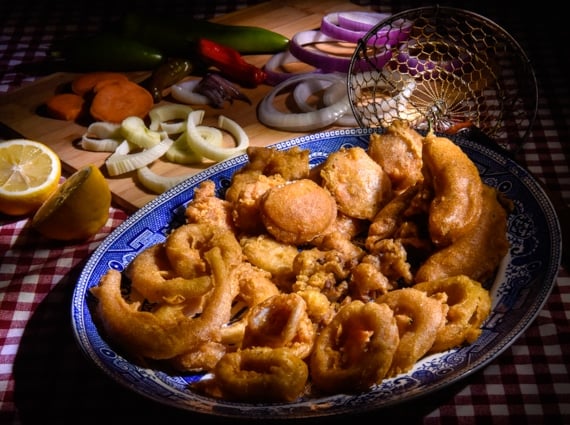
Easy Tempura Batter Recipe
Try this batter on vegetables such as zucchini, green beans, mushrooms, pickles, Brussels sprouts, peppers, onion rings, eggplant, okra, and green tomatoes sliced about 1/4-inch (6mm) thick. For seafood, try shrimp, squid, crab, lobster, or any white fish such as perch or cod.
Special Tools
- 1 Dutch Oven or Large Pot
Ingredients
For Frying And Serving
- Enough vegetable oil to fill a Dutch oven 2-3 inches deep
- 6 cups vegetables, or 3 to 4 pounds of seafood
- Coarse salt for serving
Dry Ingredients For The Batter
- 2 cups cake flour
- 1/2 cup cornstarch
- 1 tablespoon Morton Coarse Kosher Salt
- 2 teaspoons baking powder
- 1/2 teaspoon baking soda
- 1 teaspoon onion powder
Wet Ingredients For The Batter
- 2 large eggs
- 12 ounces beer or club soda
- 4 ounces 80 proof vodka
Method
- Prep. Chill the beer or club soda. Cold temps help prevent gluten formation.
- Mix the dry ingredients in a small bowl. Beat the eggs lightly in a large bowl. Add the rest of the wet ingredients to the eggs and stir. Pour the dry ingredients into the wet and stir but don’t mix aggressively as you don’t want to form gluten. Some clumps of dry flour should still be floating around in the batter, and the consistency should be a bit thinner than pancake batter. When you dunk something in it, the batter should coat the food thoroughly as excess batter gradually drips off. The batter should not be so thin that it immediately sheets off the food. If you need to thicken it, gently stir in more flour. To thin it, add beer, club soda, or water.
- Fire up. Preheat a 2 inches of oil to 325°F in a Dutch oven on your grill.
- Dunk the vegetables or seafood into the batter. Stir until coated. Note that if you are frying peppers or other pods (like okra), poke some holes in them so they don't explode.
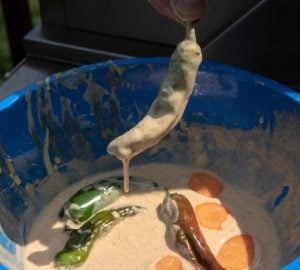
- Cook. With tongs, pull the vegetable or seafood out, let some of the excess batter drip off, and slip the vegetables or seafood into the oil. Try to cook pieces of similar thickness together so they are done at the same time. Do not crowd the pot or the oil temperature will drop too low. Try to keep the oil temp above 325°F (163°C). Flip the vegetables or seafood often and fry until the batter is pale golden in color, 1 to 2 minutes. If you are doing chicken this way, fry until the white meat reaches an internal temp of 160 to 165°F (71° to 74°C) or the dark meat reaches 170 to 175°F (77° to 79°C). Don't worry about the internal temperature of veggies and seafood. They will be safe when the batter is golden. When done, lift the food out with tongs or a spider strainer and spill them onto the grate or paper towels to drain and drip dry for a minute or two.
- Serve. Sprinkle with coarse salt and serve. Scoop out any bits of fried batter left in the oil before the next batch goes in. These crunchy bits are called tenkasu and can be used in sandwich wraps, as toppings for noodle dishes, and as garnishes for soups.
Notes
About the flour. Cake flour is lower in protein and forms less gluten that all-purpose flour. It works best. Too much gluten can make a heavier bread coating. That said, if you don’t have cake flour, you can use all purpose flour.
About the salt. Remember, Morton coarse kosher salt is half the concentration of table salt so if you use table salt, use half as much. Click here to read more about salt and how it works.
Optional. Add some seasoning if you wish. Try 1 teaspoon of hot pepper powder and/or sage.
All content © AmazingRibs.com. All rights reserved.