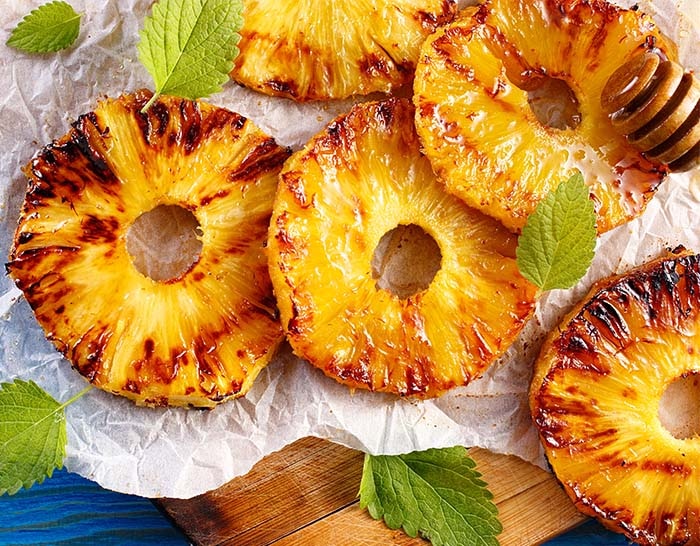
Grilled Pineapple Recipe
Use grilled pineapple on top of a grilled pork chop, in a salsa on tuna steaks, chunked and mixed in with slivers of pork tenderloin and sweet peppers to make my Grilled Sweet & Sour Pork. Grilled pineapple and grilled sweet red bell pepper go together like peanut butter and jelly. And of course sweet pineapple and salty ham is a combination made in heaven.Or use a pineapple’s sweetness in a dessert served with a scoop of ice cream or on grilled poundcake with a hot chocolate sauce. Serve it with grilled pineapple pina colada, pineapple lassi, a smoothie, or even tepache, a fermented pineapple drink.But my favorite pineapple prep is Pineapple Foster as in the video that I shot below at Michael Mina's StripSteak in Honolulu.
Video
Ingredients
- 1 ripe pineapple
Method
- Prep. Buy a good pineapple. Pick one that is plump and without obvious exterior damage or soft spots. The leaves should be green. Some say the color of the skin is not an indicator of ripeness, but the Dole website says “the exterior of a pineapple changes from a green-gray to yellow as it ripens, so as a general rule, the more yellow a pineapple’s exterior is, the riper the fruit will be. You want a pineapple that is consistently golden-yellow from top to bottom, but not getting into dark orange territory—that's gone too far.”In addition, Dole says, “a ripe pineapple will feel very slightly soft when you squeeze it. A rock-hard pineapple isn’t the one you want.” Then they say “give the base of the pineapple a sniff. If the bottom smells ripe, fruity, sweet, and bright, that thing is probably good to go. But take warning: if it starts to smell funky and fermented, like vinegar, the pineapple has gone a bit too far.”It is a myth, says Dole, that larger or smaller pineapples are riper and the leaves come loose easily on ripe pineapples.After the fruit is picked, it will not continue to ripen. If you don’t use it within a few days, pop it in the fridge.
- Skin it. The next step is to remove the tough skin. I just lop off the top and bottom, stand it on the bottom, and with a chef’s knife, slice off the skin. Some folks obsess over removing 100% of the eyes, and there are even gadgets that help you do that but I don’t fret if a few remain.You can also buy a device that both removes the woody core, cuts the fruit away from the skin, and spiral cuts it so making rings is pretty easy. These gizmos take a bit of elbow grease, and there is a bit of waste, but the results sure are pretty.
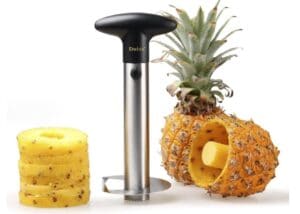
- Disk it. The Meathead Method is to first peel it and cut it crosswise into disks.
- Core it. Then there is the core. It is woody and not nearly as much fun as the flesh. Removing the core after cutting disks is easily done with the tip of a sharp knife, a narrow cookie cutter, or an icing tip. You can remove the core before grilling, after grilling, or just leave it on and let your guests eat around it, like a bone.The core can be pureed in a blender or food processor and slathered all over meat as a tenderizing marinade. Most marinades don’t tenderize much beyond a shallow layer of the surface, but pineapple contains enzymes called bromelain that are excellent tenderizers. In fact bromelain from pineapple is in many commercial meat tenderizers. It is interesting to note that once cooked or canned, the tender enzymes are disabled.
- Fire up. Get the grill as hot as you can get it so you can burn off any food bits, juices, and grease. Then scrape the grates clean on all sides. You don’t want pork grease smoke on your bright fresh fruit. Finally wipe the top of the grates with paper towels.
- Fire down. Take the heat down a notch on a gas grill, and on a charcoal grill, push most of the coals to the side so the cooking surface has a few coals below, but not a lot. Warp 7. If you are using a grill topper to grill smaller chunks, put it on and let it pre-heat.
- Seasoning the pineapple is optional. If you are going to season it, sprinkle on your blend. Toss the fruit on the grates and leave it sit for a few minutes until it gets some golden color and dark brown grill marks. Flip and repeat. They are done when they are golden and slightly limp.
- Finishing it with a glaze is optional. If you are going to gild the lilly with a sauce, wait until the pieces are almost done before basting them in order to prevent the sugar from burning.
- Serve. Remove the pineapple from the grill and plate. ou can serve them hot or room temp.
Other ways to cook it
- Whole. At it’s simplest, you can cut off the tough skin and just throw it on the grill, close the lid, and every few minutes roll it 1/4 turn. Because it is full of water, the outside will caramelize rapidly but the inside will take a long time to cook. So you run the risk of carbonizing the outside. If you go this route, be sure to hang near the grill.
- Rotisserie. My friends of Greg and Kristina Gaardbo of Chicago Culinary Kitchen are famous for their rodizio, a huge charcoal fired machine with scores of rotisseries. They douse it with liqueurs or flavored rums and enrobe it in brown sugar more than once during the process. When it is cooked through they cut it into chunks and people stand in line for them. Check out the video below. And if you start drooling over the porchetta, here's the recipe with a video.
- Chunks. After you cut wedges, you can cut the raw pineapple into chunks and roll them around on top of a grill topper to cook. Use them to make the awesome Pineapple Foster they make at Chef Michael Mina’s Stripsteak in Waikiki in the video above. Or chop the chunks and make a salsa.
- Wedges. Cut the pineapple from pole to pole and again and again into four or even eight wedges. Slicing off the woody core is easy then.
Notes
Seasoning. Pineapples are wonderful unadorned, but if you wish, you can add some layers of complexity by liberally sprinkling on Meathead’s Memphis Dust recipe or our bottled Pork Seasoning before you grill them. They have sugars and ginger in them, nice pairings with pineapple.
Gilding the lily with a glaze. Another option is to baste them with a liqueur or melted butter or both. Try equal amounts of brown sugar and Amaretto with a pinch or two of chipotle powder.
All content © AmazingRibs.com. All rights reserved.