


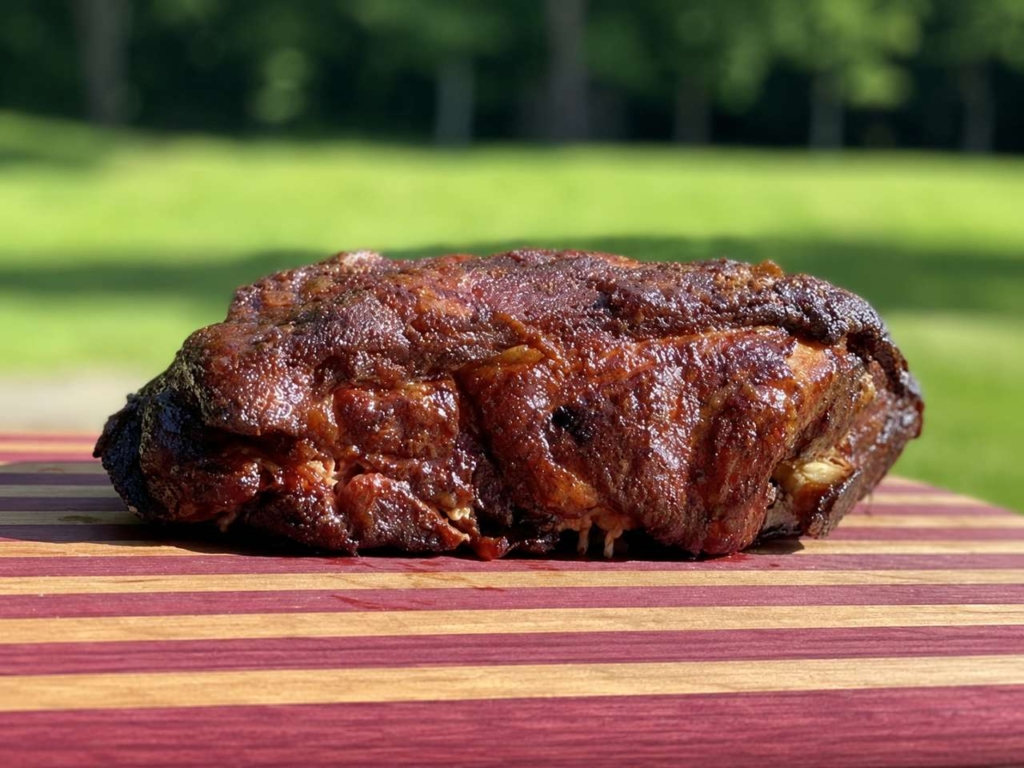
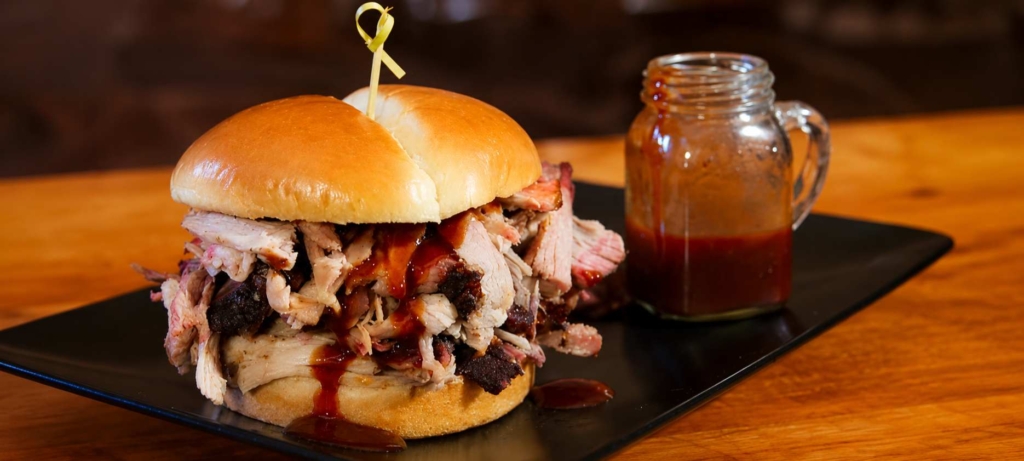
Admit it, your favorite part of pulled pork is the bark, the deep dark, rich, sweet, chewy, crusty, jerky-like rind suffused with incredible complex flavor.
Admit it, when you’re pulling the pork apart, and nobody is watching, you eat more than your fair share of the bark.
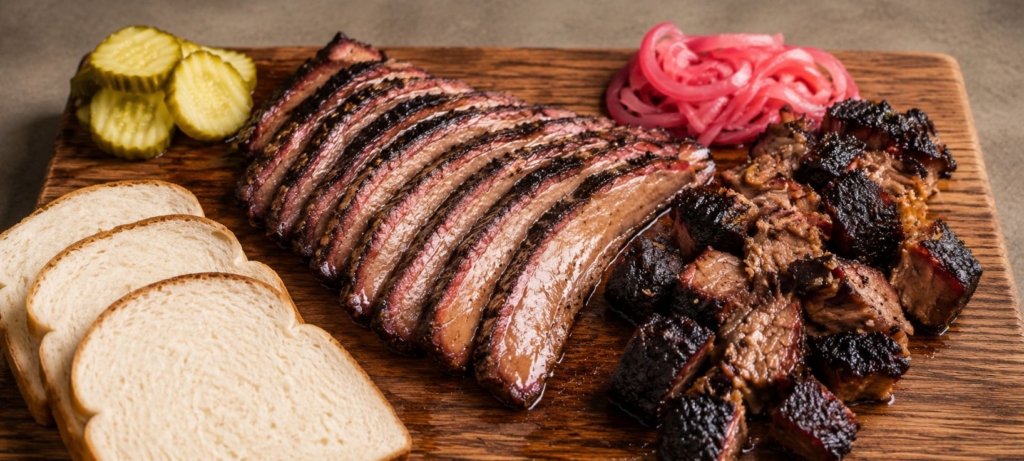
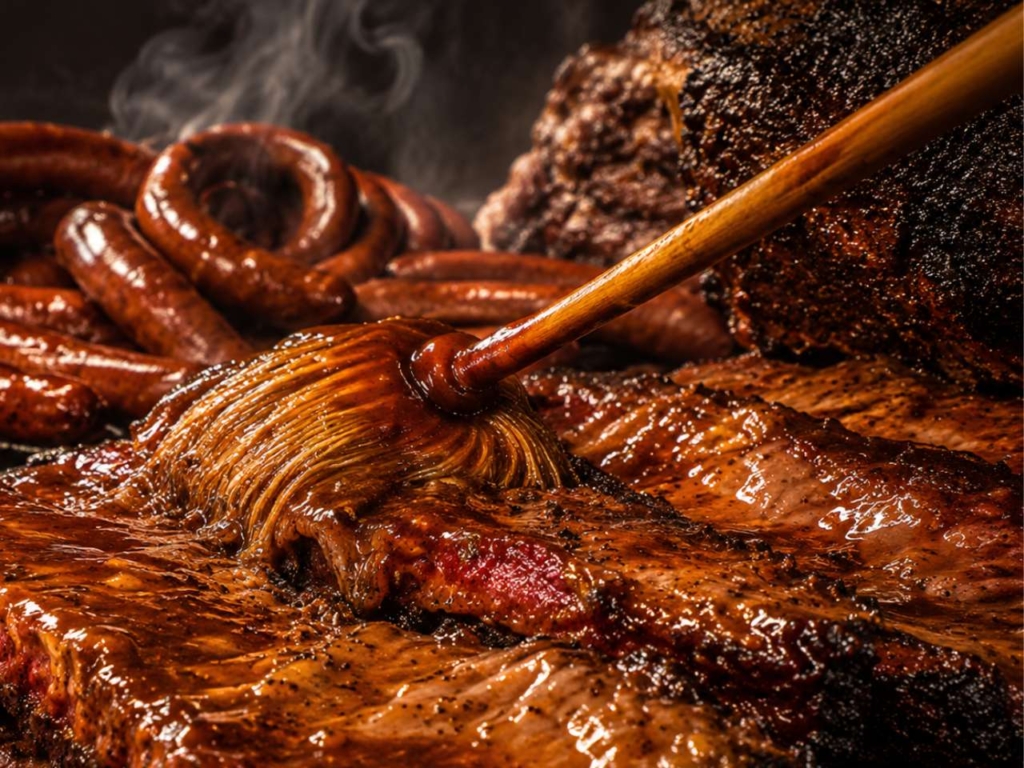
Admit it, beef brisket is great, but burnt ends are what you lust for.
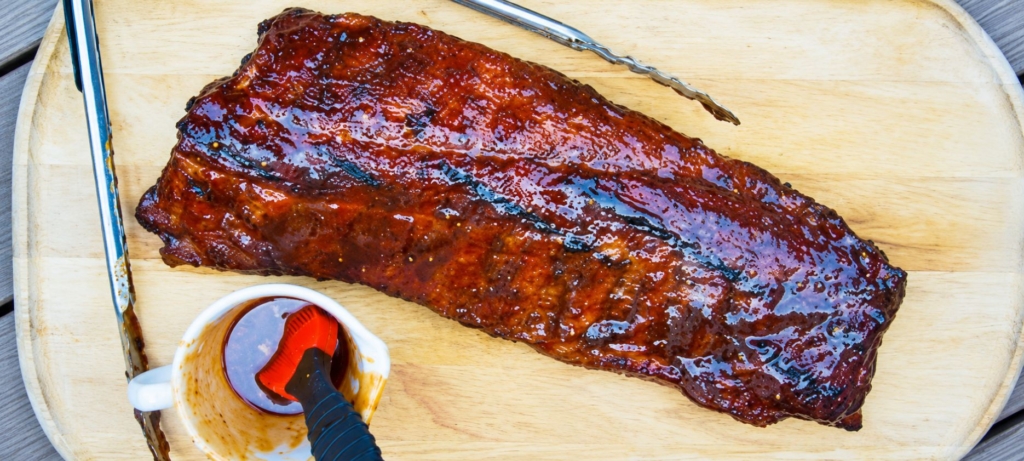
Admit it, ribs are luscious, but it is the high bark to meat ratio that you crave.
So I asked the AmazingRibs.com science advisor, Prof. Greg Blonder, to explain this magic.
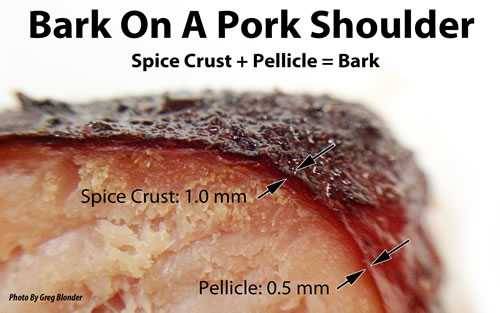
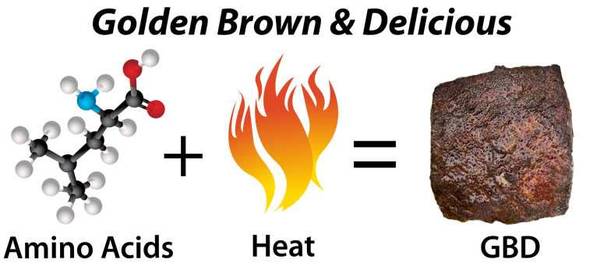
Turns out bark is a byproduct of complex chemical reactions: The Maillard reaction and polymerization chief among them.
The process begins when we coat the meat with a spice rub such as my recipe for Meathead’s Memphis Dust. Rub recipes vary, but most have salt, pepper, sugar, and paprika. After that, anything goes. Garlic powder and onion powder are common, and my recipes have ginger, and even ground bay leaf.
Some of the ingredients will dissolve in water, some will only dissolve in fat. As the meat roasts slowly at, say 225°F, moisture from the meat and water vapor in smoke dissolves the water soluble compounds in the rub, such as the salt and sugar, melting the rub into a gritty slurry (click this link to learn more about what is in smoke). Fats bubble up from within, mix with the rub and dissolve some of the spices that are fat soluble.
Salt penetrates deep inside the meat by electrochemical reactions with the water, but the molecules in most of the other rub components are too large to get beyond the surface so they stay there, essentially becoming a glaze. The idea that the spices and herbs swim deep into the meat like migrating salmon is false. The pressure of water within the meat and the diameter of the fibers and capillaries just doesn’t let them in. Meat is not like a bucket of water where spices disperse freely. Muscle is made of millions of tiny little compartments of water and membranes and salt is among the few things that can get through.
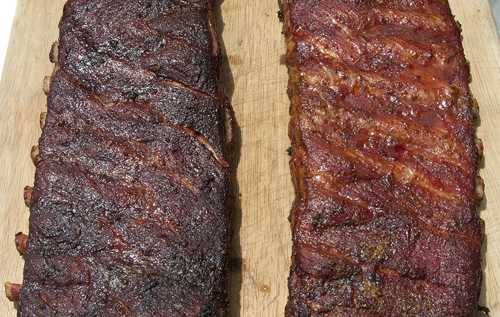
Smoke particles stick to the goo and change its color. “Without smoke, bark usually becomes a dark mahogany red, depending on what is in the rub,” says Blonder. “With smoke and enough time, it can be transformed into a licorice-black, shiny lacquer.” That’s why the bark on a pork shoulder or beef brisket can make your meal look like a meteor, but there is no carbon burned flavor. Burnt ends, the tasty candylike parts of brisket that aficionados fight over, aren’t really burnt, they are just bite-size cubes of beef covered in dark bark. In the two ribs shown here, the one exposed to more smoke is obvious.
Meanwhile, water starts to evaporate like sweat from a marathon runner, cooling the meat, and slowing down the cooking process significantly (see my article on the stall). Sometimes you can even see the steam rising from the meat. The spice rub does little to stop the water from evaporating.
Contrary to popular belief, table sugar does not caramelize and darken until it gets over 300°F, and that just doesn’t happen when you are cooking at 225°F.
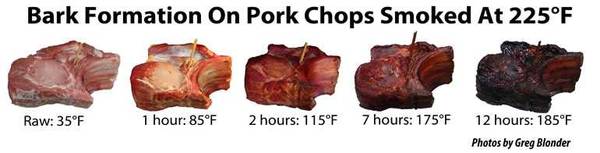
Eventually the rub begins to dry, the Maillard reaction kicks in and the chemistry of the outer layers begin to change. The Maillard reaction works best at high temps, but it can still occur, slowly, at low temps. As meat proteins under the spices bind and clump together they form a complex tightly bound matrix of compounds called polymers which form a skin called a pellicle on the surface just beneath the spice crust. The pellicle is usually less than a millimeter thick, not unlike the skin on latex paint in a can. Once the polymers are formed, they are permanent and cannot be dissolved. You can really see it on naturally smoked hams.
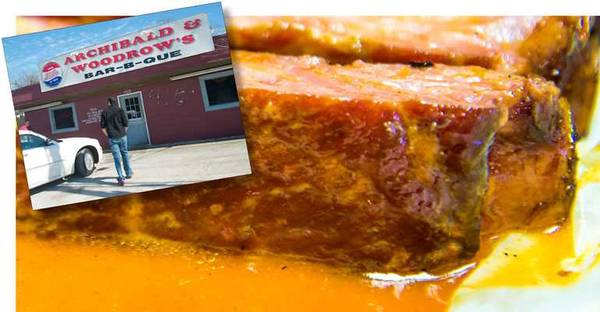
In fact, in old fashioned, no-frills Southern Barbecue joints, like Archibald & Woodrow’s in Tuscaloosa, where the pitmasters use only salt on their low-and-slow ribs, the bark on their ribs is pure pellicle. Thin and ruddy golden, parts of it can be peeled off like a skin (shown here, under their thin, orange, vinegary sauce). This is tricky, because the pellicle can get tough if there is no moist rub on top and if the humidity in the cooker is too low. Getting it right is an art.
Blonder says the technical name for the process is Diffusion Restricted Irreversible Polymerization, or DRIP for short. And, according to Blonder, contrary to the opinions of most seasoned pitmasters, the seasoning has nothing to do with pellicle formation.
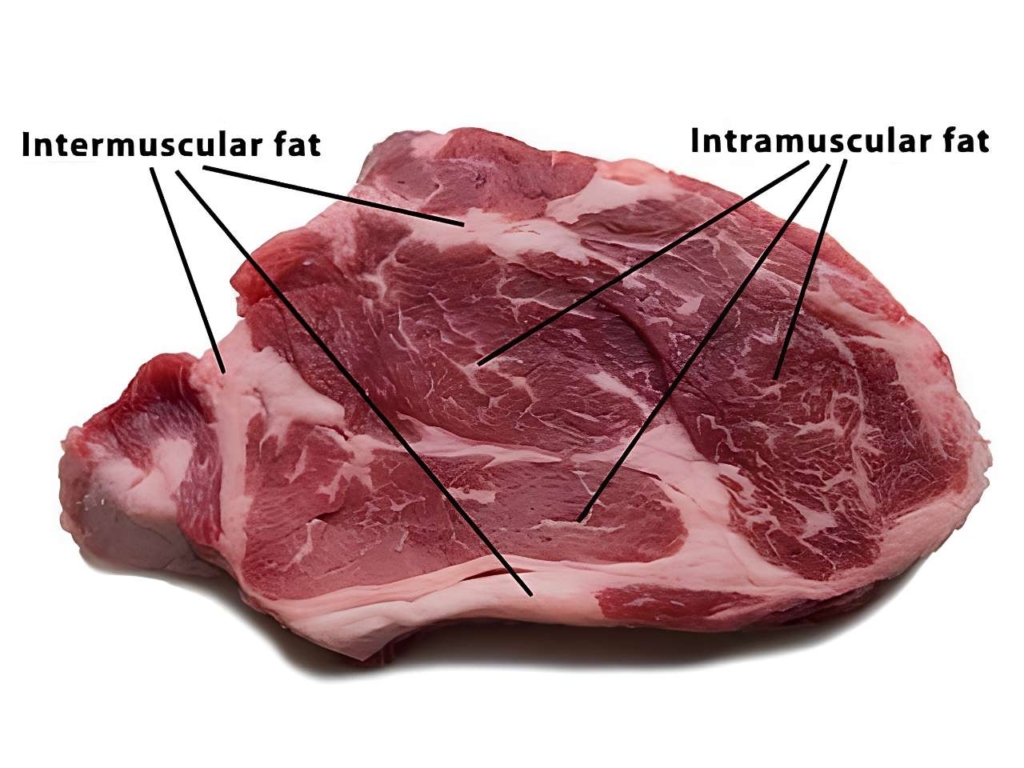
Blonder did several experiments to learn about bark formation. He learned that salty and acidic rubs formed barks slightly faster, but by the time the meat was fully cooked, the barks were “more or less indistinguishable”. When fats melt during cooking, they make a glistening sheen, and help moisten the bark and hold onto spices, but they “played no role in bark creation, as determined by comparing bark on lean meat, marbled meat, and even pure fat, which itself does not form a bark.” When spices are applied to a fat cap, they cook and sugars melt, but you don’t get the pellicle on the fat underneath. That’s another reason why I advise you remove most of the surface fat before cooking.
Click here to read more about Blonder’s experiments on his website.
So here’s some tricks if you crave bark:
- Make more surface area! Cut your pork butt in half. If there’s a bone in there, remove it with a paring knife and with butcher string tie the two parts into tubes. More surface, higher bark to meat ratio, more fun for everyone.
- Don’t put the meat in a pan. Expose it to maximum convection air flow.
- Don’t use the Texas Crutch, the method for speeding and tenderizing by wrapping meat in foil.
- Consider gashing the meat, cutting the surface about 1/2″ deep every inch in a crosshatch pattern. Then get the rub down into the gashes.
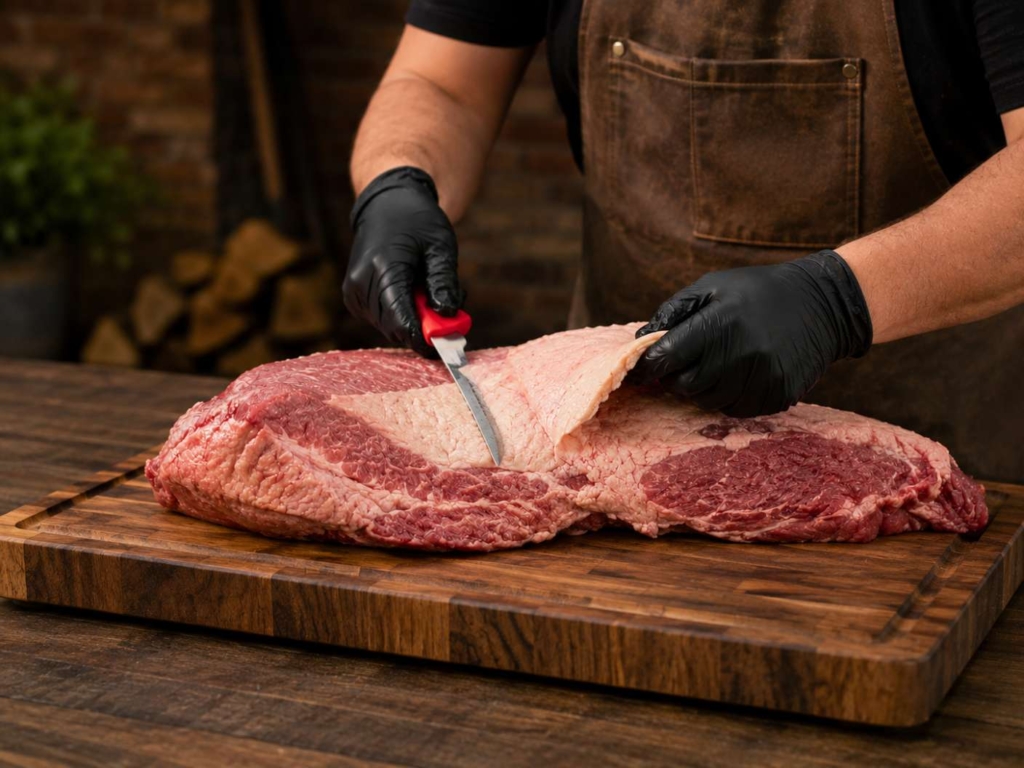
- Get rid of the fat cap.
- And if you really love bark, the ultimate expression is burnt ends from a brisket. Read more about them in my article on Texas Brisket.
Before you can post a comment or question you must sign into our commenting partner, Disqus. This helps make sure everyone hanging around the grill is civil. We do not tolerate nastiness, racism, porn, inappropriate language, or attacks on others. All comments are the property of AmazingRibs.com and we reserve the right to quote them, edit them, delete them, and block people from making future comments.
Please leave comments and questions on the same page that is devoted to that subject so others can see questions and our answers when they are reading about the subject. You must enable JavaScript to use the comments section, and you must accept cookies to post comments. Note: the software that runs Disqus is different from the Pitmaster Club, so members need to sign into the Pitmaster Club separately.