


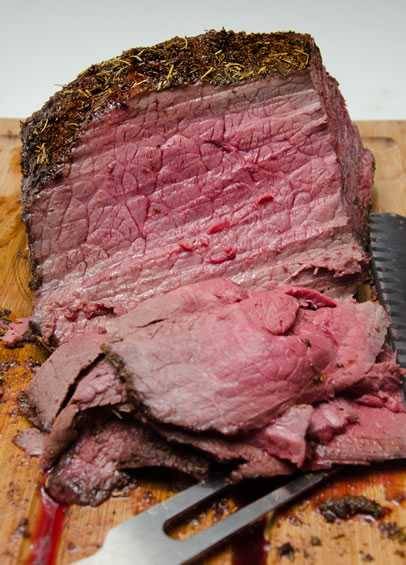
There’s no reason to settle for sub-par roast beef ever again thanks to this Baltimore pit beef recipe!
You can make roast beef from many cuts on the steer, but here’s how to make a fine roast beef by taking a lesson from the Baltimore Pit Beef cooks. Pit roast beef is served in many restaurants, bars, and pubs in the Charm City area. Surprisingly, it is rare to find it outside Maryland. It is essentially a juicy roast beef sandwich and the meat is cooked on a grill. Different cooks use different grills: charcoal, wood, and gas.
Recipe Overview: Baltimore Pit Beef Success Formula
- Buy: a 6-pound top round beef roast.
- Trim: any silver skin and excess fat from the roast.
- Dry brine: the meat a day in advance if possible using 1/2 teaspoon of Morton’s Coarse Kosher Salt per pound.
- Wet: the entire surface of the meat with water and coat with Mrs. O’Leary’s Cow Crust beef rub.
- Fire up: the grill or smoker to at 225°F with hardwood smoke and set it up for 2-zone indirect cooking. Your choice of smoking wood is not critical.
- Cook: the meat using indirect heat and check the bottom color after 30 to 60 minutes. If it’s different, roll it over.
- Roll: it around every 5 minutes or so to develop a crust all around when the exterior develops a deep mahogany color.
- Watch the temp and remove the roast when it hits 125 to 130°F (52 to 54°C) in the center for medium rare.
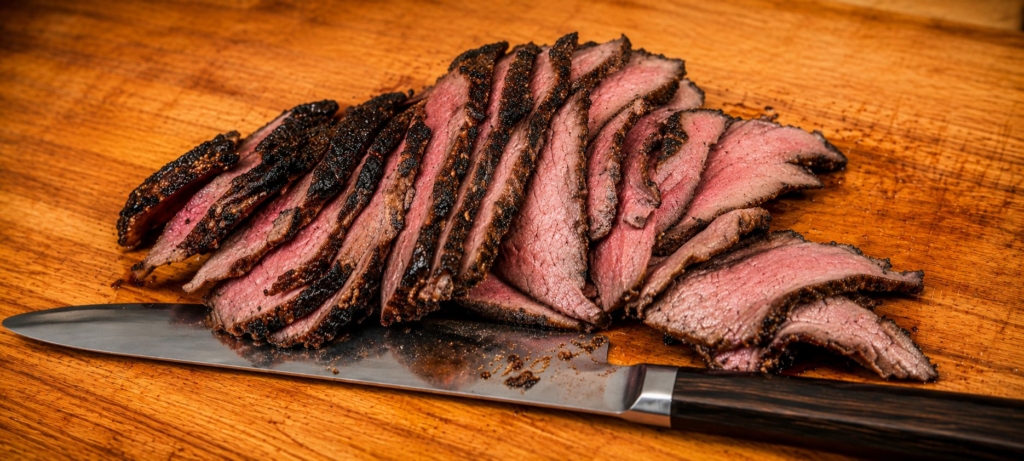
- Slice: the meat thin across the grain for max tenderness.
- Serve: by mounding it high on a roll, drizzel on horseradish sauce and some thinly sliced onion rings.
Summarize & Save this Content on:
The science of our Baltimore pit beef
The meat for Baltimore pit beef is a large hunk. It’s often from the rump, often top round, sometimes bottom round, and sometimes sirloin. It is rubbed with a savory spice and herb mix, usually cooked until it is dark and crispy on the outside and rare inside. Then, you slice it thin across the grain, which leaves a narrow crusty ring of flavor from the exterior in every bite. Then it sits on a roll or rye bread. You can usually order your preferred doneness since the edges and tapered sections cook more and are less red. Cooks will often throw slices back on the fire if you don’t want yours rare.
Because the beef roasts typically used are from the rump and are very lean, they can be tough. Restaurants specializing in Baltimore pit beef machine slice the meat very thin to make it easier to chew. But, you can make it tender by cooking it lower and slower than the high speed operations in Maryland. Low and slow melts the connective tissues that surround the meat fibers, as described in my article on meat science. Still, if you use one of the cheaper roasts from the rump, it is absolutely essential that you cut across the grain and shave the slices paper thin.
In order to get that authentic flavor, you should cook over charcoal. But you can make Baltimore pit beef just fine on a gas grill. I recommend you throw in some smoke. This is usually a big hunk of meat so you need to get as much flavor as possible on the exterior because the interior doesn’t have much flavor other than simple beef. Rub and smoke just can’t penetrate very far.
Ingredients and substitutions for Baltimore pit beef
- Jarred horseradish and mayonnaise come together to make the Baltimore Tiger sauce that goes on top. I recommend grated horseradish in vinegar or homemade. Some places proffer a wide range of condiments, but the standard is a horsey sauce sometimes called tiger sauce. It’s not the same thing as stuff sold in a bottle called Tiger Sauce. As an upgrade, use my Secretariat Horseradish Sauce.
- Top or bottom round beef roast makes pit beef what it is. You need one about 6 pounds.
- Morton’s Coarse Kosher Salt is used here for the dry brine. Remember, kosher salt is half the concentration of table salt so if you use table salt, use half as much.
- Mrs. O’ Leary’s Cow Crust is one of my recipes. It’s a combo of black pepper, onion powder, garlic powder, dried rosemary leaves, dried thyme or oregano, American paprika, and cayenne or chipotle powder.
- Raw onions are used for slicing and garnish. Do not skip. It’s key to the experience.
- Kaiser rolls are necessary to handle this sandwich. Some places serve Baltimore pit beef on caraway- studded rye bread, but if the beef is juicy and topped with tiger sauce, rye bread is a recipe for a sloppy mess in your lap. I’ll have mine on a kaiser roll or hoagie bun.
Baltimore pit beef, step by step
- Mix the horseradish and mayo together in a small bowl for the Tiger Sauce. Set aside for at least 30 minutes.
- Trim excess fat and silver skin from the roast. Figure out which way the grain is running because when it is done, you will want to slice it across the grain to reduce the chewiness. It is easier to find the grain when the meat is raw.
- Dry brine the beef a day ahead of time if possible.
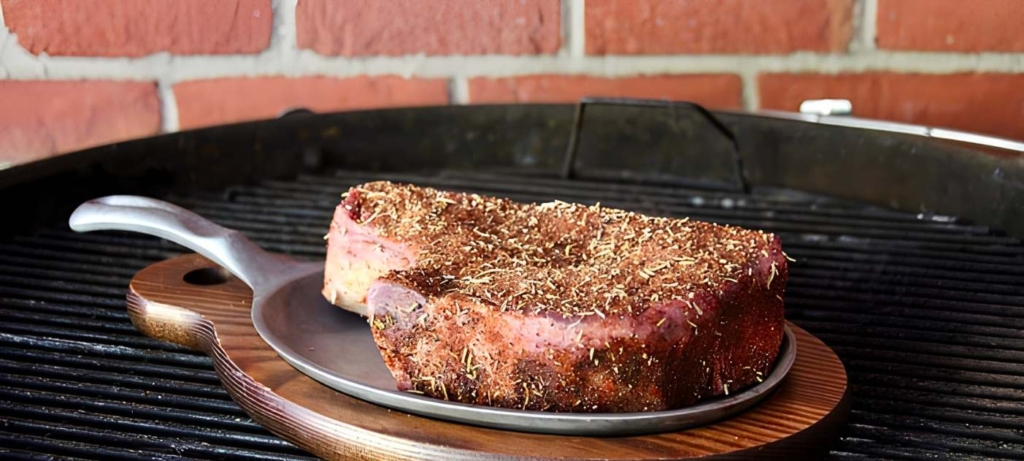
- Wet the surface of the meat and coat the it with Mrs. O’Leary’s Cow Crust dry rub.
- Set the grill for smoker for 2-zone indirect heat. get the indirect side to about 225°F (107°C) with the lid down.
- Place the meat in indirect heat and close the lid. Check the color on the bottom after about 30 to 60 minutes. If it’s different from the color on top, roll it over. The cooking time will depend on the temp and the thickness of the meat. Shoot for about 115°F (46°C) in the deepest part.
- Move the meat around every 5 minutes or so when the exterior is a deep mahogany color. You’re developing a crust here. Don’t burn it.
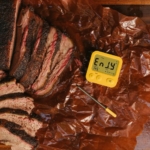
- Watch the temp in the center and remove the roast when it hits 125 to 130°F (52 to 54°C) for medium rare.
- Slice the meat thin across the grain for max tenderness. I usually slice by hand because using a meat slicer with warm meat is tricky.
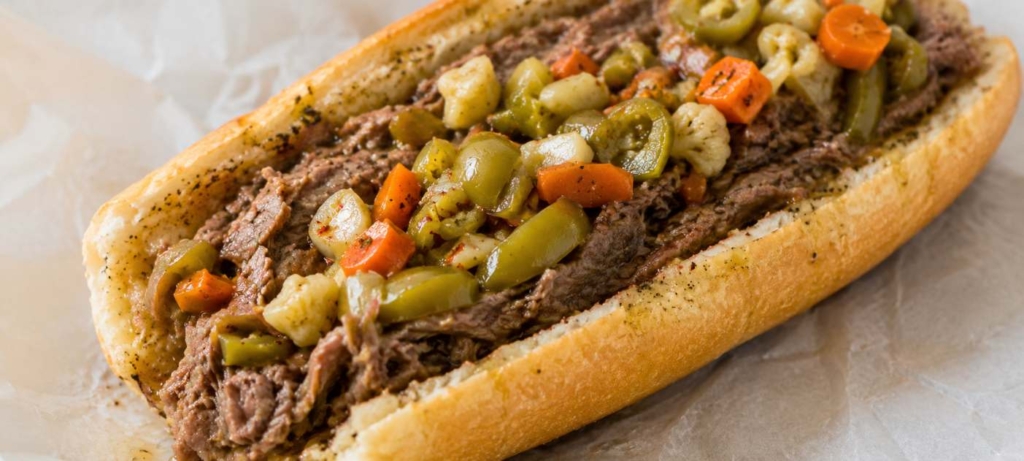
- Pile it high on a kaiser roll, drizzle on some horsey sauce, and top with a couple thinly sliced raw onion rings.
Baltimore pit beef FAQs
These share the cut of beef, either the top or bottom round, but the difference is how they’re cooked, sliced and served. Roast beef gets a low-and-slow approach, but pit beef takes its name from cooking at high heat over a charcoal or hardwood pit.
This dish evolved out of working-class neighborhoods as a faster, high-heat alternative to barbecue, which is low and slow. It originated in the working-class neighborhood along Pulaski Highway in the 1970s.
Boardwalk-style thickly cut fries are a common side, often topped with gravy or macaroni and cheese.
If you like our Baltimore pit beef, you’ll love . . .
- A Smoked Pastrami Recipe That’s Close to Katz’s
- Pulled Beef Chuck Roast Recipe
- The Best Beef Prime Rib and How to Cook it Sous Vide
- 20 for 20: Our Best BBQ Recipes of the Past 20 Years
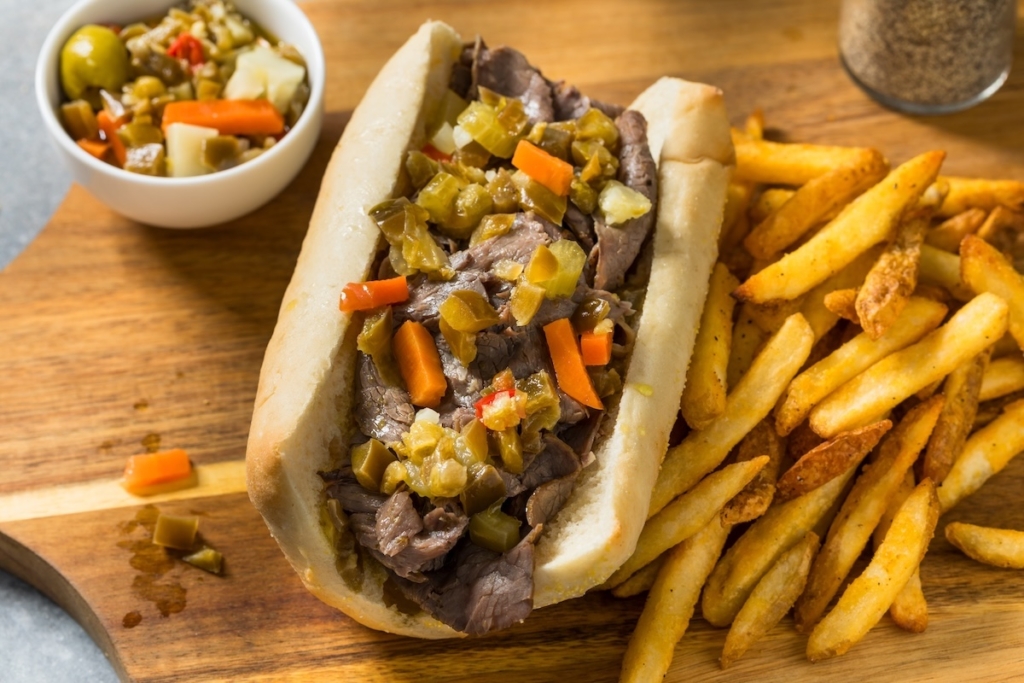
- Classic Chicago Italian Beef Sandwich
Our Baltimore pit beef recipe

Baltimore Pit Beef Recipe
Ingredients
Method
- Prep. Mix the mayo and horseradish and let it sit for at least 30 minutes during the cook.
- Trim excess fat and any silver skin from the roast. The fat does not penetrate the meat. Meat is 75% water and fat and water don't mix. And the fat blocks the rub and smoke from the meat. If your roast is funny shaped, tie it with butcher string to make it closer to uniform in thickness so it cooks uniformly. Now take a look at the meat and figure out which way the grain is running because when it is done, you will want to slice it across the grain to reduce the chewiness. It is easier to find the grain when the meat is raw.
- Dry brine the meat a day in advance if possible, 1/2 teaspoon of Morton Coarse Kosher Salt per pound of meat.
- Crust. Anytime before cooking, in a baking pan, wet the entire surface and coat it with the Cow Crust.
- Fire up. Set up your grill for 2-zone indirect heat and get the indirect side to about 225°F (107°C) with the lid down. On a smoker, set it up to cook at 225°F (107°C). I know this is a lot cooler than most restaurants cook at, but stick with me. This will make meat more tender than most restaurants. If you wish, throw some wood into your grill for smoke flavor. I recommend it.
- Cook. Place the meat in indirect heat, close the lid and check the color on the bottom after about 30 to 60 minutes. If it is different than the color on top, roll it over. The cooking time will depend on the temp and the thickness of the meat. Shoot for about 115°F (46°C) in the deepest part.
- Then move it over direct infrared heat to crisp up the crust, and roll it around every 5 minutes or so when the exterior gets deep mahogany. Don't burn it. Watch the temp in the center and remove the roast when it hits 125 to 130°F (52 to 54°C) for medium rare. This reverse sear method will give you much more even color inside the meat, and a crisper crust that if you sear first.
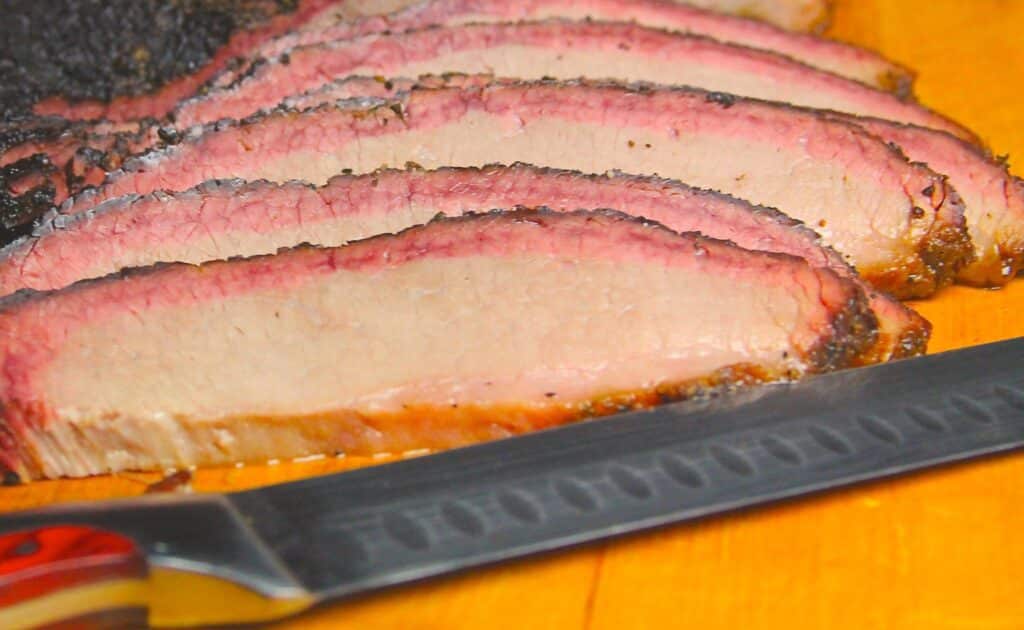
- Slice. Slice the meat thin across the grain for max tenderness. If you slice and the grain is running parallel to the slice, rotate the hunk and slice it across the grain. This is crucial! It may be hard to slice warm meat with a machine if you have one, so I slice mine by hand. Just shave it off. Don't try to make large complete slices. The thinner the better. After you slice it, you can throw a few slices back on the grill or in a pan for those who like it chewier and more well done.
- Serve. Mound it high on the roll, drizzle on some horsey sauce, and scatter a few thinly sliced onion rings on.
Before you can post a comment or question you must sign into our commenting partner, Disqus. This helps make sure everyone hanging around the grill is civil. We do not tolerate nastiness, racism, porn, inappropriate language, or attacks on others. All comments are the property of AmazingRibs.com and we reserve the right to quote them, edit them, delete them, and block people from making future comments.
Please leave comments and questions on the same page that is devoted to that subject so others can see questions and our answers when they are reading about the subject. You must enable JavaScript to use the comments section, and you must accept cookies to post comments. Note: the software that runs Disqus is different from the Pitmaster Club, so members need to sign into the Pitmaster Club separately.