



Everybody’s had boiled lobster, but I’m here to tell you that lobster is at its apex fresh from the grill. Here’s how to do it.
Yes, the dry heat from grilling makes it just a bit chewier, but it is still plenty tender, and the concentrated flavors, undiluted by the boiling water, make it worth a little extra mastication. Best of all, grilled lobster is never mushy as boiled lobster can be and has a nice smoky flavor that’s impossible to achieve indoors.
This was my favorite method for cooking lobster until I developed an allergy to shellfish like lobster, shrimp, and crawfish in the ’90s. So I asked the AmazingRibs.com science advisor, Prof. Greg Blonder if he had a recipe for lobster, and son of a gun, he gave me a refined version of the one I used to cook, loved so much, but never wrote down.
Buying lobster
Lobsters sold in the US are usually either cold water lobsters or warm water lobsters, and, although they taste similar, there is a big difference.
Cold water lobsters, also known as Maine lobsters, are dark, usually black or brown, sometimes greenish, with two large front claws (top of the page). Most come from Maine but some come from the cool waters further down the coast.
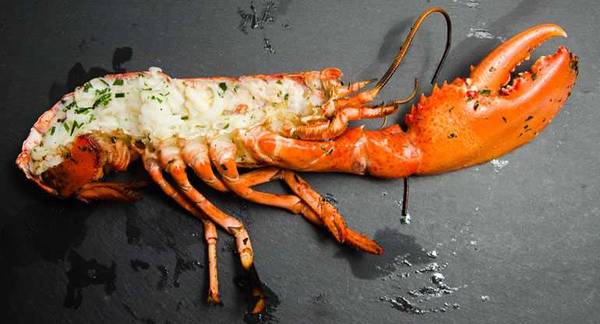
Warm water lobsters, sometimes called Florida lobsters, spiny lobsters, or rock lobsters, usually come from the Caribbean or the Gulf of Mexico (see image below). Spiny lobsters haven’t got the big meaty claws of the cold water specimens and they tend to be tan or orange. They look more like humongous shrimp with really thick antennae.

In the photo here from FloridaSportsman.com, you can see there are no claws. Since almost all the meat is in their tails, when you buy frozen lobster tails you almost always get warm water lobster tails. Cold water lobsters are usually sold whole because the claw meat is so highly prized. Warm water lobsters can grow to one pound in weight within two to three years and can add a pound a year.
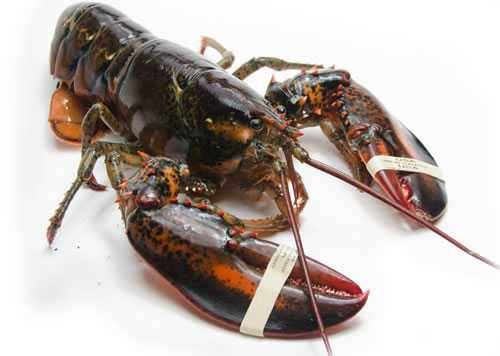
If you want the succulent claw meat, get fresh, live Maine lobsters which are available all year round. Maine lobsters are usually from 1 1/2 to 2 pounds. Anything under one pound is illegal. A typical 1 1/2 pound lobster will have less than one pound of raw tail and claw meat. Occasionally three to four pounders are caught but they usually go to restaurants. It takes cold water lobsters seven years to grow to one pound, and three years to add a second pound, so most are 7 to 10 years old. Pick an animal that is lively, walking or swimming. A listless specimen with a curled tail and meat visible between the tail and the upper thoracic carapace is a bad choice. Don’t worry if there is a little green algae in the lobster tank.
Live Maine lobsters will have rubber bands on the large front claws. Leave them on until after they are dead. They may appear sluggish, but they can still give you a serious booboo. Always grasp a lobster from above by the solid shell on the upper half, never by the tail. There are some sharp edges on that tail that can gash you if it flips its tail. Even when dead, those edges are hazardous. Handle with care.
You should cook a live lobster the same day you get it although it will stay alive and fresh in the fridge for 3 to 4 days if it has been handled well. Never submerge a saltwater lobster in fresh water. This will kill it. If you have to keep it a day or two, put it in a pot so it does not crawl around in the fridge, put about 1/4″ water in the bottom just to keep it moist, and cover it with a damp cloth. Lobsters can breathe air so they will be fine.
Sometimes, during the summer, on the coast of Maine, you can get soft shell lobster, which is a crustacean that has outgrown its hard shell, grown a new tender, shell inside, and then molted it’s old, outgrown home. In order to slide out of the old shell the animal squeezes out some of its water, concentrating the flavor in the meat. Alas, there is a lot less meat in a “shedders”. These “softies” are almost impossible to find outside Maine because they don’t ship as well as hard shells. Even in Boston they are rare.
When it comes to cooking lobster, Blonder’s advice is “Keep it simple, or you’ll obscure the flavor of the sea.” My advice: “Gather ye lobsters while ye may, for tomorrow ye shall surely become allergic.”
Lobstah myths
If you boil a lobster, it does not scream. The whistling sound is air and steam passing through the shell.
There is no evidence that early New Englanders, or their slaves, or their servants, or prisoners, or anyone else were required to eat lobster or salmon twice a week because they were so abundant.
But this is no myth: In Maine it is pronounced “lobstah”.

Greg’s Butter Basted Grilled Lobster Recipe
Ingredients
Method
- Prep. Prepare the basting sauce by melting the butter over medium heat or right on your grill, and add the rest of the ingredients. Let the flavors blend for a bit but be careful not to let the butter turn brown.
- You can kill the lobster quickly and painlessly by "pithing" it. To pith, place the lobster in a pan facing you. Place the tip of a sharp heavy chef's knife on its back about 1/2" (1.3 cm) behind the eyes with the sharp edge facing you. Plunge the knife right into its "brain" all the way through and slice downward cutting the head right between the eyes and severing all major nerves. You may see it continue to twitch afterwards, but trust me, it is quite dead and, because you've cut the nerves, it feels no pain. Then flip it over with its legs in the air, and cut the lobster in half along the mid line. Save any juices that emerge, and mix into the basting sauce. Be careful to hold it firmly so it doesn't slip around.
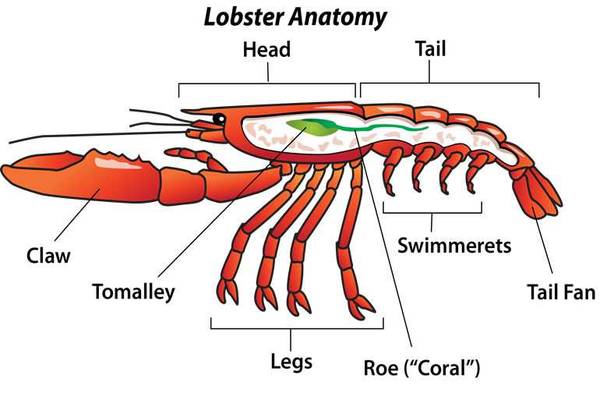
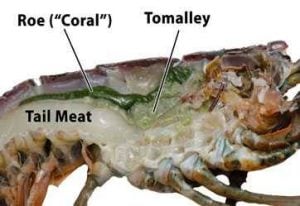
- Remove the rubber bands from the claws. Remove the roe and tomalley from the head area. Roe, sometimes called coral, is a sac of eggs in females. They are dark green or black when fresh, and reddish or orange when cooked. You may even see some in the tail if the female was laying. The tomalley is part of the digestive system and it is pale green. Beginning in 2008 the US Food & Drug Administration issued a warning against eating the tomalley because it is the filter system of the lobster. All the experts say there is absolutely no problem with the meat because the tomalley is so good at what it does. Some folks look for the digestive tract in the tail and try to remove as they do in shrimp, but Blonder says that most supermarket lobsters to have pretty clean digestive tracts compared to fresh off the boat, probably because they have been kept in carefully filtered tanks for a while.
- Fire up. Preheat the grill with a direct heat zone about medium hot, in the 400°F (204°C) plus range.
- Cook. Melt the butter in a pan with the olive oil. Add the parsley, tarragon, chives, salt, and pepper. You do this right on the grill.
- Place the lobsters, shell side down, on a medium hot grill over direct heat. Position the shell between two rungs in your cooking grate to hold it from rolling. You may have to manipulate the large claw, or place two halves side-by-side, to keep them from rolling. Some folks start them meat side down for 2 to 3 minutes to get a bit more smoke flavor and some grill marks, but that tends to dry them out a bit. Blonder usually cooks shell down all the way.
- Baste the meat with the butter, close the lid, and open it to baste once again after 3 to 4 minutes.
- When the meat in the thickest part of the tail hits a minimum of 145°F (63°C), and it has changed from translucent to pearly white, after perhaps 6 to 10 minutes, the lobster is done. Baste one last time.
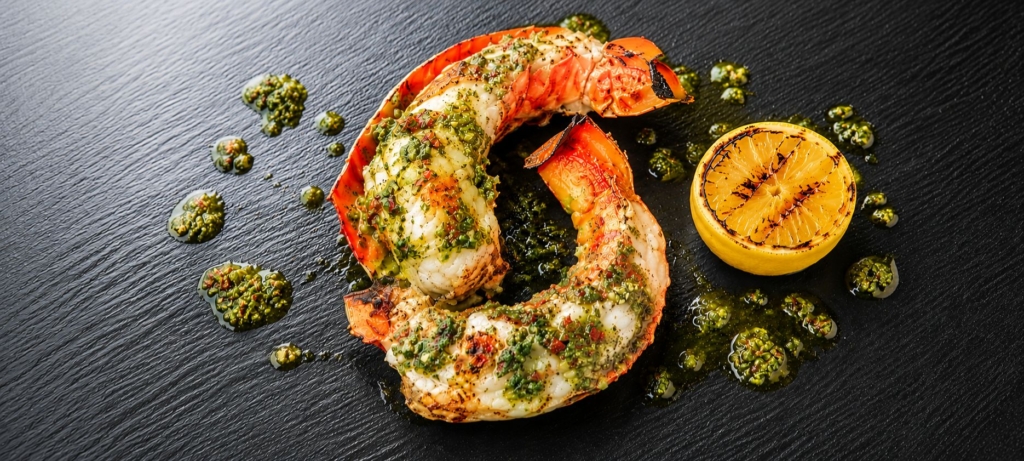
- Serve. Remove from the heat and then crack open the claws with a mallet, rolling pin, meat tenderizer, hammer, empty wine bottle, or use kitchen shears. Serve with any leftover sauce for dunking, and squeeze the lemon wedges on the meat if you wish. You can suck on the feathery gills and the small legs, or you can leave them alone and use them for making lobster bisque (see sidebar). Leftover lobster meat is great on a sandwich with mayo, and it is especially good mixed in with mac and cheese.
- When you are done with your grilled lobster feast, save the shells, especially the upper carapace with the gills, and the legs. There’s no way to get all the meat and flavor out of them. In fact, when you eat your lobster, leave a little meat in there so you can make lobster bisque, a heavenly cream soup.
Before you can post a comment or question you must sign into our commenting partner, Disqus. This helps make sure everyone hanging around the grill is civil. We do not tolerate nastiness, racism, porn, inappropriate language, or attacks on others. All comments are the property of AmazingRibs.com and we reserve the right to quote them, edit them, delete them, and block people from making future comments.
Please leave comments and questions on the same page that is devoted to that subject so others can see questions and our answers when they are reading about the subject. You must enable JavaScript to use the comments section, and you must accept cookies to post comments. Note: the software that runs Disqus is different from the Pitmaster Club, so members need to sign into the Pitmaster Club separately.