


There are a number of things that can change the cooking time of a recipe. oven temp, thickness of the food, weather, and altitude.
When you see a recipe that says “cook X minutes on one side, flip and Y minutes on the other”, run!
Meathead
If my wife has told guests to arrive for dinner at six, she knows they will be late, and if I’m cooking, so will the food.
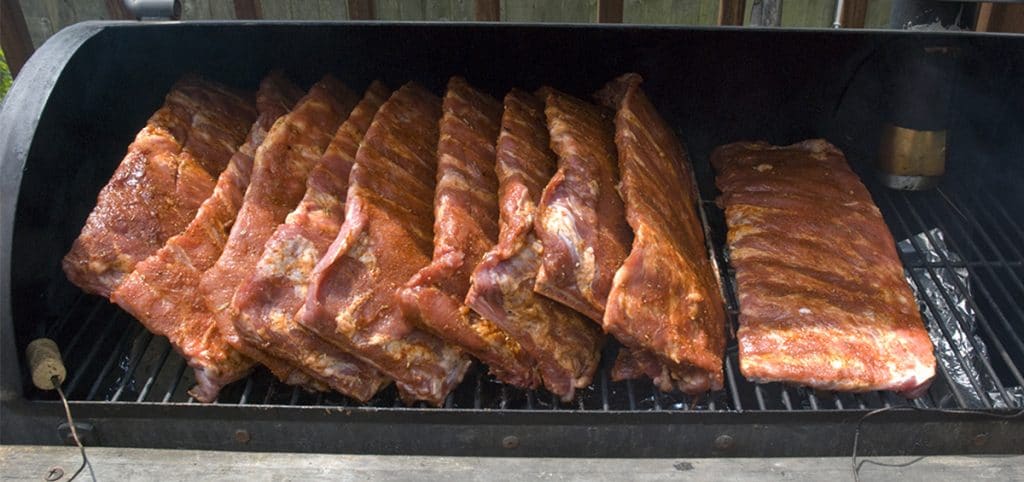
Figuring out how long it takes to cook something is more art than science, I’m ashamed to say. There are many variables that come into play, most importantly cooking temp, type of meat, temperature of the meat at the start, cooking method, thickness of the meat, weather and ambient air temp, altitude, humidity, spritzing or basting, water pans, and most important, the accuracy of your thermometers.
Here are the variables, but even pitmasters know, start early and have a faux cambro on hand.
Cooking temp
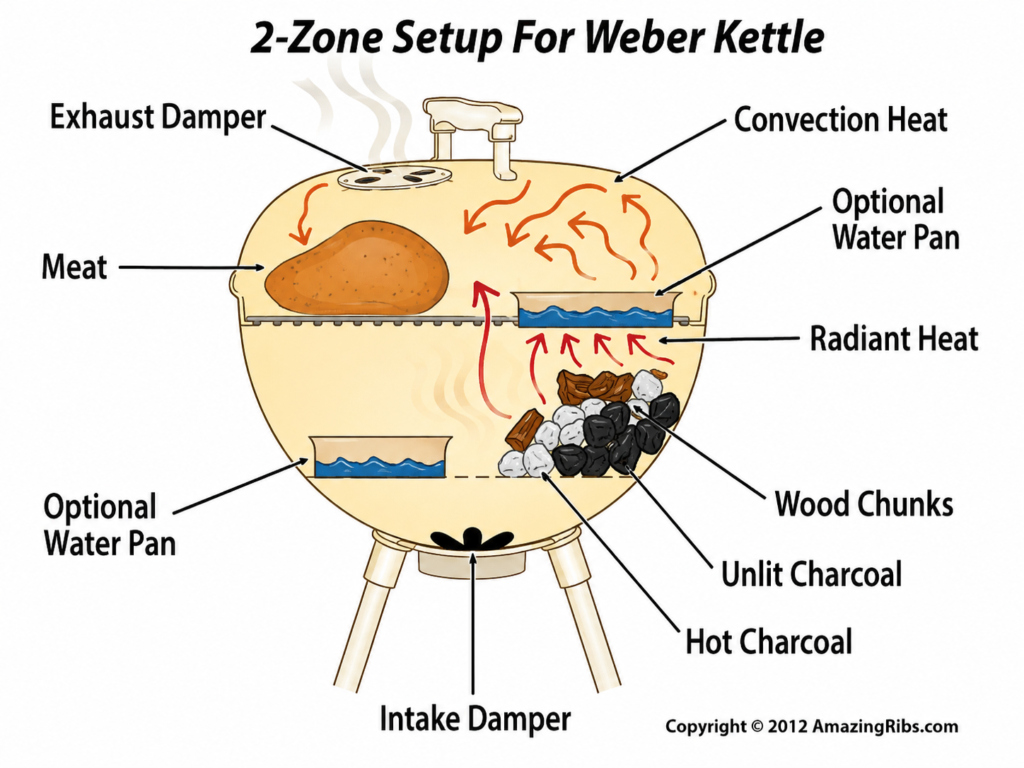
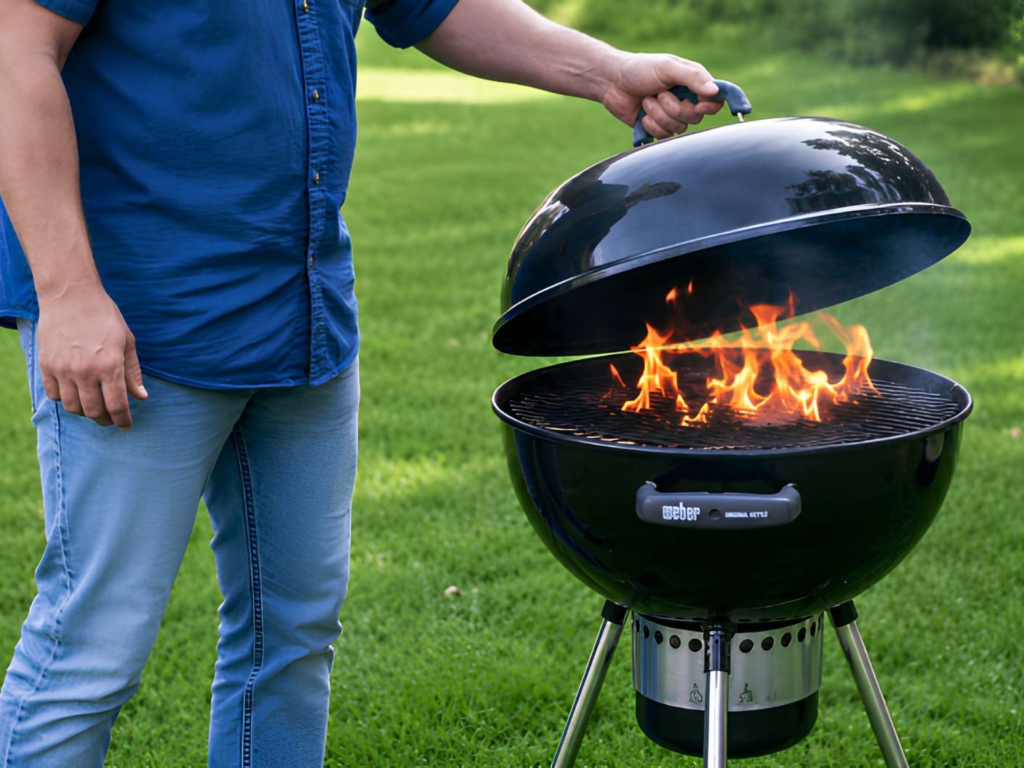
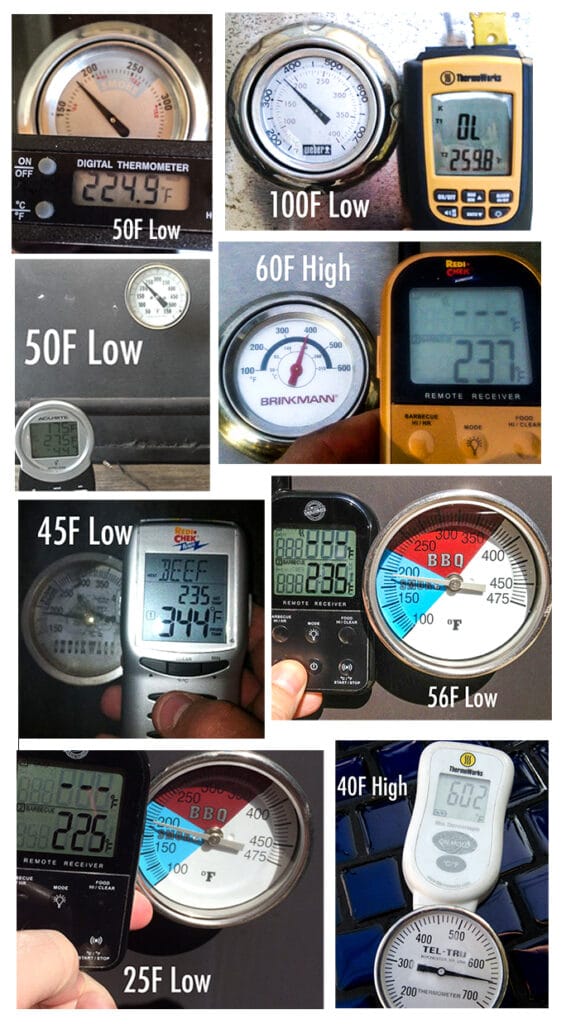
Temperature of the cooker is crucial. The hotter you cook the sooner it will be done. Measure the temp at the cooking surface a few inches away from the cool air bubble surrounding the meat. Don’t measure the temp in the lid unless you plan to eat the lid. The temp way up there is different down at grate level where the food is, especially if the heat source very close to the food. Also, the lid thermometer is in the middle of grill so it is reading an average of the left and right side, but if you are using a 2-zone setup, and you should be, then the temp in each zone, on each side, can be drastically different. Not to mention that the lid thermometer on most grills are the cheapest model the manufacturer could buy and barely qualify to be called indicators, and certainly should not be referred to as thermometers. Click here to learn more about thermometers and for a buying guide.
Type of meat
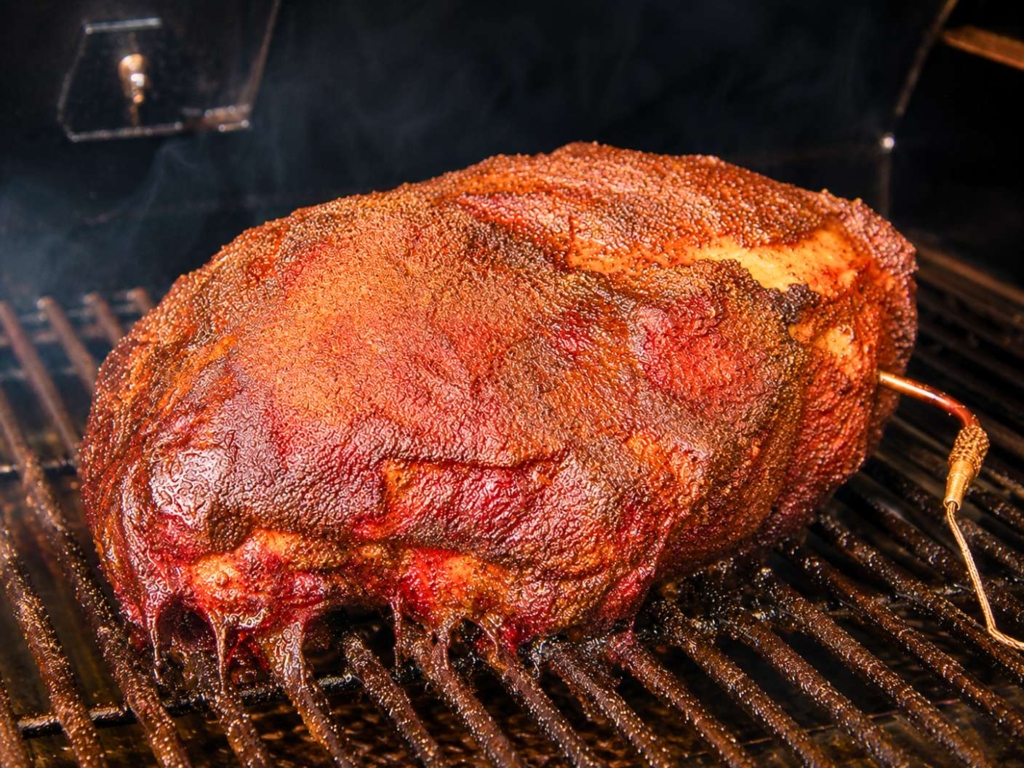
But some foods, especially tough cuts, especially ribs, brisket, shoulder (a.k.a. chuck), and rump get tougher at high heats, and more tender at low heats. So the cut of meat is an important factor. Until you learn which cut is tough and which is tender, you should refer to my recipes for recommended cooking temps.
Cooking method
Grilling directly over the flame will cook the meat faster than if the meat is along side the flame because radiant heat delivers more energy than convection heat. Wrapping a pork butt in foil will cook much faster than leaving your butt nekkid, but it will soften your bark, and sometimes go past done into mushy. Using thick wide cast iron grill grates will speed the cooking slightly because they absorb and conduct heat more efficiently than air. And where you take the temp is crucial. Read my article on thermodynamics for more on the subject.
Thickness of the meat
The thickness of the meat determines how long it takes to cook, not the weight, although the weight is often related to the thickness. That’s because meat is done when it reaches the desired temp in the geographic center. It’s that simple. And the time it takes for it to reach that temp is determined by the distance from the outside to the center since heat must travel through the meat to get there. Just like driving, the time it takes depends on the distance you are traveling. Weight is only useful when comparing two identical cuts from different size animals. Because a pork butt is a specific cut from one hog to the next, if one weighs more than another it will be the same shape but thicker. It is the thickness that is in play here, not the weight.
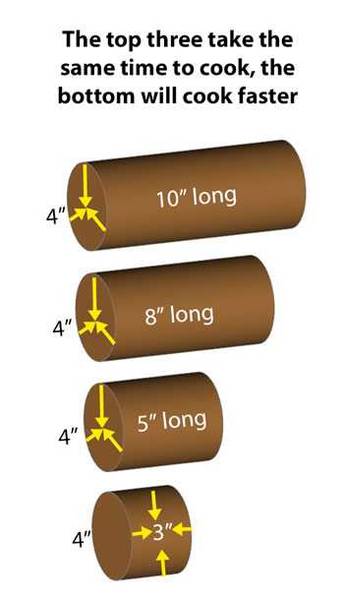
In the figure above, the first three cylindrical roasts all take the same time to cook, because heat has the same distance to penetrate from the outside, regardless of the length. But in the fourth example, the roast is narrower than it is thick, and heat will reach the interior from the end caps as well as the sides. So it will cook faster.
Nathan Myhrvold, physicist and author of the groundbreaking food science book Modernist Cuisine: The Art and Science of Cooking,
The AmazingRibs.com science advisor Prof. Greg Blonder says “This is a good theoretical start. Actual meat is a mixture of muscle types and water content, there is surface cooling due to evaporation and airflow, radiational heating, the interference of the cooking grate and a host of other real world effects that deviate from this simple guide, sometimes dramatically. But in a pinch it might help you make an estimate.”
Food scientist Harold McGee says “There is no simple and accurate equation that can tell us how long to cook a particular piece of meat in our particular kitchen. The best we can do is monitor the actual cooking, and anticipate when we should stop by following the temperature rise at the center of the meat.”
Temperature of the meat at the start
Did the meat come right out of the fridge (and that’s a best practice), and what temp is that fridge? 40°F? 33°F? Makes a diff.
Weather and ambient air temp
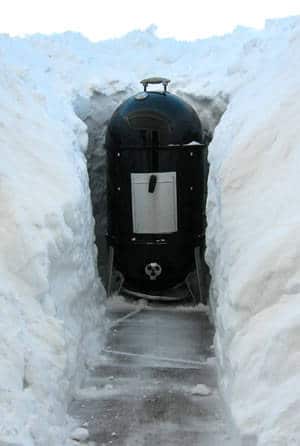
Another factor is the ambient air temp outside the cooker. Cold air will cool the air coming in through the combustion air vents and cool the coals or gas jets. Hot air will have the opposite effect. Wind and rain really cool the exterior of the cooker and can wreak havoc with your plans. To overcome them, you will need more charcoal or more gas. If you are not prepared for these variables, dinner will be late. Practice for these eventualities by calibrating yourself and your cooker.
Humidity
If you are cooking hot and fast, humidity has little impact. But if you are cooking low and slow, at 225°F as I recommend, and targeting a high finishing temp, such as 203°F as I recommend for pulled pork and Texas brisket, as the air around your food warms it, moisture begins to evaporate. This evaporation can cool the food and cause it to stall. Meat can get stuck at a temp, usually in the 150°F to 170°F internal temp range, and stay there for as long as six hours! If you’re not ready for this you better be ready to order Chinese carryout. You’ll like their ribs.
A lot of cooks like to spritz their low and slow meats with apple juice or vinegar or some other concoction. This attracts smoke, but it also cools the meat. If you spritz a lot, cooking time will increase. The flavor compounds in the juice are measured in parts per million, so few that they will make no major impact on the meat. Certainly not in comparison to the power of a rub or sauce.
If you use an electric smoker, things cook faster because there is no combustion and as a result there is less airflow through the cooking chamber. That means less evaporation which means less cooling. Of course you also don’t get the same flavor as in a wood, charcoal, or gas smoker.
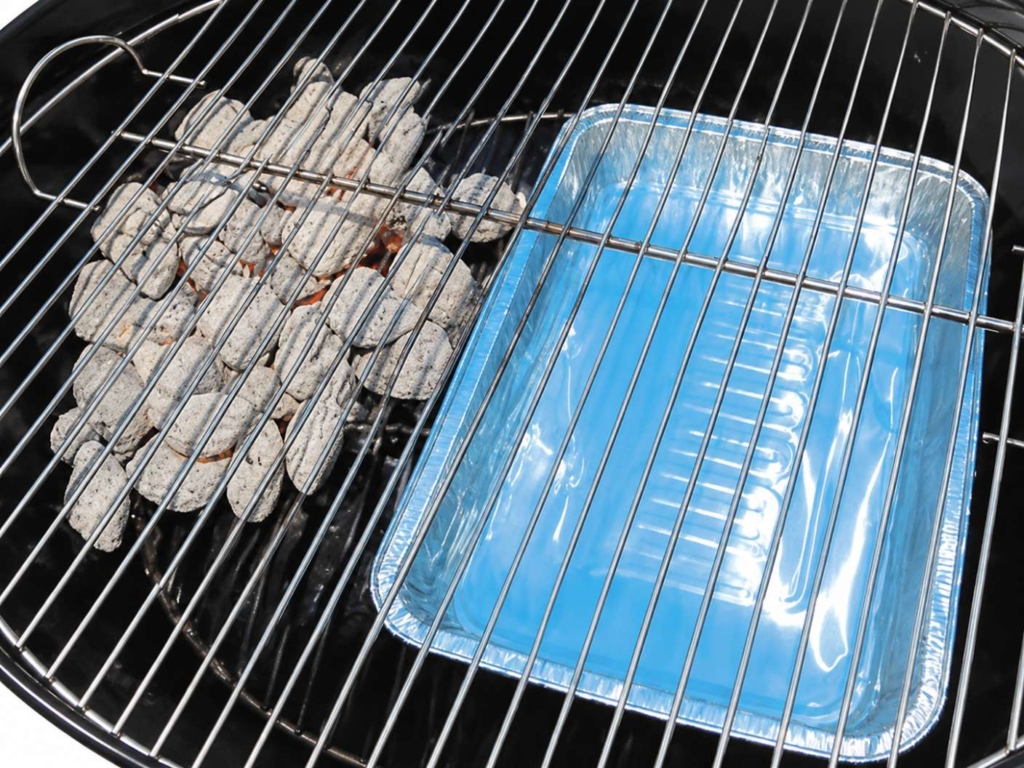
The natural humidity of the weather is a factor in cooking time for low and slow cooks. The lower the ambient humidity, the more moisture will evaporate from your meat and the slower the cook. But you can boost the humidity and reduce evaporative cooling by putting water pans inside the cooker, a technique I recommend in my articles on setting up your cooker. The AmazingRibs.com science advisor Prof. Greg Blonder says “If you want to increase humidity, and you do, fill the pan with those red lava rocks sold at garden stores, and then add the water, but don’t cover the rocks. They are very porous so they act like sponges, and the large surface area pumps more moisture into the air. And don’t let fat drip into the pan because it will quickly coat the surface and prevent evaporation.”
Another technique is wrapping large tough cuts in foil after smoking for a few hours, a trick called the Texas Crutch. Blonder says “Cooking time depends strongly on humidity, temperature, and time as a unit. For example, with pork shoulder, if the humidity is high and you cook at 225°F, the meat might be tender in about 13 hours even though the internal meat temp is only 185°F. On the other hand, if you wrap the meat in foil at 145°F, then cook at 275°F, the meat needs may need to reach 192°F to be tender. But it might be done in 10 hours. Conversion of collagen takes time and temp and humidity which can be traded off against each other. And of course some muscle groups within the pork butt will be tender at 180°F, while others benefit from 195°F or more.”
“There are other things that influence humidity. Cold 30°F air is usually drier than 70°F air, so there can be more evaporation in cold air. That’s why low humidity air quickly dries clothes and how freeze drying works. Wind is also a factor. Cold days are often windier, and that draws humid air out of the cooker through the chimney, so the meat and water pan evaporate faster. On cold days your flame has to be hotter to keep the cooker temp up unless you have a super insulated cooker. That can dry the air out. Unless you put a pan right above the flame, then it will create more humidity in the cooker (not steam, unless the flames actually touch the pan). If your smoker is not well insulated, as the moisture in the air may condense on the colder, drier meat. It’s like mopping all the time, and that cools the meat further.”
Your thermometers
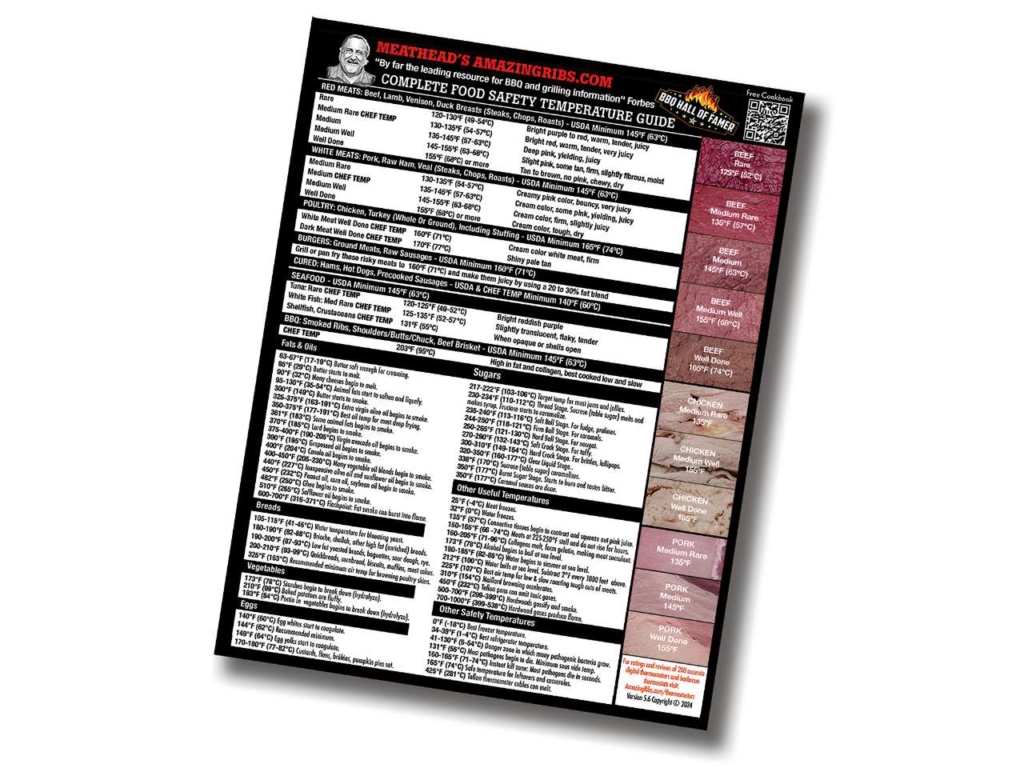
Last but not least, your meal is ready when the meat hits your target temp. Only very experienced pitmasters can tell by touch, so don’t try it. And you cannot tell by color or when the juices run clear. You will fail. Miserably. Believe me. You are not that good so stop thinking like a macho man. Get a good digital meat thermometer and eliminate the guesswork. No sense in wasting money on overcooked food, plucking undercooked food of your guest’s plates, or stroking their hair as they pray to the porcelain god of undercooked food.
Altitude
Air pressure is lower at higher altitudes (the column of air pushing down on the food surface is shorter). The boiling point goes down about 2°F for every 1,000 feet above sea level. Altitude also reduces the amount of oxygen available to your fire. Air pressure impacts boiling temps, but it does not impact melting temps of fats, collagens, and sugars. As you go up in altitude food and cooking surfaces cool faster and conduct heat slower because evaporation occurs at lower temps and evaporation cools things. Since boiling temp is lower at higher altitude, I advise you to take the cooker temp from 225°F down to 216°F to help preserve moisture. This could mean longer cooking times.
Just in case
For long low and slow cooks, start early. Don’t cut it close. Get to the station before the train. If your turkey is done 30 minutes before the dinner bell, you can hold it on your cooker at 155°F for hours or put it in a faux cambro, which is simply a beer cooler. Click here to read more about setting up a faux cambro.

Before you can post a comment or question you must sign into our commenting partner, Disqus. This helps make sure everyone hanging around the grill is civil. We do not tolerate nastiness, racism, porn, inappropriate language, or attacks on others. All comments are the property of AmazingRibs.com and we reserve the right to quote them, edit them, delete them, and block people from making future comments.
Please leave comments and questions on the same page that is devoted to that subject so others can see questions and our answers when they are reading about the subject. You must enable JavaScript to use the comments section, and you must accept cookies to post comments. Note: the software that runs Disqus is different from the Pitmaster Club, so members need to sign into the Pitmaster Club separately.