
AmazingRibs.com, The Zen of Barbecue & Grilling masthead
barbecue

About barbecue sauce ingredients

Just like barbecue sauce, the ingredients used in making barbecue sauces have many permutations. There are hundreds of mustards, for instance, and they can really taste different, even to the uneducated palate. Did you know that many barbecue sauces contain Worcestershire sauce which contains anchovies? For more about how mustard, ketchup, molasses, Worcestershire sauce, hot sauce, and other common sauce ingredients are made, check out the article on my favorite ingredients.

About liquid smoke

Many commercial sauces contain liquid smoke, which is smoke from burning hardwood that has been captured and dissolved in alcohol. When added to sauces it contributes another layer of flavor, simulating, but not duplicating, the flavor of hardwood smoke from the cooker. Purists hate it, but if you have no way to cook outdoors, it can really help.

Commercial barbecue sauces

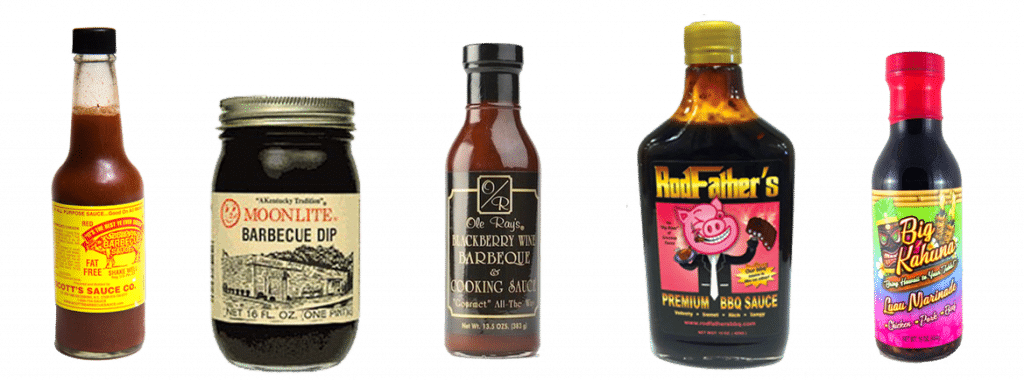
Sometimes it seems as if every rib joint in the country is bottling its sauce and selling it on the internet.

My tongue has been marinating in them for years and, since you asked, I'd be glad to recommend a few. Click here to see which sauces I like best and how to get them.

Saucing strategies

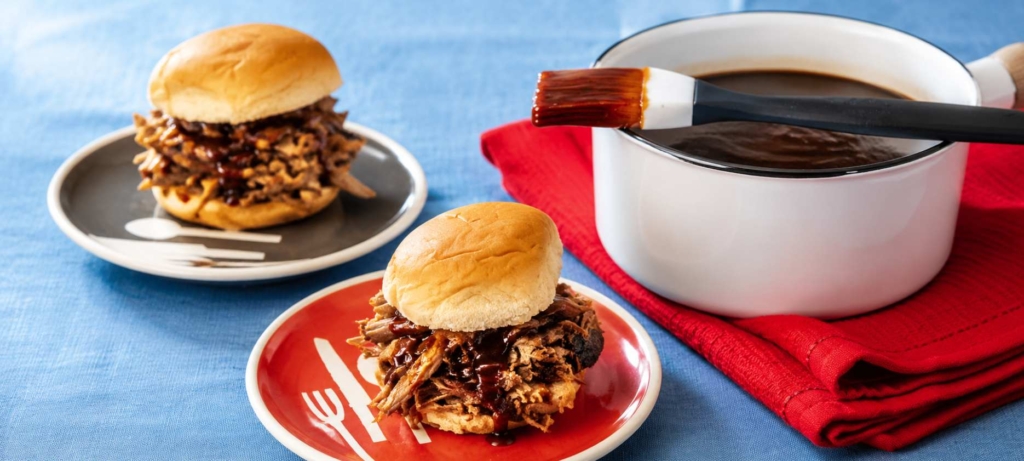
Mop-sauces are splashed on throughout the cook, but many sauces contain sugar and can burn quickly, so the secret is to hold off on the sauce until the last 10 minutes. Click here for more on saucing strategies.

A taxonomy of American barbecue sauces

Your Choice of Sauces"Sometimes I eat ribs nekked, but if company's coming, I usually put on pants." Meathead


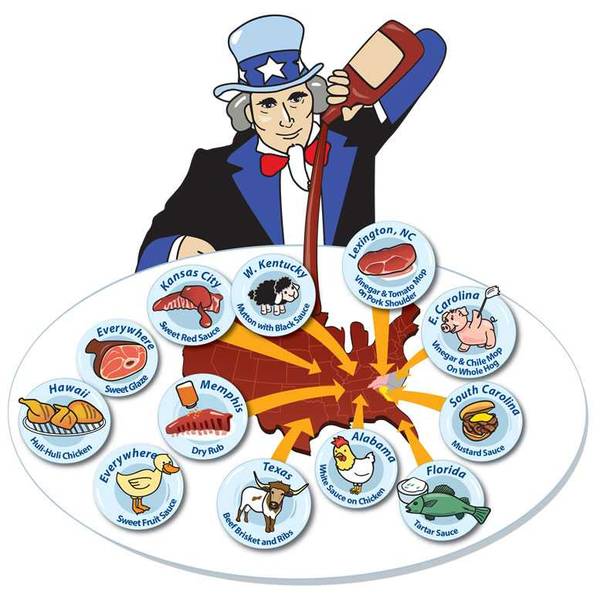
When properly cooked, ribs are great nekkid, but most of us prefer them with suace. To most Americans, barbecue sauce is red and sweet and it comes from a shelf near the ketchup. To those of us who travel and would rather lunch out back of a rickety shack under a shade tree rather than under the golden arches, barbecue sauce comes in a rainbow of colors and flavors, and they are tied to the area of origin.

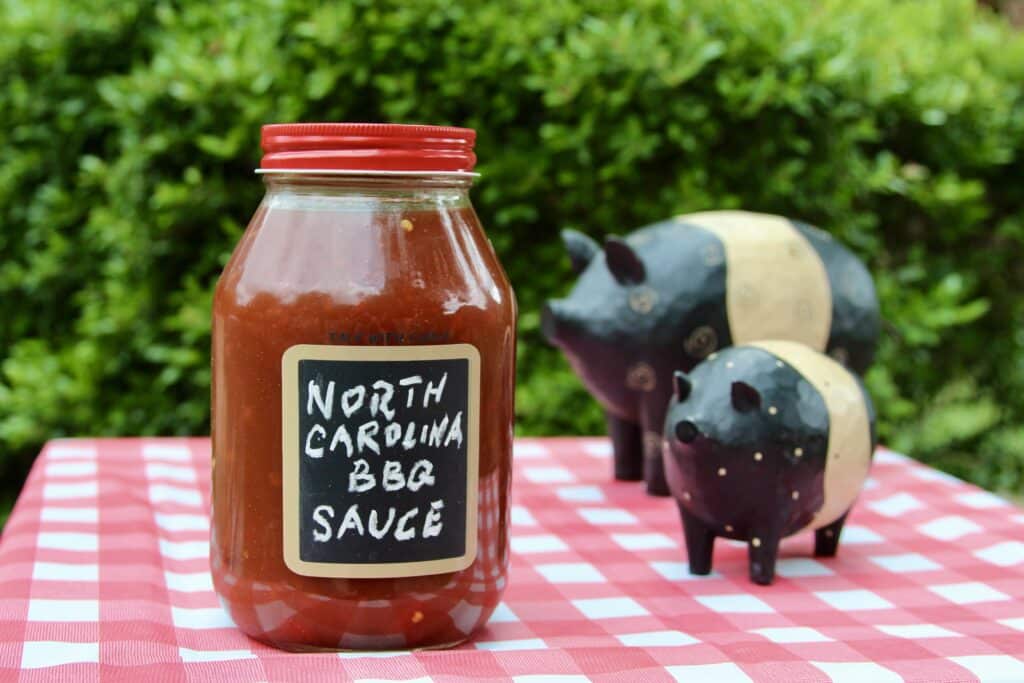
In half of North Carolina barbecue sauce is practically clear with cayenne pepper flakes that flurry in it like a snow globe. In other parts of the state it is practically pink. In much of South Carolina it is yellow. In many dingy brown joints of Texas it is close to brown with big chunks of green peppers and other flotsam in it. And in a corner of North Alabama it is white with black pepper flecks. In Memphis the "sauce" comes from a shaker and is no more liquid than the paprika that is its backbone.

That's because barbecue has evolved along disparate paths around the nation, led down these trails by the racial and ethnic immigrants who settled there. Indeed, barbecue sauce is a cultural phenomenon.

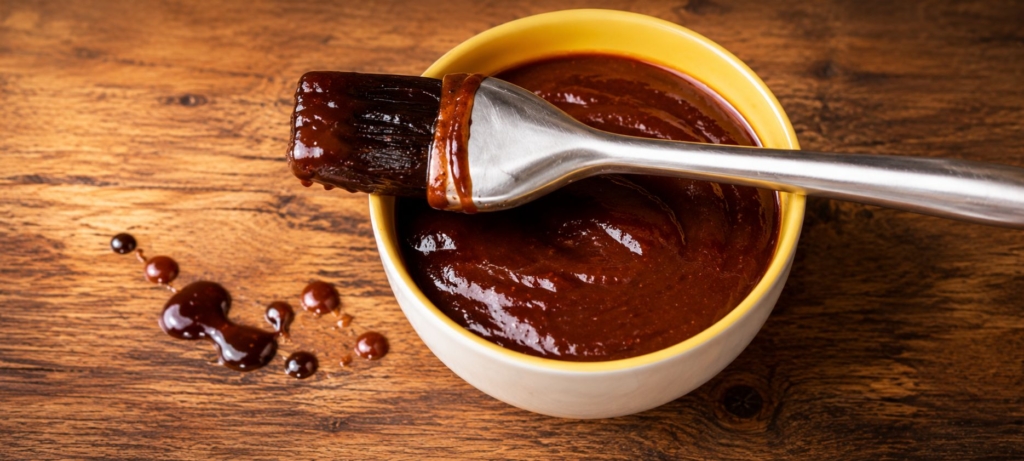
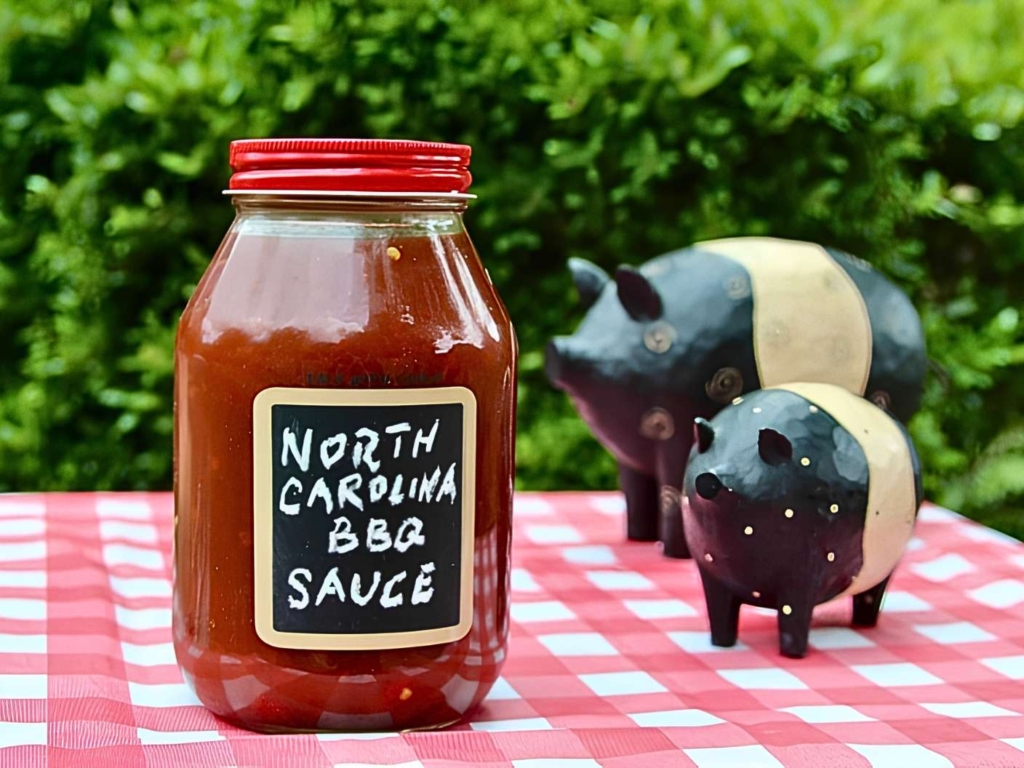
To the cook, barbecue sauce is alchemy. It is downright fun to make. Standing over the pot adding a dash of this, a pinch of that, taking a taste, adjusting, tasting, and adding something else makes one feel like a wizard. To add a personal flair to your next cookout, serve your homemade sauce from a jelly jar and be prepared to take a few bows. If you feel ambitious, serve your guests a choice of several sauces and repeat what you read here.

Below are the 12 classic American barbecue sauces (if we stretch the definition of "sauce" to include Memphis dry rubs). Click the links for my recipes if you want to make your own. If you want to taste examples of these styles but don't want to make them, click here for a list of my favorite commercial barbecue sauces.

The regional American barbecue sauce

Barbecue sauce1) Kansas City Sweet Sauce. By far the most popular style of barbecue sauce, this is the classic rich, sweet-tart, tomato-based sauce often sweetened with molasses or brown sugar and balanced with the tartness of vinegar. Many have liquid smoke to help get that outdoor flavor for folks who cannot cook outdoors. But beware: Most commercial sauces labeled Kansas City sauce are waaaaaay too sweet. If you pick up a bottle in the grocery labeled "Kansas City Style Barbecue Sauce", and sugar or high fructose corn syrup are the first ingredients on the label, put it down.

KC sauces don't penetrate the meat well, and sit on top like frosting. But they caramelize beautifully over a hot fire making a crisp coat. They also burn easily, so coat your meat no sooner than 10 minutes before serving. If this is your favorite sauce, make sure you read my article on saucing strategies.

Now that I've defined the genre, let me point out an important exception to the rule: Arthur Bryant's Original Barbeque Sauce. Arthur Bryant's has been one of the iconic barbecue joints since 1930, perhaps the most holy of them all in the city that means barbecue more than any other, and they have been making a tomato based sauce that is thick, intense, with a solid black pepper and garlic theme. No noticeable sweetness or liquid smoke flavor. Nada.

2) South Carolina Mustard Sauce. Nowhere are there more regional sauce preferences than in the Carolinas where barbecue is not chicken, burgers, hot dogs, or even ribs. Barbecue is pork, often whole hog, cooked low and slow, chopped or pulled into succulent shards, mixed with sauce, and served either in a pile on a plate or on a bun, often crowned with cole slaw.

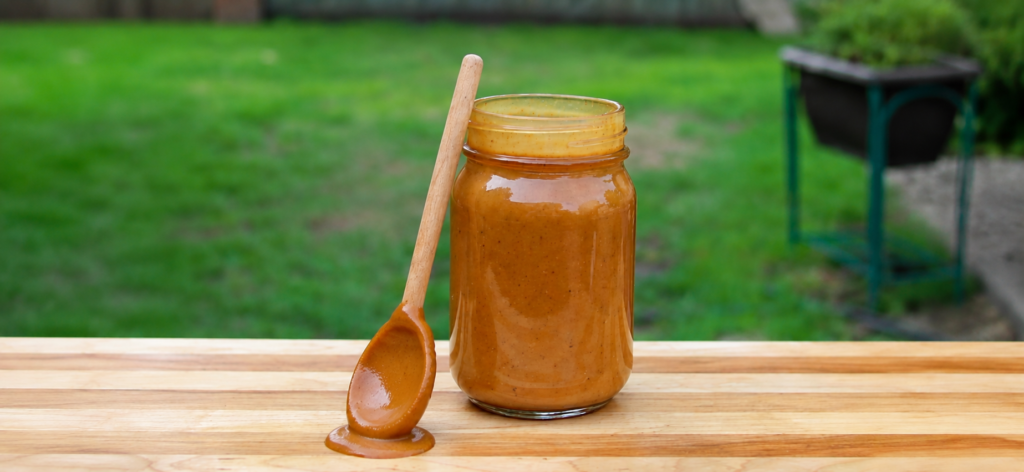
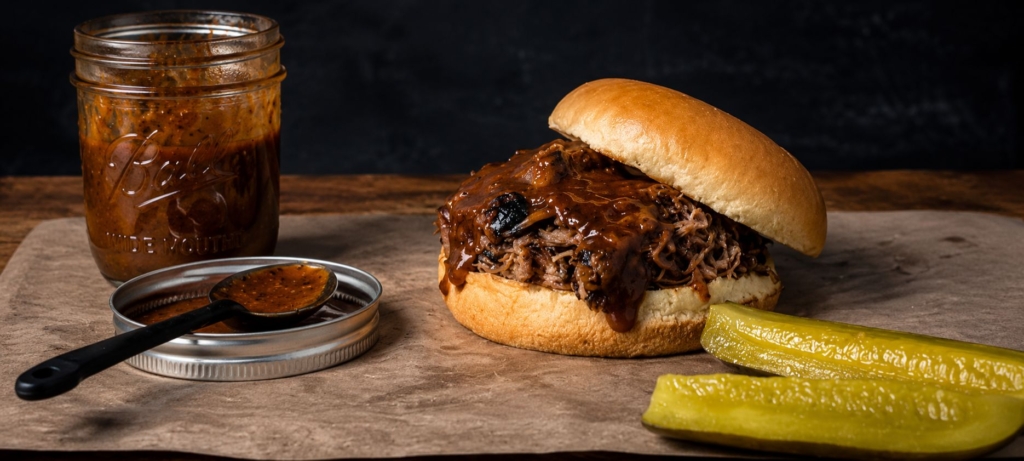
The most distinctive sauce, and by far my fave, is the mustard based sauce found in barbecue joints from Columbia to Charleston. Mustard and pork go together like peanut butter and jelly. Early German immigrants in South Carolina knew this and the names of many of the best barbecue joints that serve mustard sauce have German names, like Shealy, Sweatman, Meyer, and Zeigler. The classic SC mustard sauces are a runny mix of yellow mustard, vinegar, sugar, and spices. Simple but very effective. They are especially good on pulled pork. I offer two recipes, my South Carolina Mustard Sauce is the classic while my personal riff on the theme, Grownup Mustard Sauce, is a more complex, herbal variation on the theme.

3) East Carolina Mop-Sauce. On the coast of North and South Carolina, a.k.a. "East Carolina" or the "Low Country", the philosophy is "Whole hog and keep the mustard for your hot dogs and the ketchup for your fries." The African slaves of the Scottish settlers in the region pioneered American barbecue and their simple sauces were plain a kiss of hot pepper flakes and ground black pepper in vinegar. And so they remain today, where the sauce is used both as a mop or baste on the meat while it is cooking, and then as a finishing sauce at tableside. Thin and piquant, they are designed to penetrate the meat, not just sit on top as thicker ketchup and mustard sauces do. They do a great job of cutting the fat in lipid-laced pork. There is little or no sugar in the mix, so your kids will hate it. Try my East Carolina Kiss & Vinegar just a bit of your chopped pork before your pour it over the whole sandwich, and if don't like it, send the leftovers to me.

4) Lexington Dip (a.k.a. Western Carolina or Piedmont Dip). In Lexington, NC, and in the "Piedmont" hilly areas of the western Carolinas, they prefer to make their barbecue from the pig's shoulder, a rich flavorful clod of meat. In North Carolina, otherwise kindly old men have been moved to fisticuffs over the question of whether barbecue is properly made from whole hog or shoulder. In Lexington and west, they often call their mop-sauce "dip". It is vinegar and pepper based, a lot like the East Carolina mop-sauce, but laced with a hint of tomato sauce or ketchup added, not a lot. The red stuff helps tame the fierceness of the vinegar a bit, and the hint of sweetness counterbalances the acidity. I prefer my Lexington Dip slightly to the East Carolina style.

There is one other popular style in the Carolinas. In western South Carolina on the Georgia border, the locals are partial to a ketchup based sauce similar to Kansas City sauce.

Texas Sauce at Cooper's5) Texas Mop-Sauce. In Texas they barbecue pork and beef ribs, pulled pork, chicken, mutton, goat, and sausage they call "hot guts", but the star of the Lone Star State is beef brisket, an impossibly tough cut from the chest area that is magically converted to buttah-like tenderness with 12-18 hours of low and slow smoke roasting.

There are three important culinary influences on Texas barbecue: 1) European immigrants who brought expertise in smoking meats, especially Germans, Czechs, and Hungarians
2) freed slaves from the Southeast, and
3) Mexicans (Texas was, after all, a part of Mexico, and its cuisine leans heavily on Spanish, Mayan, and Aztec cultures).

Most Texas sauces are fashioned to complement beef brisket first and they are not very sweet. Some traditional Texas pitmasters use their sauce as both a mop to cool and moisten the meat during direct cooking, and as an optional finishing sauce. Most common are thin, tart mops that are flavored with vinegar, chili powder or ancho powder, lots of black pepper, cumin, hot sauce, fresh onion, and only a touch of ketchup. Some of the best sauces have beef drippings, and therefore cannot be bottled. As a result, the stuff served in the traditional old restaurants is vastly different than the stuff sold in bottle. In hallowed joints like Cooper's, in Llano, they often resemble a thin tomato soup with a beef stock base. They penetrate the meat easily rather than sit on top. I prefer them on brisket, not pork. In this picture, the bottled sauce sold at Cooper's is poured into a large pot and is kept warm on the holding pit. Trimmings are tossed in the pot, and when you order, if you ask for sauce, the meat is dipped in the pot. It tastes a LOT different than the bottled sauce served on the tables.

Before the meat is cooked, it is seasoned with a Texas Dry Rub, formulated for brisket with little or no sugar, lots of black pepper, and so they are very different from Memphis and most other rubs. Try my Texas Mop-Sauce for a taste of a real down on the ranch Texas barbecue mop and sauce.

Slab with sauce6) Tennessee Whiskey Sauce. The Jack Daniel's World Championship Invitational Barbecue is considered by many to be the most prestigious competition in the world. As do many competitions, they have a sauce tasting, but theirs has a twist: Jack Daniels whiskey must be in the blend. Well, just as they planned it, whiskey-laced sauces have spread across the nation. There are so many that I think it must be considered a legitimate category of barbecue sauce. My recipe for Tennessee Hollerin' Whiskey Sauce is named after the hollow, a lowland by the creek in which it was invented, this rich sauce has a kick, and when you taste it you'll bend over and holler "Kick me!" The secret: Whiskey concentrate.

7) Louisiana Hot Sauce. In Louisiana anything that can be put on a grill is called barbecue, from fish to crawfish to nutria (kinda like a rat). In Louisiana, hot sauce goes on everything. The first bottled hot sauces came out of Louisiana, home of Tabasco Sauce. Nowadays there are lots of great hot and spicy barbecue sauces on the market. Some just burn from capsaicin (the active ingredient in chili peppers), but the best are blends of several different kinds of heat, among them: Black pepper, white pepper, mustard, wasabi, several different kinds of chilis, plus an underlying flavor of the meat of the chili pepper. The heat is then usually tempered with tomato sauce, and often countered with sweetness. Bayou Bite, my version of a Louisiana barbecue sauce is a wonderful blend of sweet and hot peppers used as a finishing sauce, after the meat is cooked, or as a dipping sauce served with the meat. Even if you don't like hot stuff, you really should try this one.

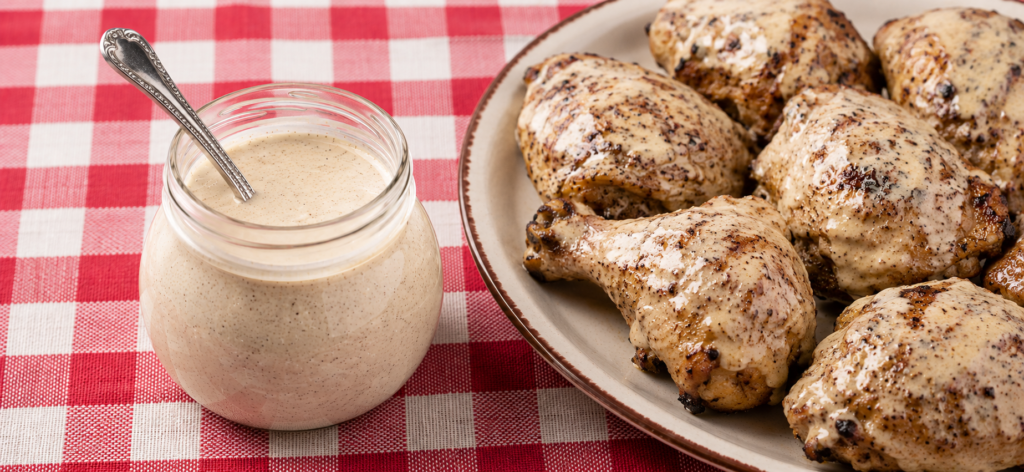
8) Alabama White Sauce. Developed for chicken by Big Bob Gibson's Bar-B-Q in Decatur, Alabama, this mayonnaise and vinegar sauce has become so well known among barbecue fans that it has generated many admirers and a handful of imitators. I don't recommend it for pork, and not everyone likes it on chicken, but it is so popular in Alabama it must be consider a regional classic. Chris Lilly, of Big Bob's says my attempt to reverse engineer his Alabama White Sauce is "scary close".

9) Memphis Dry Rub. Memphis is second only to Kansas City as a town of barbecue renown. Ribs and pulled pork are the stars, although their local special, perhaps best called their local oddity, is barbecue spaghetti. No, they don't put the pasta on the pit, it's just doused with barbecue sauce.

Alas, there is no distinctive indigenous Memphis sauce style. Around the nation a lot of pit stops call their sauce Memphis style, but they're kidding themselves and us. In fact, many Memphis purists prefer their ribs "dry" with only a spice rub. A restaurant's gotta have confidence in its meat to serve it with spices only and no sauce. Many Memphis restaurants have bowed to public demand and now offer a choice: Dry or wet, with wet usually meaning a Kansas City-style tomato-based sauce perhaps a bit thinner, more vinegary.

Memphis dry rubs are usually paprika based, and typical ingredients are salt, garlic, onion, black pepper, chili powder, and oregano. Meathead's Memphis Dust is a very versatile rub perfect for pork, but readers have told me they love it on everything from turkey to salmon. Perhaps the most revered dry ribs are served at Charlie Vergos' Rendezvous (called "The Vous" by some of the locals). There are a lot of recipes on the internet that the owners have palmed off on gullible media. They aren't close. I've reversed engineered Rendezvous-style Memphis Dry Rub, and my recipe is a LOT closer to the real deal.

The other major styles

10) Fruit Sauces. There are a number of wonderful sauces made with fruits, jams, and jellies as sweeteners. They often are your basic tomato based barbecue sauce with jams as sweeteners. Raspberry, cherry, and apple are common. The best work great with ribs. Eve's KC Pig Paint is a rich, sweet, Kansas City-style tomato-based sauce, with a secret ingredient from the Garden of Eden.

11) Sweet Glaze. A lot of great sauces are mostly sweetener, vinegar, and spices. The sweetener is usually brown sugar and/or molasses, and occasionally maple syrup, which, although wonderful, is too expensive for most commercial sauces. They tend to penetrate well, they are shiny so they make the meat glisten, and they are sweet/sour so they complement the pork and cut the fat. In New Mexico there's a legendary pit stop where diners come out glazed over with Danny Gaulden's Legendary Glaze.

12) Novelty Sauces. Modern chefs are nothing if not creative, and just about anything you can imagine is used to make barbecue sauces. These sauces rarely have regional logic, and no matter how good, I can only classify them as novelties. Old timers in Charleston, SC, in the heart of great mustard sauce country, clutch their hearts when it is mentioned, but Tristan restaurant's chocolate based barbecue sauces are a good example. Believe it or not, they're darn tasty.

This page was revised 5/27/2009


Barbecue Accessories


contact us

Important Info About This Website

AmazingRibs.com is all about the Zen of Barbecue, cooking ribs, and all kinds of BBQ recipes and techniques: Barbecue baby back ribs, spare ribs, pulled pork, beef brisket, chicken, smoked turkey, steak, lamb, barbecue sauces, rubs, and great side dishes, with the net's best buying guide to barbecue smokers and cookers. It is written, illustrated, and coded solely by Craig "Meathead" Goldwyn.

Product Reviews and Meathead's Hot Stuff Awards. Meathead's Hot Stuff Awards are highly recommended products that I have tested personally or that have been tested by reliable sources. Awards are based on features, quality, and value. Rest assured that when I recommend a product, it is really because I like it, not because someone has paid me to say so or because the company is an advertiser or sponsor. I purchase most products I review although occasionally suppliers send me samples.

About links on this site. Other than clearly marked ads, links and recommendations on this site are all products, services, and websites I truly admire, and are never paid endorsements. Your suggestions are always welcome. If you would like me to link to your website, click here to read my links policy first.

My Privacy Promise. I promise to never sell or distribute any info about you individually without your express permission, and I promise not to, ahem, pepper you with email or make you eat spam. Click here for more about my privacy promise.

Copyright © 2010 by Craig "Meathead" Goldwyn. Unless otherwise noted, all text, recipes, photos, and code are owned by Meathead and fully protected by US copyright law. This means you need my written permission to publish or distribute anything on this website. But I'm easy. To get reprint rights, click here. Note: Some photos of commercial products such as grills were provided by the manufacturers and under their copyright.


Bookmark and Share


Meathead the Barbecue Lover Cartoon
Get new tips & recipes

Get "Smoke Signals," Meathead's free eletter. No spam. Guaranteed.


Keep this site free!

barbecue hatHelp Meathead pay for this web site. With a $25 donation you'll get a 100% cotton, brushed twill, adjustable, low profile cap with the patch sewn on. Click here for more info and pictures of the hat. I'll even toss in a small bag of BBQ'rs Delight wood smoke pellets.


Save this link to
support this site

http://tinyurl.com/yazmwlq

This link takes you to Amazon.com and tags anything you buy with my affiliate code so I get a small referral fee. It works on anything from grills to diapers and it has zero impact on the price you pay. Low prices, fast delivery, and good refund policies are the best reasons to buy from Amazon.com, but clicking on that link before you shop helps me devote more time and money to you. Thanks!


Meathead's Faves

These recommendations are not ads. They are unsolicited endorsements.

GrillGrates Take Your Grill Into the Infrared Zone

Hot Stuff Barbecue AwardGrillGrates are the best new product I have tested in years and the best thing to happen to beef since salt and pepper.

They sit on top of your current grill's grates. The hard anodized aircraft grade aluminum rail tops are flat and wide and make perfect dark crunchy grill marks. The base superheats yet eliminates hot spots and blocks flareups. This is the same concept behind the expensive new infrared grills.

Juices drip in the valleys between the rails and are vaporized and penetrate the meat enhancing flavor. I throw wood between the rails and they impart a delicate smoke flavor. I have made my best steaks and burgers ever with Grill Grates. This is a really great new product! Click here to read more and for ordering info.

grill grates

The Smokenator

If you have a Weber Kettle, you need the amazing Smokenator and Hovergrill. The Smokenator turns your grill into a first class smoker, and the Hovergrill can add capacity or be used to get steakhouse steaks. Click here to read more and for ordering info.

Weber Barbecue Smokenator

The Weber Smokey Mountain

Weber Smokey Mountaain Barbecue Grill

I am a big fan of the Weber Smokey Mountain Smokers. Click here to read my review.

Click here to order the 18.5" WSMbarbecue or the 22.5" WSMbarbecue from Amazon.


Get free standard shipping when you order $150 or more from Kansas City Steak Company.
La Cense Beef
Free Shipping on all Items