



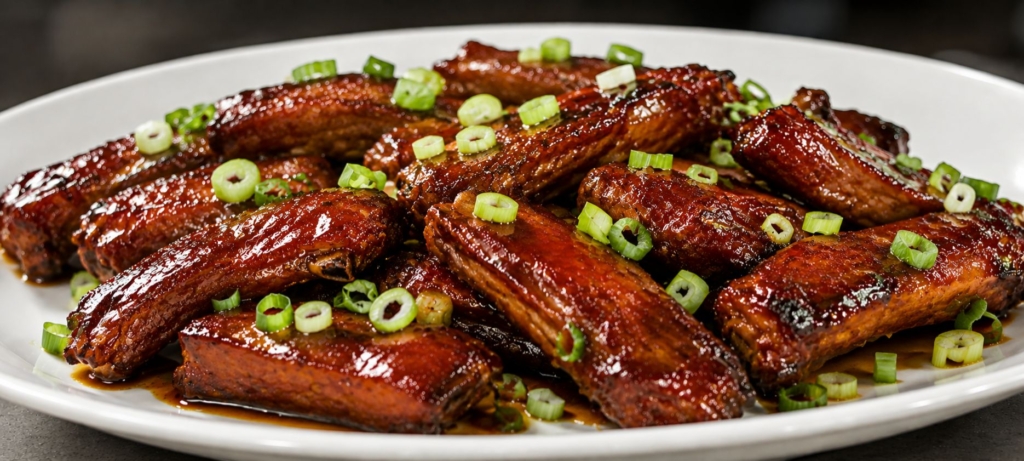
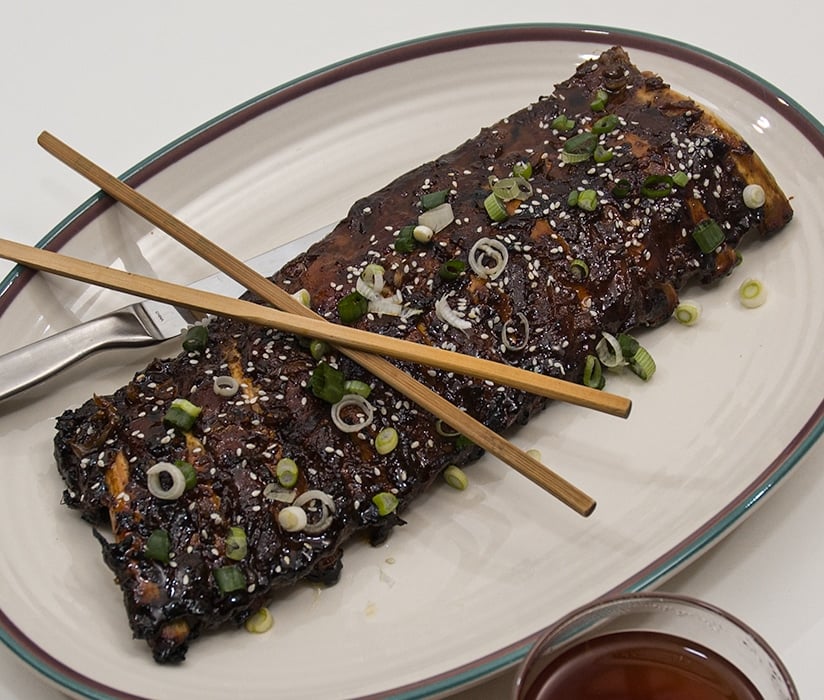
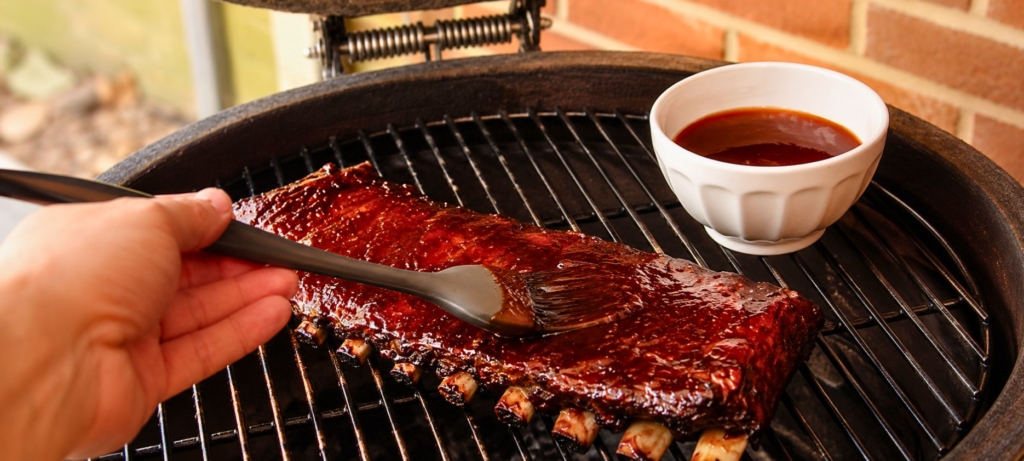
While not traditional BBQ ribs, these Chinese ribs are just as delicious. Here’s how to make char siu ribs at home.
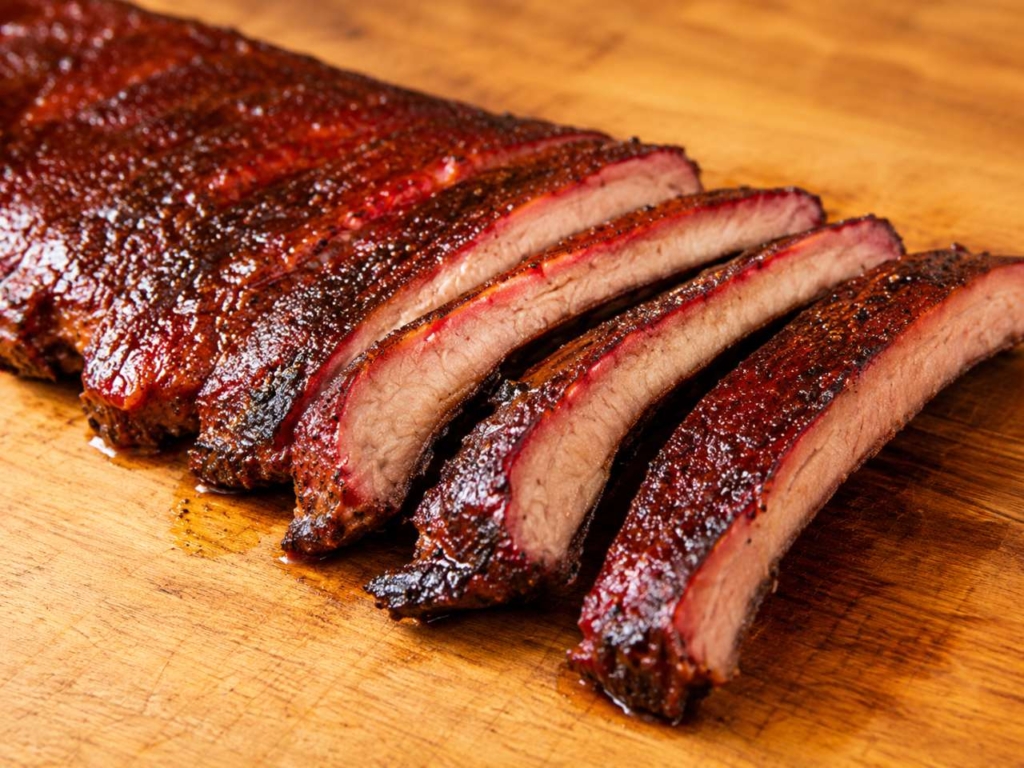
I love the “barbecued” pork and ribs in Chinatown. Unlike traditional Southern American low-and-slow smoke roasted BBQ ribs, char siu ribs have no smoke flavor, even though there is a pink ring beneath the surface of the meat. How do they do it?
The science behind our char siu recipe
Well, it turns out that char siu, even though it sounds like charcoal, is not grilled or smoked. It is roasted in a special oven, usually gas fired. And most of the time it gets its ruddy tone from red food coloring (some chefs use a red bean paste, or beets). But it still tastes great. You can buy char siu sauce in Chinese specialty stores, but it is thick and gooey. It makes a fine glaze, but it doesn’t taste like the ribs you get at Chinese restaurants. That’s because you need to marinate the meat first.
I’ve worked on this char siu ribs recipe for a while and I think I’ve really nailed the technique for making Chinese ribs at home in the oven or on the grill. Here’s how to make this dizzyingly delicious favorite. This char siu ribs marinade is especially good on pork, but I’ve used it on chicken, turkey, and duck with great success.
Recipe Overview: Char Siu Ribs Success Formula
- Buy: a slab of ribs, any cut. I like baby back ribs for this.
- Remove: the membrane from the back of the ribs and cut the rack into individual ribs.
- Mix the marinade in a large bowl and marinade the meat in a metal bowl or zipper bag.
- Heat: Your oven or outdoor cooker set up for 2-zone cooking at 225°F in the indirect zone. Skip using wood if you’re grilling.
- Cook: Grill, keeping the meat away from the flame, or put a pan of water with rack on top of it under the meat to cook in the oven. Roast or grill for 3 hours.
Summarize & Save this Content on:
Hungry for more ribs recipes, tips, and techniques? Click here to download our ebook “Amazing Ribs Made Easy” $3.99 on Amazon (free Kindle app runs on all computers and devices). Or, get this book and others FREE as a member of the AmazingRibs.com Pitmaster Club. Click here to join.
Ingredients and substitutions for Chinatown char siu
- Ribs can mean many things. Many Chinese restaurants use spareribs that are chopped into 3-4″ (8-10 cm) riblets with a cleaver. If you want, your butcher can make you riblets with a band saw. If not, you can do them whole. I like baby backs for this recipe because they are meatier on top of the bone.
- Hoisin sauce is an essentail ingredient in Chinese cooking and it’s sometimes called Chinese ketchup or Chinese barbecue sauce, though it doesn’t really resemble either. It’s a condiment made from soybeans, vinegar, rice, salt, flour, garlic, and chili peppers.
- Water is pretty self explanatory but it will help the ingredients come together.
- Brandy (or dark rum or bourbon) will work. It’s not much, and most of it cooks out, but if you don’t want to use it substitute apple juice or water.
- Honey adds sweetness here, much like maple syrup does in my maple glazed BBQ ribs recipe.
- Soy sauce is made from fermented soybeans, wheat, salt, and water. If you can’t have soy sauce, use tamari instead as it has no gluten.
- Toasted sesame oil is darker than regular sesame oil and has richer, nuttier taste. Please use it. It’s essential.
- Hot sauce like Tabasco provides more heat than flavor, so if you have an Asian-style chili sauce you can use it, but any old hot sauce will work fine in this marinade, or try my “controlled burn” hot sauce. The recipe produces mild heat. Add more if you love pain.
- Ground onion or powdered onion can work here and they add an earthy pungent taste.
- Ground ginger or powdered ginger adds a sweetness and a bit of heat. Substitute fresh if you’d prefer.
- Ground garlic or powdered garlic brings a combination of sweetness and pungency. The science of garlic in all its forms is interesting! You can use fresh garlic in this recipe instead of powdered if you want.
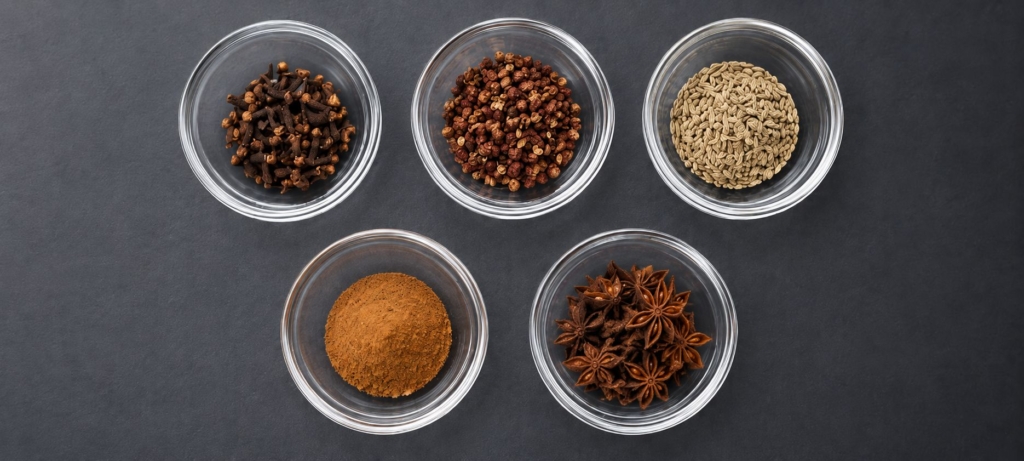
- Five spice powder is a combination of cinnamon, fennel, cloves, star anise and Szechuan peppercorns. You can make your own, using my five spice powder recipe, or buy one in Asian markets, the spice aisle, or at places like Penzeys online.
- Red food coloring is commonly used in this recipe to give it that vibrant color, but some people don’t like it. Readers tell me you can use beet root powder, fermented red bean curd, achiote and its seeds, annato, or cochineal (a.k.a. carmine). If you want to leave it out, it’ll still be great, but won’t have the traditional color.
Char siu ribs, step by step
- Remove the membrane from the rack of ribs and cut the rack into individual ribs.
- Mix the marinade together in a metal bowl (a plastic bowl might stain if you use food coloring).
- Marinate the meat in a metal bowl or in a zipper bag for 1 to 2 hours. Discard the used marinade.
- Heat your outdoor cooker or oven to 225°F (107.2°C) in the indirect zone.
- If you’re grilling, set up a 2-zone system and make sure the meat isn’t directly over the flame.
- If you’re using the oven indoors, put a pan of water with a rack on top of it under the meat to catch the drippings and prevent them from burning.
- Roast the ribs for about 3 hours (if you’re doing loin strips, it’ll take about half that time).
Char siu ribs FAQs
Char siu gets its flavor from a marinade that combines soy sauce, hoisin sauce, Chinese five-spice powder, Shaoxing wine, and red fermented bean curd.
This traditional Cantonese method of barbecuing skewered meats comes from the Guangdong province in southern China.
This translates to “fork roasted” in Cantonese.
If you like this char siu recipe, you’ll love . . .
- Grilled Roasted Peking Duck Recipe
- Hoisinful Nine Dragon Chinese Ribs Recipe
- Korean BBQ Short Ribs (a.k.a. Kalbi or Galbi) Made Even Tastier in Your Backyard
- Chinese Five-Spice Ribs Recipe
- Korean Grilled Pork Belly With Spicy-Sweet Glaze
Hungry for more ribs recipes, tips, and techniques? Download our ebook “Amazing Ribs Made Easy” $3.99 on Amazon. Or, get this book and others FREE as a member of the AmazingRibs.com Pitmaster Club.
Our Chinese BBQ pork ribs recipe

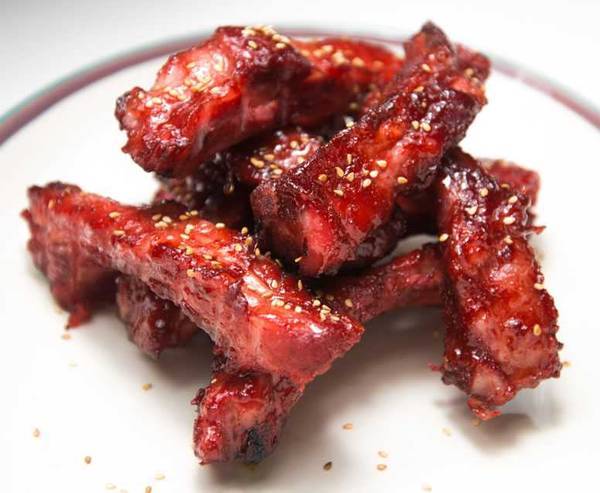
Chinese BBQ Pork (Char Siu) Ribs Recipe
Ingredients
Method
- Prep. Remove the membrane from the rack of ribs. Cut the rack in to individual ribs.
- Mix the marinade thoroughly in a bowl. Don’t skip the booze. It helps penetrate, and even if you’re a teetotaler, don’t worry, there isn’t any measurable alcohol in the meat. Yes, I know alcohol can dry meat out, but I just think it works well in this case. If you must skip it, substitute apple juice or water. You can substitute fresh ginger and garlic for powdered ginger and garlic if you wish.
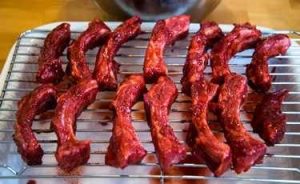
- Marinate. Marinate the meat for 1 to 2 hours in a metal bowl or zipper bags. Discard the used marinade. It is contaminated with meat juice. Don't marinate in a plastic bowl if you use the food coloring. It might stain.
- Fire up. As much as we are fans of outdoor cooking, this meat also tastes great cooked in an indoor oven. Either way, heat your cooker or oven to about 225°F (107.2°C) in the indirect zone.
- Cook. If you are grilling, set up in a 2-zone or Indirect system. Make sure the meat is not directly over the flame on a grill. Indoors, put a pan of water with a rack on top of it under the meat. This is important or drippings will burn in the pan. Roast ribs for about 3 hours, loin strips for about 1 1/2 hours. If you grill, skip the smoking wood. I think it is cleaner and brighter sans lumber.
Notes
Approximate Nutrition
Tried this recipe?
Let us know how it was!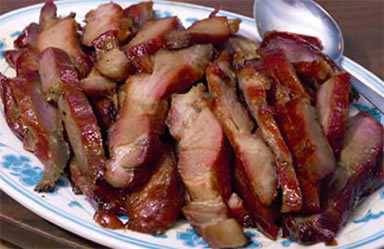
A Dissertation Upon Roast Pig
Everyone has a theory of where barbecue originated. Well here’s an explanation that I find irresistible. It was written by Charles Lamb (1775-1834), an English writer whose essays often ran to the fanciful and humorous. His version of the discovery of roast pork was first published in 1822. Some believe it is the source of the common idiom “burn the house to roast the pig,” meaning, essentially, overkill. It is probably also the source of the name cracklings for cooked pork skin. Plus, it explains why so many barbecue cooks are called Bubba. Clearly, Mr. Lamb was a pork lover. Click here to read his tale.
Barbecue pork at Sun Wah
Sun Wah Bar-B-Q Restaurant (5039 N. Broadway St., Chicago, IL 60640, phone 773-769-1254) has been an Uptown Chicago destination since 1987. Owner Eric Cheng learned Chinese barbecue, in Guangdong Province in Southern China, home of Cantonese cuisine. He fled Mao Zedong’s Cultural Revolution in China in 1972 by swimming eight hours to Hong Kong where he apprenticed and became a Barbecue Master. He emigrated to New York in 1976 and Chicago in 1986. Here’s how he makes barbecue pork (the photos were taken at his previous location):
Strips of pork loin marinate for 20-30 minutes in red bean curd paste, soy bean paste, sugar, salt, monosodium glutamate, oyster sauce, ginger, and dried shallots.
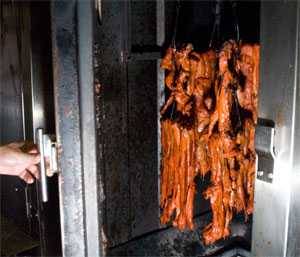
The marinated pork loin strips are skewered and hung in the oven to roast for about 50 minutes. Some ovens use charcoal, but most use gas. The burners go around the bottom of this well-insulated cabinet. There is no smoke.
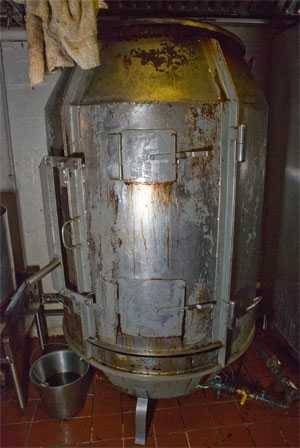
When done you dunk them in a molasses based sauce similar to Char Siu sauce. You can buy barbecue pork loin sections in slabs or sliced.

Before you can post a comment or question you must sign into our commenting partner, Disqus. This helps make sure everyone hanging around the grill is civil. We do not tolerate nastiness, racism, porn, inappropriate language, or attacks on others. All comments are the property of AmazingRibs.com and we reserve the right to quote them, edit them, delete them, and block people from making future comments.
Please leave comments and questions on the same page that is devoted to that subject so others can see questions and our answers when they are reading about the subject. You must enable JavaScript to use the comments section, and you must accept cookies to post comments. Note: the software that runs Disqus is different from the Pitmaster Club, so members need to sign into the Pitmaster Club separately.