

Shopping for BBQ Gear? Start Here!

2,000+ Free Pages

2,000+ Free Pages

YOU ARE HERE >> AmazingRibs » Cooking Science » The Science of Soy Sauce

Share On:

The Science of Soy Sauce

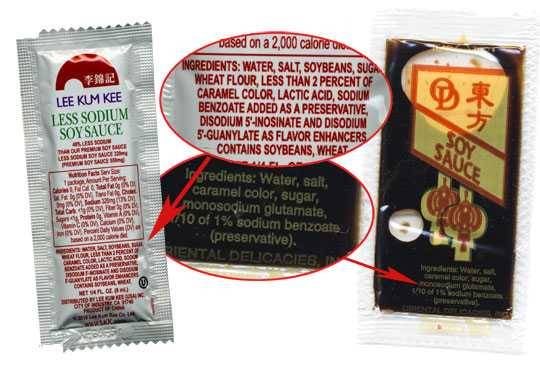
ingredient labels on soy sauce packets

Real soy sauce (a.k.a. soya sauce, shoyu, tamari) is made by fermenting soy beans and other grains, and has salt and water added. The process has been around for 2500 years. It is salty, complex, and high in natural glutamates, amino acids that amp up the flavor of food called umami. Think of it as liquid salt with a flavor amplifier built in.

The soybeans are soaked, sometimes boiled, then mixed with the other grains, typically wheat, and fermented by yeasts and other microbes in a culture called koji. It is then pressed to separate the now dark brown liquid from the spent solids, then pasteurized, and aged and bottled.

The result is called light soy sauce and you can see this term on some labels. If it is aged longer it can darken and intensify in flavor, and is sometimes labeled as dark soy sauce. Some dark soys have caramel coloring or molasses added. Without getting too complicated, it will suffice to say that dark soy sauce is more concentrated, richer, and more intense. Like dark coffee vs. light coffee. Exact production processes vary from country to country and brand to brand. In Japan, soy sauce is called tamari sauce, and it tends to be a bit less salty and, I think, better balanced. Some tamari sauces are wheat free. In recent years, in a nod to those salt restricted diets, several brands have introduced “low sodium” soy sauces. Keep in mind, “low sodium” is a relative term. They are still pretty salty. I think the Kikkoman Low Sodium is pretty good stuff, in fact I prefer it to the regular, and not for health reasons.

I have been known to buy dark soy, and if the recipe calls for light, I dilute it with about 10% water. I’m too lazy to stock both. Most commercial brands are closer to dark soy sauce than light.

When a recipe calls for soy sauce, before you grab those leftover packets from Chinese carryout, grab a magnifying glass. It may not be real soy sauce. Take a look at the two packets shown here. Soybeans are third on the list of the Lee Kum Kee Low Sodium Soy Sauce. This is typical of real soy sauce. Notice that there are no soybeans in the generic “Soy Sauce” on the right! Kikkoman brand soy sauce, now made in Wisconsin, is ubiquitous in Chinese restaurants in the US and is the brand I use in my recipes. The ingredients list of their “Naturally Brewed Soy Sauce” says “Water, wheat, soybeans, salt, sodium benzoate: Less than 1/10 of 1% as a preservative.” That’s soy sauce!

There are small artisan producers whose bottles are sought after like rare wines. If you can find a Chinese grocery, you can buy imported soy sauce by the quart or gallon. Cheap.

Hawaiian huli-huli chicken is a hugely popular type of grilled chicken with a sweet teriyaki style barbecue sauce. Here's my
Add a flavorful Asian twist to pork, chicken, steak, or shrimp with this recipe for an all-purpose Asian style marinade
Marinades work on some foods but not on others. A good marinade contains certain ingredients but not others. Here's the
Perfectly flavored with five spice powder then smoked until tender, these Asian inspired pork ribs are a sure fire hit
This item is for members only
Korean Galbi (Kalbi) is delicious beef rib meat sliced thin, marinated, and grilled right at the table at most Korean
Easy to make, this recipe for umami-rich shio koji butter is sure to become a favorite alternate to regular butter
Comments & Questions
Ask Us Anything
Sign in BBQ joint

Before you can post a comment or question you must sign into our commenting partner, Disqus. This helps make sure everyone hanging around the grill is civil. We do not tolerate nastiness, racism, porn, inappropriate language, or attacks on others. All comments are the property of AmazingRibs.com and we reserve the right to quote them, edit them, delete them, and block people from making future comments.

Please leave comments and questions on the same page that is devoted to that subject so others can see questions and our answers when they are reading about the subject. You must enable JavaScript to use the comments section, and you must accept cookies to post comments. Note: the software that runs Disqus is different from the Pitmaster Club, so members need to sign into the Pitmaster Club separately.

Click to comment or ask a question...
Published On: December 2, 2014
Last Modified On: December 2, 2014

On This Page

New Recipes, Reviews, and Science Sent To Your Inbox!

Subscribe to receive our FREE weekly newsletter, Smoke Signals, and never miss a new recipe!

Up Your BBQ IQ By Joining The Pitmaster Club

Get a free trial of the AmazingRibs.com Pitmaster Club and experience everything that the world’s largest membership-based BBQ and grilling community has to offer. No credit card required!

Products We Love
The Slow ‘N Sear, The Single Best Accessory For The Weber Kettle Ever
For about $90 you can easily convert a standard Weber Kettle into a much better grill as well as a smoker capable of making restaurant quality smoked ribs, pulled pork, beef brisket, turkey, salmon, or whatever you want to smoke.
Meater Pro XL Wireless Meat Thermometer Review And Rating
The Meater Pro XL is a wireless meat thermometer that features four probes, each of which has five separate temperature sensors. How does it perform? Check out our full review.
Kamado Joe Classic II 18″ Review And Rating
Read our review of Kamado Joe's Classic II 18”. It's is a well-crafted ceramic cooker that presents strong competition to other 18" models in the premium priced market with a number of remarkable upgrades that exemplify the elegance and innovation that are hallmarks of Kamado Joe. We give it our top Best Value AmazingRibs.com Platinum Medal.
Meater Pro XL1
Meater Pro XL1
The Meater Pro XL is a wireless meat thermometer that features four probes, each of which has five separate temperature sensors.
Camp Chef Woodwind Pro Review And Rating
Camp Chef Pellet Grills have a knack for coming up with simple solutions to common pellet grill complaints and here they go again. To increase smoke flavor on their Woodwind Pro, Camp Chef adds a Smoke Box that slides in from the front over the firepot and burns wood chunks over the wood pellet fire. Does it work? Read our review to find out.
Slow N Sear Deluxe
Slow N Sear Deluxe
The Slow ‘N Sear is arguably the single best accessory for the Weber kettle, turning it into a great smoker and searing machine. 
Combustion Predictive Thermometer
The Combustion Predictive thermometer is one of our favorite wireless probes, using a unique sensor array to measure and predict cooking times.
Jump To Top