



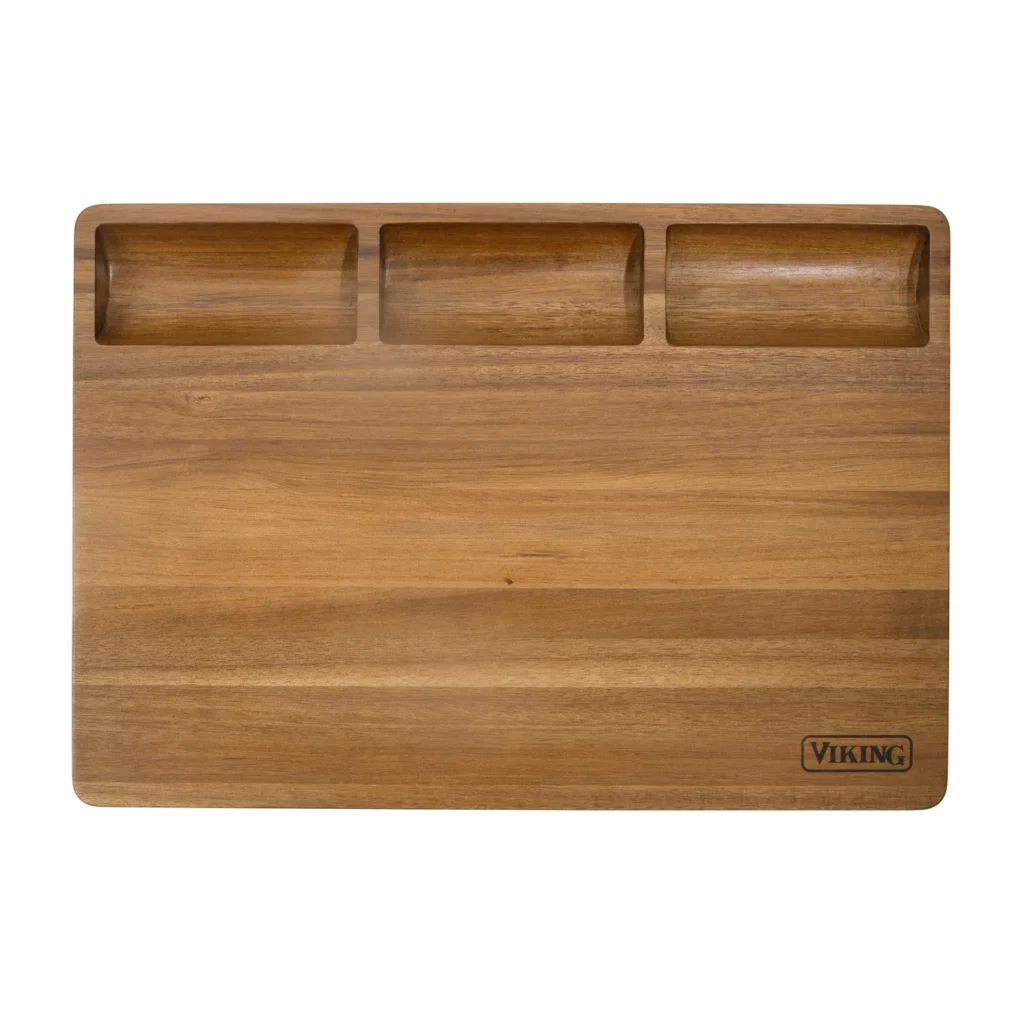
I appreciate kitchen tools that earn their storage space, and the Viking Reversible Acacia Cutting Board does that by handling several jobs.
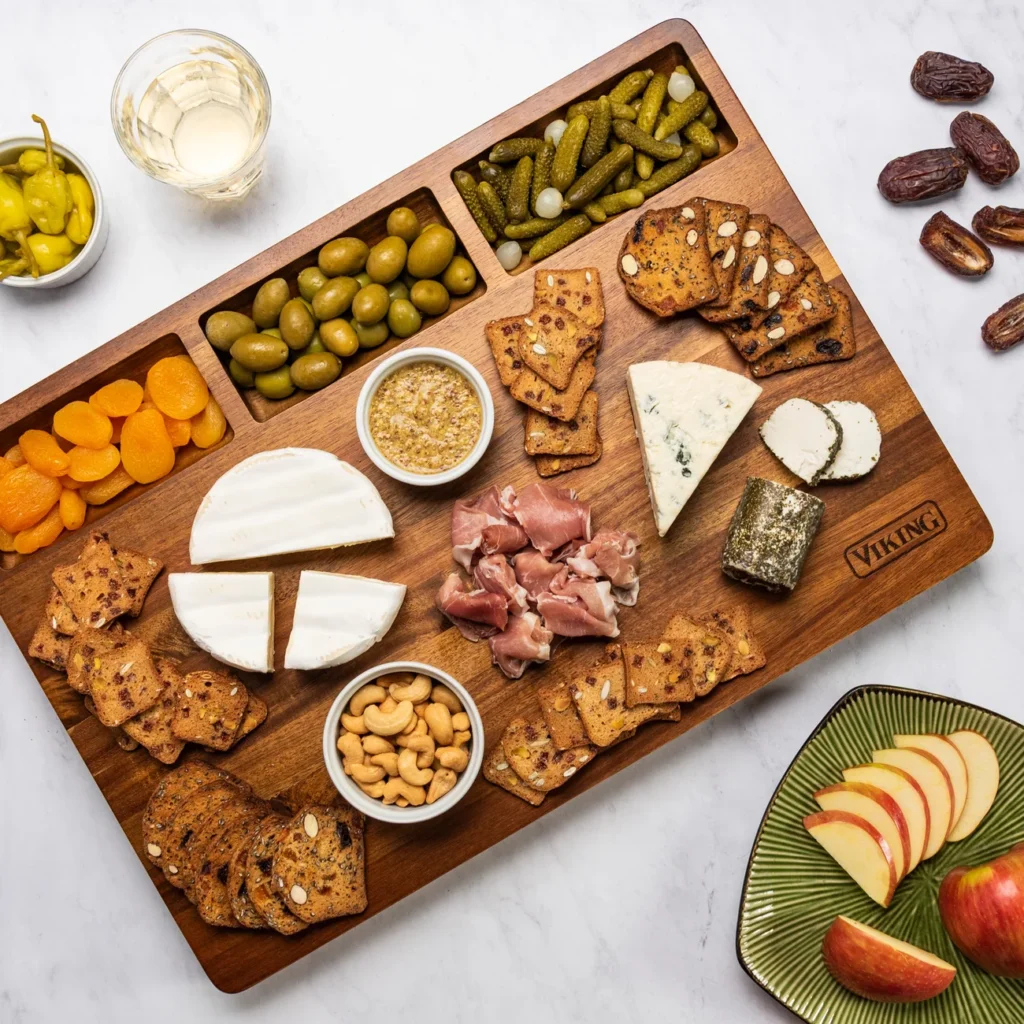
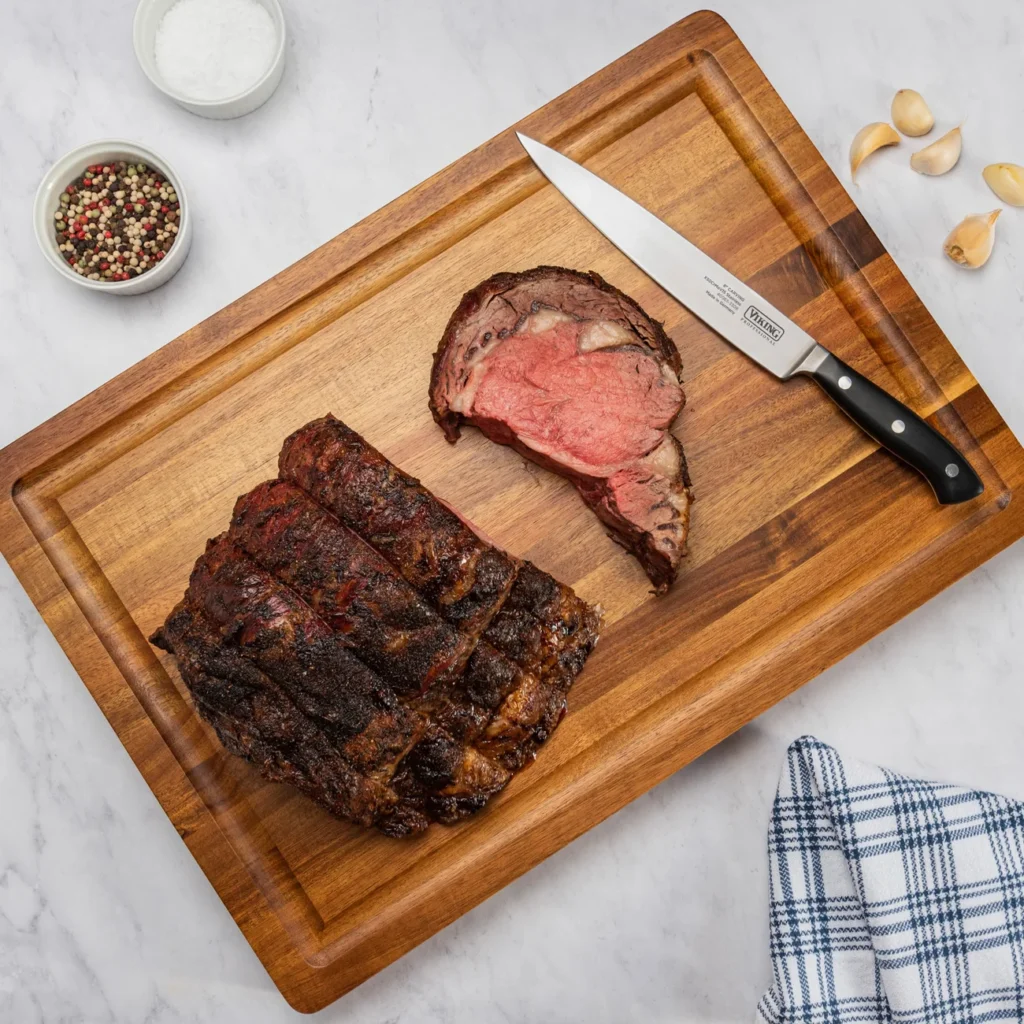
One side of this 20-inch butcher block cutting board helps organize ingredients during prep with its three 1-cup ingredient wells. Flip it over, and the board features a continuous shallow channel running around the entire perimeter to catch juices when carving meat. The dual purpose means fewer specialized boards competing for room in your cabinet, especially when it comes to larger wood cutting boards like this one.
Viking Reversible Acacia Cutting Board construction and size
The Viking Reversible Acacia Cutting Board measures 20 inches long, 14 inches wide, and 1 1/2 inches thick, providing a generous surface for chopping vegetables, slicing steaks, and carving a roast. Weighing just over 9 pounds, this is a fairly substantial wooden board, so its size and heft are worth considering if you’ll be moving it frequently between the counter, sink, and table, plus finding ample storage space for it.
Acacia’s varied wood grain gives the board plenty of visual appeal. It looks equally at home holding chopped ingredients beside the stove as it does presenting cheese and charcuterie to guests.
Prep on one side and carve on the other
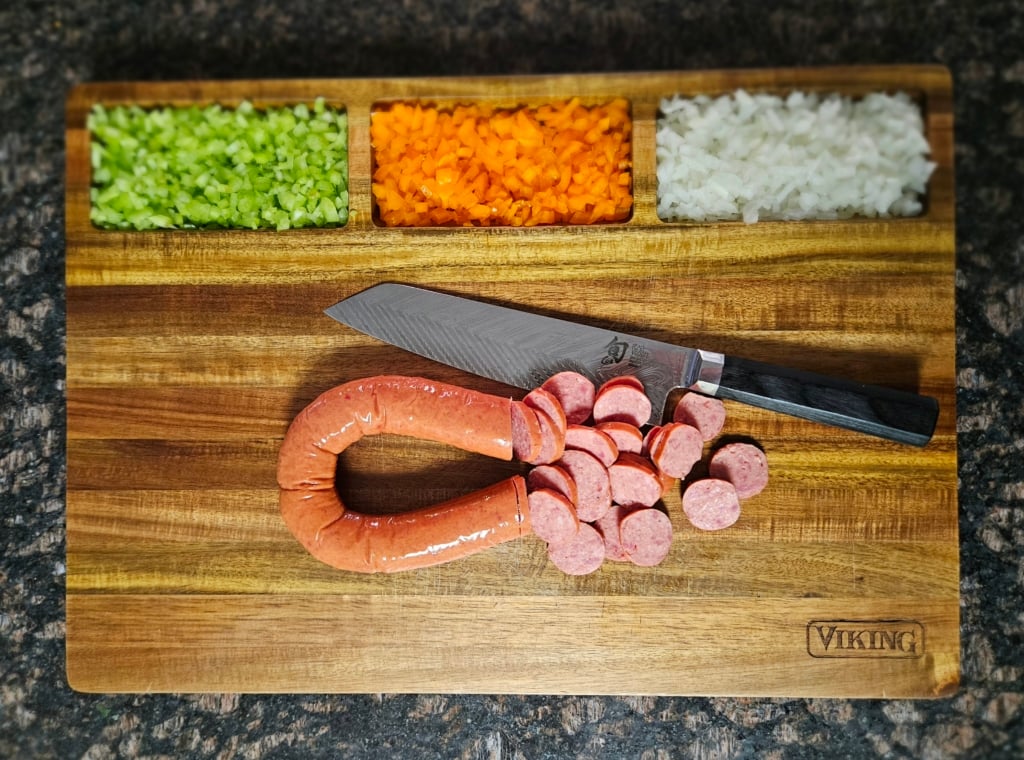
The standout feature of the Viking Reversible Acacia Cutting Board is a set of three built-in compartments on the “prep” side. That’s an unusual and useful addition to a wooden cutting board.
When chopping ingredients before cooking (called mise en place), you can tuck each into its own compartment to keep the main cutting surface clear. Think onions, peppers, and celery ready for the skillet, without three extra bowls crowding the counter.
Since each well holds exactly one cup, they are also handy for estimating how much of an ingredient you’ve chopped. It might not be perfectly precise, but you should be able to get a pretty close read on whether you have a full, half, third, or quarter of a cup by volume.
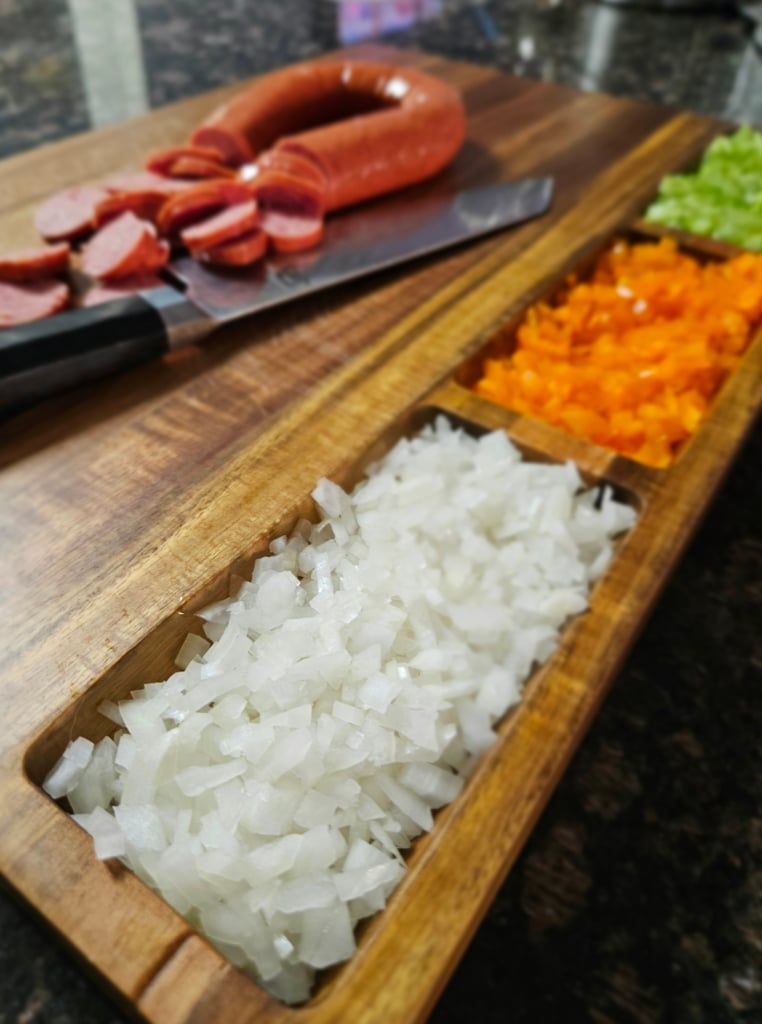
Those compartments are just as handy when entertaining. Fill them with olives, nuts, or dried fruit, then arrange cheeses, cured meats, and crackers across the remaining surface. The wells help keep the smaller items contained while making the board feel like a thoughtfully designed serving platter.
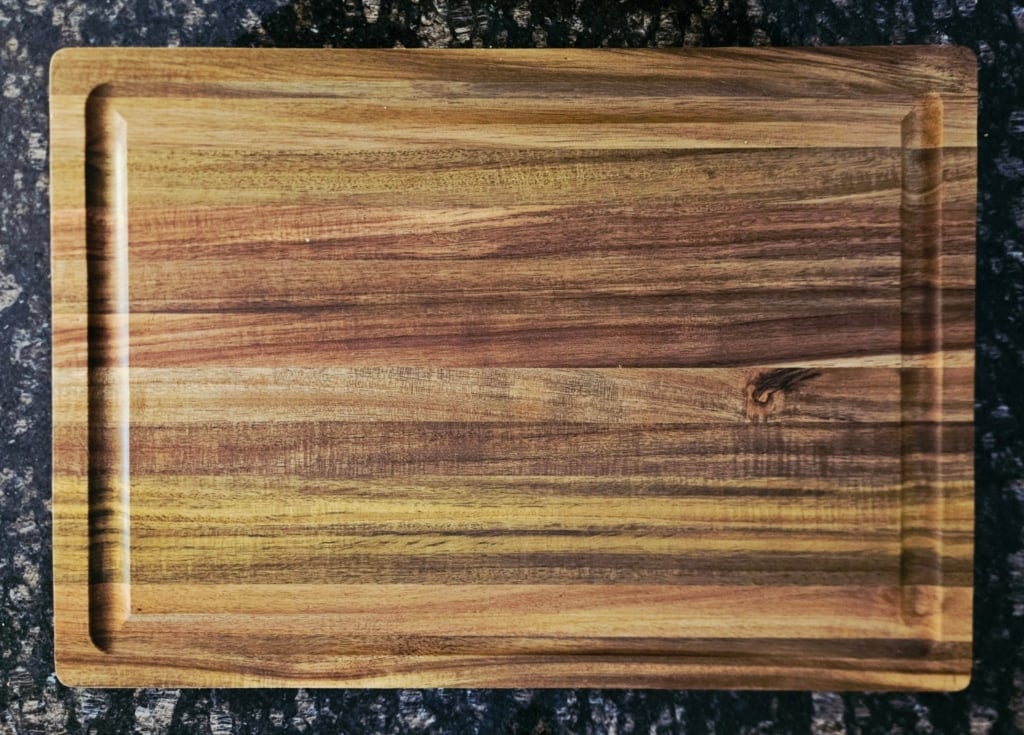
Flip the board over, and you have a carving surface bordered by a juice groove. That channel helps catch liquid from sliced steaks, chicken, turkey, or a roast before it runs onto the counter. Prep on one side, carve on the other, and bring it to the table when presentation matters.
Of course, reversing a board doesn’t replace washing it. Clean both sides thoroughly whenever raw meat has contacted the board and before switching to cooked or ready-to-eat food.
Why the Viking Reversible Cutting Board uses acacia wood
Acacia is a durable hardwood with natural moisture resistance, making it a practical choice for a cutting board when properly finished and maintained with food-grade mineral oil. Water-resistant doesn’t mean waterproof, though. Like any wooden board, it needs protection from soaking and prolonged dampness, as this can easily lead to the board splitting.
The hardness of any cutting board comes with a trade-off: harder boards can be less forgiving of knife edges than softer cutting-board woods. That durability may help the surface resist wear, but your knives may need more frequent edge maintenance.
That said, keeping knives sharp is worthwhile regardless of the board you use. A sharp blade cuts more cleanly and requires less pressure, giving you better control than forcing a dull knife through an ingredient.
Edge grain versus end grain
One detail I hadn’t given much thought to until our site editor, Dave Joachim, pointed it out is the difference between edge-grain and end-grain construction.
This Viking Reversible Acacia Cutting Board is an edge-grain board, as revealed by the long, uninterrupted stripes of wood seen on the surface. That means the wood fibers run along the cutting surface, with their ends visible at the board’s edges. I find that continuous grain particularly attractive for serving charcuterie or carving a roast at the table.
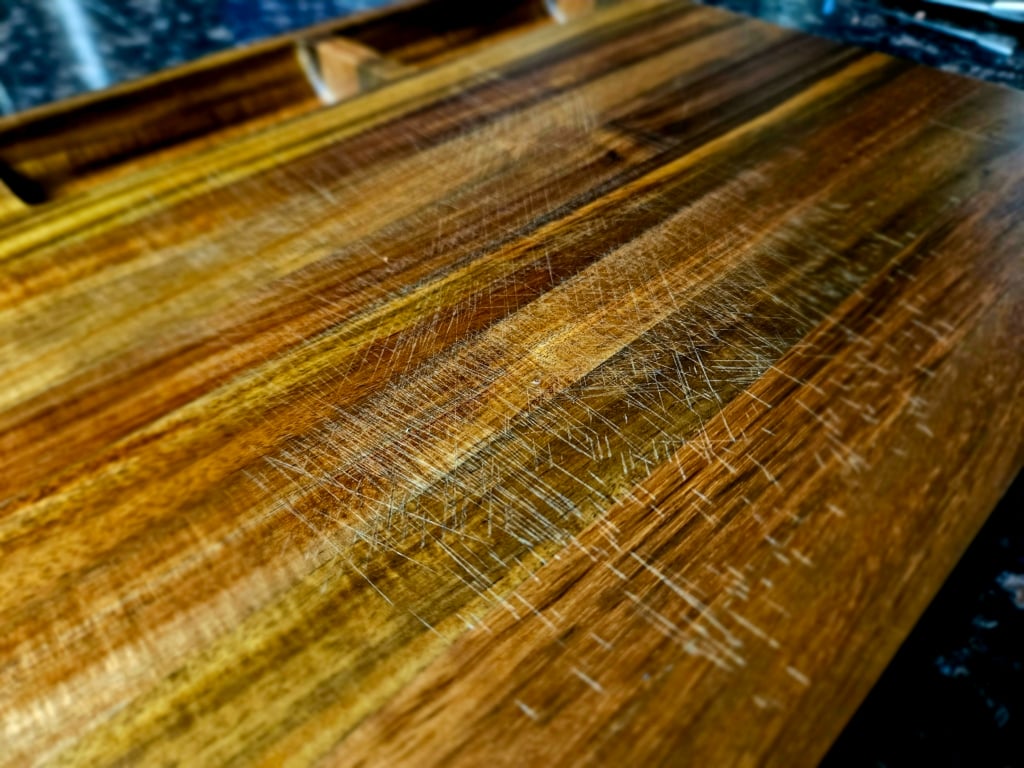
The trade-off, however, is how the surface meets your knife and how that factors into the long-term aesthetics (and possible food safety) of an edge-grain cutting board. As Dave explains in his Bevel & Bond End-Grain Maple Cutting Board review, cutting across the wood fibers can leave deeper gouges that make thorough cleaning more difficult. Here is a close-up look at the surface of the Viking Reversible Acacia Cutting Board after several sessions of slicing and dicing, showing just how much wear an edge-grain cutting board can show in a short amount of time. It doesn’t diminish the effectiveness or longevity of the cutting board, though; it is merely aesthetic.
Conversely, on an end-grain board, the fibers stand vertically, presenting their ends to the blade. The knife can settle between those fibers rather than cutting across them, generally making the surface more forgiving of knife edges and better at disguising cut marks.
For heavy daily chopping, end-grain cutting boards have advantages. For a board that balances preparation, carving, and presentation, the Viking’s attractive edge grain and useful features make a compelling combination.
Cleaning and care
Hand wash the board with hot, soapy water, then towel-dry it promptly and allow it to finish drying with air circulating around it. Pay attention to the compartments and juice groove, where food and moisture can collect.
As previously mentioned, you should never put this or any wood cutting board in the dishwasher, submerge it, or leave it sitting in water as those can lead to warping or splitting. An occasional application of food-grade mineral oil will also help keep the wood from drying out. Avoid placing hot cookware directly on the cutting board, as it can easily damage the surface.
Viking Reversible Acacia Cutting Board conclusion
The Viking Reversible Acacia Cutting Board offers more than good looks. On the prep side, the three 1-cup compartments make ingredient prep easier and give small charcuterie accompaniments a place of their own. On the carving side, the juice groove adds practical value when carving meat.
While the MSRP of $129.99 is on the higher side for a cutting board, it’s an appealing option for someone who wants one handsome board for several kitchen and entertaining tasks. Its substantial construction should provide years of service with proper care, although knife marks and routine maintenance come with owning a wooden board. We award it our Gold Medal.
Warranty
Viking’s current product page advertises a limited lifetime warranty.







Before you can post a comment or question you must sign into our commenting partner, Disqus. This helps make sure everyone hanging around the grill is civil. We do not tolerate nastiness, racism, porn, inappropriate language, or attacks on others. All comments are the property of AmazingRibs.com and we reserve the right to quote them, edit them, delete them, and block people from making future comments.
Please leave comments and questions on the same page that is devoted to that subject so others can see questions and our answers when they are reading about the subject. You must enable JavaScript to use the comments section, and you must accept cookies to post comments. Note: the software that runs Disqus is different from the Pitmaster Club, so members need to sign into the Pitmaster Club separately.