



If you are a fan of The Bear, a hit FX on Hulu series featuring Jeremy Allen White as a classically trained chef who takes over his family restaurant, The Original Beef of Chicagoland, then this Italian beef sandwich recipe is for you.
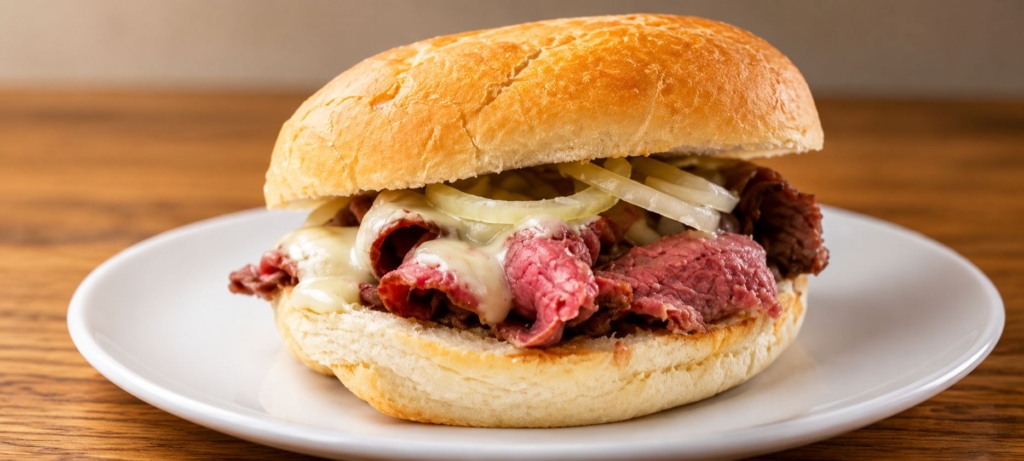
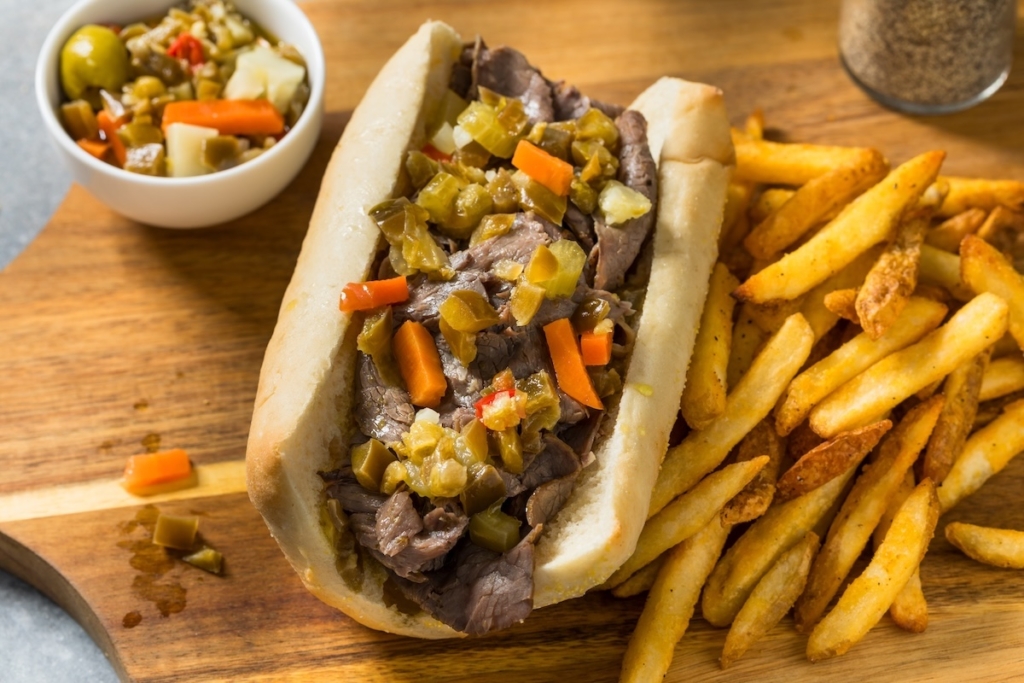
Created on the Sout Side of Chicago (they say Sout on the South Side), in the Italian enclaves around the now defunct Stockyards, the classic Chicago Italian Beef Sandwich (pronounced sangwitch) is a unique, drippy, messy variation on the French Dip (which is not a sex act). Italian beef is available in hundreds of joints around the city and has rarely been found beyond its environs, until now, thanks to our authentic Italian beef sandwich recipe.
If you’re looking for a quick Chicago Italian beef sandwich recipe, then this is not the one for you. The true magic of the authentic version comes from a roast that was cooked low and slow until it nearly melts in your mouth! Want to know the backstory? Check out the fascinating history of the Chicago Italian beef sandwich, and my take on the best sandwich shops in Chicago.
The science behind our Italian beef sandwich recipe
The Chicago Italian beef sandwich recipe is as much science as it is lore. It begins by slowly roasting lean beef on a rack above a pan filled with seasoned beef-based stock. Some folks call it gravy, but in most Chicago Italian households gravy is a term reserved for tomato sauces.
Others call it au jus or “juice” for short, although it is often made with bouillon, and that is not technically au jus, which normally refers to natural cooking juices.
Let’s just call it juice, OK?
My Chicago Italian beef sandwich recipe is triangulated from several sources. Everyone has their own secret. Many, like Al’s #1 (my fave), put the meat in the juice and submerged it halfway while it roasts rather than hovering above it. My brother-in-law, who once owned an Italian deli and makes the best Italian beef I know, cuts slits in the meat and studs it with slivers of fresh garlic and onion slices. He also uses a mysterious ingredient named Fuggedaboudit. Whenever I ask him for the secret to his Italian beef sandwich recipe, he says, “fuggedaboudit.”
Recipe Overview: Italian Beef Sandwich Success Formula
- Buy: a 3- to 5-pound boneless beef sirlion or round roast.
- Stab: the surface with a knife and slide in slivers of fresh garlic.
- Rub: with a combo of black pepper, garlic powder, onion powder, oregano, basil, and crushed red pepper.
- Preheat: at 225°F in the oven or in a smoker over the indirect side.
- Dissolve: the bouillon in a baking pan filled with boiling water.
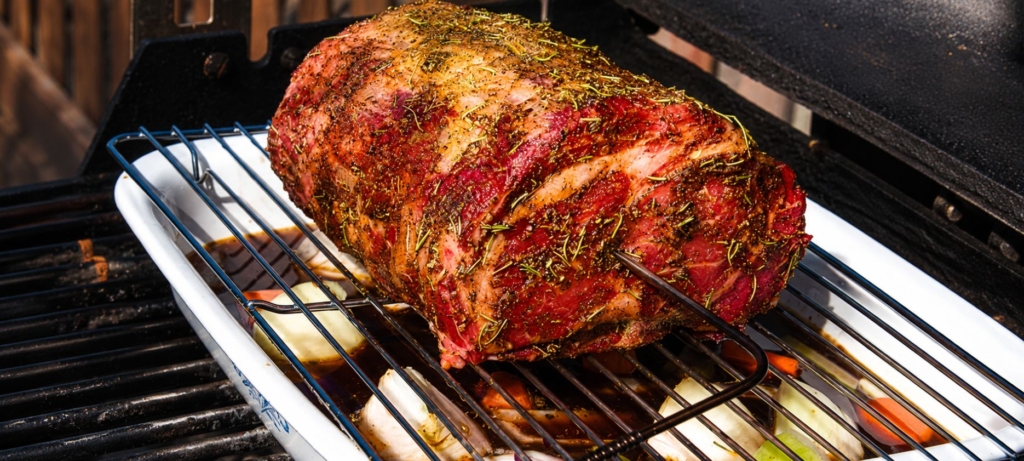
- Rack: the roast over the top of the pan and place both on the indirect side of the grill or in the oven indoors.
- Roast: the beef of 130°F to 140°F for medium rare, about 3 hours.
- Chill: the roast so it slices more easily. Transfer the juices to a container and chill them, too.
- Saute: the bell peppers over medium high heat with olive oil. Make or buy giardinieria, if you want.
- Slice: the beef as thinly as possible.
- Assemble: the sandwiches with fluffy but sturdy Italian bread by spooning juice over the bread, adding meat, adding juice, repeating. Top with peppers or giardiniera. Or both.
- Grab: a lot of napkins and enjoy.
Summarize & Save this Content on:
Ingredients and substitutions for Italian beef sandwich recipe
- Boneless beef sirlion or round roast, roasted low and slow. Slice it thin and soak it in juice.
- Fresh garlic or garlic powder, depending. If you’re gonna do it like my brother-in-law, you need slivers of fresh garlic. Or skip it and just use garlic powder.
- Onion powder brings a mildly pungent flavor to this rub and tag teams with garlic, either fresh or powder.
- Dried oregano is great in a rub thanks to its pungent sharpness.
- Dried basil is yet another one of those essential Italian herbs. It’s a little sweet.
- Crushed red pepper brings just the right amount of heat to the mix
- Hot water and beef bouillon combine to create the base for the juice.
- Green bell peppers stand in for Melrose peppers. Devotees, such as my Sout Side Italian-American wife, say you should only top an Italian beef sandwich with Melrose peppers. These long, slender, thin-walled sweet green peppers were brought over from Italy and named for the suburb of Melrose Park, home to many immigrants. They are sautéd in olive oil and served whole, with seeds. Virtually no restaurants make it with Melrose peppers because they are not grown commercially. Still, many home cooks/gardeners, including my wife’s family, cultivate this variety just for sangwiches and “peppers & eggs” (a popular Italian American breakfast in Chicago restaurants). Some restaurants get fancy and use colorful sautéd red peppers or yellow peppers in their Italian beefs.
- Giardiniera also tops the meat. The most popular commercial brand of giardiniera, Dell’Alpe, is simply a condiment of hot pickles serrano peppers, celery, green olives, and spices packed in oil. Others, like my recipe for giardiniera, include carrots, cauliflower, and more. Finally, you spoon more beef juice over the toppings, making the bread wet and chewy. Many stands will dip the whole sandwich in juice if you ask. You can ask for juice for dipping on the side, but then everyone will know you ain’t from around here.
- Italian bread, not French bread is essential, sturdy and sliced lengthwise. This crust is typically tan, only slightly crumbly, fluffy and white in the center, and high in gluten. According to Allen Kelson, former restaurant critic for Chicago Magazine, it is important that the bread has what Bounty Towels calls “wet strength.” This comes from long fermentations, he explains. The more accelerator, the worse the bread, as far as Italian beef goes. French bread just doesn’t cut it, he says.
Italian beef sandwich, step by step
- Stab the surface of the meat all over and insert slivers of fresh garlic. (If you do this, leave garlic out of the rub.) Otherwise, mix the rub together in a bowl.
- Lightly coat the meat with water so the rub will stick when you sprinkle it all over the meat. Go ahead and add the rub. Hang onto any leftover rub; don’t throw it out.
- Put the rack just below the center of the oven and preheat to 225°F (107°C). Or use a 2-zone setup on your smoker and get it to the same temp.
- Pour water into a baking pan and boil it. Dissolve the bouillon and add in the leftover rub. Place a rack on top of the pan and place both of them on the indirect side of the grill, or in the oven indoors.
- Place the roast on top of the rack above the juice and roast until 30-140°F (54-60°C) for medium rare, about 3 hours.
- Halve the bell peppers and remove the stems and seeds. Cut into 1/4-inch strips and cook in a frying pan over medium high heat with enough olive oil to coat the bottom.
- Remove the roast and the juice pan. Pour off the juice and put the meat in the coldest part of the fridge to firm up for slicing. Chill juice in a separate container.
- Slice the meat against the grain as thin as humanly possible. Taste the juice. Decide if it needs to be thinned out or more reduced.
- Slice the rolls in half but leave them hinged on one side. Spoon the juice onto the roll followed by the beef. Get it all wet with juice. Be generous with both. Top with bell pepper and, giardiniera if you want.
- Variations: Da combo: Nestle Italian sausage in with the beef. Da cheef: Top with mozzarella and/ or provolone and broil til it melts. Wit gravy: Add marinara. Da soaker: Dip the bread in juice for a classic laborer’s lunch.
Italian beef sandwich recipe FAQs
Traditionally, it is cooked indoors. But you can do it on the grill or smoker and amp it up a notch, or even the rotisserie. You can even cook the whole thing a day or so in advance and serve it from a slow cooker. It’s perfect for game day.
This sandwich is made with slowly roasted beef that’s thinly sliced, piled up on sturdy but fluffy high-gluten bread (not French bread!), with the seasoned beef juices and topped with sauteed bell peppers or giardiniera or both.
Potato chips, french fries, cheese fries, and onion rings are popular sides to this iconic sandwich. Mr. Beef, the real-life inspiration for the sandwich shop on “The Bear,” serves what they call “fresh fries,” in reference to their freshly cut French fries.
If you like this Italian beef sandwich recipe, you’ll love . . .
- Copycat McRib Sandwich Recipe
- New York Style Reuben Sandwich Recipe
- Authentic Baltimore Pit Roast Beef Done Right In Your Own Backyard
- Cleveland Polish Boy Recipe
- The Cincinnati Cheese Coney Is Pure Hot Dog Bliss
Now, on to my own Chicago Italian beef sandwich recipe. To see how it’s done, watch the video!

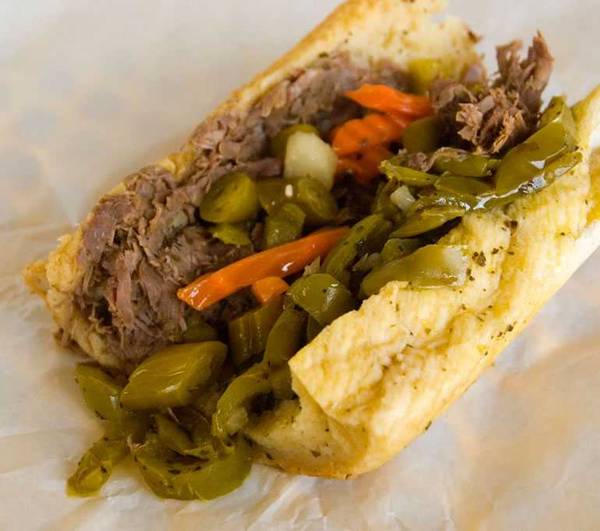
Authentic Chicago Italian Beef Sandwich Recipe
Makes
10 well-stuffed sandwichesIngredients
Method
- Prep. If you wish, you can stab the surface of the meat every inch or so and stick slivers of fresh garlic into the meat as does my brother-in-law. If you do this, leave the garlic out of the rub. Otherwise, mix the rub in a bowl. Coat the meat lightly with water to help the rub stick, sprinkle it generously on the meat, and massage it in. There will be some left over. Do not discard it, we will use it in the juice.
- Fire up. If you are cooking indoors, put a rack just below the center of the oven and preheat to 225°F (107°C). If you are cooking outdoors use a 2-zone setup or a smoker and get it the oven or the indirect side up to about 225°F (107°C).
- Cook. Pour the water into a 9 x 13" (22 x 33cm) baking pan and heat it to a boil. Dissolve the bouillon in the water. It may look thin, but it will cook down and concentrate during the roasting. Pour the remaining rub into the pan. Place a rack on top of the pan and place them both on the indirect side of the grill or in the oven indoors. Place the roast on top of the rack above the juice. Roast at 225°F (107°C) until interior temperature is about 130-140°F (54-60°C) for medium rare, about 3 hours (exact time will depend on the cut of meat, its thickness, and how well calibrated your cooker is). This may seem long, but you are cooking over water and that slows things down. Don't worry if there are people who won't eat medium-rare meat. The meat will cook further in step 5, and you can just leave theirs in the juice until it turns to leather if that's what they want.
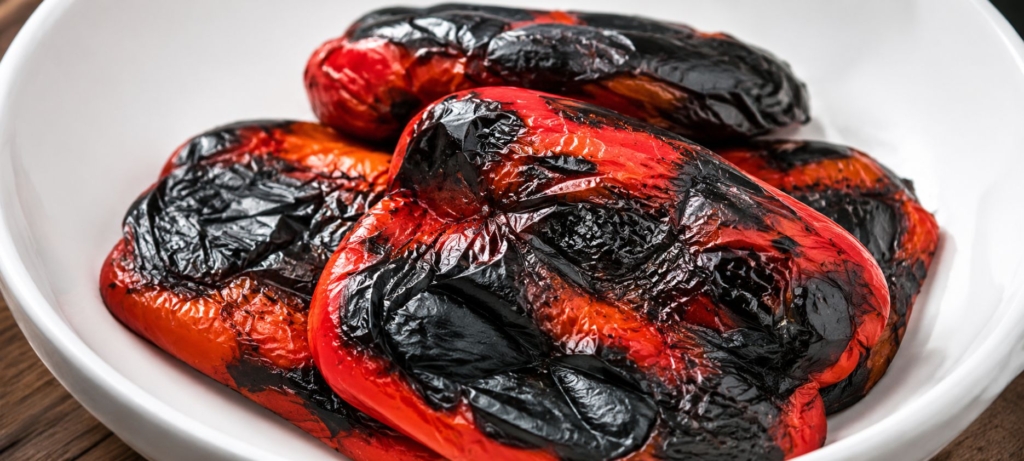
- While the meat is roasting (mmmmm, smells sooooo good), cut the bell peppers in half and remove the stems and seeds. Rinse, and cut into 1/4" (6.3 mm) strips. Cook the peppers in a frying pan over a medium high heat with enough olive oil to coat the bottom, about 2 tablespoons. When they are getting limp and the skins begin to brown, about 15 minutes, they are done. Set aside at room temp.
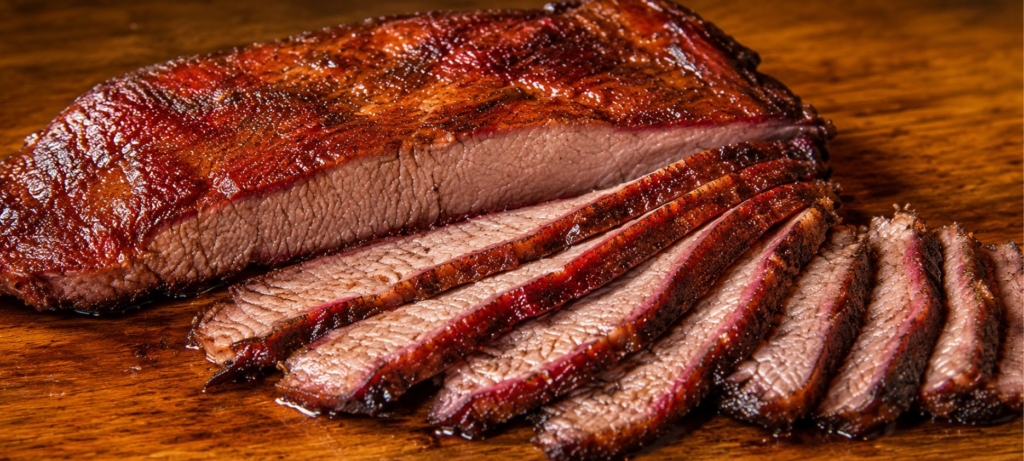
- Prep again. Remove the roast and the juice pan. Take the meat off the rack and remove the rack. Pour off the juice, put the meat back in the pan, and place it in the coldest part of the refrigerator. Let it cool for a few hours, long enough for the meat to firm up. This will make slicing easier. Chill the juice, too, in a separate container. Slice the meat against the grain as thin as humanly possible, preferably with a meat slicer. My wife remembers that her family would cook the roast and take it to the butcher to slice on his machine. That’s a good strategy if you don’t have a meat slicer but it may be against your local health codes. If you don’t have a slicer, use a thin blade and draw it along the meat. If you try to cut down or saw through the crust you will be cutting it too thick.
- Next, taste the juice. If you want you can thin it with more water, or make it richer by cooking it down on top of the stove. In Chicago beef stands it is rich, but not too concentrated. Then turn the heat to a gentle simmer. Soak the meat in the juice for about 1 minute at a low simmer. That's all. That warms the meat and makes it very wet. You can't leave the meat in the juice for more than 10 minutes or else it starts to curl up, squeezes out its natural moisture, and toughens. If you go to a beef stand and the meat is really curly, they have committed a mortal sin. At Mr. Beef, for example, I watched them take a handful of cooked beef and dump it into the juice every time they took out enough for a sandwich. This also enriches the juice with meat protein and seasoning from the crust.
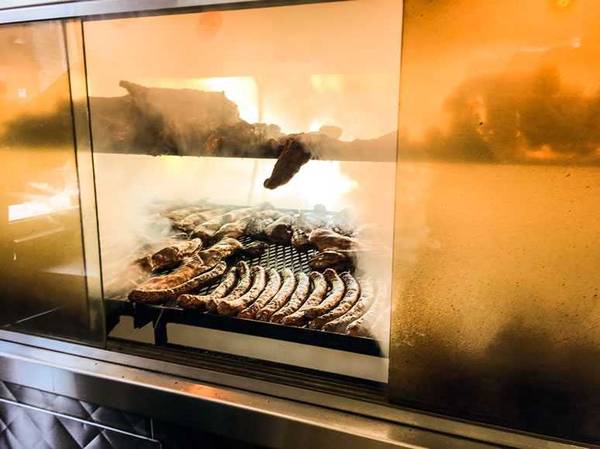
- Serve. Slice the rolls lengthwise but leave them hinged on one side. Or slice a loaf of Italian bread the same way, then cut it widthwise into 10 portions. To assemble the sandwich, start by spooning some juice directly onto the bread. Get it wet. Then lay on the beef generously. Spoon on more juice (don't burn your hand). Top it with bell pepper and, if you wish, giardiniera. If you want it "wet", dip the whole shootin' match in juice. Be sure to have plenty of napkins on hand. You can also try one of the following variations of the classic:Da Combo. Most Italian beef joints offer a "combo," which also has a grilled Italian sausage nestled in with the beef (shown being made at Al's in a photo at right). These are thick, uncured, coarsely ground pork sausages in natural casings, flavored with fennel, paprika, black pepper, red or green bell peppers, onions, garlic, parsley, and crushed red chili peppers for some heat. Italian sausages are made in your choice of hot, medium, or mild (sometimes called sweet).Da Cheef. Cover it with shredded mozzarella and/or provolone, broil for a few minutes, and you have a "cheesy beef" or "cheef". Not many stands offer this mutant strain.Wit Gravy. An even rarer and more heretical variant, topped with marinara.Da Soaker. Just dip the bread in the juice and you have the classic laborer's lunch, a soaker, a.k.a. "sugo pane", or gravy bread. Sugo pane is also commonly made with marinara sauce.

Before you can post a comment or question you must sign into our commenting partner, Disqus. This helps make sure everyone hanging around the grill is civil. We do not tolerate nastiness, racism, porn, inappropriate language, or attacks on others. All comments are the property of AmazingRibs.com and we reserve the right to quote them, edit them, delete them, and block people from making future comments.
Please leave comments and questions on the same page that is devoted to that subject so others can see questions and our answers when they are reading about the subject. You must enable JavaScript to use the comments section, and you must accept cookies to post comments. Note: the software that runs Disqus is different from the Pitmaster Club, so members need to sign into the Pitmaster Club separately.