



Kick up the flavor of your beef with this classic thin Texas BBQ sauce recipe.
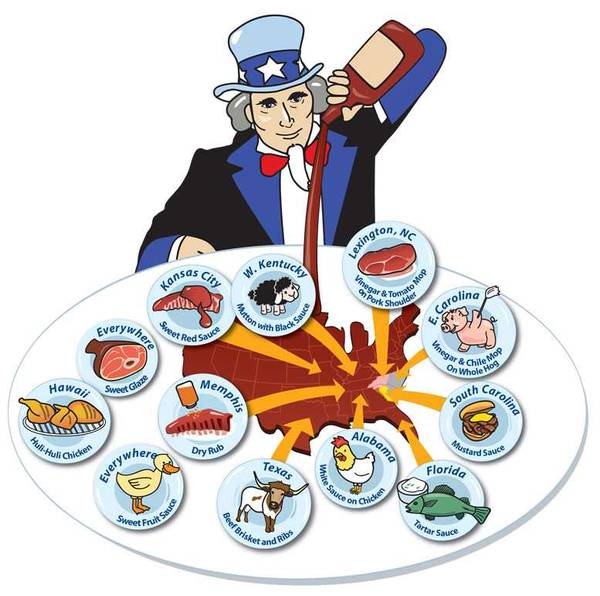
Texas barbecue ranges from ribs to goat to sausage, but beef brisket is king.
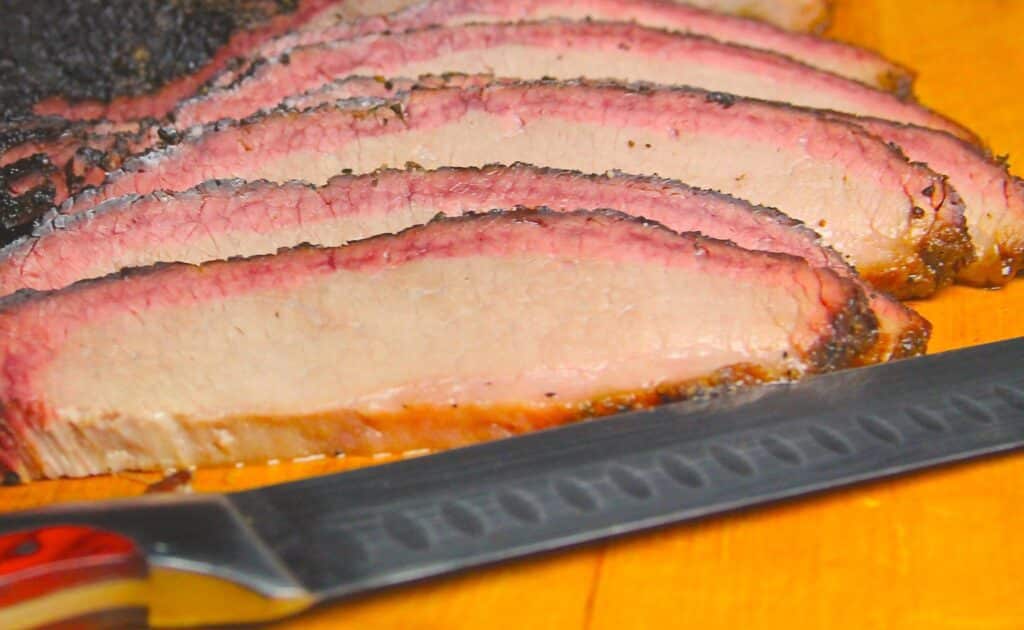
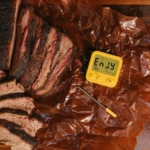
A dark clod of beef breast, brisket, when cooked, is usually sliced about 1/4″/6.35 mm thick across the grain. It’s then served on brown butcher paper or in white bread sandwich. Old timey Texans take their brisket naked. They don’t cotton to sloppy, sticky, ketchup-based sauces like they make up north in Kansas City. That’s because cattle don’t need sweetened ketchup any more than they need wolves. Some pit stops have relented to public demand and now serve sauces. Some serve gloppy red sauces, but the best serve a thin brown sauce, almost a gravy that works both as a mop during the cook, and as a simple finishing sauce.
Recipe Overview: Texas BBQ Sauce Success Formula
- Prep: the garlic, onion and pepper. Finely chop the onion, mince the garlic and chop the bell pepper.
- Mix: the paprkia, black pepper, American chili powder and cumin a small bowl.
- Melt: butter in a small saucepan and cook the onion until translucent.
- Add: the garlic and bell pepper, and then the spices, and cook for 2 minutes.
- Stir in: beer, ketchup, Worcestershire, steak sauce, brown sugar, hot sauce, and stock until well blended.
- Divide: it in half and use half to mop the meat when cooking. Use the rest to serve with the meat.
Summarize & Save this Content on:
The science of our Texas BBQ sauce recipe
Texas BBQ sauce is a mop-sauce that features local flavors: American chili powder, ancho powder, hot sauce, cumin, beer, onion, beef drippings, and maybe even coffee grounds. Thin as it is, it adds a richness and depth to the meat. That’s because it doesn’t just sit on the surface, it penetrates. Cooks in Texas make up a batch and use it on everything: Brisket, beef ribs, pork ribs, pulled pork, sausage (a.k.a. hot links), mutton, goat, and even chicken. But it shines with beef.
People use them as mops during the cook because in Texas commercial pits often cook the meat two to three feet directly above coals. They can run hot, and they are opened often to add and remove meat. So a mop splashed on the meat during cooking replenishes moisture and cools the meat.
Still, many folks like a sauce, especially if the meat is dry, and that can happen with brisket. So here’s a very tasty formula inspired by the Texas BBQ sauce at legendary Cooper’s Old Time Pit Bar-B-Que in Llano, TX, pictured here. They have a dozen pits to cook in, and one pit that is a holding pit. It has hunks of each of their meats and a big bucket of sauce.
Customers come up and point at the meat they want. If they want sauce, they dunk the meat in the bucket, flavoring both. Trimmings and leftovers are also tossed in the bucket. So if you go to Cooper’s, and if you want sauce, don’t tell the pitmaster you’ll use the bottled sauce on the picnic tables inside. Tell him to dip it.
Ingredients and substitutions for Texas BBQ sauce
- Paprika is made from grinding dried mild and sweet red peppers. Typically, it’s sold as sweet, which is the most common, or smoky.
- Black pepper is the most popular and widely used spice around the world. The flavors come from the delicate oils and compounds that evaporate and oxidize quickly once the peppercorn breaks open—that’s why freshly cracked black pepper is best.
- American chili powder is not the same thing as chile powder in Mexico and other countries. American chili powders have multiple layers of heat and complexity that come from different kinds of chiles.
- Cumin powder is an earthy and warm and slightly nutty spice that comes from grinding cumin seeds. It helps to balance the sweet and acidic notes.
- Butter adds fat and flavor. It works just fine here, but if you wanna make this authentic, use rendered beef fat from the brisket.
- Onion is in the allium family. Onions add both an element of sweetness when cooked down and a savory depth, too.
- Garlic brings a pungent kick when it’s raw. Here, it combines with onion and bell pepper for a solid flavor base.
- Green bell pepper adds some sweetness and a mild peppery taste. It’s not at all hot, and it’s not as sweet as red, yellow, or orange bell peppers.
- Texas Lone Star beer is the beer of Texas and so it brings a taste of the state. In this bbq sauce, the beer deepens the flavor. Feel free to substitute any lager that you like.
- Ketchup lends sweetness and already contains vinegar and mild spices. All of this makes it a fairly balanced base for BBQ sauce.
- Apple cider vinegar lends acidity and a bit of sweetness. It’s not an uncommon ingredient in BBQ sauces.
- Worcestershire sauce gets its flavor from its delicate balance of ingredients, including fermented malt or vinegar, along with molasses, salt, cured anchovies, and other savory elements.
- Steak sauce contributes another savory note to this sauce; it helps concentrate the flavor.
- Brown sugar is necessary to bring sweetness and brown sugar contains molasses so it adds depth.
- Hot sauce ups the heat. There isn’t much in the recipe but it’s just enough. Feel free to use your favorite or make my Controlled Burn hot sauce recipe.
- Beef stock adds liquid and flavor at the same time and reinforces a beef taste.
Texas BBQ sauce, step by step
- Finely chop the onion, mince the garlic, and chop the bell pepper.
- In a small bowl, mix the paprika, black pepper, American chili powder and cumin.
- Melt the butter or fat in a small saucepan over medium heat. Add the onion and gently cook until it’s translucent.
- Stir in the garlic, bell pepper and spice mix. Cook for two minutes to extract the flavors.
- Add the beer and the rest of the ingredients. Stir until well blended.
- Simmer the sauce on medium for 15 minutes. Taste and adjust as needed.
- Divide the sauce in half and use half to mop the meat while cooking. Serve the rest of the sauce with the meat once it’s ready.
Texas BBQ sauce FAQs
Texas BBQ puts meat front and center. It often uses a dry rub, long smoking times, and a focus and preference toward beef brisket.
Texas BBQ sauce is built for beef, with a base made with ketchup, steak sauce, and beer, among other ingredients. Carolina sauce includes mustard, which gives it a sharpness that Texas BBQ sauce doesn’t have, and it’s really best on pulled pork.
It’s a little bit of both but it’s balanced, so neither one dominates.
If you like Texas BBQ sauce recipe, you’ll love . . .
- These Texas Short Ribs May Be Better Than Brisket
- North Carolina Lexington Dip BBQ Sauce Recipe
- Chris Lilly’s Spiced Apricot Sauce Recipe
- An Epic Smoked Ribs Recipe (Baby Back or St. Louis Spare Ribs)
- Perfect BBQ Ribs Every Time With Sous Vide and Smoke
Texas BBQ sauce recipe


Texas Barbecue Juice Recipe
Ingredients
Method
- Prep. Finely chop the onion, mince the garlic, and chop the bell pepper.
- Mix the paprika, black pepper, American chili powder, and cumin in a small bowl.
- Cook. In a small saucepan, melt the butter or fat and gently cook the onion over medium heat until translucent.
- Add the garlic, bell pepper, and the spice mix. Stir, and cook for two minutes to extract the flavors.
- Add the stock and the rest of the ingredients. Stir until well blended. Simmer on medium for 15 minutes. Taste and adjust as needed.
- Use. Divide it in half and use half to mop the meat when cooking. Use the remainder to splash on the meat when you serve it.

Before you can post a comment or question you must sign into our commenting partner, Disqus. This helps make sure everyone hanging around the grill is civil. We do not tolerate nastiness, racism, porn, inappropriate language, or attacks on others. All comments are the property of AmazingRibs.com and we reserve the right to quote them, edit them, delete them, and block people from making future comments.
Please leave comments and questions on the same page that is devoted to that subject so others can see questions and our answers when they are reading about the subject. You must enable JavaScript to use the comments section, and you must accept cookies to post comments. Note: the software that runs Disqus is different from the Pitmaster Club, so members need to sign into the Pitmaster Club separately.