



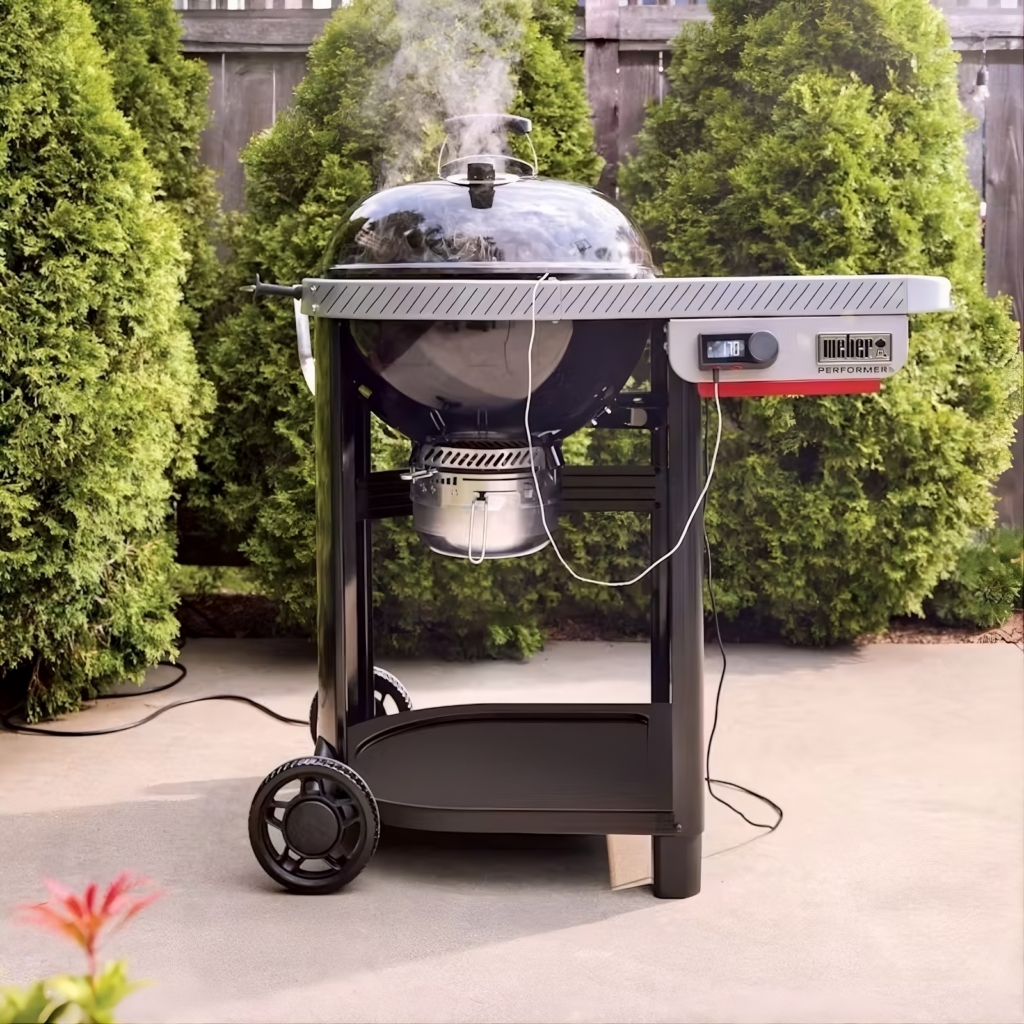
The Weber 22″ Performer Smart Charcoal Grill electrifies the company’s iconic charcoal kettle grill with a spark of modern automation.
Way back in 1952, Weber introduced its bowl-shaped charcoal grill, a steel marine buoy cut through the equator and retrofitted for cooking. That prototypical grill helped propel backyard cooking into one of America’s favorite pastimes. By 1985, as propane had become more widespread, Weber came out with a more rectangular line of gas grills, Genesis, which continues to sell well today. In 1990, Weber introduced the Performer, a classic 22″ kettle grill built into a more convenient wheeled cart with an integrated work table. Then in 2020, just as the pandemic hit, lockdowns were pervasive, and people around the world became more digitally connected than ever before, Weber released the SmokeFire pellet grill and its first-ever smartphone app, the Weber Connect Smart Grilling app. Now, in 2026, Weber has come full circle and released the Weber 22″ Performer Smart Charcoal Grill. This new grill has all the benefits of the original cart-mounted Performer charcoal grill, plus a built-in convection fan and LCD Wi-Fi-enabled temperature controller that connects to any smart device. Now you can set a temperature in your kettle grill and let the fan and controller do the work of adjusting the airflow to stoke the coals and maintain your set temperature, all monitored from your phone. With modern tech, the Weber 22″ Performer Smart Charcoal Grill combines the flavor advantages of charcoal grilling with the set-it-and-forget-it convenience of a pellet smoker.
Construction
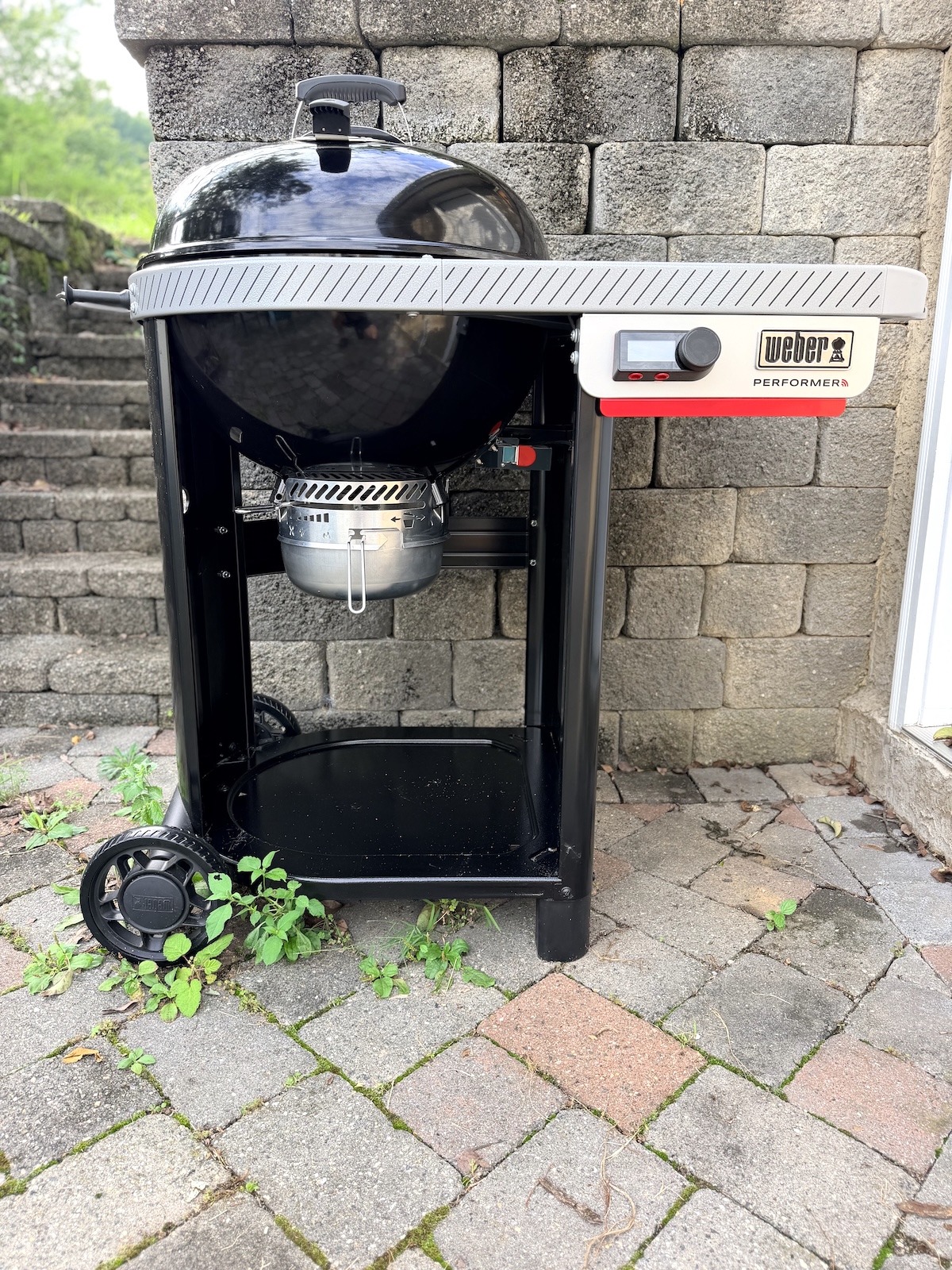
The design and construction of the classic Weber Kettle Charcoal Grill have remained fundamentally unchanged since the late 1970s. A Weber kettle still sports a hemispherical shape, porcelain-enameled steel, and dual-vent airflow controls on the top and bottom. Those features are untouched in the brand new Weber 22″ Performer Smart Charcoal Grill. The total weight is 72 pounds and dimensions remain steady at 45″H x 40.25″W x 28″D (with the lid closed). This grill looks strikingly similar to the classic Weber Performer Charcoal Grill, including the sturdy cart with storage shelf, the built-in work table, and the side rail handle for moving the grill around easily. The side rail still has two tool hooks and accommodates a wealth of Weber Works drop-in and snap-in accessories such as a sink basin with a lid that doubles as a cutting board, various prep containers, a condiment holder, bottle holder, work clips, additional tool hooks, and a flexible gooseneck light.
So what’s different in the “smart” Performer? There’s a digital temperature controller in place of the tool hooks on the unit’s front panel. And there’s a motorized convection fan built into the bowl of the kettle. There’s also a companion Weber Connect app to control things remotely. These key additions to the classic Performer allow you to monitor, adjust, and largely automate the temperature of your charcoal grill. You can also monitor food temperatures and receive temperature and time alerts on a connected smartphone or other smart device. Modern tech meets primitive grilling.

Optional upgrades
If you’re a die-hard charcoal griller, you may want to go all in on this new version of the Weber kettle grill. Another $200 gets you the larger Weber 22″ Performer Premium Smart Charcoal Grill. That model has an extended cart with more storage shelves, an additional 7 inches or so of prep space on top, and locking caster wheels on the cart for a total of four wheels instead of just two, as on the lower priced model. Plenty of additional accessories are available for both models, including a cover, motorized rotisserie, and more. You can even buy a round carbon steel insert that fits over your kettle grill grates to make the entire grill surface a 22-inch round griddle. Lots of ways to outfit the charcoal grill of your dreams.
Assembly
Weber’s packaging and assembly instructions are always top-notch, and the Smart Performer is no different. It took me a couple hours to assemble the grill on my own. In addition to the cart assembly, you have the new convection fan and digital controller to install. To get that done, there are lots of bits and bobs and wires. I wouldn’t say it was difficult—just time consuming.
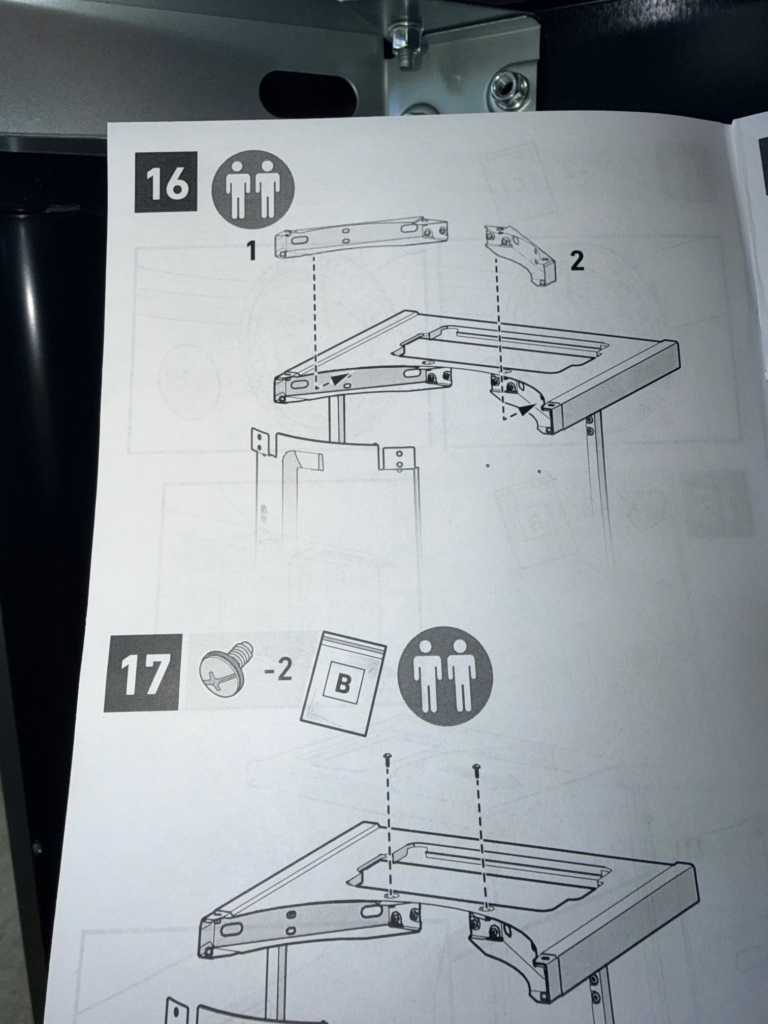
Note: There was a manufacturing misprint in step 16 of the assembly guide. For the work table assembly, parts #1 and #2 were mislabeled. Part #2 actually fit in the #1 spot, and #1 fit in the #2 spot (see photo above). Weber caught this before shipping and included an addendum to the assembly directions that shows the correct orientation of #1 and #2. No big deal, but it’s something to watch for.
Weber 22″ Performer Smart Charcoal Grill set up
With the smart Performer assembled, I was pretty eager to get cooking. But how? Is it like a classic Weber kettle grill, where you light up the briquets in a charcoal chimney then dump them on the coal grate? Do you still use the top and bottom air vents?
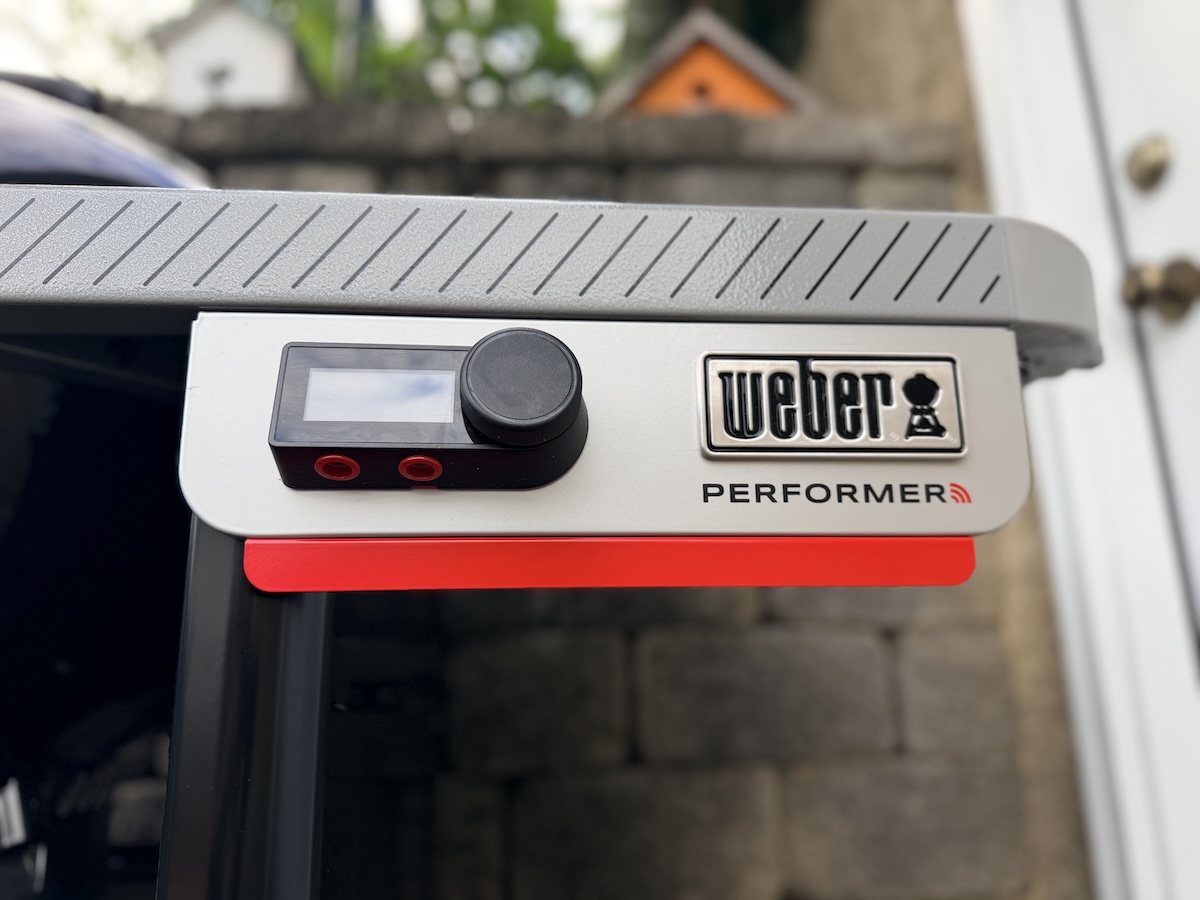
Be prepared to change your ways: The grill set up for the Weber 22″ Performer Smart Charcoal Grill is a little different than what you might be used to. First off, to operate the convection fan and digital controller, you have to plug in the grill. The supplied power cord (6 foot length) was a bit short of my nearest outlet, so you may need an extension cord. You can also run the grill off a 5V/2.4A power bank (not included). Once you’ve got power, you put your raw unlit briquets on the coal grate with a couple lighter cubes, light the cubes, and then press the control knob to turn the unit on. Rotate the knob to select a temperature, press the knob again to confirm the temperature, and you’re off to the races.
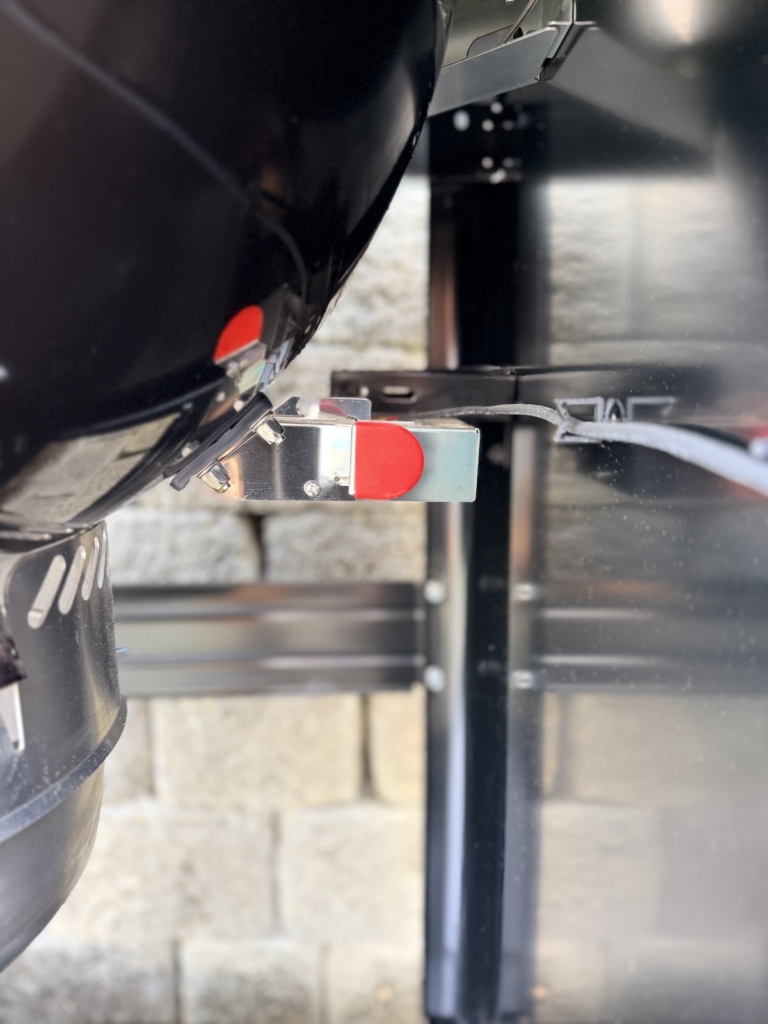
At this point, you completely close off the bottom vents and pull a little red tab on the fan assembly to activate airflow: now the fan is in control of sending air to the coals. You still use the lid and the top vents to help control the burn rate of the coals—and the resulting grill temperature. You open the top vents about 1/4 open for low and slow cooking (200-300°F), about 1/2 open for medium to medium-high indirect grilling and roasting (300-450°F), and fully open for direct grilling and high heat searing (450°F+).
You can also use the Weber Connect app to set, monitor, and change the grill temperatures from your phone. Once you download the app to your phone, you can access recipes and connect to the Performer’s onboard PID digital controller via Bluetooth or your WiFi network. (Just in case you’re wondering, PID stands for Proportional, Integral, Derivative. It’s math speak for the controller’s algorithm. The PID is essentially what allows your grill to run on “cruise control.”) Pair the app with the grill, and the basic cooking procedure is pretty simple: Plug in and turn on the grill, configure the briquets for your particular cook, light some starter cubes, turn the temp dial to your target temp, press to confirm, open the fan door, and go.
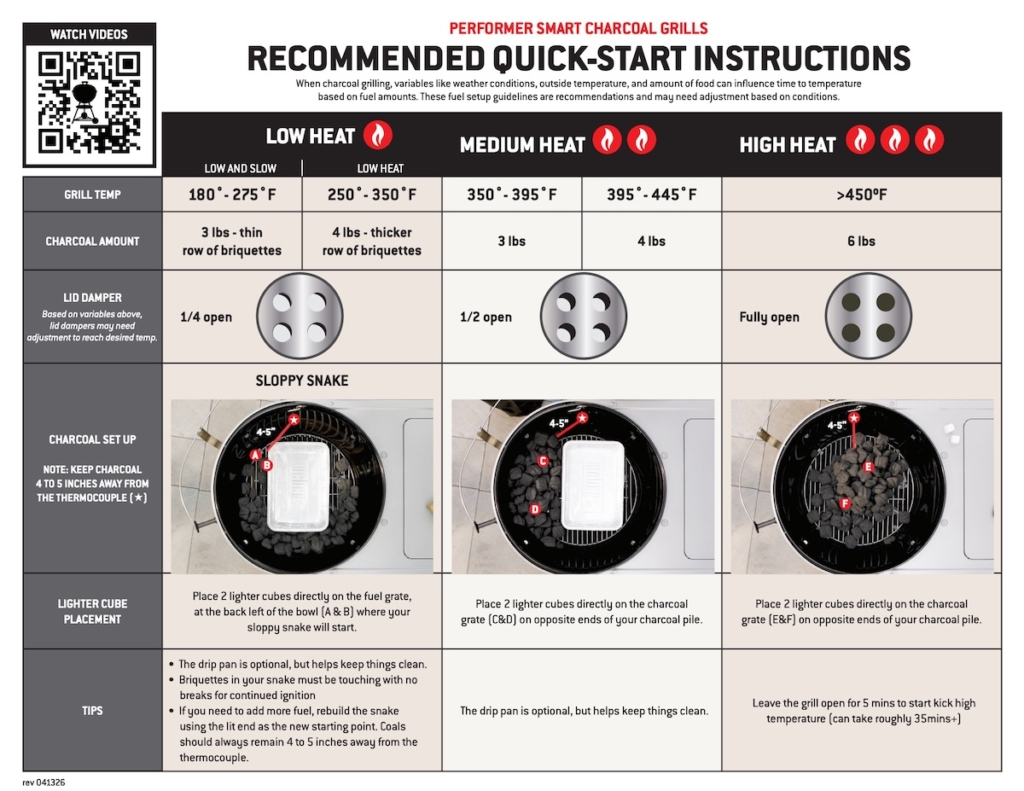
Weber includes a handy visual guide to the charcoal configurations for low, medium, and high heat cooking. Say goodbye to your trusty charcoal starter. The built-in fan stokes the coals, so you don’t need one. Instead, you configure the raw unlit briquets in a snake pattern for extended low temp cooking, or in a pile on one side for medium to medium-high heat indirect cooking, or in a big pile in the center for high temp searing. Light a couple starter cubes and things get going pretty quickly. To speed the lighting of your coals, the controller features “RapidFire Assist,” which blows extra air onto the briquets at the beginning of the cook to save preheating time. When the coals are lit, the fan cycles on/off to reach and maintain your set temperature.
Other functions
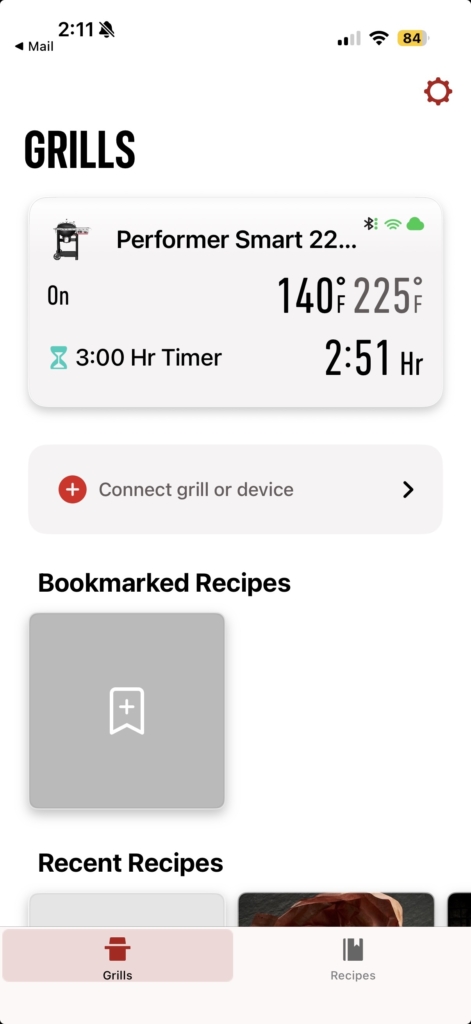
The real innovation of the Weber 22″ Performer Smart Charcoal Grill is applying the “set it and forget it” mindset to a charcoal grill. It makes your Weber kettle grill function more like your indoor oven or a pellet smoker, so you don’t have to mess with the fire as much. You just set a temp from 180° to 425°F, light up some briquets, and let the grill do most of the work. And you can monitor and adjust times and temps right from your phone or smart device.
Let’s say you want to control the convection fan yourself. In that case, you can opt for “Manual Mode.” That skips the temperature control functions. Instead, the convection fan operates continually on a speed of your choosing, from speed 1 (lowest speed) all the way up to 10 (highest speed). I gotta say, I’d rather pick a target temp and let the grill do its thing. That’s the whole point of the grill being “smart” and connected, right?
Want to set a countdown timer? The controller has that function too. Let’s say you’ve got the rotisserie setup and you’re cooking rotisserie chicken: You can set the timer for 1 1/4 hours or however long you think the bird will take (the timer has a maximum of 99 minutes).
Want to use a food probe? The digital controller has ports for up to two food probes at a time, and Weber supplies one food probe with this grill. You can set a target temp for the food (say, 205°F for smoked brisket) and the Weber Connect app will notify you when the target temp has been reached.
Need to turn the grill off? Press and hold the control knob for 3 seconds until the displays reads “Stop” then press again to confirm. Or, you can turn off the controller/fan from the app by selecting “Off.”
And what if your power goes out? Then what? Rest assured, you can always operate the smart Performer without the “smart” part. Just use the kettle charcoal grill the same way backyard cooks have been using it since 1952: Light up some briquets in a chimney or directly on the coal grate, and adjust the top and bottom vents to achieve and maintain the temperature you want.
Cook tests
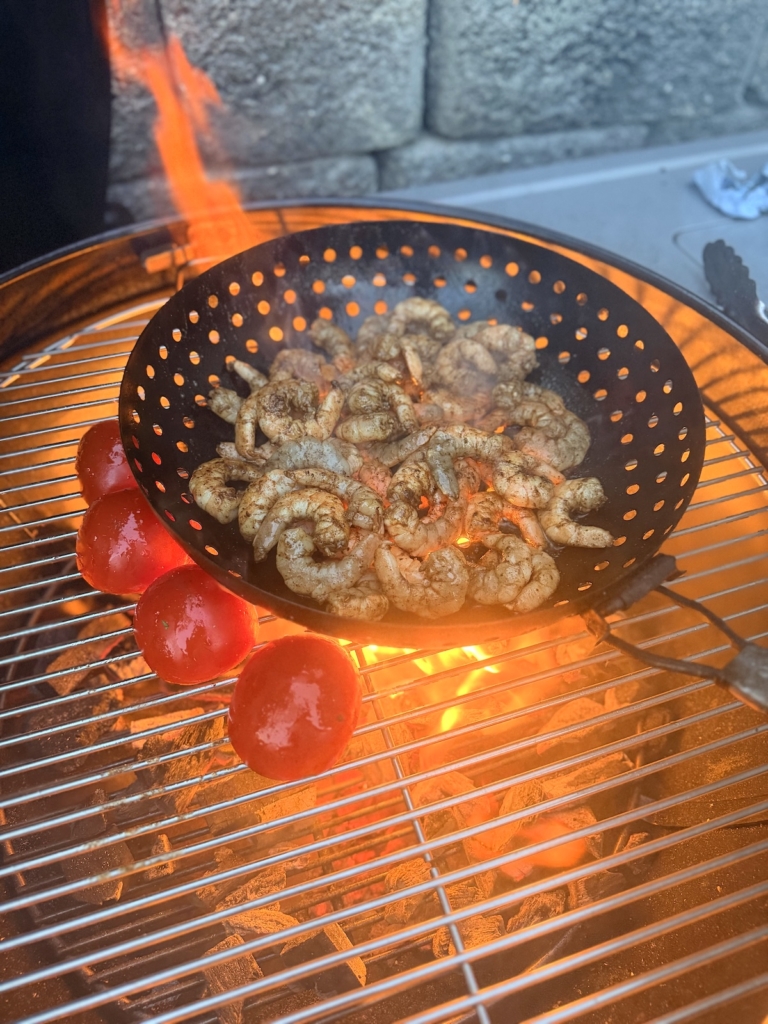
That’s exactly what I did for my first cook. I lit up a chimney of lump charcoal, dumped it onto the coal grate, adjusted the bottom vents for medium-high heat and grilled some Cajun shrimp. No electricity. No lid. Just old-school grilling. Figured I’d break in the new grill by disregarding all the tech! I dusted the shrimp with a mix of Tony Chachere’s Creole Seasoning and Phil Robertson’s Cajun seasoning, tossed the little buggers in peanut oil and grilled them in a grill wok alongside fresh tomatoes. The lump charcoal gave the shrimp a touch of smoke and char, which paired so perfectly with a creamy remoulade. I gotta say, the smart Performer’s side table is super nice. Seems like there’s never enough space for food, trays, cutting boards, etc. The side rail handle also made it easy to move the grill around and the two tool hooks kept my tongs and spatula at the ready. Underneath, the storage shelf easily held a standard bag of charcoal plus a few other small accessories.
Wibs for the Win
A hot and fast cook was fine, but the real test here is a low and slow cook. Just how smart is the Weber 22″ Performer Smart Charcoal Grill? Can it maintain a steady, low grill temperature on its own? And how long can it maintain the temp?
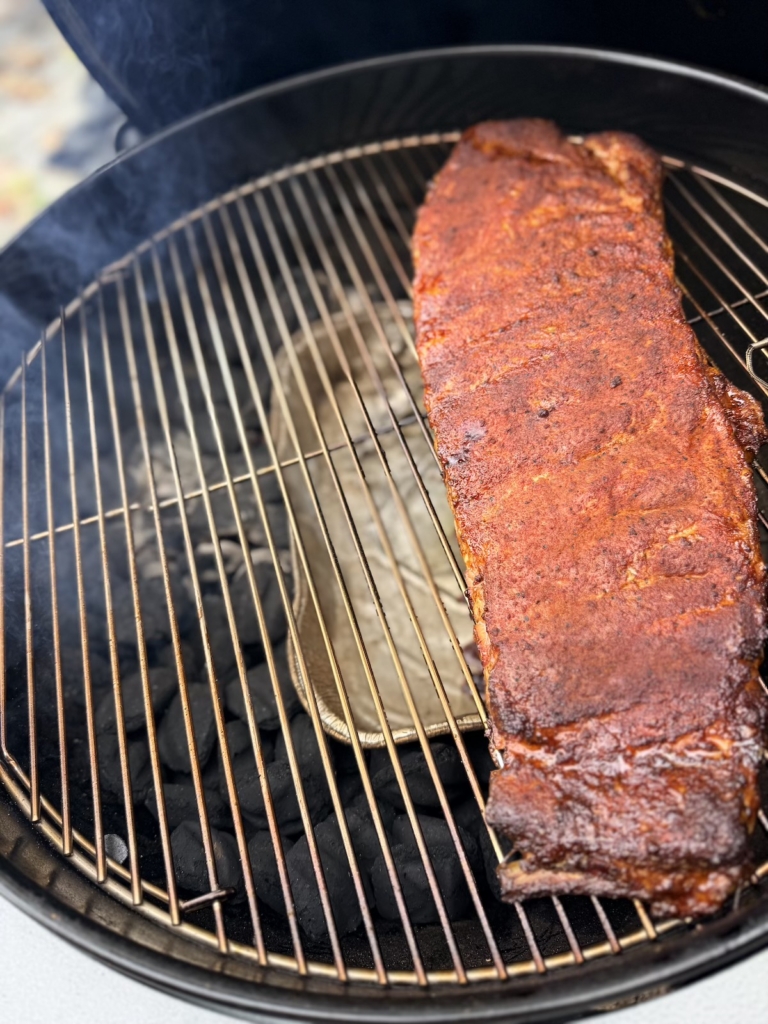
I figured Meathead’s Last Meal Ribs would be a good first test. I followed the Weber manual’s instructions for low and slow cooking at 225°F, arranging 5 pounds of raw briquets in a U-shaped pattern opposite the grill’s built-in temperature probe and away from the fan. It’s essentially the fuse method (a.k.a. snake method) for long, slow cooks on a charcoal grill, with two lighter cubes placed on one end of the snake. However, on the smart Performer, you close the bottom vents completely, set the controller for a 225°F target temperature, put on the lid, adjust the top vents about 1/4 open, and let the smart grill do its thing. I lit the starter cubes at 1:45 PM on an 85°F day, and according to the Weber Connect app, the target temperature was reached in 10 minutes.
That seemed unlikely, so I set up my Fireboard Drive for a second opinion on the temp readings, placing its temp probe a few inches away from Weber’s built-in temp probe. I proceeded with the ribs and decided to compare the Weber and Fireboard temperature graphs at the end of the cook.
I had seasoned and dry brined a rack of St. Louis cut spareribs for 24 hours with Meathead’s Pork Seasoning & Dry Brine. I laid the slab directly on the cooking grate, bone-side down, at 2 PM. Then I added a piece of smoking wood (hickory) to the grill.
The Weber manual states “Due to the fan rotating air around the kettle, it is not necessary to reposition your cooking grate mid-cook for an even, indirect cook.” However, my slab of ribs was thin at one end and thick at the other, stretching across the entire diameter of the cooking grate. I rotated the grate about halfway through the initial 3- to 4-hour cooking period to prevent this small end from getting too much heat as the coals got lit.
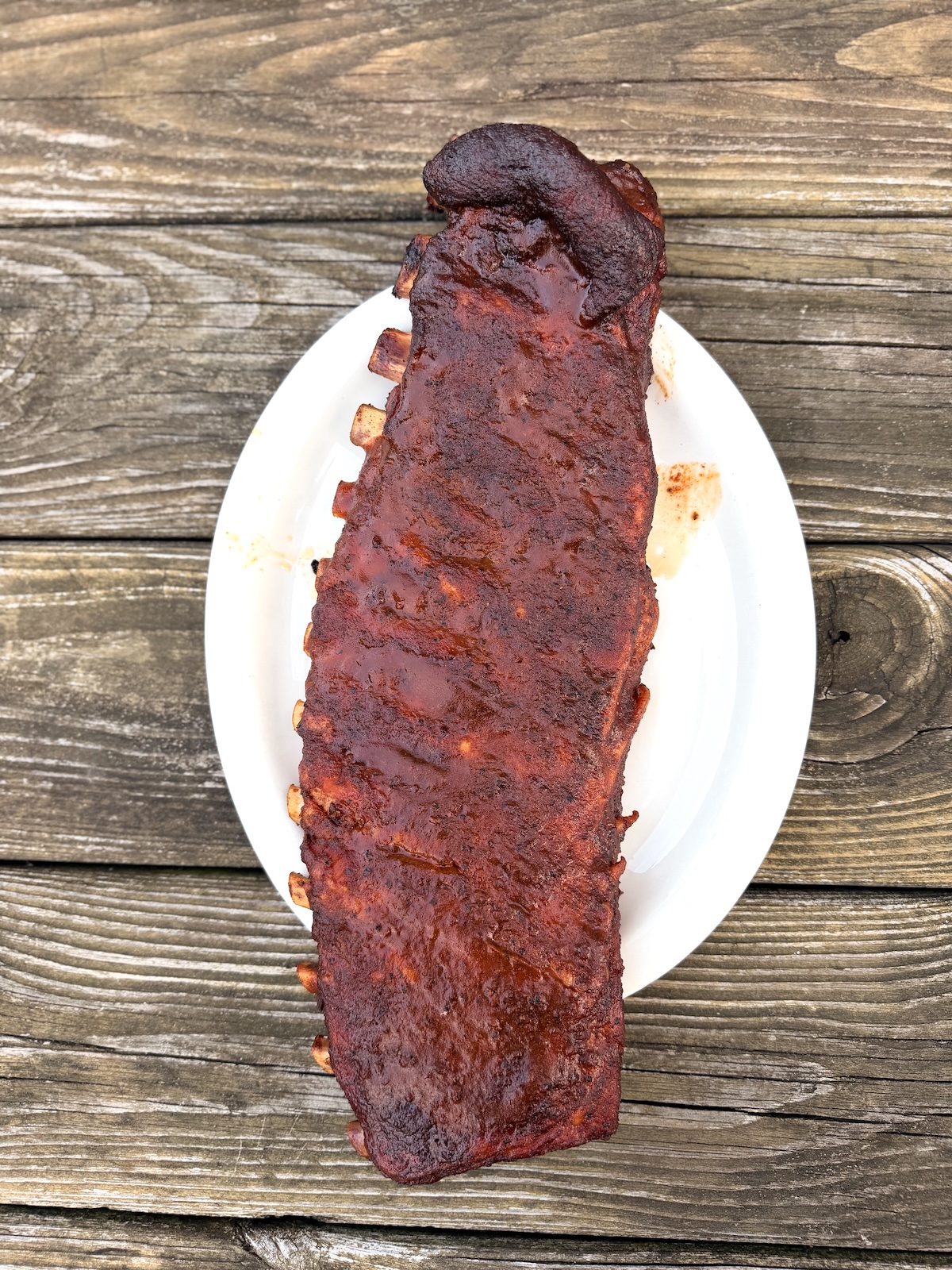
The ribs were done around 7pm, for a total cooking time of a little over 5 hours. During one of those hours, the ribs were “wrapped.” I didn’t have enough foil, so the slab actually sat in a foil-covered sheet tray with some beer as the liquid—which worked great!. The ribs were done a little sooner than I expected and they were a little softer than I prefer—the bones slid out from the meat a bit too easily. But they were still very meaty and juicy with a decent bark. Not bad for a 1st cook with a new system.
Why were the ribs done sooner than expected? Probably because I added fuel to the fire (the hickory wood chunk), bumping up the grill temperature. When I checked the temp graphs, Weber Connect showed the highest grill temp throughout the cook as 350°F, and Fireboard showed the high temp as 300°F. Otherwise, both graphs showed similar temperature fluctuations throughout the cook with temps holding somewhere between 225° and 275°F. The temp probably would’ve stayed between 200° and 250°F if I hadn’t added more fuel in the form of a wood chunk. What can I say? I like smoky ribs!
Ribs Round Two
Since there were differences between the Weber and Fireboard temp readings, I repeated the same test. I made ribs again the following week. Same style. Same process. But I skipped the chunk of smoking wood. Believe it or not, the ribs came out even better this time! They were slightly less smoky, but the meat texture was better, probably because the grill temperature was more consistent throughout the cook.
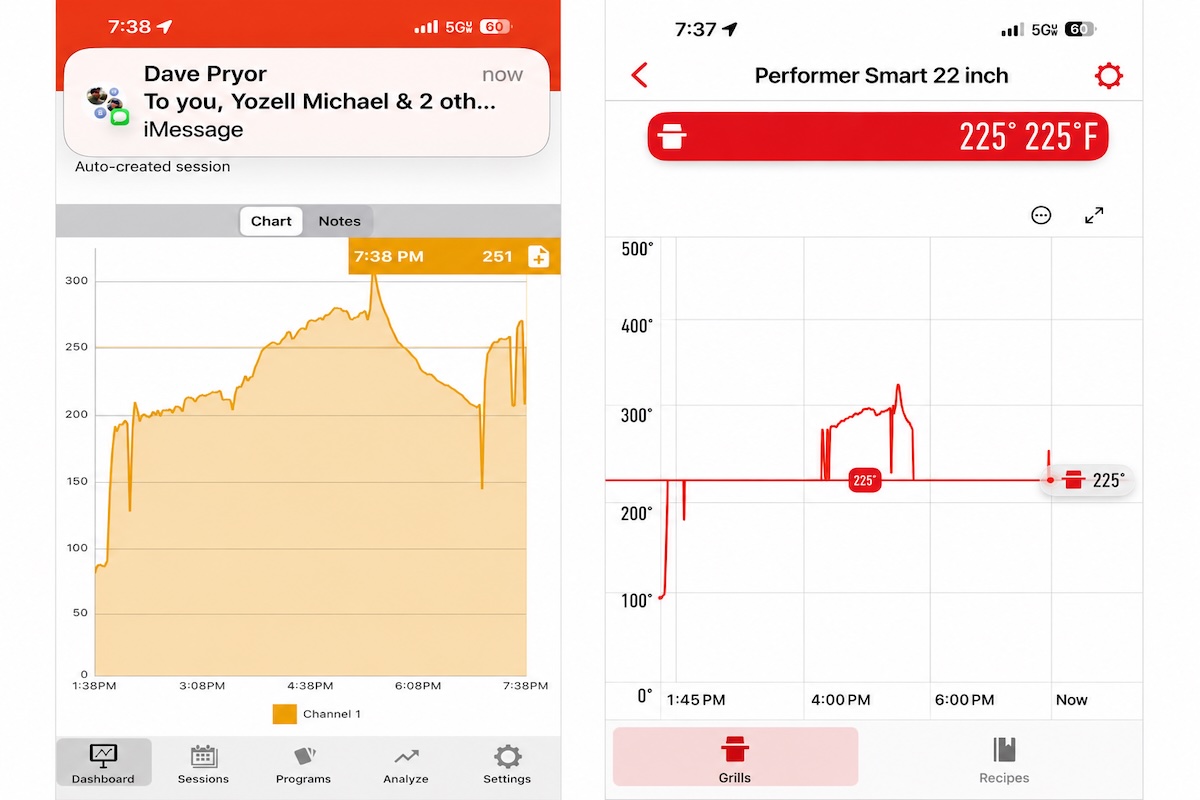
How accurate are the temp readouts on the Weber 22″ Performer Smart Charcoal Grill? Check the screenshots above—and disregard that errant text from my buddy Dave Pryor that came in right when I snapped the Fireboard screenshot! As you can see, the high temp reading on both graphs, at about 5:30pm, is about 325°F. Otherwise, the graphs show that the grill temp was maintained somewhere between 225° and 275°F throughout the cook. So why does the Weber graph look like the grill held a more steady 225°F temp? I did several other cooks (see below), and based on my tests, I would simply say that Weber’s temp probe is not quite as sensitive as Fireboard’s, and/or the Weber Connect app doesn’t display quite as much detail in temperature fluctuations from minute to minute. But the Performer temp readings are still pretty accurate, and the Weber controller and app still offer meaningful temperature control and monitoring—certainly more accurate than any bi-metal dial thermometer built into the lid of older kettle grills. For the ultimate in accurate temperature readings, check out our thermometer reviews here.
Reverse-seared burger
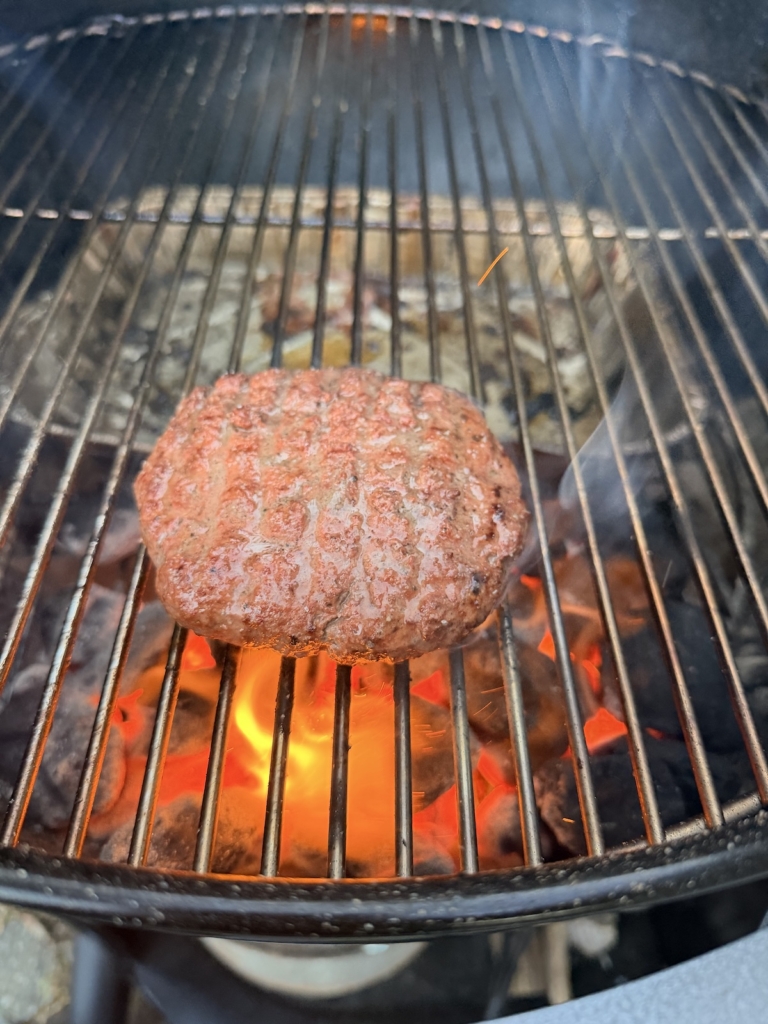
Time to try out a reverse-seared burger, Meathead’s Steakburger recipe. I used a modified low and slow cooking setup and piled about 3 pounds of raw briquets on one side of the grill, stacked high so there would be a good sear zone later on. The pile was positioned opposite the built-in probe away from the convection fan. I kept the bottom vent closed, lit one lighter cube, and put on the lid with the lid damper barely open. I set the temp to 225°F and listened to soft whoosh of the fan kicking on.
After 20 minutes of indirect cooking, and flipping the burger once, the internal meat temp had reached about 120°F. I reset the grill’s set temp to 500°F for sear mode, salted the burger all over, and seared it directly over the coals to an internal temperature of 150°F, flipping it a few times. I melted on some cheese at the end. It was a bangin’ burger. Maybe not the best I’ve ever had, but damn good.
West African suya
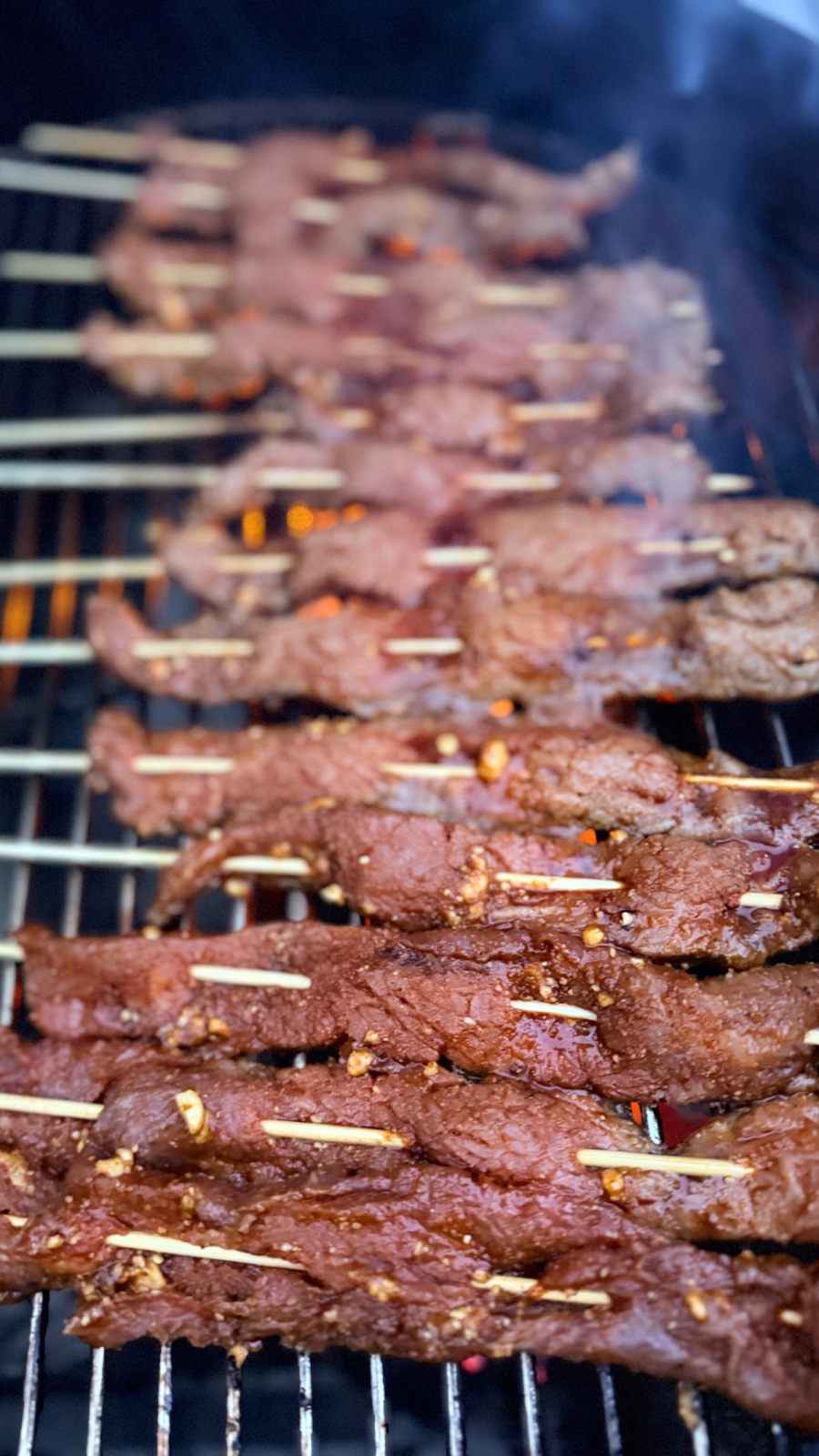
I cooked several other things on the Weber 22″ Performer Smart Charcoal Grill, both low and slow and hot and fast. One of the highlights was West African suya. I was testing the recipe for an upcoming barbecue cookbook. If you’re new to suya, it’s grilled beef skewers rubbed with spicy peanut paste. These were made with flank steak, sliced, salted and seasoned with a paste of ground peanuts, smoked paprika, cayenne, onion powder, garlic powder, ground ginger, cloves, allspice, ground alligator pepper (grains of paradise), and a little oil. I grilled the beef strips on wooden skewers and served them with a squeeze of fresh lime plus sliced tomatoes, onions, and cucumbers for munching on, along with a generous sprinkling of the peanut spice rub. It was fantastic. And, yes, I did skip the step of soaking the wood skewers for 30 minutes in water, since that myth was busted long ago.
After many months of cooking on and temperature testing the Weber 22″ performer Smart Charcoal Grill, I jotted down these final notes:
Pros:
- No chimney starter or prelighting of coals required
- Pretty steady temperature holding
- Somewhat automatic operation of kettle grill, a big plus for charcoal, which tends to require more fiddling
- Temp and time monitoring/alerts remotely from your phone
Cons:
- Temperature graph readings not quite as detailed as other thermometer systems
What could go wrong?
The Weber 22″ Performer Smart Charcoal Grill is well-built and reliable, just like the original Weber Kettle Grill. But it now includes some sensitive electronics. If you overload this grill with charcoal, you could damage the electronics. Weber warns against this possibility in several places. Stick to the recommended charcoal setups, and you’ll be fine. You may also want to invest in a cover. For extra safety, I also completely unplugged the unit between cooks and stored the power cord in a drawer.
If something does go wrong with the electronics, or you lose power to the fan, never fear. You can always cook on the Weber 22″ Performer Smart Charcoal Grill without the “Smart” part. Just set it up and operate it like a good old-fashioned kettle grill with briquets in your preferred configuration and the top and bottom vents adjusted to control the airflow however you wish. Old school, baby. Weber also has a solid warranty to cover any manufacturer defects.
Weber 22″ Performer Smart Charcoal Grill Conclusion
When people ask me whether they should buy a charcoal grill or a gas grill, I turn around and ask them: “Do you like to drive a stick or an automatic car?” Generally, people who like a more manual driving experience tend to prefer charcoal—they seem to like the hands-on nature of charcoal grilling. On the other hand, people who like to push buttons and have things more automated tend to prefer gas grills. It’s faster, easier, and more convenient. The Weber 22” Performer Smart Charcoal Grill threads the needle between the two: You get the flavor advantages of cooking with charcoal AND the set-it-and-forget-it temperature precision of grilling with gas. The smart grill’s convection fan and PID controller do most of the work of temperature regulation, along with your charcoal configuration and the top-vent damper.
What’s the cost of this modern tech and automation? About $150. The Weber 22″ Performer Smart Charcoal Grill retails for $599, while the classic Performer sells for $449. In my opinion, $150 is a modest price for a digital temperature controller, a built-in convection fan, and a noticeable bump in performance and convenience. Sure, the Weber temperature probe isn’t quite as sensitive and doesn’t show quite the level of detail you’ll see on something like Fireboard temperature probes. That’s not a deal breaker. The Weber temps show you what you need to know to monitor your cook. It just doesn’t sweat the small stuff.
For successfully marrying tradition with innovation, the Weber 22″ Performer Smart Charcoal Grill earns our Platinum medal.
Now, you may be asking, what if I already own a 22″ Weber kettle grill and just want the digital controller, convection fan and connectivity? Do I have to buy a whole new grill? Nope. Weber has you covered with the add-on Kettle Smart Ring that fits into your existing kettle grill. It functions much like the built-in version on the Performer. The Kettle Smart Ring retails for $279.99. A full review is forthcoming.
Warranty
10 years: on bowl and lid
5 years: on One-Touch cleaning system and plastic components
2 years: on remaining parts
We thank Weber for providing a 22″ Performer Smart Charcoal Grill for our tests.





Before you can post a comment or question you must sign into our commenting partner, Disqus. This helps make sure everyone hanging around the grill is civil. We do not tolerate nastiness, racism, porn, inappropriate language, or attacks on others. All comments are the property of AmazingRibs.com and we reserve the right to quote them, edit them, delete them, and block people from making future comments.
Please leave comments and questions on the same page that is devoted to that subject so others can see questions and our answers when they are reading about the subject. You must enable JavaScript to use the comments section, and you must accept cookies to post comments. Note: the software that runs Disqus is different from the Pitmaster Club, so members need to sign into the Pitmaster Club separately.