
barbecue & grilling accessories
Techniques Recipes Buyer's Guides Ingredients One Nation Under Sauce
Misc BBQ Articles Weights, Measures, Conversions Links Advertising Newsletter Updates Meet Meathead

early barbecue sauce

The history of barbecue sauce

The idea of putting sauces on food goes back pretty far. In the days before refrigeration and written history, somebody discovered that smoking meat helped preserve it. Somebody else discovered that soaking it in salty seawater helped preserve it. Somebody else discovered that packing it in dried salt helped preserve it. Somebody else discovered that leaving it in the hot sun or near the fire so it dried out helped preserve it. We now know that smoke and salt have anti-microbial properties, and that dehydrating foods also delays spoilage.

These prehistoric iron chefs discovered that they could also improve flavor and mouthfeel with smoke, salt, seeds, and leaves, as well as basting meat with wine, vinegar, and oils. Especially if the meat was on its way towards funky.

Preserved meats, especially dried meats, were often soaked in liquids to bring them back to life as stews, swimming in sauce based on such as water, oil, juices, dairy, and even blood. In fact the word sauce is said to come from an ancient word for salt.

According to Harold McGee's superb book "On Food and Cooking: The Science and Lore of the Kitchen", in 239 BCE Chinese Chef I Yin, in "Master Lü's Spring and Autumn Annals" discusses the harmonious blending of sweet, sour, bitter, pungent, and salty, and the importance of balancing them harmoniously in sauces. "The transformation which occurs in the cauldrom is quintessential and wondrous, subtle and delicate. The mouth cannot express in words; the mind cannot fix upon an analogy. It is like the subtlety of archery and horsemanship, the transformation of Yin and Yang, or the revolution of the four seasons." The Yin and Yang of mixing sweet and sour is, of course, a Chinese specialty, and at the heart of most barbecue sauces.

McGee also quotes a Latin poem from 25 CE. It describes a farmer pounding herbs, cheese, oil, and vinegar, and adding it to a flatbread. The paste sounds quite a bit like pesto genovese, and the flatbread sounds like a pesto pizza or calzone.

Apicius, the famous Roman cookbook written in the 4th or 5th century, had about 500 recipes, more than 100 of them for sauces. Fermented fish sauce, called garum, was big in those days. Look at the ingredients list of Worcestershire sauce and you will find anchovies right near the top. Anchovies are a great source of the savory flavor component known as umami. Look carefully at the ingredients lists of modern barbecue sauces and you will often find Worcestershire. In fact Worcestershire is the backbone of the most obscure of our regional barbecue sauces, Kentucky Black Barbecue Sauce. Lea & Perrins Worcestershire Sauce was introduced in England in 1837, and appeared in the US around 1849.

French, Italians, Spanish, and Portugese chefs became masters of sauces and gravies, and in a French kitchen the title of saucier is hard earned. In the Middle Ages, Europeans often used sweet grape juice in sauces, then wine, which is grape juice that has been fermented by yeast, and then vinegar, which is wine that has undergone a further fermentation by bacteria. Today, vinegar is in practically every barbecue sauce on the market.

In 1492 Columbus sailed the ocean blue, and as the Spanish explored the New World, they discovered the natives had a wooden device for smoking meats which to them sounded like "barbacoa". Smoked meats were common in Europe long before Columbus, but the barbacoa technique was different and the flavor was popular with explorers.

In 1539 DeSoto brought hogs and vinegar with him when he landed near Tampa, FL. The natives liked pork so much they often stole hogs from the palefaces. Sugar cane and molasses were plentiful in the Caribbean, chile peppers were native to Central America, and tomatoes probably originated in South America. Where there are tomatoes, there will eventually be tomato sauce, so it is highly likely that the first tomato sauce was made well before Spanish explorers first tasted it.

It is possible that sometime during DeSoto's alternating wars and feasts with the natives, a confluence of smoke, pork, vinegar, chiles, and molasses all came together. There is some evidence that vinegar and peppers may have been at a feast near Tupelo, Mississippi, and some evidence it happened a bit later in Virginia.

The Spanish colonized heavily in Florida and Mexico, the Dutch piled into New Amsterdam (now New York), the French set up shop in Canada and New Orleans, and Germans found the port of Charleston, SC, inviting. Each brought their culinary traditions with them and the sauces that they applied to the grilled and smoked barbecue meats of the New World reflected their preferences.

The first barbecue sauces were mostly butter. In "Nouveaux Voyages aux Isles d'Amerique" by Frenchman Jean B. Labot in 1693, there is a description of a barbecued whole hog that is stuffed with aromatic herbs and spices, roasted belly up, and basted with a sauce of melted butter, cayenne pepper, and sage. The French are incapable of making anything without butter and this is a technique that probably came to what is now the US via the French West Indies with slaves and Creoles. The French also were big on meat juices in their sauces, an ingredient still found in some homebrewed Texas barbecue sauces.

In 1867, just after the end of the Civil War, after all the slave cooks were freed, the Georgia widow Mrs. A.P. Hill published Mrs. Hill's New Cook Book dedicated "to young and inexperienced Southern housekeepers... in this peculiar crisis of our domestic as well as national affairs". It contains the first reference I have found for a barbecue sauce. It is mostly butter and vinegar: "Sauce for Barbecues. - Melt half a pound of butter; stir into it a large tablespoon of mustard, half a teaspoon of red pepper, one of black, salt to taste; add vinegar until the sauce has a strong acid taste. The quantity of vinegar will depend upon the strength of it. As soon as the meat becomes hot, begin to baste, and continue basting frequently until it is done; pour over the meat any sauce that remains." Interestingly, Mrs. Hill shares many "catsup" recipes, among them two for tomato catsup that are pretty close to what we know today. Originally ketchup was probably made from fermented fish.

The first recipe I have found labeled "Barbecue Sauce" was in a handwritten cookbook by Edith Lockwood Danielson Howard of Providence, RI. I found it in the library of the Johnson & Wales College of Culinary Arts in Providence. The archivists there believe it was written about 1900, but the tomato sauce recipe mentions Crisco, which was introduced by Procter & Gamble in 1911 and, although it became very popular very quickly, this means the actual date is probably after 1912. As with other early sauces, it has a lot of oil. Interestingly, Mrs. Howard, a woman of means, did not cook. She had help to perform domestic labor.

Mrs. Howard's barbecue sauce

Mrs. Howard's Barbecue Sauce,
ca. 1913

1/4 pound butter
1/4 cup water
1 teaspoon dry mustard
1 teaspoon tabasco sauce
Dash of cayenne
Chopped parsley
2 tablespoons tomato catsup
2 tablespoons lemon juice
2 tablespoons vinegar
1/2 teaspoon onion salt
1 tablespoon tomato sauce

Tomato Sauce
1/4 cup oil, crisco, or butter
1/2 cup chopped onions
Cook gently then add
1/2 cup green peppers
1/2 cup celery
1/2 cup carrots
2 1/2 cups tomatoes
1/2 cup tomato paste
1 teaspoon salt
1 bay leaf

Simmer 1 hour, stirring often or until as thick as cream. Use plain or strain.

You'll notice that the recipe called for Tabasco sauce by name. The Louisiana hot sauce that is used in many barbecue sauces has been around since 1868.

Around the same time, in 1913, the witty Martha McCullogh-Williams wrote Dishes And Beverages Of The Old South. Born in 1848 on her family's plantation in northwest Tennessee, she included many receipts, as recipes were called then, that she learned from her black "Mammy". She reminisces how her father made a mop and sauce for barbecue: "Daddy made it thus: Two pounds sweet lard, melted in a brass kettle, with one pound beaten, not ground, black pepper, a pint of small fiery red peppers, nubbed and stewed soft in water to barely cover, a spoonful of herbs in powder - he would never tell what they were - and a quart and a pint of the strongest apple vinegar, with a little salt. These were simmered together for half an hour, as the barbecue was getting done. Then a fresh, clean mop was dabbed slightly in the mixture, and was lightly smeared over the upper sides of the carcasses. Not a drop was permitted to fall on the coals - it would have sent up smoke, and films of light ashes. Then, tables being set, the meat was laid, hissing hot, within clean, tight wooden trays, deeply gashed upon the side that had been next to the fire, and deluged with the sauce, which the mop-man smeared fully over it. Hot! After eating it one wanted to lie down at the spring-side and let the water of it flow down the mouth. But of a flavor, a savor, a tastiness, nothing else on earth approaches."

In the December 6, 1926 Los Angeles Times, a food column called "Chef Wyman's Suggestions for Tomorrow's Meal" ran a recipe for lamb and accompanying it was a "Barbecue Sauce". It said "Melt two level tablespoonfuls of unsalted butter in a small saucepan, add one teaspoonful of mustard, three tablespoonfuls of Worcestershire sauce, one teaspoonful of tarragon vinegar, three tablespoonfuls of tomato catsup, and a few drops of tobasco sauce." Sounds good!

In the 1930s in the heart of the Great Depression, the Federal Writer's Project deployed unemployed writers to collect info for a book called America Eats. WWII broke out in 1941 before it could be published. It contained several barbecue sauce recipes, among this one from Pinky Langley, a whitre man from Jackson, MS. His instructions were to mix the ingredients, cook for 30 minutes, and baste the meat every turn and turn frequently.

Juice of 6 lemons
3 lemons sliced
1 pint vinegar
3 heaping tablespoons sugar
1 heaping tablespoon prepared mustard
3/4 pound oleo
1 small bottle tomato catsup
1 small bottle Lea & Perrins Sauce
3 chopped onions
Enough water to make 3/4 gallons
Salt, black pepper, and red pepper to taste

The first book about barbecue, "Sunset's Barbecue Book", published in 1938 by California's Sunset Magazine, had three barbecue sauce recipes, recommended for marinating, basting, and serving. One, called "Herb Barbecue Sauce For Lamb" was given to a Sunset magazine by the great grandson of one of the first Spanish governors of California. It is a savory sauce with onion, garlic, rosemary leaves, mint leaves, vinegar, and water. "Barbecue Sauce For Steaks Or Hamburgers" had equal amounts of ketchup and olive oil, with butter, mustard, Worcestershire, grated onion and garlic, lemon juice, salt and pepper. Their "Circle J Barbecue Sauce" was more complicated and more like a Texas sauce with 2/3 cup butter, 1/2 cup ketchup, 3 cups water, and small amounts of onion, garlic, mustard, horseradish, herbs, A1 or Worcestershire, tabasco, chili powder, salt, black peppr, and only 2 teaspoons of sugar.

James Beard's landmark 1954 Complete Book of Barbece & Rotisserie Cooking offers several barbecue sauce recipes. His "Basic Barbecue Sauce" has 1 cup oil, 1 cup tomato sauce, 1 cup Worcestershire sauce, 1 cup red wine vinegar, plus onions, garlic, green peppers, brown sugar, rosemary, thyme, and parsley.

The first commercial barbecue sauce may have been made by the Georgia Barbecue Sauce Company in Atlanta, GA. At the top of the page is an ad for it in the Atlanta Constitution in 1909. It says "Georgia Barbecue Sauce is the finest dressing known to culinary science for Beef, Pork, Mutton, Fish, Oysters, and Game of every kind; roasted, fried or broiled. It is also unequaled for perfecting Brunswick Stew and as dressing for Vegetables." Alas, it is no longer made and I have been unable to unearth the recipe.

scotts barbecue sauceThe oldest commercial barbecue sauce still made began in 1917 when Adam Scott opened a barbecue restaurant in Goldsboro, NC. Scott, a preacher, said the ingredients for his barbecue sauce came to him in a dream although the ingredients are nothing strange for the region. It was mostly vinegar. It was served in his restaurant until his son, A. Martel Scott, Sr., spiced up the mixture a bit in 1946. Scott's Family Barbecue Sauce is still available today and is an East Carolina classic.

Numerous other barbecue joints have been around a long time and their sauces eventually found their way into bottles, onto grocery shelves, and now for sale on the web. Among them is another classic, Abe's Bar-B-Q Sauce, first made in 1924 in Clarksdale, MS, in the Delta region, famous for both barbecue and blues.

maulls barbecue sauceA lot of websites say that the first bottled barbecue sauce was made by H.J. Heinz in Pittsburgh in 1948, but Louis Maull of St. Louis beat them to the punch by 22 years. Heinz may have been the first in broad national distribution, but not the first in a bottle.

In 1897 Maull began selling groceries from a horse-drawn wagon. He incorporated in 1905, grew steadily as a wholesaler of fish and cheese, began manufacturing a line of condiments in 1920, and introduced his barbecue sauce in 1926. It became so popular that's about all they make nowadays.

In 1930, ads for Ralphs grocery in the Los Angeles Times promoted Del Ray Barbecue Sauce for 12¢.

The art of "doctoring" commercial sauces has been around a long time too. Here's a recipe from Mr. & Mrs. Alinda Hobbs near Greenwood, MS, in the Delta area, recorded by Eudora Welty in the late 1930s. I have only slightly rounded off some archaic measurements.

2 pounds butter
2 cups Wesson Oil
2 cups commercial barbecue sauce
1 cup vinegar
1 cup lemon juice
4 cups tomato catsup
1 cup Worcestershire Sauce
1 tablespoon Tabasco Sauce
2 cloves garlic, chopped fine
Salt and pepper to taste

By far the most popular ingredient in modern barbecue sauces is ketchup. Early ketchups were fish based sauces, more like Asian fish sauce or Worcestershire. Some were even mushroom based. Heinz introduced the first tomato based ketchup in 1875, and one can make the argument that most barbecue sauces are just a type of ketchup. Ketchup is tomato paste, vinegar, sugar and spices. The standard grocery store Kansas City style barbecue sauce is ketchup, vinegar, sweeteners, herbs, spices, and liquid smoke. Only the ratios are different. Click here to read more about ketchup.

Many modern barbecue sauces have high fructose corn syrup (HFCS) in them, an ingredient that is controversial. Click here to read more about corn syrups and my take on the controversy.

Many commercial sauces also contain liquid smoke, which is smoke from burning hardwood that has been captured and dissolved in alcohol. When added to sauces it contributes another layer of flavor, simulating, but not duplicating, the flavor of hardwood smoke from the cooker. Purists hate it, but if you have no way to cook outdoors, it can really help.

Click here to learn more about the history of barbecue and the origin of the word.

Barbecue sauce on his chest

A taxonomy of American barbecue sauces

"Sometimes I eat ribs nekked, but if company's coming, I usually put on pants." Meathead (no, that's not me at right, but it could be)

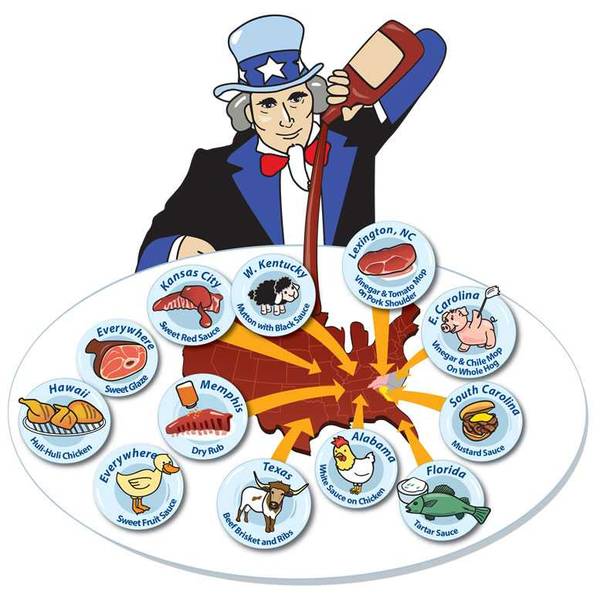
To most Americans, barbecue sauce is red and sweet and smokey and it comes from a shelf near the ketchup. To those who travel and would rather lunch in back of a rickety shack under a shade tree rather than under the golden arches, barbecue sauce comes in a rainbow of colors and flavors, and most tied to the area of origin and its ethnic roots. Indeed, barbecue sauce is a cultural phenomenon.

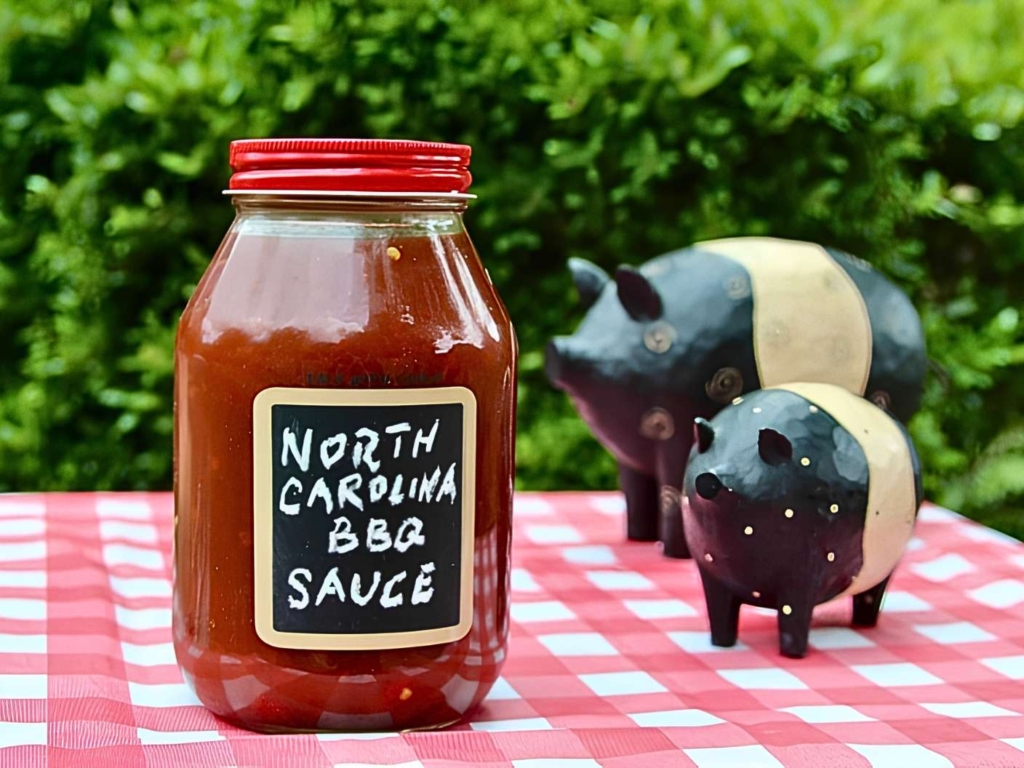
In the eastern half of North Carolina barbecue sauce is practically transparent with cayenne pepper flakes that flurry in it like a snow globe. In western half of the state it is practically pink going on garnet from ketchup. In much of South Carolina it is yellow from mustard, popular with German settlers. In many dingy brown joints of Texas it is close to brown from meat drippings with big chunks of green peppers and other flotsam in it. And in a corner of North Alabama it is white with black pepper flecks. In Memphis the "sauce" often comes from a shaker and is no more liquid than the paprika that is its backbone.

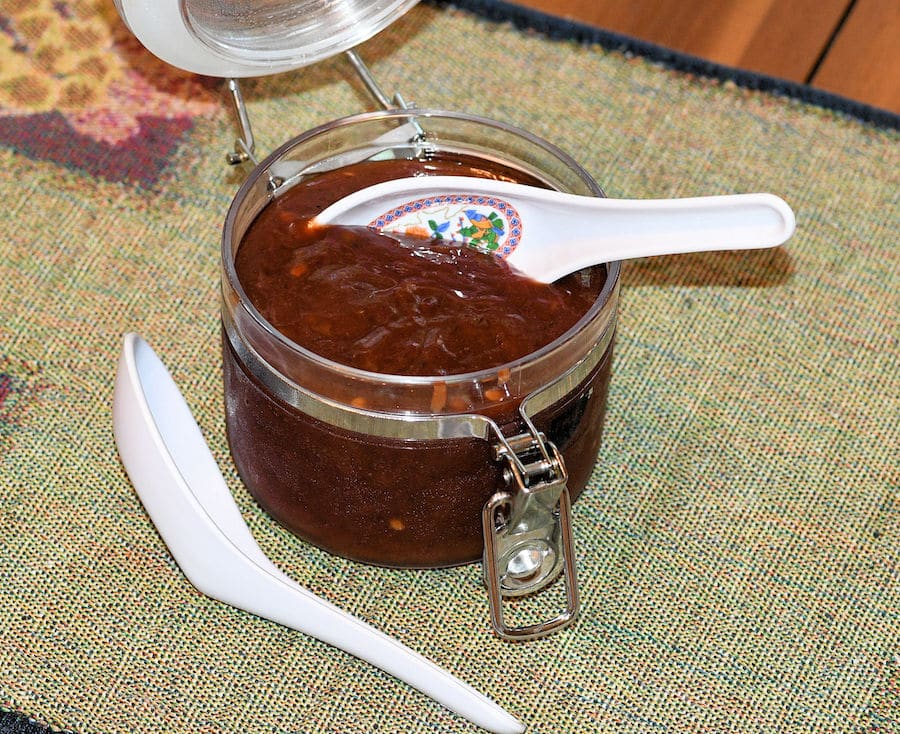
To the cook, barbecue sauce is alchemy. It is downright fun to make. Standing over the pot adding a dash of this, a pinch of that, taking a taste, adjusting, tasting, and adding something else makes one feel like a wizard. To add a personal flair to your next cookout, serve your homemade sauce from a jelly jar and be prepared to take a few bows. If you feel ambitious, serve your guests a choice of several sauces and repeat what you read here.

Below are the 12 classic American barbecue sauces with links to recipes.

Saucing strategies

Many sauces contain sugar and can burn quickly, so the secret is to hold off on the sauce until the last 10 to 15 minutes. Click here for more on saucing strategies.

The regional American barbecue sauces

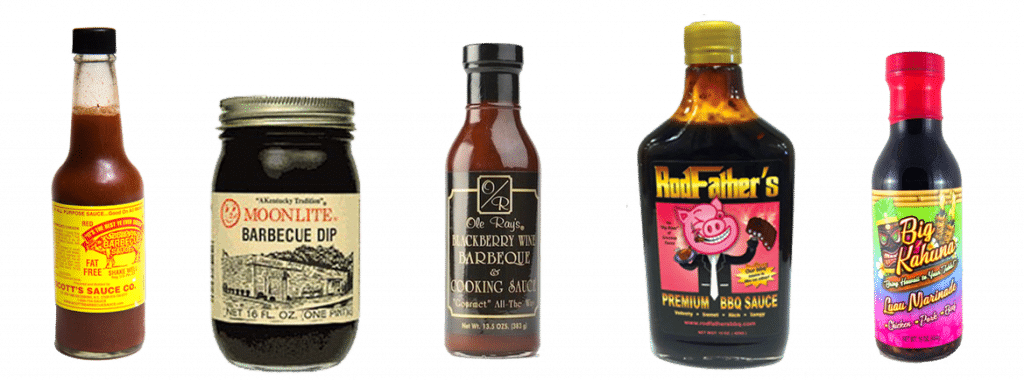
American barbecue sauces owe their differences to their colonial histories and can be divided in three basic categories, vinegar based, tomato based, and mustard based. Then there are at least 10 distinct classic American regional barbecue sauce styles and infinite variations (if we stretch the definition of "sauce" to include Memphis dry rub). Click the links for my recipes if you want to make your own. If you want to taste examples of these styles but don't want to make them, click here for a list of my favorite commercial barbecue sauces.

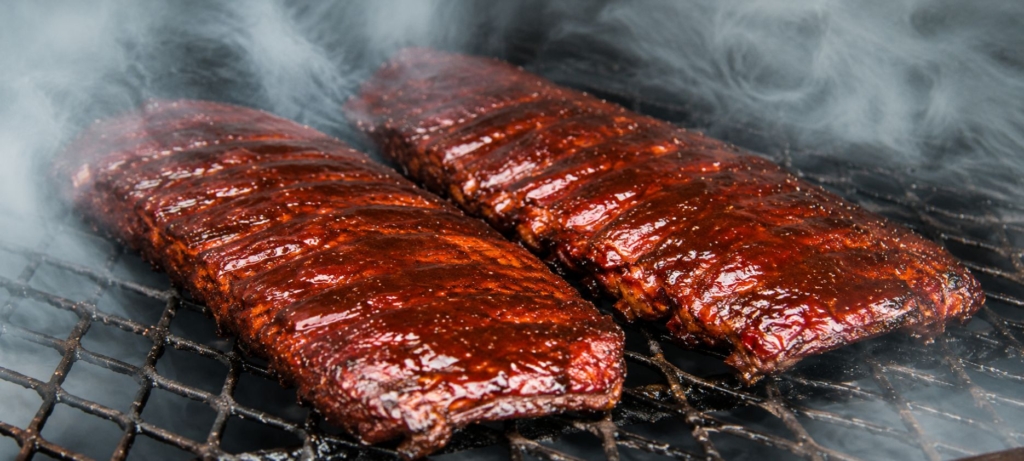
ribs with kansas city barbecue sauce

1) Kansas City Sweet Sauce

The first Kansas City barbecue sauces were hot, probably mostly vinegar and pepper, like the sauces of the Carolinas (below). Evidence is that this was the case for Henry Perry's sauce, and he started it all in 1907 in the city that is best known for barbecue in the world.

The style has evolved to become the iconic classic rich red, tomato-based, sweet-tart sauce with molasses or brown sugar and balanced with the tartness of vinegar. Many have liquid smoke added to help create that outdoor flavor for folks who cannot cook outdoors. They are by far the most popular in the nation and imitated around the country. But beware: Most commercial sauces are waaaaaay too sweet. If you pick up a bottle in the grocery and sugar or high fructose corn syrup are the first ingredients on the label, put it down. KC sauces are, if you study their content lists, is really just amped up ketchup, and many of us love it on fries and burgers instead of ketchup.

arthur bryant's barbecue sauceKC sauces don't penetrate the meat well, and sit on top like frosting. But recipes like my KC Classic, while not the same as KC Masterpiece, is mighty tasty and caramelizes beautifully over a hot fire making a crisp coat. They also burn easily, so coat your meat no sooner than 10 minutes before serving. If this is your favorite sauce, make sure you read my article on saucing strategies.

Now that I've defined the genre, let me point out an important exception to the rule: Arthur Bryant's Original Barbeque Sauce. Arthur Bryant's has been one of the iconic barbecue joints since 1930, perhaps the most holy of them all in the city that means barbecue more than any other, and they have been making a tomato based sauce that is thick, intense, with a solid black pepper and garlic theme. No noticeable sweetness or liquid smoke flavor. Nada. This is probably because the Arthur and Charlie Bryant were disciples of Perry. Not sure why, but they keep a five gallon carboy of the stuff on display in their front window (above).

carolina barbecue sauces

2) South Carolina Mustard Sauce

Nowhere are there more regional sauce preferences than in the Carolinas where barbecue is not chicken, burgers, hot dogs, or even ribs. Barbecue is pork, often whole hog, cooked low and slow, chopped or pulled into succulent shards, mixed with sauce, and served either in a pile on a plate or on a bun, often crowned with cole slaw.

The most distinctive sauce, and by far my fave, is the mustard based sauce found in barbecue joints from Columbia to Charleston. Mustard and pork go together like peanut butter and jelly. Early German immigrants in South Carolina knew this and the names of many of the best barbecue joints that serve mustard sauce have German names, like Shealy, Sweatman, Meyer, and Zeigler. The classic SC mustard sauces are a runny mix of yellow mustard, vinegar, sugar, and spices. Simple but very effective. They are especially good on pulled pork. I offer two recipes, my South Carolina Mustard Sauce is the classic while my personal riff on the theme, Grownup Mustard Sauce, is a more complex, herbal variation on the theme.

3) East Carolina Mop-Sauce. On the coast of North and South Carolina, a.k.a. "East Carolina" or the "Low Country", the philosophy is "Whole hog and keep the mustard for your hot dogs and the ketchup for your fries." The African slaves of the Scottish settlers in the region pioneered American barbecue and their simple sauces were plain a kiss of hot pepper flakes and ground black pepper in vinegar. And so they remain today, where the sauce is used both as a mop or baste on the meat while it is cooking, and then as a finishing sauce at tableside. Thin and piquant, they are designed to penetrate the meat, not just sit on top as thicker ketchup and mustard sauces do. They do a great job of cutting the fat in lipid-laced pork. There is little or no sugar in the mix, so your kids will hate it. Try my recipe for East Carolina Kiss & Vinegar on just a bit of your chopped pork before your pour it over the whole sandwich, and if don't like it, send the leftovers to me.

whole hog barbecue

4) Lexington Dip (a.k.a. Western Carolina or Piedmont Dip)

In Lexington, NC, and in the "Piedmont" hilly areas of the western Carolinas, they prefer to make their barbecue from the pig's shoulder, a rich flavorful clod of meat. In North Carolina, otherwise kindly old men have been moved to fisticuffs over the question of whether barbecue is properly made from whole hog or shoulder. In Lexington and west, they often call their mop-sauce "dip". It is vinegar and pepper based, a lot like the East Carolina mop-sauce, but laced with a hint of tomato sauce or ketchup added, not a lot. The red stuff helps tame the fierceness of the vinegar a bit, and the hint of sweetness counterbalances the acidity. I prefer my recipe for Lexington Dip slightly to the East Carolina style.

pork shoulder with lexington dip barbecue sauce

There is one other popular style in the Carolinas. In western South Carolina on the Georgia border, the locals are partial to a ketchup based sauce similar to Kansas City sauce.

5) Texas Mop-Sauce

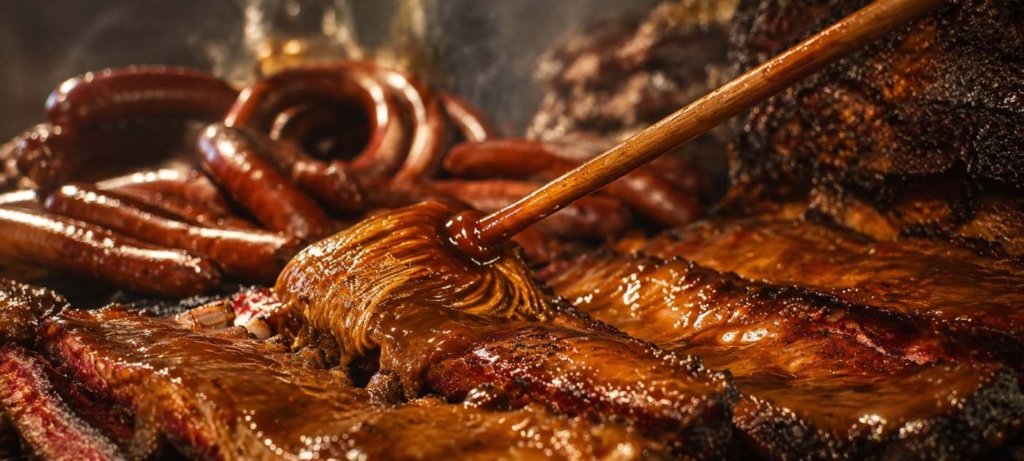
In Texas they barbecue pork and beef ribs, pulled pork, chicken, mutton, goat, and sausage they call "hot guts", but the star of the Lone Star State is beef brisket, an impossibly tough cut from the chest area that is magically converted to buttah-like tenderness with 12 to 18 hours of low and slow smoke roasting.

There are three important culinary influences on Texas barbecue:
1) European immigrants who brought expertise in smoking meats, especially Germans, Czechs, and Hungarians
2) freed slaves from the Southeast, and
3) Mexicans (Texas was, after all, a part of Mexico, and its cuisine leans heavily on Spanish, Mayan, and Aztec cultures).

The old-fashioned classic Texas sauces were fashioned to complement beef brisket first and they were not very sweet. Nowadays they have been influenced by the popularity of Kansas City sauces, and have gotten redder and sweeter.

Some traditional Texas pitmasters use their sauce as both a mop to cool and moisten the meat during direct cooking, and as an optional finishing sauce. Most common are thin, tart mops that are flavored with vinegar, chili powder or ancho powder, lots of black pepper, cumin, hot sauce, fresh onion, and only a touch of ketchup.

Texas Sauce at Cooper's

Some of the best sauces have beef drippings, and therefore cannot be bottled. As a result, the stuff served in the traditional old restaurants is vastly different than the stuff sold in bottle. In hallowed joints like Cooper's, in Llano, they often resemble a thin tomato soup with a beef stock base. They penetrate the meat easily rather than sit on top. I prefer them on brisket, not pork. In this picture, the bottled sauce sold at Cooper's is poured into a large pot and is kept warm on the holding pit. Trimmings are tossed in the pot, and when you order, if you ask for sauce, the meat is dipped in the pot. It tastes a LOT different than the bottled sauce served on the tables.

Before the meat is cooked, it is seasoned with a Texas Dry Rub, formulated for brisket with little or no sugar, lots of black pepper, and so they are very different from Memphis and most other rubs. Try my Texas Mop-Sauce for a taste of a real old-fashioned hard to find anymore down on the ranch Texas barbecue mop and sauce.

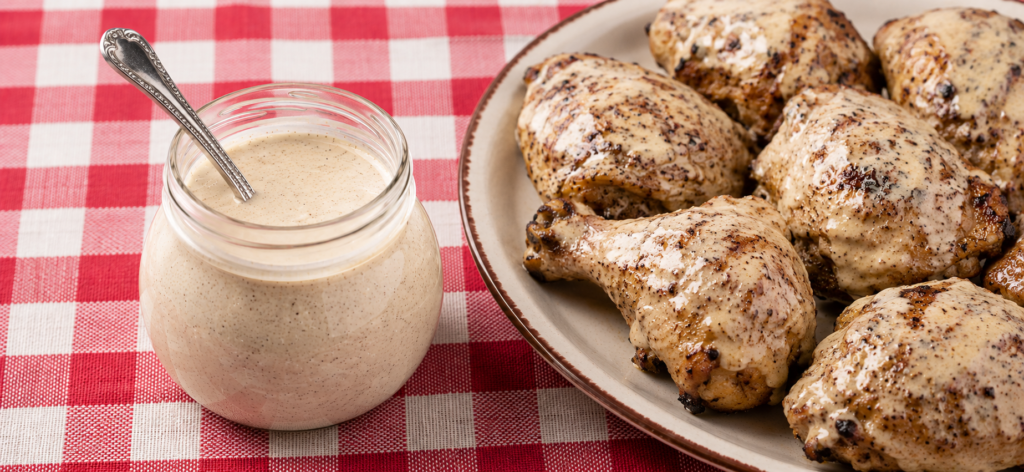
6) Alabama White Sauce

chris lilly of big bob gibson barbecueDeveloped for chicken by Big Bob Gibson's Bar-B-Q in Decatur, Alabama, this mayonnaise and vinegar sauce has become so well known among barbecue fans that it has generated many admirers and a handful of imitators. I don't recommend it for pork, and not everyone likes it on chicken, but it is so popular in Alabama it must be considered a regional classic. Chris Lilly (above), of Big Bob's says my attempt to reverse engineer his Alabama White Sauce is "scary close".

7) Kentucky Black Barbecue Sauce and Dip

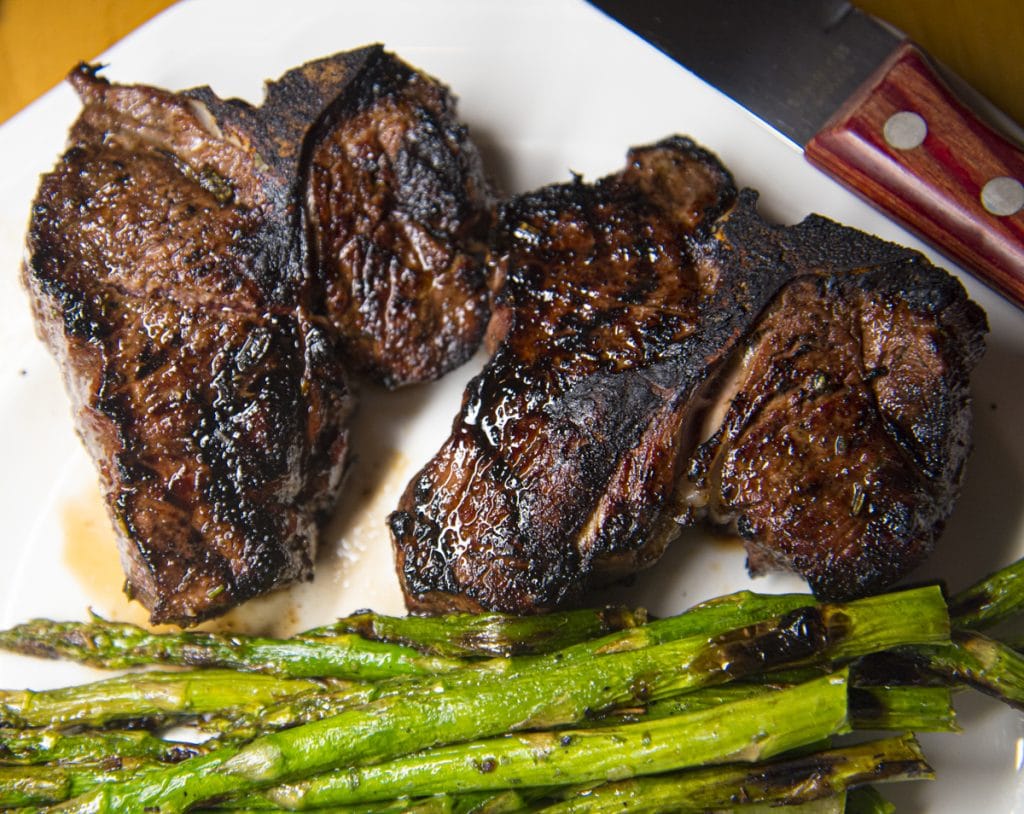
Sunlite Kentucky Black Barbecue Sauce & Dip For Lamb And MuttonThe most obscure of the regional sauces because it can be found in only a small area of Western Kentucky just east of Louisville around Owensboro, this fascinating blend is mostly distilled white vinegar and Worcestershire sauce. It is designed to go with the specialty of the region, slow smoked mutton (mature lamb), but it is also used on chicken and other meats. It is used as a baste on the pit, and then as a finishing sauce. Some places, like the Moonlite Bar-B-Q Inn, the most famous of them all, have two slightly different recipes, one for basting, and one for serving. My Sunlite Kentucky Black Barbecue Sauce & Dip For Lamb And Mutton is both a baste and finishing sauce, and frankly, I think it is better than the Moonlite. Just sayin.

8) Tennessee Whiskey Sauce

The Jack Daniel's World Championship Invitational Barbecue is considered by many to be the most prestigious competition in the world. As do many competitions, they have a sauce tasting, but theirs has a twist: Jack Daniels whiskey must be in the blend. Well, just as they planned it, whiskey-laced sauces have spread across the nation.

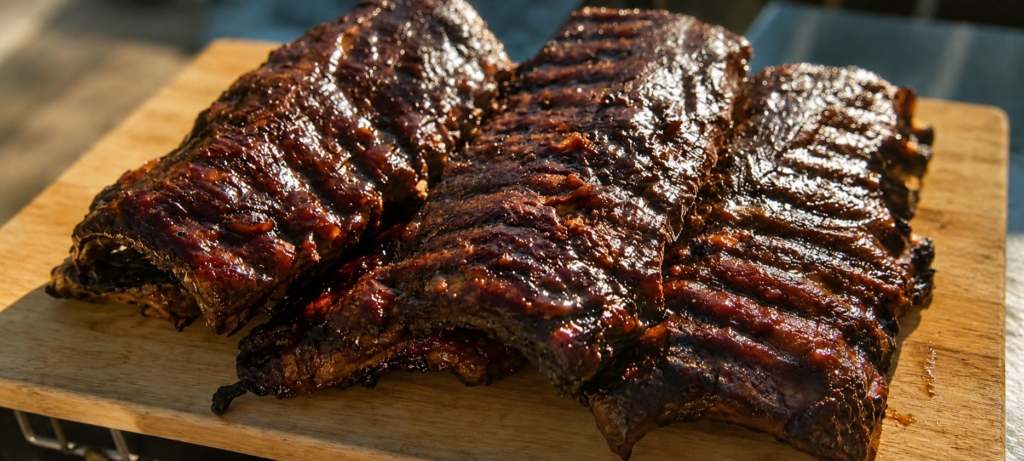
Slab with sauce

There are so many that I think it must be considered a legitimate category of barbecue sauce. My recipe for Tennessee Hollerin' Whiskey Sauce is named after the hollow, a lowland by the creek in which it was invented, this rich sauce has a kick, and when you taste it you'll bend over and holler "Kick me!" The secret: Whiskey concentrate.

9) Louisiana Hot Sauce

chose your barbecue sauceIn Louisiana anything that can be put on a grill is called barbecue, from fish to crawfish to nutria (kinda like a rat). The first bottled hot sauces came out of Louisiana, home of Tabasco Sauce and in Louisiana, hot sauce goes on everything. Nowadays there are lots of great hot and spicy barbecue sauces on the market. Some just burn from capsaicin (the active ingredient in chile peppers), but the best are blends of several different kinds of heat, among them: Black pepper, white pepper, mustard, wasabi, several different kinds of chiles, plus an underlying flavor of the meat of the chile pepper. The heat is then usually tempered with tomato sauce, and often countered with sweetness. Bayou Bite, my mildish version of a Louisiana barbecue sauce recipe is a wonderful blend of sweet and hot peppers used as a finishing sauce, after the meat is cooked, or as a dipping sauce served with the meat. Even if you don't like hot stuff, you really should try this one.

10) Memphis Dry Rub

Memphis is second only to Kansas City as a town of barbecue renown. Ribs and pulled pork are the stars, although their local special, perhaps best called their local oddity, is barbecue spaghetti. No, they don't put the pasta on the pit, it's just doused with barbecue sauce.

Alas, there is no distinctive indigenous Memphis sauce style. Around the nation a lot of pit stops call their sauce Memphis style, but they're kidding themselves and us. In fact, many Memphis purists prefer their ribs "dry" with only a spice rub. A restaurant's gotta have confidence in its meat to serve it with spices only and no sauce. Many Memphis restaurants have bowed to public demand and now offer a choice: Dry or wet, with wet usually meaning a Kansas City-style tomato-based sauce perhaps a bit thinner, more vinegary.

Memphis dry rubs are usually paprika based, and typical ingredients are salt, garlic, onion, black pepper, chili powder, and oregano. Meathead's Memphis Dust is a very versatile recipe perfect for pork, but readers have told me they love it on everything from turkey to salmon.

Perhaps the most revered dry ribs are served at Charlie Vergos' Rendezvous (called "The Vous" by some of the locals). There are a lot of recipes on the internet that the owners have palmed off on gullible media. They aren't close. I've reversed engineered Rendezvous-style Memphis Dry Rub (that's the Vous above), and my recipe is a LOT closer to the real deal.

11) Sweet Glazes

ham with apricot barbecue sauceA lot of great sauces are just a mix of sweetener, vinegar, and spices. The sweetener is usually brown sugar and/or molasses, and occasionally maple syrup, which, although wonderful, is too expensive for most commercial sauces. Glazes tend to penetrate well, they are shiny so they make the meat glisten, and they are sweet/sour so they complement the pork and cut the fat. In New Mexico there's a legendary pit stop where diners come out glazed over with Danny Gaulden's Legendary Glaze and he has been generous enough to publish the recipe. Another fave is Chris Lilly's Spiced Apricot Sauce, a killer glaze for ham created by the Executive Chef of Big Bob Gibson Bar-B-Q in Decatur Alabama, and one of the best barbecue cooks I've ever known. He too, has shared his recipe.

12) Flavored Sauces

chocolate chile barbecue sauce on ribsModern chefs are nothing if not creative, and just about anything you can imagine is used to make barbecue sauces. These sauces rarely have regional logic. There are a number of wonderful sauces that start out as start out as basic tomato based barbecue sauces and then are amped up with fruits, jams, and jellies as flavorizers and sweeteners. Raspberry, cherry, and apple are common. The work great with ribs. Eve's KC Pig Paint is a recipe of mine, a rich, sweet, Kansas City-style tomato-based sauce, with a secret ingredient from the Garden of Eden. Long ago I remember tasting a barbecue sauce tinged with cocoa, so I created my own Chocolate Chile Barbecue Sauce recipe.

How long can you keep a barbecue sauce?

When it comes to storing sauces, we have two concerns: Safety and flavor. We don't want any microbes setting up housekeeping in our sauce, and we want the flavors to remain bright and fresh.

Commercial barbecue sauces usually have preservatives so they can keep in the fridge for many months, even a year or more. Homemade sauces, at least my recipe, have no added preservatives, per se.

The good news is that vinegar, salt, sugars, liquid smoke, some spices, and other common ingredients all have antimicrobial and preservative properties, so they tend to help sauce safe from microbes and fresh tasting for weeks, even months. As long as you keep your sauce refrigerated, you should have little risk. Just make sure that when you are done making the sauce you put it in a very clean glass bottle with a tight fitting lid. I use Ball canning jars and lids and run them through my dishwasher, but jelly jars and bottles from other condiments work fine as long as they have tight lids. Just clean them well.

Also, never dip a brush into sauce and then brush meat, contaminating it with meat juices and microbes, and then put it back into the jar. Pour what you need into a coffee cup and if there is leftover after cooking, toss it.

Oxygen and heat are the natural enemies of freshness, and we all have seen ketchup turn black under the cap from oxidation. So don't let bottles of sauce sit out on the dining table for long, and certainly not on the shelf next to the grill. Again, pour what you need and chuck any unused sauce out.

If a sauce recipe calls for cooking onions, garlic, or spices in oil, then expect shelf life to shorten a bit. Oil can go rancid with time, especially animal fats such as bacon fat and butter. If you want to keep it a long time use a vegetable oil rather than butter. That said, my KC Classic sauce keeps many months and stays wonderful.

This page was revised 10/30/2011


facebook Be my
Friend
twitter Follow
on
Twitter
google_plus_logo My posts
on Google+
Huffington Post Food Read me
in
HuffPost
amazingribs barbecue & grilling favicon My free email
newsletter
amazing ribs barbecue & grilling RSS Feed My current
RSS feed

Add to Google Add to My Yahoo! Add to My AOL

Read this before posting a comment please:

1) If you are looking for info, please use the table of contents or the search box, at the top of every page before you ask for help.

2) Please don't ask any questions that involve temperature unless you tell us that you are using a digital thermometer! Dial thermometers are often off by as much as 50°F! If you are not using a good digital you have no idea what the temp really is so I can't help you. If you are still using a dial thermometer, please read this article about thermometers, then buy a good digital, and then, if the problem persists (chances are it won't), hit us with your questions. Please tell us everything we need to know to answer your question like the type of cooker you are using.

3) Please don't ask "What grill (or smoker) should I buy?" Read our Buyer's Guides and the buying checklists and follow the links. We've shared just about everything we know. Pay attention to the awards I have given my faves. We cannot pick the right cooker for your needs any more than we could pick the right car or spouse for you.


Barbecue & Grilling Accessories


Important Info About This Website

AmazingRibs.com is all about the science and zen of barbecue, grilling, and outdoor cooking, with great BBQ recipes and techniques: Baby back ribs, spareribs, pulled pork, beef brisket, steak, burgers, chicken, smoked turkey, lamb, barbecue sauces, burgers, steaks, rubs, and side dishes, with the world's best buying guide to barbecue smokers, grills, and accessories. It is edited by Meathead.

AmazingRibs.com is published by AmazingRibs, Inc., a Florida Corporation.

Our philosophy about food is simple. First of all it must taste great. It must be easy to make and emphasize fresh seasonal products with a minimum of processed ingredients. We think that people need to know why as well as how, so we spend a lot of time explaining things, and we believe that there are no rules in the bedroom or dining room.

Gold Medal for barbecue & grilling awardAbout Product Reviews and Best Value Gold, Silver, and Bronze Medals. These are highly recommended products based on features, quality, and especially value. Rest assured that when we recommend a product, it is really because we like it, not because someone has paid us to say so because we do not accept advertising from products we review. We purchase many products we review although occasionally suppliers send us samples. We have always been transparent about when we are reviewing a product sample, even before the Federal Trade Commission Required it in 2009. Click here to read more about our medals.

About links on this site. Other than clearly marked ads, links and recommendations on this site are all products, services, and websites we truly admire, and are never paid endorsements. Your suggestions are always welcome. If you would like us to link to your website, click here to read our links policy first.

Federated media Advertising on this site. AmazingRibs.com is one of the 100 most popular food websites in the US according to comScore, Alexa, and Quantcast. It is by far the most popular barbecue website in the world and pageviews increase rapidly every year. Advertising on AmazingRibs.com is a great way to build your brand or make direct sales. We do not accept ads from products we review and we keep a strict wall between editorial and advertising, so, for current pricing and availability of prime space, contact our agency, Federated Media, by clicking the logo at right. Click here for analytics, stats, demographics, and advertising options.

Our Privacy Promise. AmazingRibs, Inc. promises to never sell or distribute any info about you individually without your express permission, and we promise not to, ahem, pepper you with email or make you eat spam. Click here for more details of our privacy promise.

Disclaimer. The information on this website is for educational purposes only. All material within comes without warranties of any kind. The authors are human and capable of mistakes, omissions, or errors, so we make no guarantees as to the accuracy, completeness, or safety of the information. Under no circumstances are we liable for any damages that result from use of the site (so you can't sue us if you don't like a recipe or if you burn your tongue on hot ribs, OK?).

Copyright © by AmazingRibs, Inc. Unless otherwise noted, all text, recipes, photos, and code are owned by AmazingRibs, Inc. and fully protected by US copyright law. This means you need written permission to republish or distribute anything on this website. But we're easy. To get reprint rights, click here. Note: Some photos of commercial products such as grills were provided by the manufacturers and are under their copyright.


LeaderDog.org ad on BBQ site
Meathead the Barbecue & Grilling Lover Cartoon

Get Smoke Signals, my free eletter with tips and recipes. No spam. Guaranteed.


Save this link to
keep this site free!

http://tinyurl.com/amazingribs

This link takes you to Amazon and tags anything you buy with a code so we get a referral fee. It works on anything from grills to diapers and it has zero impact on the price you pay. The best reasons to buy from Amazon are low prices, fast often free delivery, fair return policies, and often there is no sales tax. But clicking on that link before you shop helps us devote more time and money to you. Thanks!


Hot Stuff Barbecue & Grilling Award
Look At These AmazingRibs.com Best Value Gold Medal Winners

Here are some great products that have earned The AmazingRibs.com Best in BBQ Gold Medals. These are not ads!

Award Winning Meat Temp Fridge Magnet

National Barbecue Association AwardThe prize for Best BBQ Tool at the 2012 The National Barbecue Association conference went to a simple inexpensive fridge magnet by Meathead. It includes the latest USDA recommendations as well as chef recommendations (and they often differ) as well as color photos of the different stages of doneness for red meats. The temperatures are the same for both indoor and outdoor cooks. Click here for more info and how to order it.

meat temperature magnet for grilling

GrillGrates Take You To The Infrared Zone

GrillGrates are the best new product I have tested in years and the best thing to happen to beef since salt and pepper. The base superheats, eliminates hot spots, and blocks flareups. This is the concept behind the expensive new infrared grills. A must for gas grills. Click here for more about GrillGrates.

barbecue grill grates

The Smokenator: A Necessity For All Weber Kettles

If you have a Weber Kettle, you need the amazing Smokenator and Hovergrill. The Smokenator turns your grill into a first class smoker, and the Hovergrill can add capacity or be used to create steakhouse steaks. Click here to read more.

Weber Barbecue Smokenator

ThermoWorks Pocket Thermometer - No More Guessing

A good thermometer is why I never serve overcooked or undercooked food. This one has a very thin tip with a tiny thermocouple so it gives an accurate reading in just six seconds. I cannot recommend it more highly. It will improve your cooking overnight and pay for itself in a hurry. And it is inexpensive. Click here for more about thermometers.

barbecue & grilling thermometer


Steakhouse Knives

These are the same knives used at the best steakhouses (Peter Luger, Smith & Wollensky, Morton's and others). Machine washable, temper-ground, serrated, high-carbon stainless-steel, full-tang blades with excellent cutting edge retention, beefy hardwood handle, rust and stain resistant, and they stay shiny without polishing. And now they have the AmazingRibs.com imprimatur. Click here for more info on these wonderful knives.

steak knife set for barbecue


Donate to keep
this site free!

barbecue & grilling hatWith a $30 donation you'll get a 100% cotton brushed twill adjustable low profile cap with the AmazingRibs patch sewn on. I'll even toss in a small bag of BBQ'rs Delight wood smoke pellets. Click here for more info.


Advertisement


Big Poppas Smokers Grilling & Barbecue Ad