



Most pizza/baking stones nowadays are made from a high temp tolerant “refractory” material called cordierite. This material absorbs and retains heat beautifully, and it transmits that heat to the pizza dough efficiently. A few baking stones are made from cast iron and there is a new generation of heavy steel materials that function like griddles.
Modern pizza stones are porous and breakable, just like the old fashioned kiln baked clay or ceramic stones. And if they get wet, when they are heated, the steam can expand and crack the stone. If dropped or banged hard or subjected to thermal shock, they can shatter. But if they have cordierite in the blend, they are a bit stronger and more durable. They’re also a bit more expensive.
When new, cordierite stones are pale tan, and things can stick to them easily. Most manufacturers don’t tell you this because it is controversial, but I think it is a good idea to “condition” or “season” a new stone to make it non-stick and easier to clean.
Like what you’re reading? Click here to get Smoke Signals, our free monthly email that tells you about new articles, recipes, product reviews, science, myth-busting, and more. Be Amazing!
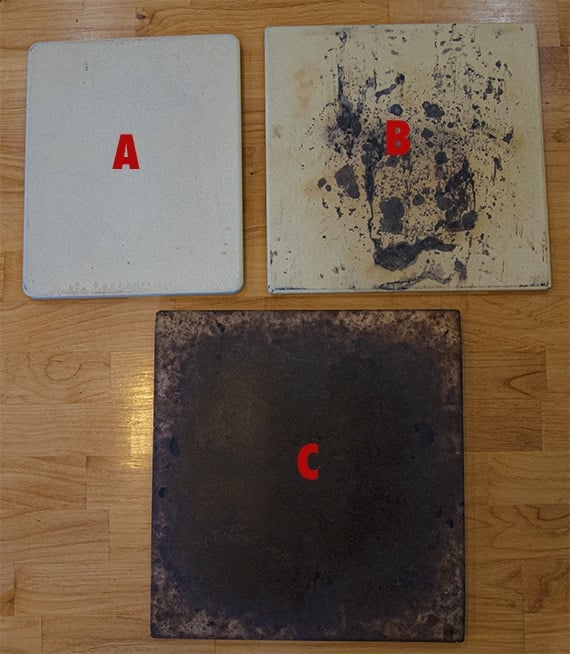
An unseasoned stone may not be a huge problem when you thoroughly preheat the stone before cooking, but conditioning the stone before cooking makes it foolproof. As stones get used, they darken and absorb oil, and water will bead up on them. The darker color also cooks pizzas better.
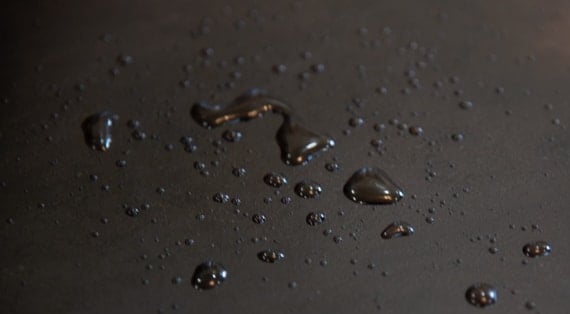
In the photo above you can see (A) a brand new cordierite stone, (B) one that has been cooked on unseasoned and how it has charred from sauce, cheese, and juices, and (C) one that I have had for more than a decade that is well seasoned and almost black. Below you can see in detail how it repels water from the surface.
Of course, you can use a new tan stone right out of the box, and most people do, but I recommend you season it first, just like you would season a cast iron pan or a carbon steel wok.
Here’s how. Wash the stone with warm water, no soap. Let it air dry completely. Then oil it generously on both sides with a high smokepoint oil such as safflower, peanut, soybean, or a cheap refined olive oil. It will drink up several ounces. Add some more until it doesn’t absorb any more. Then wipe the excess off with a paper towel. Now bake the stone in the oven or on the indirect heat side of a grill at about 350°F for 20 to 30 minutes. Don’t go much higher or it can smoke. Indoors, put a sheetpan or foil under it in case some oil drips. Once baked, let the stone cool, then wipe it down with oil a second time and bake it again. When it cools, you are good to go. Or if you want a really deep seasoning, repeat one more time.
After you cook with it, there might be cheese or sauce stuck to the stone. Scrape it off with a paint scraper and scrub it with a scrubbie sponge, making sure you get off any foreign matter that might stick to food. You want the surface smooth. Then let the stone air dry thoroughly before using it.
Our former editor, David Joachim, has co-authored a book on pizzas. He teaches the proper technique for transferring the pie from the peel to the stone: “I prefer to use a wooden peel to launch a raw pizza, and I like to use some wheat bran, cornmeal or flour under it to make sure it doesn’t stick to the peel. Just before inserting it into the oven, I jiggle the pizza on the peel and sometimes even blow air under it to make sure it isn’t sticking. Then I place the tip of the peel on the back of the stone, shake and angle up slightly to get the tip of the dough on the stone, then pull the peel away with a smooth jerk to leave the pizza on the stone. With that technique, there should be no dough bunching, regardless of the seasoning on your stone. The dough should also unstick itself rapidly as it toasts on the hot stone.” I might add that there is a tendency to push before pulling. Don’t. Just pull.



Before you can post a comment or question you must sign into our commenting partner, Disqus. This helps make sure everyone hanging around the grill is civil. We do not tolerate nastiness, racism, porn, inappropriate language, or attacks on others. All comments are the property of AmazingRibs.com and we reserve the right to quote them, edit them, delete them, and block people from making future comments.
Please leave comments and questions on the same page that is devoted to that subject so others can see questions and our answers when they are reading about the subject. You must enable JavaScript to use the comments section, and you must accept cookies to post comments. Note: the software that runs Disqus is different from the Pitmaster Club, so members need to sign into the Pitmaster Club separately.