


Pork chops and steaks are blank canvases. They love to be painted with herbs and spices, and smoke and sauces. But they can transmogrify from juicy to jerky in just two minutes, so temperature control is especially crucial. There are many cuts of pork and several different cuts chops you need to know, but my favorite cooking method works equally well on all cuts.
This is Kermit the Frog’s Second Favorite Pork Chop. For Kermit’s all time favorite pork chop, just watch the ending of the movie The Muppets Take Manhattan, below.
Recipe Overview: Juicy Smoked Pork Chops Success Formula
- Trim: the excess fat off the pork chops, including the silverskin.
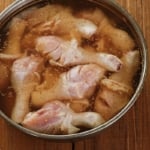
- Dry brine: the meat by filling a gallon zipper bag with the brine and adding the meat. Put the bag in a bowl in the fridge for 1 to 2 hours.
- Fire up: your grill for 2-zone or indirect cooking or fire up the smoker, aiming for 225°F (107.2°C) in the indirect zone.
- Remove: the chops from the bag and season them with the black pepper.
- Cook: the chops on the indirect side of the grill, paint them on both sides with the sauce and close the grill’s lid. Flip them after 20 minutes and paint again. Cook time should be 45 minutes to an hour.
- Make grill marks: when the meat hits about 125°F (51.7°C), paint on the sauce, and then move the chops to direct heat and lift the lid on the grill. Rotate after 3 minutes, flip, and paint them again, cook for 3 minutes, and rotate. Just take care not to burn the sauce and overcook the meat. Remove them when the centers are 140 to 145°F (60 to 62.8°C).
- Serve: the chops on a platter, and serve with grilled asparagus, spätzle, and a dry Riesling.
Summarize & Save this Content on:
The different types of pork chop cuts
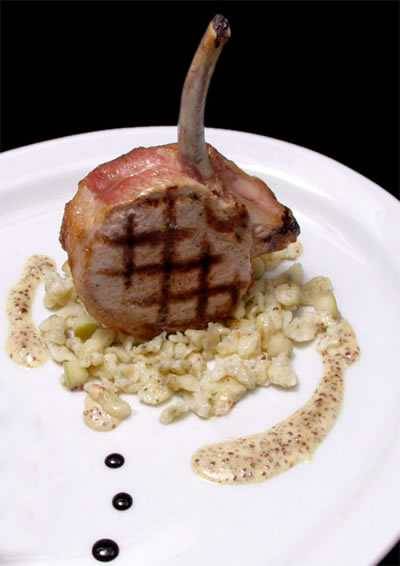
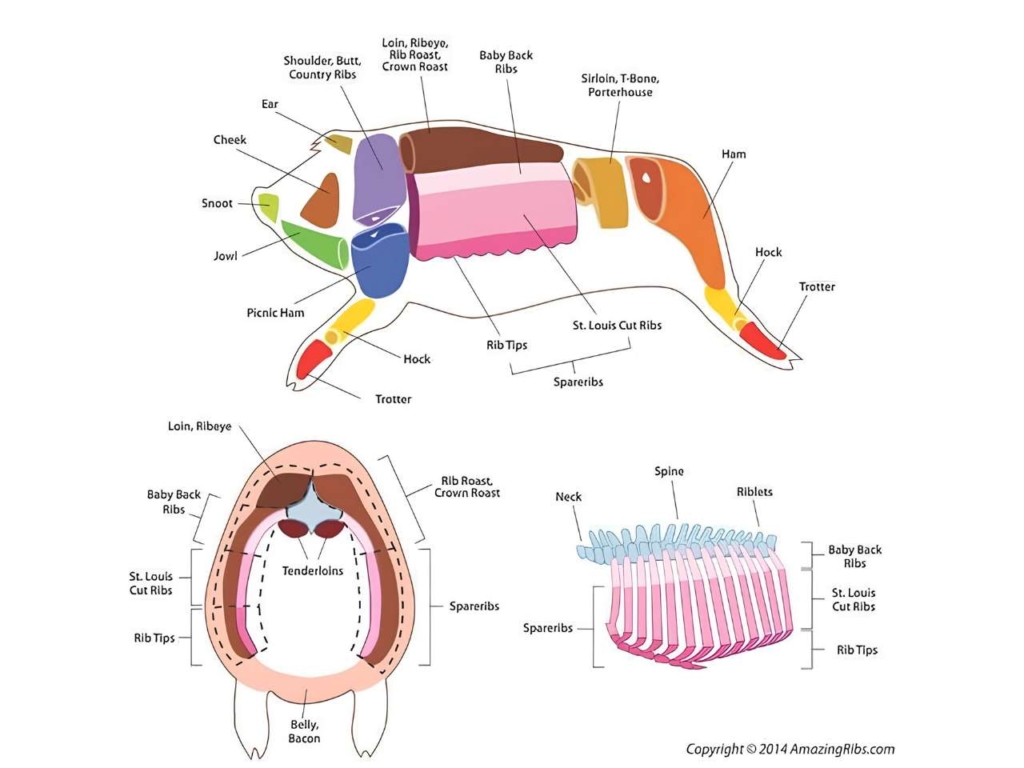
The bone-in loin chop. This comes from the loin muscle that runs along the backbone. The meat is very lean. It usually has a thin belt of fat on one side, and a rib bone attached to another side. This is the “other white meat” you’ve heard of, mild and tender because the loin muscle does not get a lot of work. It is usually about 4″/10.2 cm diameter. Sometimes you’ll encounter a bone-in loin chop with a bone that has been cut partially loose of the meat, to make a cutesy lollichop. Usually this bone is attached and the meat is more oblong shaped.
The boneless loin chop. This is the same cut as above, but the rib bones have been removed before it is cut into chops. Think of these chops as a chicken breast. Simple, lean, tender, unless you overcook it, and a blank canvas. Sometimes it is slit along the side and folded open like a book, making a butterflied loin chop.
The T-bone or porterhouse. Cut from behind the rib cage, there is a T-shaped bone with a large hunk of loin meat on one side, and on the other side of the bone there is a smaller round, section of the tenderloin. This is also a lean cut and care must be taken not to overcook.
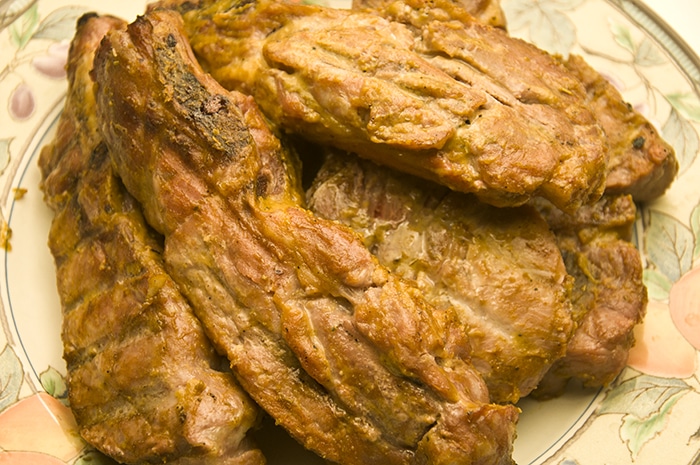
Country-style ribs (a.k.a. country ribs, a.k.a. blade steaks, a.k.a. blade chops). Country-style ribs are not really ribs. They are really pork chops, more meaty and less fatty than real ribs, cut from the front end of the baby backs near the shoulder. Sometimes a tray of these “ribs” at the grocery store will contain a rib or two, but more likely, it will include a section of shoulder blade. These should be cooked like chops and should not go beyond 140°F/60°C, whereas ribs often are cooked way up to 200°F/93.3°C.
Because they vary in size and thickness, they are hard to cook to an even doneness. Depending on how they are cut, a serving will be one or two country ribs. For big hungry men, perhaps three. They respond well to brining before low and slow cooking.
The science behind our juicy smoked pork chops recipe
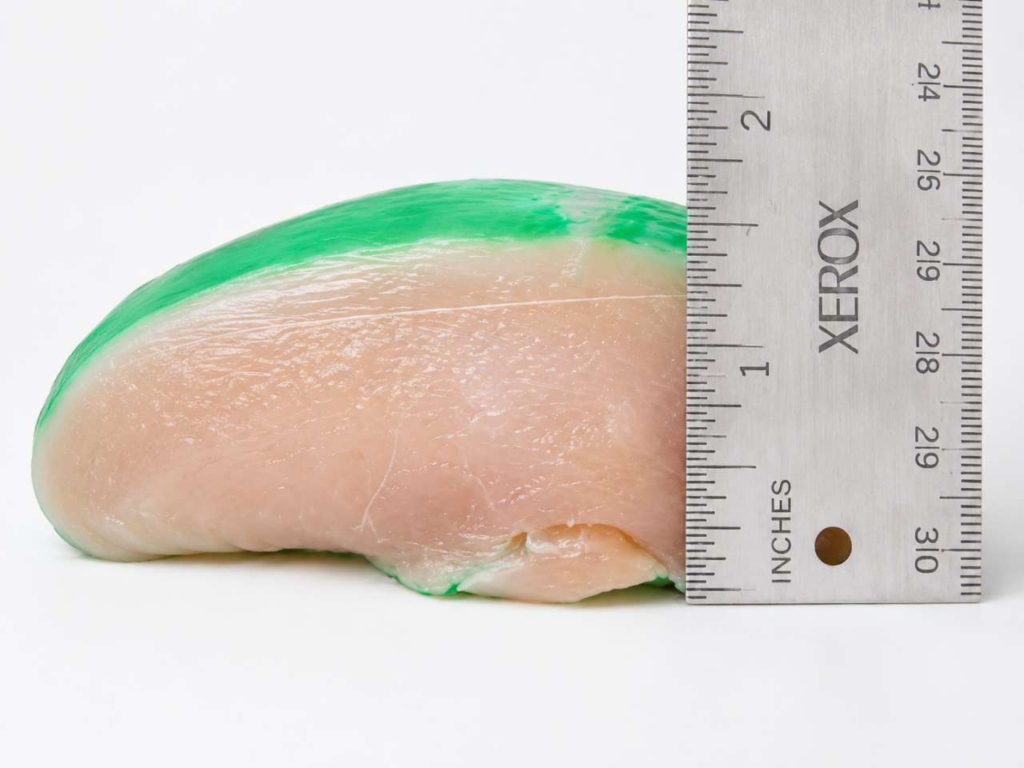
Loin chops and T-bones are best when cut thick, at least 1″/25.4 mm, when wet brined for about an hour, then gently cooked with a little smoke, and flavored with herbs and/or a sauce. This is one of the rare occasions where I prefer a wet brine vs. dry brine because a bit of water is drawn into the meat and this cut needs all the water it can get. Thin chops are easy to overcook and there is less room for error. You can ask your butcher to cut them thicker, if you wish. Most butchers are happy to do this for you at no extra charge.
To make sure you get it right, I recommend you cook low and slow with indirect heat at about 225°F/107.2°C, which is especially important for shoulder chops. They have a lot more connective tissue.
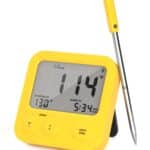
Shoot for meat that is 135 to 140°F/57.2 to 60°C in the thickest part, using a good digital thermometer. You may see a little pale pink in the meat, but don’t worry about trichinosis. Trich is extinct in USDA inspected pork. When there is a hint of pink, it is at its peak tenderness and juiciness. Resist the temptation to cook pork chops over high heat. We like to sear beef steaks, but dark colored pork is not as flavorful as dark colored beef, so don’t worry if you don’t get the outside brown. It is far more important to get the insides right.
To knock them outta the park, add smoke. Check out my article on the science of wood, smoke, and combustion for some know-how. To knock them outta the state, top them with caramelized onions.
Ingredients and substitutions for juicy smoked pork chops
- Two Pork chops, at least 1″ (25.4 mm) thick. They should be bone-in, and the thickness is important to keep them juicy.
- Blonder brine is our wet brine of choice. We use Morton’s Coarse Kosher salt but it doesn’t matter for this kind of brine what sort of salt you use.
- Black pepper, just a little bit, is needed in this recipe. Black pepper is the world’s most recognizable and widely used spice. The chops are already salted so this is all you need.
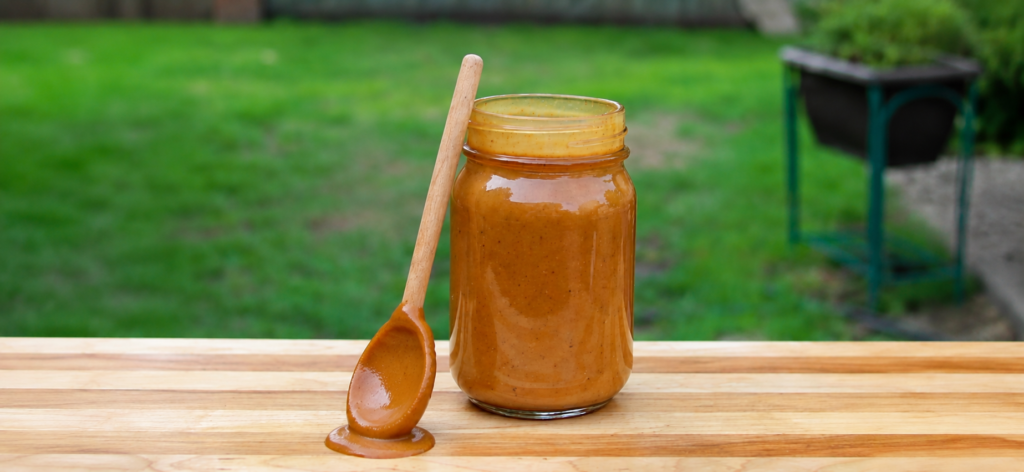
- Columbia Gold BBQ Sauce is my favorite mustard-based sauce. You can use your favorite barbecue sauce, but I’ve tried them all, but the combo is perfect, like chocolate and cherry. Mustard and pork, especially smoked pork, is common throughout Germany and Eastern Europe (think hot dogs or Polish sausages).
Juicy smoked pork chops, step by step
- Trim excess fat. If you have loin chops, remove the silverskin that’s under the band of fat around the perimeter.
- Fill a gallon-sized zipper bag with the brine and add the chops. Place the bag in a bowl and refrigerate for 1 to 2 hours.
- Remove the chops from the brine and season them with black pepper.
- Prepare a grill for 2-zone cooking, and shoot for 225°F (107.2°C) in the indirect zone.
- Put the chops on the grill’s indirect side and paint both sides with sauce. Let them cook with the lid down. Flip them after about 20 minutes and paint them again. After 20 minutes or so, you’re ready to eat. Cooking time will be about 45 to 60 minutes for 1″ (25.4 mm) chops to reach 145°F (62.8°C) in the center, max.
- To add grill marks, when the chops reach 125°F (51.7°C), paint sauce on the sauce, and then move them to direct heat and remove the lid. After 3 minutes rotate them 45 degrees to get cross hatching. Wait 3 minutes more and flip, paint, 3 minutes more and rotate. Leave the lid off the entire time and remove when the centers reach 140 to 145°F (60 to 62.8°C).
- Plate the pork chops and serve with grilled asparagus, spätzle, and a dry Riesling.
Juicy smoked pork chops FAQs
I’m sorry to say it, but I don’t recommend that you stuff pork chops. Stuffed chops are made by cutting a slit into a thick chop and working a knife around to create a pocket. The process makes a thicker entity, and by the time the center of the stuffing is warm, the meat, which you have now, for practical purposes, reduced to two thin chops sandwiching the stuffing, is overcooked as the heat works its way toward the center. If you must stuff a chop, precook the stuffing so you can get them off the heat sooner, and cook at 225°F/107.2C and no more.
All you need to do is warm them through gently, and then hit them with quick sear or a glaze, without overcooking it. A flavorful brown sugar and mustard glaze is perfect.
There are a few reasons, and one of them has to to with temperature. They’re cooked past 145°F, or they’re very lean and/or thinly cut, or they’re boneless. It’s harder to dry out bone-in pork chops, as they tend to stay juicier and usually have more fat.
My second favorite sauce to use for this dish after the Columbia Gol is my Italian piccata sauce. You don’t paint it on the meat on the grill. You pour a pool on the plate and sit the chop on top and serve it that way.
Contrary to popular belief, the bone does not add flavor to the meat. It does not somehow dissolve or send out flavor compounds across 4″/10.2 cm of solid protein. Besides, the bone is mostly calcium on the outside. Bones add flavor to stews and other wet cooking methods, but not in grilling or roasting methods. The bone does impede heat transfer slightly, so meat next to the bone tends to be a bit less cooked. But the bone is also fun to gnaw on.
If you like these juicy smoked pork chops, you’ll love . . .
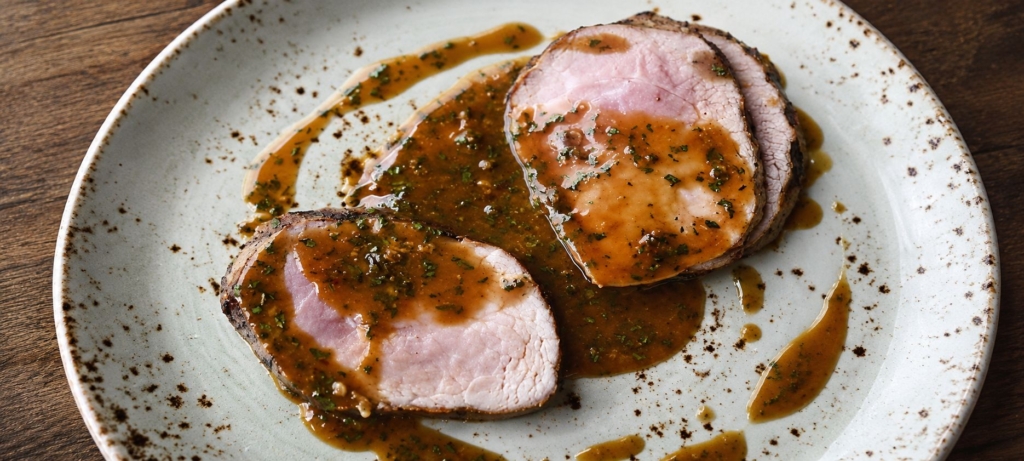
- Celebrate Any Occasion Smoked Stuffed Pork Loin Roast
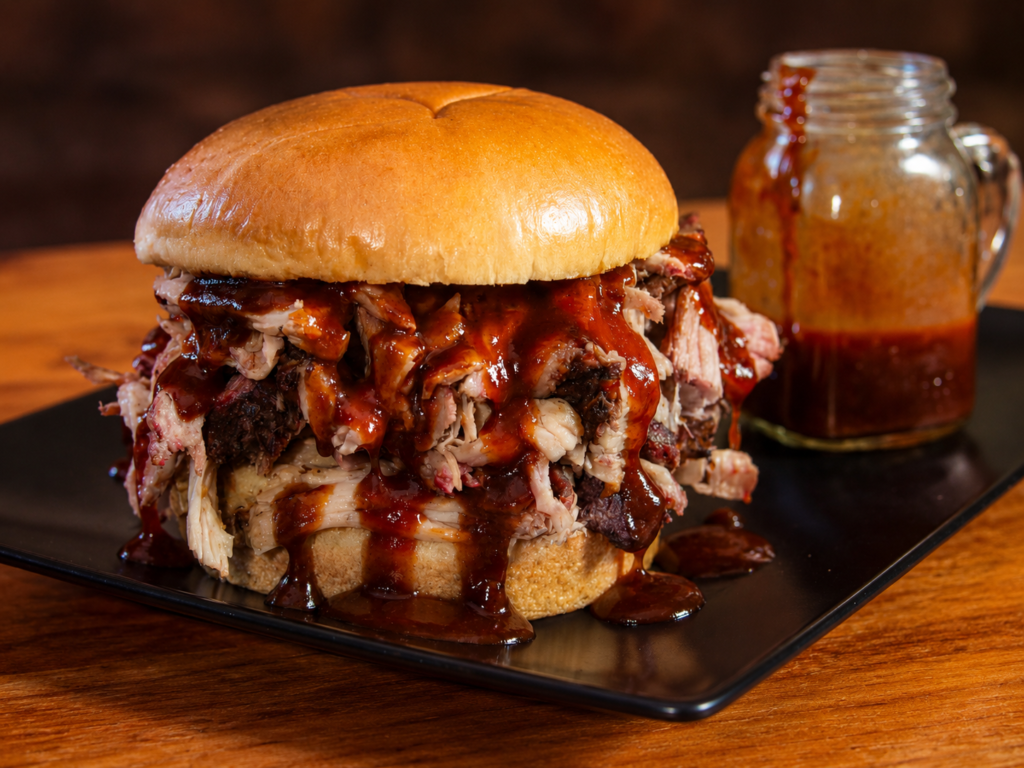
- A Perfect BBQ Pulled Pork Recipe
- Pork Tenderloin Lollipops, a Meaty Treat for All Ages
- Pork Belly Porchetta: The Best Pork Roast Ever
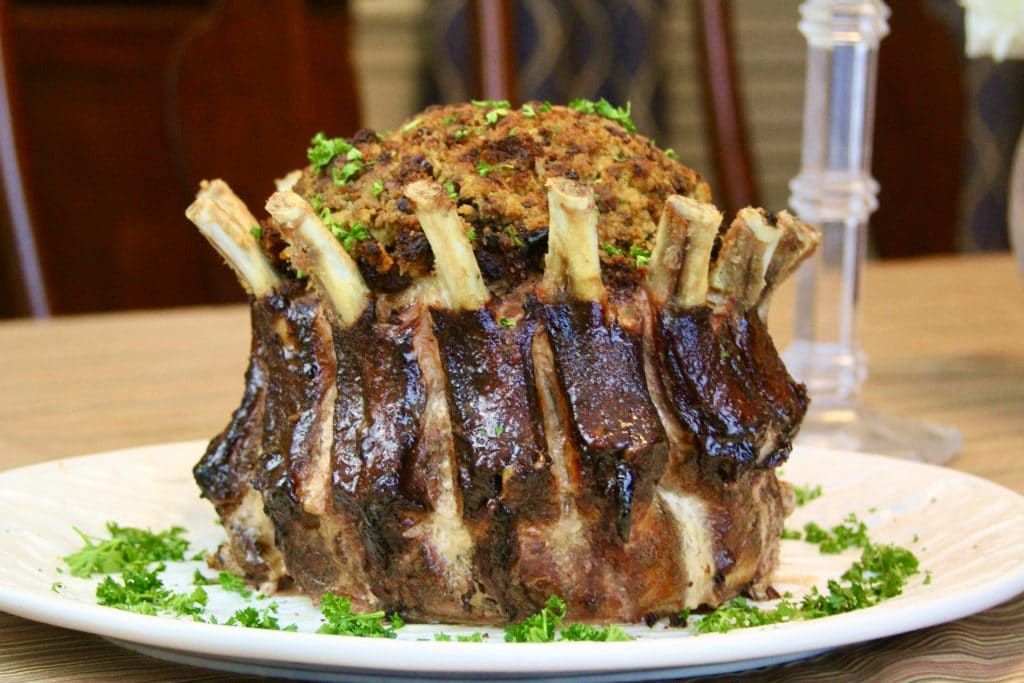
- Smoked Pork Crown Roast, the Reigning King of Your Holiday Meal
Video: Kermit and Miss Piggy’s Wedding
Find out which pork chop is Kermit’s FAVORITE.

Juicy Smoked Pork Chop Recipe, a.k.a. Kermit’s Second Favorite Pork Chop
Ingredients
Method
- Prep. Trim excess fat. If you have loin chops, there is a band of fat around the perimeter. Beneath the fat is a thin layer of connective tissue called silverskin. You need to remove it because as it cooks it shrinks and causes the meat to form a cup. The fat will not penetrate the meat so there is no reason to leave it on unless you like eating the fat. In that case, cut at least two slits through the fat and the silverskin right down to the meat.
- Brine. Fill a 1-gallon (3.9 L) plastic zipper bag with the brine, add the chops, place the bag in a bowl to catch any leaks, and refrigerate for 1 to 2 hours. Thinner chops will take half that time.
- Fire up. Prepare a grill for 2-zone cooking, or fire up the smoker, and shoot for 225°F (107.2°C) in the indirect zone.
- Season the chops with black pepper, but no salt (they have enough from the brine). Don’t bother with your favorite barbecue rub. Not needed.
- Cook. Put them on the indirect side of the grill, paint both sides with sauce, and let them cook with the lid down. Flip them after about 20 minutes and paint them again. After another 20 minutes or so, you're ready to eat. If your indirect side is about 225°F (107.2°C), cooking time will be about 45 to 60 minutes for 1" (25.4 mm) chops. Please use a good digital thermometer to get them cooked properly, 145°F (62.8°C) in the center, max. If you are cooking over direct heat, don't add the sauce until just before the chops are ready or else it will burn.
- If you want to get fancy and add grill marks, when the meat hits about 125°F (51.7°C), paint on the sauce, and then move them to direct heat and remove the lid. After 3 minutes rotate them 45 degrees to get cross hatching. 3 minutes more and flip, paint, 3 minutes more and rotate. You've got to be careful here, this is a great way to incinerate the sauce and overcook the meat. You want the lid off so the meat is cooking only on the bottom side. Remove them when the centers are 140 to 145°F (60 to 62.8°C).
- Serve. Plate and serve with grilled asparagus, spätzle, and a dry riesling.
Before you can post a comment or question you must sign into our commenting partner, Disqus. This helps make sure everyone hanging around the grill is civil. We do not tolerate nastiness, racism, porn, inappropriate language, or attacks on others. All comments are the property of AmazingRibs.com and we reserve the right to quote them, edit them, delete them, and block people from making future comments.
Please leave comments and questions on the same page that is devoted to that subject so others can see questions and our answers when they are reading about the subject. You must enable JavaScript to use the comments section, and you must accept cookies to post comments. Note: the software that runs Disqus is different from the Pitmaster Club, so members need to sign into the Pitmaster Club separately.