



The store bought stuff is ok, but it pales in comparison to a homemade Irish or Canadian bacon.
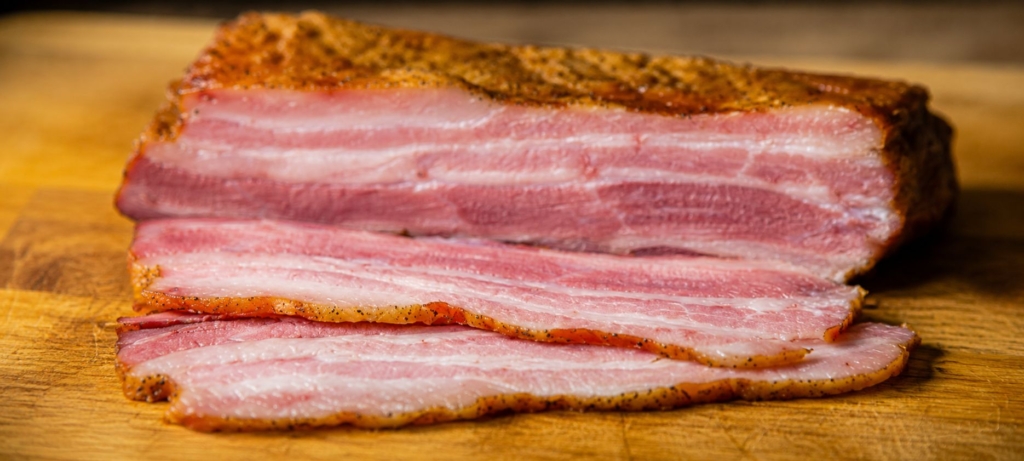
People often misunderstand the term “Canadian bacon.” In the US, it usually means wet cured pork loin that is smoked. But Canada’s Food Inspection Agency has three classifications for bacon, none of which are called “Canadian Bacon” for obvious reasons. The first is bacon, which refers to pork belly, cured only. The second is back bacon, which is pork loin, cured and smoked. This is Canadian bacon as most folks know it. And finally, Wiltshire bacon, which is boneless pork loin with portion of belly attached, cured only.
The science behind our Canadian bacon
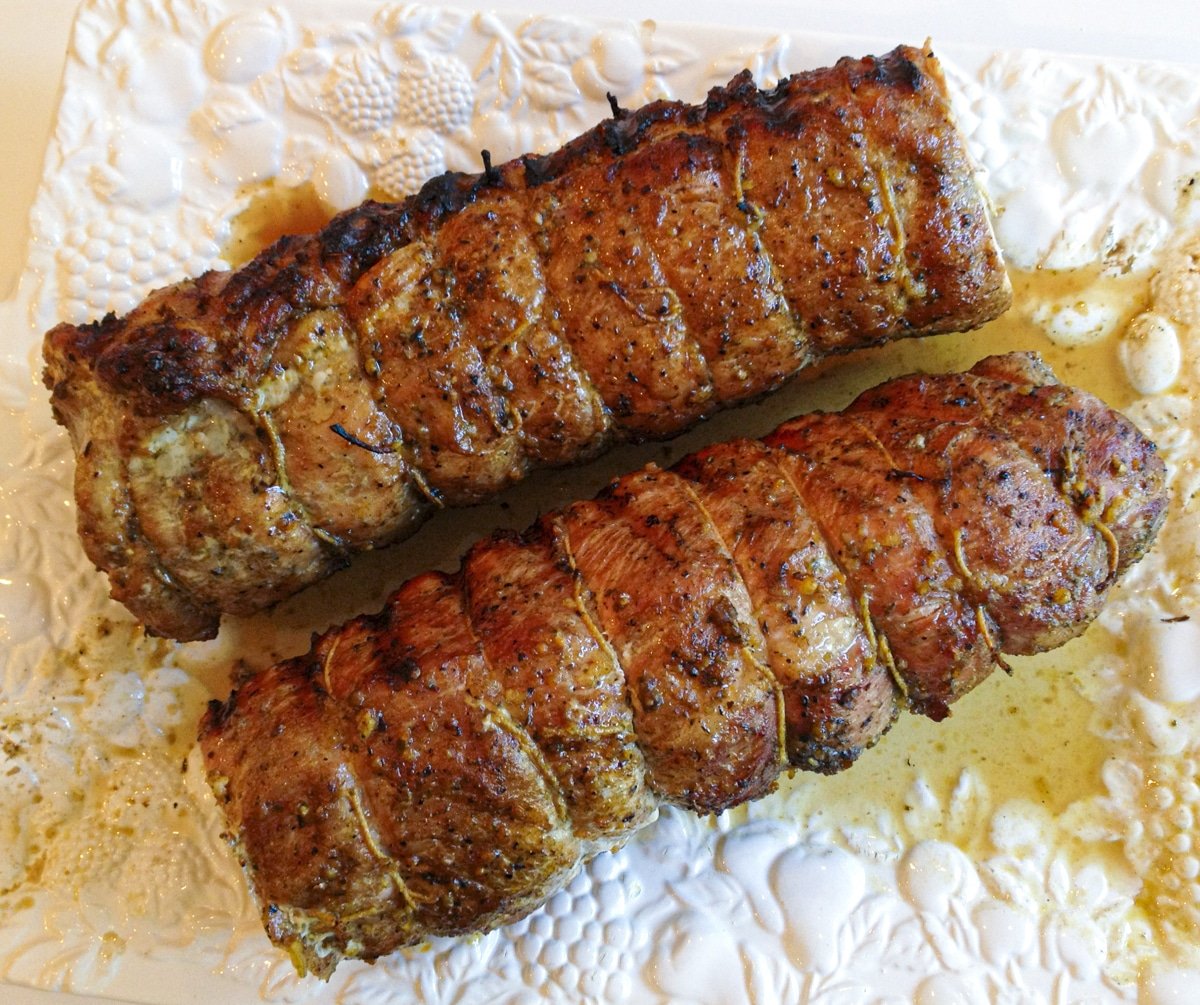
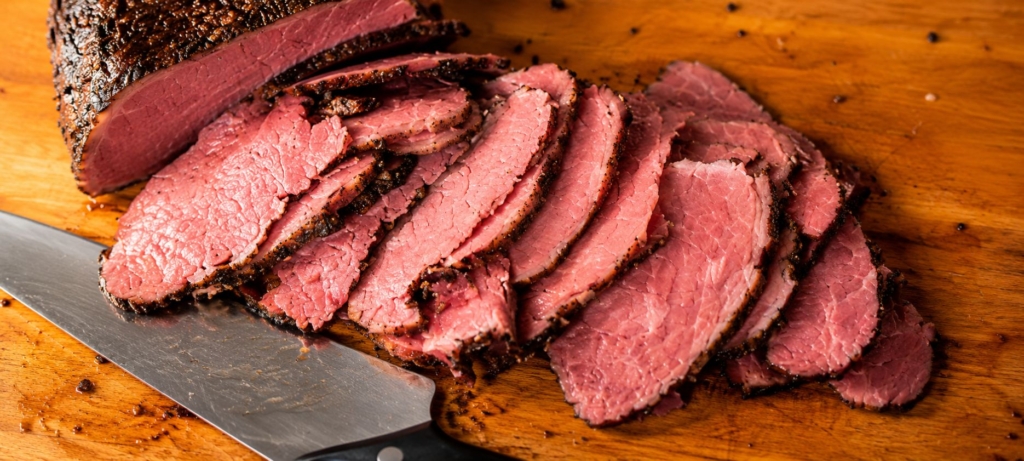
There’s a great big wide world of ham, but this Canadian bacon recipe shows you how to make back bacon, i.e. cured, smoked pork loin sliced into discs about 1/8″ thick. The picture above shows the same cut, pork loin, NOT cured (notice the meat is not pink), just smoked and sliced. When you cure and smoke pork loin, the cure turns the meat pink, and it is exactly what you want for legit Egg McMuffins and Eggs Benedict.
In Canada, you can also find “peameal bacon,” which is back bacon that has been rolled in cornmeal. Irish bacon is cured like Canadian bacon but it is not smoked so just leave the wood out of this Canadian bacon recipe if you want to make it Irish.
Both bacons are lean, perhaps 10:1 meat to fat, while American bacon, also called streaky bacon, made from pork side and belly, is often 50% fat. Because Irish and Canadian bacon are much thicker than American bacon, the curing time is longer. For this Canadian bacon recipe, order boneless pork loin (not tenderloin, that is an entirely different cut). Once cured, back bacon can be cut thick and grilled and served like ham steaks because they are made the same way and taste very similar.
Curing meats such as homemade bacon, ham, or pastrami is fun and the results are often better than store bought. But curing is very different from any other recipe because you are using a preservative, sodium nitrite. You must read and thoroughly understand the Science Of Curing Meats before attempting to cure meat or before you ask any questions.
Recipe Overview: Canadian Bacon Success Formula
- Buy: a 3-pound pork loin (not a tenderloin).
- Prep: the cure by putting everything but the meat in a large nonreactive pot.
- Dissolve the salts and sugar.
- Cure: Scrub the exterior of the meat thoroughly. Add the pork to the pot and refrigerate it using the calculations from the brine calculator.
- Rinse: the bacon to remove the heavy salt layer.
- Cook: Canadian bacon by smoking at 325°F (163°C) until it is 145°F (63°C) in the deepest part of the center.
- Cook: Irish bacon by roasting it in the oven or on the grill at 325°F (163°C) until it is 145°F (63°C) at the deepest part of the center.
- Serve it right out of the smoker or oven.
Summarize & Save this Content on:
Ingredients and substitutions for Canadian bacon
- Pork loin, not pork tenderloin is key to Canadian and Irish bacon.
- Warm distilled water plays an important role. It makes sure the brine is free of minerals, chemicals, and unwanted bacteria that could affect safety or alter the flavor. If you do not have distilled water, you can boil regular tap water for a few minutes to kill bacteria, then let it cool completely before mixing your cure.
- Prague powder #1 is a curing ingredient that’s different from what you find in the grocery store—Prague Powder #2, which is and is only appropriate for cold smoking at a lower temperature. That’s not what we’re doing here. You want #1 because we smoke this belly at 225°F, which cooks and pasteurizes the meat and makes it safe to eat right off the smoker. I do not recommend cold smoking at home.
- Sugar adds some sweetness and helps to balance the bite of the salt.
- Morton’s coarse kosher salt is my go-to salt, but if you use table salt, remember to use half as much. Otherwise it will be too salty. And yes, salt is a bit of a matter of preference, but you do need it.
- Garlic powder is made from dehydrated garlic cloves ground into a powder. You need it here to bring some savory depth to the cure.
Canadian bacon, step by step
- Compute the cure formula using the calculator on this page.
- Put everything except the meat in a clean nonreactive pot (stainless, glass, ceramic-coated). Let it cool in the fridge.
- Scrub the meat thoroughly but don’t use soap. Add it to the pot and keep it in there in the fridge for the time calculated above.
- Weigh it down with a dinner plate or something else if necessary, to keep it submerged.
- For Canadian bacon, rinse the surface of salt. Smoke at 325°F (163°C) until it is 145°F (63°C) in the deepest part of the center. This may take 1 to 3 hours.
- For Irish bacon, rinse the surface of salt. Roastit at 325°F (163°C) until it is 145°F (63°C) in the deepest part of the center without smoke.
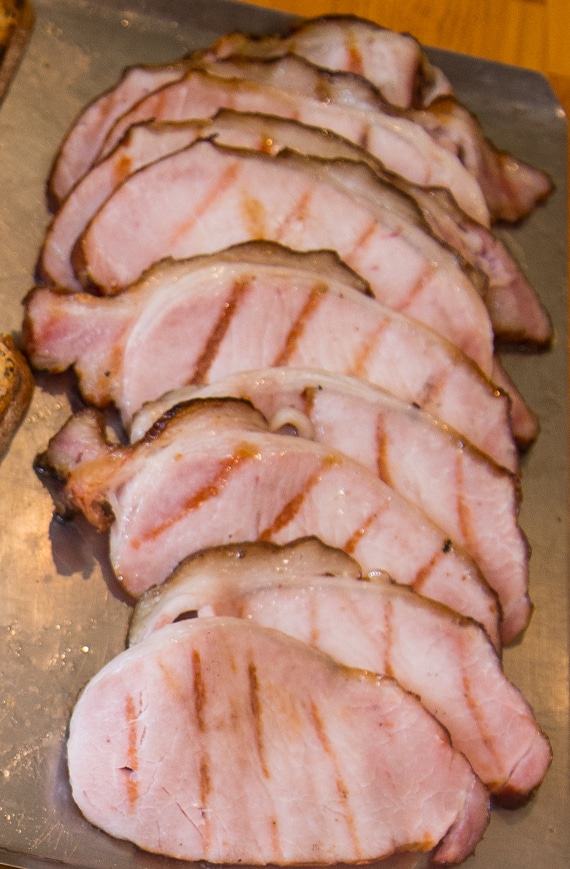
- Serve right away or slice into discs and sear it on the grill or in a medium-sized hot frying pan with a little oil.
- Canadian bacon will keep in the fridge for up to two weeks. Frozen, it will keep longer. Vacuum-sealed and frozen, it’s good almost indefinitely.
Canadian bacon FAQs
This style of “bacon” is made from pork loin, which is the lean center of the pig’s back. American bacon comes from the belly, which has more fat. It’s closer to a mild ham than it is to bacon.
This Canadian bacon, it will last 2 weeks in the fridge. If you freeze it, it’ll last much longer. If you vacuum seal it and freeze it? Longer still.
It’s great for breakfast with eggs, or as part of an Eggs Benedict recipe. Try it in a grilled ham and cheese sandwich, or a Cuban sandwich.
Well first, some similarities. They’re both cut from the same part of the pig. But Canadian bacon is usually cured and smoked. In grocery stores, you’ll find it sold in pre-cut rounds. Irish bacon, sometimes called rashers, is brine-cured, and not usually smoked. It’s also key part of a traditional Irish breakfast.
If you like this Canadian bacon recipe, you’ll love . . .
- Once You Make Maple Bacon, You’ll Never Get Store Bought Again
- Spanish Lomo Recipe: Cured Pork Tenderloin
- Redeye Gravy with Ham, a Southern Classic
- Homemade Asian-Style Bacon Recipe
- How to Make Smoked Homemade Bacon— It’s So Much Better Than Store Bought

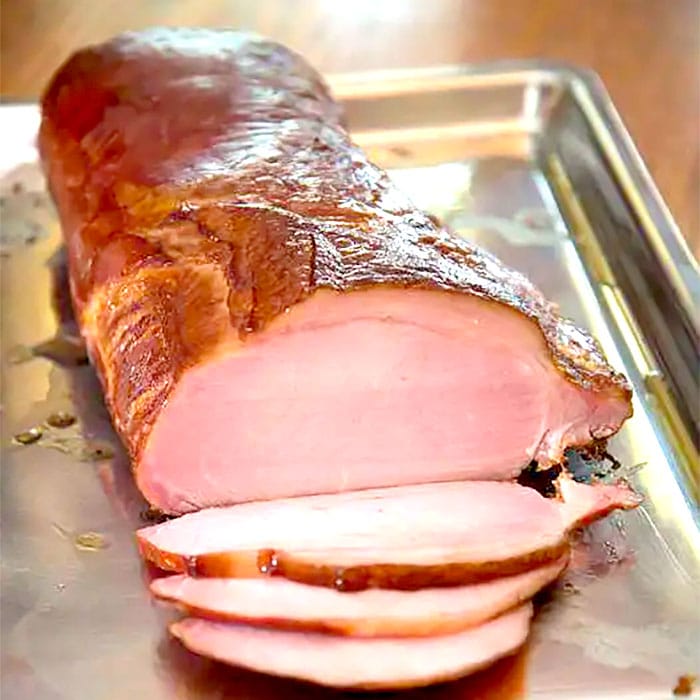
Homemade Irish and Canadian Bacon Recipe
Ingredients
Adjusting Curing Ingredients
Cure time: 0.8 days
Method
- Prep. Put everything except the meat in a very clean nonreactive pot stainless, enamel coated, glass). Dissolve the salts and sugar. The garlic will not dissolve thoroughly. Let it cool in the refrigerator.
- Cure. Scrub the exterior of the meat thoroughly (don't use soap). Put the pork in the pot and keep it in the fridge for the length of time in the calculations above (you can go about 20% longer if you have to). If necessary weigh it down with a dinner plate or something else.
- Cook. For Canadian bacon, after the cure, it is time to smoke. Before smoking, rinse the surface really well because there will be a heavier concentration of salt on there. Smoke at 325°F (163°C) until it is 145°F (63°C) in the deepest part of the center. Depending on how thick your meat is, this will take from 1 to 3 hours. The reason we cook at 325°F (163°C) is to prevent the stall which will happen at lower temperatures and that can result in a much longer cook and drier meat. You can refrigerate it for up to two weeks or freeze it for longer. If you vacuum seal, it will keep longer still.
- For Irish bacon, after the cure, rinse the surface really well because there will be a heavier concentration of salt on there. Then, in the grill or oven, roast it at 325°F (163°C) until it is 145°F (63°C) in the deepest part of the center without smoke. You can refrigerate it for up to two weeks or freeze it for longer. If you vacuum seal, it will keep longer still.
- Serve. You can serve it right out of the smoker or oven or slice into discs and sear it on the grill or in a medium hot frying pan with a little bit of oil.
- Or make Eggs McMuffins! Smear some butter on the cut sides of an English Muffin and grill them alongside a slice of Canadian Bacon. Plop an egg in a ramekin or small bowl and sit it in simmering water until it is done to your liking. Add a slice of Cheddar or American cheese and it's better than McDonald's!



Before you can post a comment or question you must sign into our commenting partner, Disqus. This helps make sure everyone hanging around the grill is civil. We do not tolerate nastiness, racism, porn, inappropriate language, or attacks on others. All comments are the property of AmazingRibs.com and we reserve the right to quote them, edit them, delete them, and block people from making future comments.
Please leave comments and questions on the same page that is devoted to that subject so others can see questions and our answers when they are reading about the subject. You must enable JavaScript to use the comments section, and you must accept cookies to post comments. Note: the software that runs Disqus is different from the Pitmaster Club, so members need to sign into the Pitmaster Club separately.