



Our recipe for cured smoked ham makes the holiday feast infinitely better than store-bought results. Here’s the easy way to make a homemade smoked ham properly and safely.
Want to create a cured smoked ham at home but aren’t sure how to do it? The key to creating a ham like the ones you normally purchase during the holidays is the simple process of curing a fresh ham. Bonus: fresh hams are usually fresher and cheaper than cured hams, making them one of the best values in the meat case. That signature flavor and deep red color of a traditional holiday ham come from knowing how to cure a fresh ham properly.
Recipe Overview: Cured Smoked Ham Success Formula
- Buy: a whole fresh ham, about 20 pounds.
- Remove: the fat cap and the skin. Use the skin to make cracklins.
- Clean: a 5-pound bucket thoroughly and bleach it.
- Scrub: the ham to clean it, and submerge it in the bucket
- Cure: the ham, using ingredient ratios determined by our curing calculator.
- Rub: with one of my spice rubs, if desired, such as Simon & Garfunkel rub.
- Smoke: at 325°F with hardwood smoke. Your choice of smoking wood is not critical.
- Glaze: the meat during the last hour of smoking.
- Serve: the meat by slicing or refrigerate until you’re ready to eat it.
Summarize & Save this Content on:
The science of cured smoked ham
Curing is very different from any other recipe because you are using a preservative, sodium nitrite. You must read and thoroughly understand my article on the Science Of Curing Meats before attempting to make a cured smoked ham or before you ask any questions. If your ham is bigger or smaller, you need to go to the curing calculator to determine how much water and Prague Powder #1 you need, and it will also tell you how long it will take. (You should also read my articles on the Science of Hams and my recipe for Double Smoked Ham, which involves cooking store-bought ham on the grill or smoker to add flavor.)
Ingredients and substitutions for cured smoked ham
- Ham is what you need to start with: a fresh one, about 20 pounds.
- Salt is essential here, and you’ll want to use Morton’s Coarse Kosher Salt. If you use regular table salt, you’ll need to use half as much as what’s called for in the recipe. Otherwise it will be way too salty.
- Prague Powder #1 is what you need. You’ll more commonly find Prague Powder #2 in the grocery store, but it’s only appropriate for cold smoking at a lower temperature. That’s not what we’re doing here. You want #1 because we smoke this ham at 225°F, which cooks and pasteurizes the meat and makes it safe. I do not recommend cold smoking at home.
- Water: Three gallons of distilled water are needed. This ensures the brine is free of minerals, chemicals, and unwanted bacteria that could affect safety or alter the flavor. If you do not have distilled water, you can boil regular tap water for a few minutes to kill bacteria, then let it cool completely before mixing your cure.
- Time. Yes, time is an ingredient. You need about a week for this to cure, so plan accordingly.
What you don’t need are garlic, herbs and spices, or celery, despite the fact that a lot of recipes call for those ingredients. They just don’t penetrate. I debunk this myth in my article on marinating.
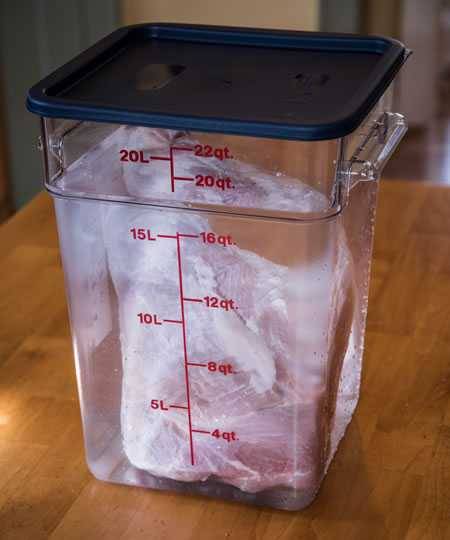
Curing container for cured smoked ham
You also need a large container for curing a fresh ham. A large food-safe plastic bucket is best (see photo). You can use something like a large stainless steel or enamel coated stock pot. Do not use an aluminum pot. It can react with the salt and create off flavors. If you only have an aluminum pot or if your bucket is not food grade, you must line it with a food grade plastic bag such as the Ziploc XL or five gallon food grade bucket liners. A very clean beer cooler will also work.
NOTE ON INJECTING: Once upon a time this recipe recommended injecting the meat with cure, but that made it difficult to use the Curing Calculator properly. Readers contacted us to tell us they’d had spots of meat in the center of their hams that did not properly cure because of improper injection. If you are interested in curing a ham but want to speed things up, you can inject with the cure. But inject a lot and make your injections about 1″ apart. This will knock about 30% off the curing time, but I can’t guarantee that.
Cured smoked ham recipe, step by step
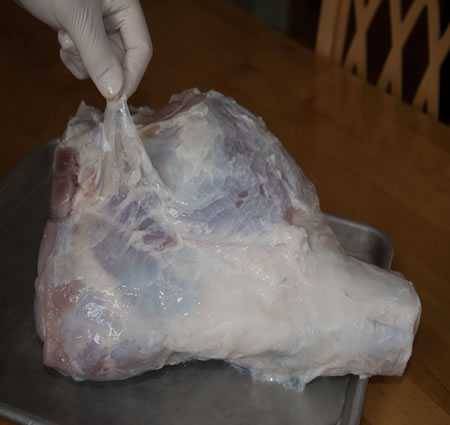
- If your ham has skin, remove it and all the fat cap.
- Clean a 5-gallon food-grade bucket, rinse with bleach solution, and add the distilled water, kosher salt, Prague Powder #1. Stir til they dissolve. Chill.
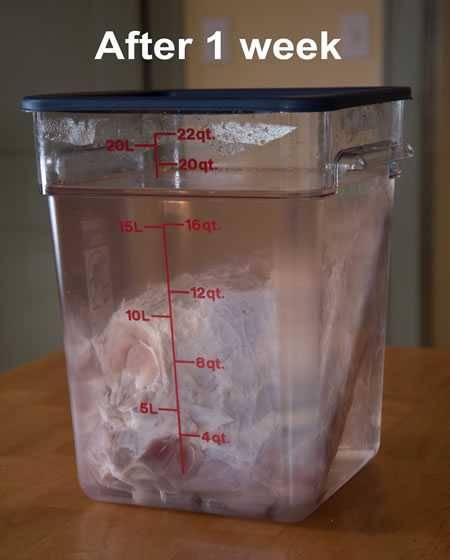
- Scrub the exterior of the ham, but don’t use soap. Put the meat in the bucket and submerge it. Refrigerate it for as long as the curing calculator tells you is necessary.
- Remove the ham from the cure and rinse it off. Soak in cold water for 6 hours if sensitive to salt; otherwise rub it down with one of my amazing rubs if desired.
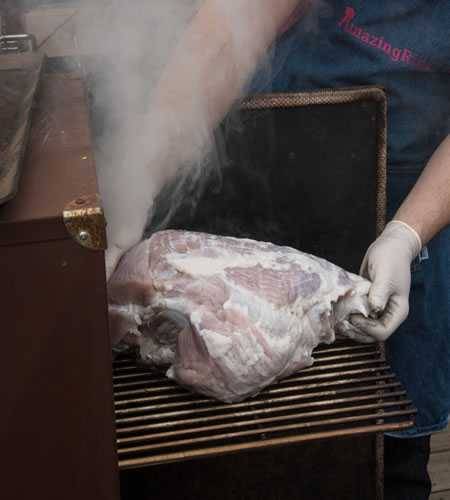
- If you’re going to eat it right away, smoke the ham at 325°F (163°C) until it is 145°F (63°C) in the deepest part of the center. If you’re going to eat the ham later, smoke it at the same temperature but until it is 165°F.
- During the last hour, paint it with a glaze like Danny Gaulden’s Brown Sugar Mustard Glaze. Skip the glaze if you’re going to eat the ham later.; it’s good for two weeks in the fridge.
- Slice and serve immediately or refrigerate until ready to use.
- Leftovers can be stored in the fridge for up to a week or vacuum sealed for longer.
Cured Smoked Ham FAQs
They serve different functions but are often used together. Curing is an act of preservation that involves salt and other ingredients. Smoking is flavor enhancer and can add additional preservation qualities because it dries the meat’s surface and introduces compounds that are naturally antimicrobial.
If you’re buying it in the grocery store or other commercial environment, the answer to this is almost always going to be yes.
This depends on the type of ham and the nature of its curing. However, for the sake of the type of cure in this recipe, I recommend smoking the meat if you’re not going to eat the meat within a week.
If you like this cured smoked ham recipe, you’ll love . . .
- The Ultimate Double Smoked Ham Recipe
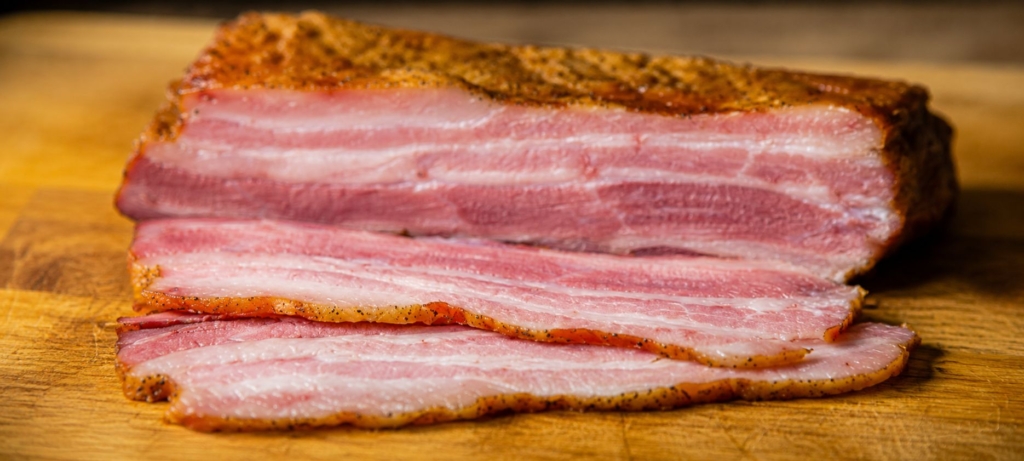
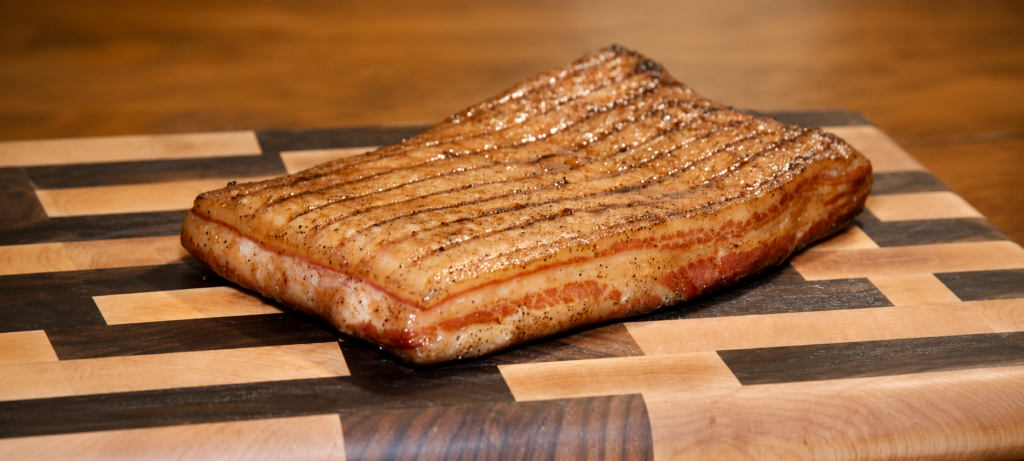
- How to Make Smoked Homemade Bacon — It is So Much Better Than Store Bought
- You’re Gonna Love Bacon Ribs: Tastes Like Bacon, Chews Like Smoked Ribs!
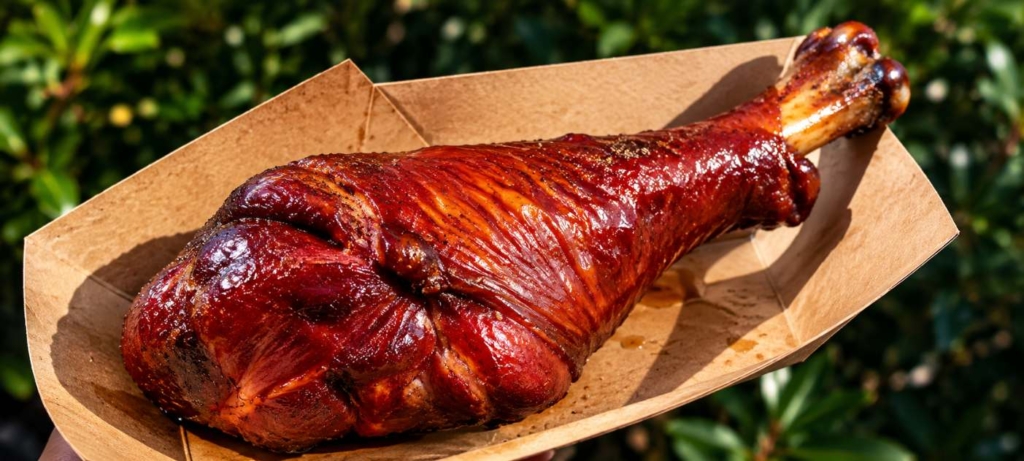
- Ultimate BBQ Turkey Smoked and Grilled: Step by Step Recipes and Tips
- Best Smoked Brisket Recipe: Meathead’s Texas Style BBQ Brisket
Up your game: Join our Pitmaster Club. Try it out for free for 30 days. No credit card is needed. No spam. Join now and Be Amazing!

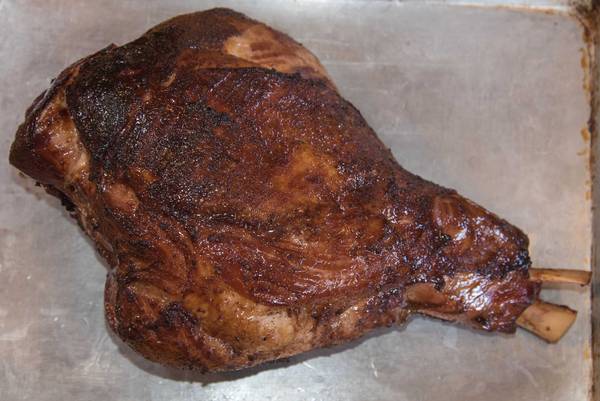
Wet Cured Smoked Ham Recipe
Makes
1 cured and smoked whole ham, about 20 poundsIngredients
Adjusting Curing Ingredients
Cure time: 0.8 days
Method
- Prep. If your ham has skin, remove it and all the fat cap. You can use the skin to make cracklins. Skin and fat just do not add flavor. I debunk this myth in my article on fat caps. Besides, fat on a ham only slows the penetration of the cure and will get gelatinous after curing like this image.
- Get a 5 gallon (19.5 L) food grade bucket and clean the heck out of it first with soapy water. Rinse thoroughly with ounce (30 mL) of bleach per gallon (3.9 L) of water. Dry thoroughly. Then and add the distilled water, kosher salt, and Prague Powder #1. Stir til they dissolve. Chill it.
- Scrub the exterior of the ham thoroughly to remove as much bacteria as possible (don't use soap). Put the meat in the bucket and submerge it. If a piece of bone sticks out, get the hacksaw and cut it off or add more cure to cover it. If necessary, weight the meat down under a clean plastic container filled with water. Put the bucket in the refrigerator and let the meat cure for as long as the calculator tells you. If it is larger or smaller, use our curing calculator on this page to determine how long it needs to be in the cure. It must remain cold. After curing the water should remain transparent, but slightly pink, like this image.
- If you don’t keep it in the brine long enough, you might have a tan spot that will taste like pork, not ham, like this one.
- Cook. After the cure, it is time to smoke. Before smoking, rinse the surface since there will be a heavier concentration of salt on there. All hams are salty and we think this one is just right, but if you are sensitive to salt, soak it for about 6 hours in iced water to pull out some salt. Then, if you wish, you can apply a salt free spice rub like my Meathead's Memphis Dust just before smoking. If you want to serve it immediately, and I strongly recommend it, smoke the ham at 325°F (163°C) until it is 145°F (63°C) in the deepest part of the center. This will take up to 5 hours depending on the meat's thickness. Rule of thumb: 30 minutes per inch of thickness at the thickest part. Your mileage may vary depending on a lot of variables such as your cooker's airflow, humidity, how much moisture in the meat, etc. The reason we cook at 325°F (163°C) is to prevent the stall which will happen at lower temperatures and that can result in a 12 hour or longer cook. During the last hour, paint it with a glaze. My favorite glazes are Chris Lilly's Spicy Apricot Glaze or Danny Gaulden's Brown Sugar Mustard Glaze. Make sure it doesn't burn. There is no substitute for a ham fresh from the smoker.
- If you don't plan to use it within a week, smoke it at 325°F (163°C) until it is 165°F (75°C) in the deepest part and it will be safe for up to two weeks in the fridge. Then when you reheat it cook it up to 145°F (63°C) and lay down your first layer of glaze when it hits about 130°F (54°C). Reheating can take almost as long as the initial smoking.
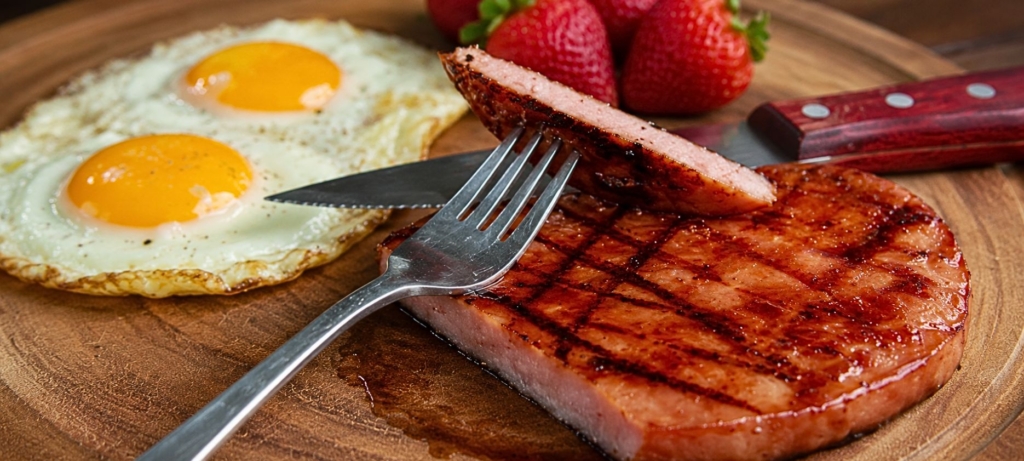
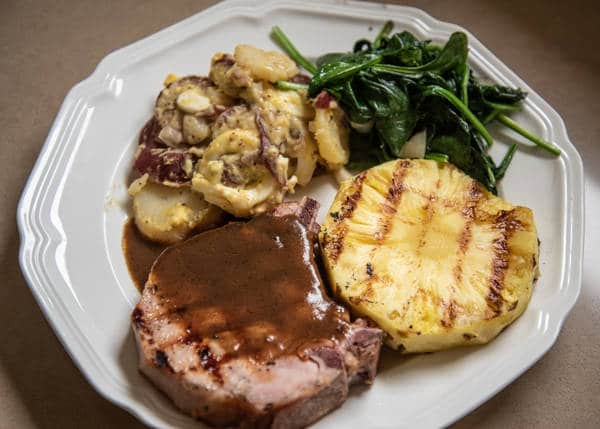
- Serve. Slice and serve immediately or refrigerate until ready to use. Leftovers can be stored in the refrigerator for a week or so, or frozen. If you vacuum seal, it will keep longer. You can cut slices and grill ham steaks (we like these Grilled Balsamic and Brown Sugar Ham Steaks), or just warm it in the oven.
Before you can post a comment or question you must sign into our commenting partner, Disqus. This helps make sure everyone hanging around the grill is civil. We do not tolerate nastiness, racism, porn, inappropriate language, or attacks on others. All comments are the property of AmazingRibs.com and we reserve the right to quote them, edit them, delete them, and block people from making future comments.
Please leave comments and questions on the same page that is devoted to that subject so others can see questions and our answers when they are reading about the subject. You must enable JavaScript to use the comments section, and you must accept cookies to post comments. Note: the software that runs Disqus is different from the Pitmaster Club, so members need to sign into the Pitmaster Club separately.