
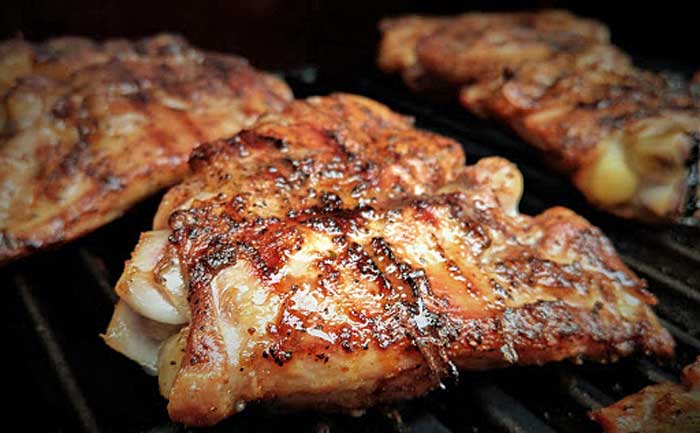
Here are the best techniques for juicy BBQ chicken on the grill and smoker
Chicken gets blamed for a lot of bad barbecue meals, but most of the time it’s not the bird’s fault. Dry meat, rubbery skin, and sauce used as a cover-up usually come from cooks who lean on high heat instead of temperature control, heavy rubs instead of focused flavors, and guesswork rather than paying attention. Good barbecue chicken is like other well-made dishes. It’s not about muscling through or letting mysteries dictate the results. It’s a conversation. Learn to listen to what the bird is telling you, and it will reward you with juicy meat and crisp skin. Ignore it, and it dries out with no apology.
Choose your cuts wisely
Chicken speaks in temperatures, textures, and time. White meat wants a gentle approach and early removal from the heat, while dark meat benefits from patience and slightly higher doneness temperatures than white meat. Dark meat takes a bit longer to cook and that extra time allows collagen to melt into mouth-filling moisture. The meat itself is all about retaining juiciness. For chicken skin, it’s the opposite: you want dry heat and good convection airflow for crispness. Learn to read those signals, and you’ll make juicy chicken with crispy skin every time. At that point, barbecued chicken stops feeling unpredictable and becomes exactly what it should be: reliable, forgiving, and deeply satisfying.
When possible, choose bone-in, skin-on poultry—that goes for turkey, duck, and other birds, too. The skin acts as natural insulation, protecting the meat from drying out—and the skin gets deliciously crispy. The bone helps regulate internal temperature during cooking to avoid overcooking. If boneless is all you have, that works too, of course. White meat (chicken breasts and wings) and dark meat (legs, thighs and drumsticks) both have their place, but they behave differently on the pit or grill. Understanding that difference is key.
White meat vs. dark meat
White meat, including breasts and wings, is lean and cooks relatively quickly. White meat contains less fat and connective tissue, so it benefits from gentler heat and closer attention as it approaches doneness. Pulling white meat off the heat at the right doneness temperature helps preserve moisture and keeps it tender rather than dry and stiff.
Dark meat, found in thighs and legs, contains more fat and connective tissue. That muscle composition allows thighs and legs to benefit from longer cooks and higher doneness temperatures. As it cooks, connective tissue breaks down and contributes to a juicier, richer texture. Click here to read more about how connective tissue transforms into gelatin. Bottom line: on the grill, dark meat tends to be more forgiving than white meat and it rewards patience. For more details on poultry meat composition, click here to read about white meat vs. dark meat and overall meat science.
Skin plays an important role in both cuts. For skin to become crisp, the fat beneath it must melt (render), which happens best with dry heat and good airflow. The enemies are moisture on the skin surface, crowded grill grates, and cooking too cool. Those can prevent proper fat rendering, even if the meat itself is fully cooked.
Get a grip on these principles and cooking poultry becomes far more predictable. White meat benefits from protection and precision. Dark meat improves with time and heat. Skin wants higher, drier heat and airflow. Suddenly, a grill session shifts from guesswork to control.
Why chicken thighs shine on the grill and in the smoker
Chicken thighs are uniquely suited to barbecue. Their higher fat content allows them to tolerate longer cooks and higher doneness temperatures, while connective tissue breaks down into rich-tasting gelatin rather than drying out. When properly cooked, thighs develop deeper flavor, better texture, and remain forgiving across a range of cooking techniques. That resilience makes them ideal for practicing temperature control, rendering skin properly, and applying bold seasonings—whether smoked low and slow or finished hot over direct heat.
How to keep chicken meat tender and juicy
The most important step to tender, juicy poultry that doesn’t taste like carboard is cooking to temperature, not to time. Watch the thermometer, not the clock. Overcooking is what you want to avoid, but undercooked chicken isn’t just unpleasant, it can carry foodborne pathogens. Cooking to a minimum internal temperature matters as much for food safety as it does for quality. Click here to read more about food safety and meat doneness temperatures. Visual cues and cooking time alone aren’t reliable, which is why an instant-read thermometer is an essential tool. And that old adage that says chicken is done when the juices run clear? Don’t be fooled. It’s a myth.
White meat chicken or turkey should be cooked to an internal temperature of 160° to 165°F. Dark meat benefits from a slightly higher internal doneness temperature of 170° to 175°F. That extra heat allows connective tissue and collagen to break down and convert to gelatin, resulting in meat that is noticeably juicier and more succulent.
Do I need to brine chicken?
A simple salt brine improves poultry by helping it retain moisture and seasoning it throughout. Dry brining (pre-salting the bird) is generally best for larger poultry roasts that take longer to cook. It’s easier and uses less salt than wet-brining. Dry brines are also best for skin-on poultry to help crisp the skin. But wet brines work great for small, quicker-cooking cuts like skinless chicken breasts and thighs. Sugar is optional and contributes flavor rather than juiciness. Brines are also highly customizable. Herbs, spices, citrus, and aromatics can all be added, depending on your flavor preferences. Click here to read more about the science of brining.
How long to brine poultry
As a general guideline, brine chicken or turkey pieces for about 2 hours, whole chickens for 5 to 6 hours, and whole turkeys overnight in the refrigerator. After wet brining, rinse the poultry under cool water and pat completely dry before seasoning with spices and/or herbs. See our Basic Poultry Brine Recipe to started making juicier chicken. This brine helps keep oven-roasted chicken and turkey moist too.
How to season poultry for the grill
When grilling poultry over high heat, use a rub or seasoning that is low in sugar. Sugar can burn quickly and create bitter flavors.
When smoking poultry, on the other hand, a rub with some sugar works well, helping to build color and a lightly caramelized exterior. Balance is key: you want enough sugar for browning, but not so much that it scorches.
The best ways to grill and smoke different cuts of poultry
High heat direct grilling at 400 to 450°F tends to work best for chicken pieces, boneless breasts, and wings.
Two-zone or indirect grilling at 350 to 400°F allows you to crisp the skin over direct high heat, then finish cooking gently over indirect lower heat with the lid closed.
Smoking poultry works best at slightly higher temperatures than traditional low-and-slow barbecue. Cooking at 275 to 350°F helps render fat and crisp the skin while still delivering smoke flavor.
Poultry Smoking Time and Temperature Chart
All times and temperatures are approximate. Click here for more meat doneness temperatures and our award-winning food temperature guide.
| Poultry Cut | Cooking Temperature | Doneness Temperature | Approximate Cooking Time |
| Chicken, whole | 275-350°F | 170-175°F | 2-3 hours |
| Chicken leg quarters | 275-350°F | 170-175°F | 1-2 hours |
| Chicken thighs | 275-350°F | 170-175°F | 1 1/2 hours |
| Chicken wings | 375-425°F | 170-175°F | 40-45 minutes |
| Turkey, whole | 275-350°F | 170-175°F | 4-5 hours |
| Turkey leg | 275-350°F | 170-175°F | 2-3 hours |
| Turkey breast | 275-350°F | 160-165°F | 4 hours |
| Cornish hen | 250°F | 160-165°F | 2 hours |
| Whole duck | 225–250°F | 160-165°F | 4 hours |
When to add BBQ sauce to BBQ chicken
Saucing poultry is optional. During the last 20 to 30 minutes of cooking, you can baste with your favorite barbecue sauce to create a glossy glaze. Click here for a good, basic Kansas City Style Barbecue Sauce recipe. Sauce or no sauce, poultry cooked with a well-balanced rub and great grilling or smoking technique stands perfectly well on its own.
Putting it all together with barbecue chicken recipes
Great BBQ chicken comes down to the fundamentals. Control the heat, measure doneness with an accurate thermometer, and let the meat do the rest. When those things fall into place, juicy chicken isn’t a surprise, it’s an expectation.
To see how it all comes together on the grill or smoker, check out our recipes for Hot & Fast Dry-Brined Chicken Wings, Sweet & Smoky Pit-Smoked Chicken Thighs, Ancho Lime Grilled Chicken Thighs, and Basic Poultry Brine.

High quality websites are expensive to run. If you help us, we’ll pay you back bigtime with an ad-free experience and a lot of freebies!
Millions come to AmazingRibs.com every month for high quality tested recipes, tips on technique, science, mythbusting, product reviews, and inspiration. But it is expensive to run a website with more than 2,000 pages and we don’t have a big corporate partner to subsidize us.
Our most important source of sustenance is people who join our Pitmaster Club. But please don’t think of it as a donation. Members get MANY great benefits. We block all third-party ads, we give members free ebooks, magazines, interviews, webinars, more recipes, a monthly sweepstakes with prizes worth up to $2,000, discounts on products, and best of all a community of like-minded cooks free of flame wars. Click below to see all the benefits, take a free 30 day trial, and help keep this site alive.
Post comments and questions below
1) Please try the search box at the top of every page before you ask for help.
2) Try to post your question to the appropriate page.
3) Tell us everything we need to know to help such as the type of cooker and thermometer. Dial thermometers are often off by as much as 50°F so if you are not using a good digital thermometer we probably can’t help you with time and temp questions. Please read this article about thermometers.
4) If you are a member of the Pitmaster Club, your comments login is probably different.
5) Posts with links in them may not appear immediately.
Moderators