



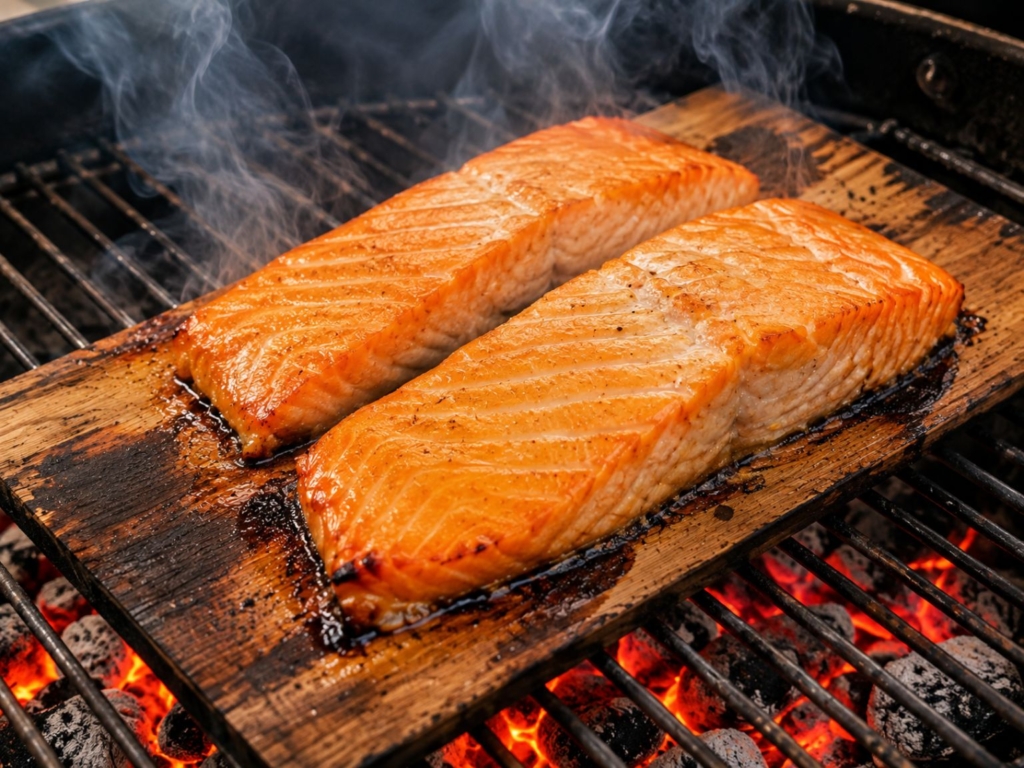
No fish is more grill or smoker friendly than salmon. This recipe is meant for hot smoked salmon, but I have tried it with white-fleshed fish, too, and it works just fine.
My recipe modernizes the ancient technique. It creates an elegant, delicate, moist piece of meat with a hint of sweet, salt, and garlic. Unlike the stuff we put on bagels, it is “hot smoked” at about 225°F (107°C).
Recipe Overview: Hot Smoked Salmon Success Formula
- Acquire: a clean brown paper bag.
- Prep: about two pounds of fresh skin-on salmon by removing the scales and leaving the skin intact.
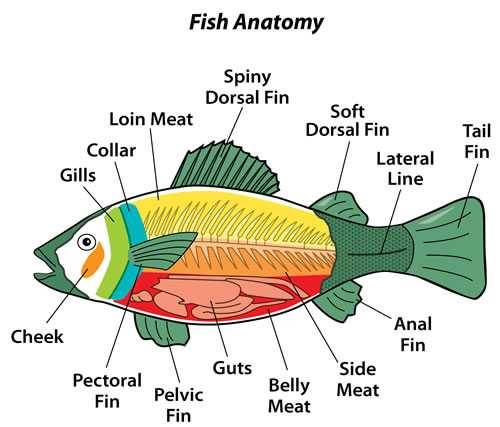
- Remove: the pin bones by running your fingers over the surface of the fish. Remove the milky membrane of the belly, if present.
- Cut: the meat into 8-ounce pieces about 3 inches wide.
- Brine: Make the brine with hot water, salt, sugar, garlic, and black pepper.
- Pour: the brine into a food-grade, non-reactive container like a zipper bag or a large brining bag.
- Refrigerate: the container and make sure all parts of the brine come in contact with the fish. Brine for 1 to 2 hours.
- Drain: the brine out of the bag and discard. Rinse the fish in water to remove excess salt.
- Rest: the salmon in the fridge if desired, but it’s not necessary.
- Cut: pieces of a brown paper bag to match the size of the salmon fillets. Place the fillets, skin side down, on the paper.
- Fire up: the grill for 2-zone grilling or bring the smoker’s indirect zone to 225°F (107°C).
- Cook the fish in the smoker (add smoking wood if using) for about an hour and remove when the internal temperature is about 135°F (57°C) but no more than 140°F (60°C).
- Cool: the fish for about 15 minutes and then remove the papers, which helps remove the skin.
Summarize & Save this Content on:
The science of our hot smoked salmon
Hot smoking and cold smoking are different, and the former involves, you guessed it, using higher temperatures. WIth hot smoking, food is cooked between 145 and 300 and it’s also flavored at the same time. Once it’s smoked, you can eat it immediately. With cold smoking, it adds smoke but not flavor, and you need to cure it and the process is generally more risky. If you’ve spent any time around these parts, you know I don’t recommend cold smoking at home.
The short history of hot smoked salmon
Long before Europeans set foot in North America, Native Americans and Native Canadians on the Pacific coast practically subsisted on salmon. The flesh is rich in protein, minerals, and fish oil loaded with omega 3 fatty acids, unsaturated fats thought to be beneficial. To preserve their catch in the days before refrigeration they would cut meaty filets from these huge fish, cure them by coating them with salt, and drape the filets over a pole above a smoldering fire. They even built smokehouses with walls of animal hides.
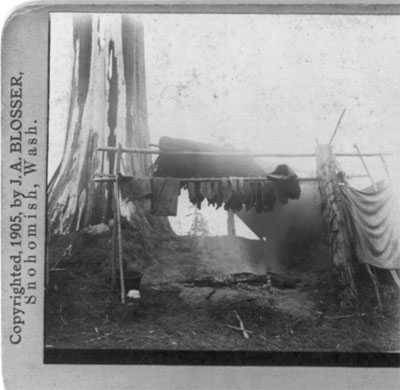
Another popular technique in the Pacific Northwest was to butterfly the fish, attach it to a stake, and jam the stake in the ground around a smoky campfire, gently cooking and smoking them at the same time. Called ponassing, here we see the method still practiced by Tillicum people on Blake Island in Puget Sound where visitors learn of the native Americans of the region and get to eat the salmon. The chefs here season the meat, thread wooden sticks through the fish and a stake, jam the stake into the dirt around glowing hardwood embers, and roast the meat side for about 30 minutes, turn the stake around, and roast the skin side for about 10 minutes. It comes out perfect.

Ingredients and substitutions for hot smoked salmon
- Fresh, skin-on salmon fillets of similar thickness
- Hot water will be used to make the brine.
- Salt, any type, can be used here, whether it’s kosher, table, sea, or pickling. Yes, you read that correctly—you don’t need my usual, Morton coarse kosher salt. The salt dissolves in hot water to create a slurry.
- Cold water and the slurry create the brine.
- Granulated white sugar is almost always part of the smoking process. But if you are diabetic, you can skip the sugar, although very little actually gets into the meat.
- Garlic powder brings the unmistakable pungency and earthiness of garlic, plus a mild sulfur aroma that becomes sweet and nutty when mellowed by heat. Don’t use garlic salt.
- Finely ground black pepper is the world’s most traded spice, beloved in cuisines from Asia to America and Europe to Russia, and so named for its ability to liven up almost anything it touches.
- A brown paper bag or piece of plain white paper, cut into shapes the size of the fillets, is needed. You’ll place the salmon on them, skin side down. The paper makes it easier to remove the skin later.
- Wood choices here include alder, apple, peach, or other fruitwood chips or pellets are my favorite woods. Avoid hickory or mesquite; they are too strong. As always, too much smoke is worse than too little. On a charcoal grill or smoker or an electric smoker, 4 ounces of wood will probably be enough. On a gas grill, double it.
Hot smoked salmon, step by step
- Remove the scales from the fish but leave the skin on. Run your fingers over the flesh to remove the pin bones. If the salmon belly has a milky membrane, remove it with a sharp filletng knife. Cut into 8-ounce pieces, about 3 inches wide.
- Combine the hot water and salt (any kind) in a measuring cup. You can make this slurry 3 days ahead if you like, but keep it chilled.
- Pour the slurry into a food-safe vessel such as an XL zipper bag. Add the cold water, sugar, garlic, and black pepper. Stir until mostly dissolved.
- Submerge the fish skin side up in the brine and refrigerate. If needed, add a plate with a weight on top to keep the fish submerged in the brine.
- If using a zipper bag, periodically squish it around and flip the meat so it’s thoroughly brined.
- Brine for 1 to 2 hours in the fridge, depending on how thick the fillets are. Drain the fillets and discard the brine. Rinse the fish to remove excess salt and pat dry with paper towels.
- Cut pieces of a paper bag or white sheet of paper to match the size of each fish. Place the fish skin side down. (The paper will help remove the skin when it smokes).
- Grill or smoke by setting up a 2-zone configuration at 225°F (107°C). Add smoking wood if using a grill. Place the fish on a rack on your grill or smoker and make sure the pieces don’t touch. Cook about an hour, until the temperature reaches 135°F (57°C) but no more than 140°F (60°C).
- Remove the fillets and let them cool until you can handle them. Peel off the paper and skins. Scrape off any dark brown flesh with a serrated steak knife. Serve.
Ways to serve hot smoked salmon
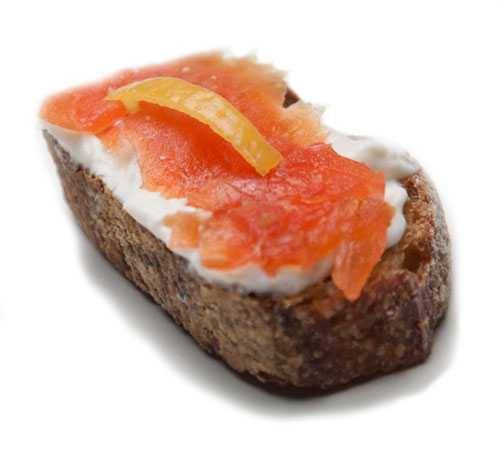
I serve hot smoked salmon as an appetizer at room temp on a platter so people can help themselves and flake it on crackers, toast points, rye toast, apple slices, or cheese slices. The salt helps it keep well at room temp for a few hours. You can make a heady variation of bagels and lox by serving this on bagel chips with cream cheese and chives. Or slice small boiled potatoes in half, top with sour cream, and then the salmon. Try it on a toast point with a dollop of horseradish cream sauce or minced hard boiled egg. It’s also fantastic as part of this custardy French omelet with smoked salmon.
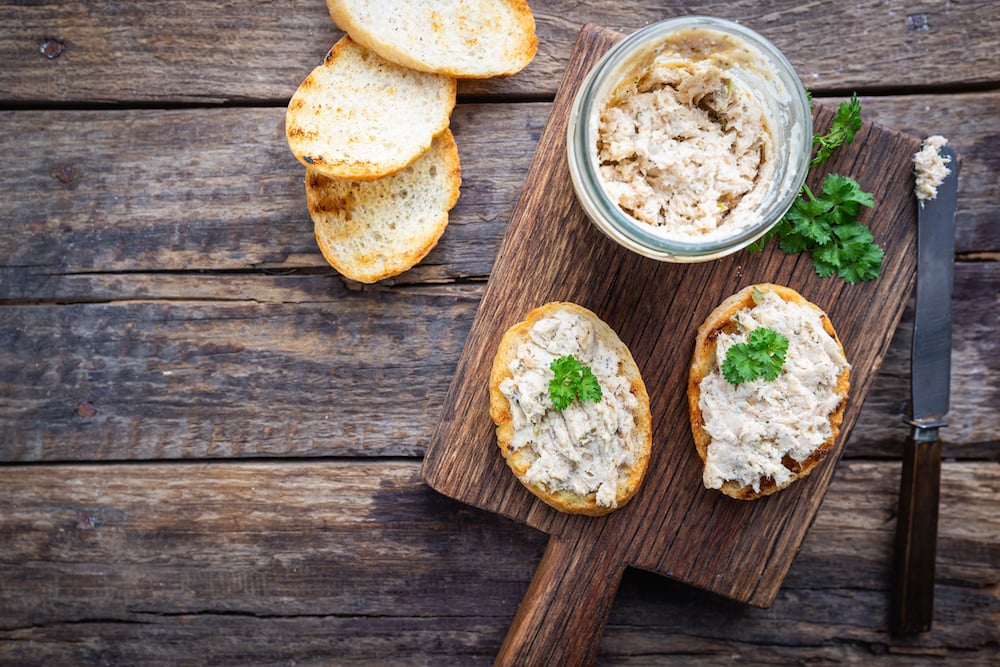
Another wonderful use for this hot smoked salmon recipe: mix it in with scrambled eggs, omelets, or in risotto. It also makes a fine sandwich. Put it in a bowl and flake it with a fork, add a tiny splash of sesame oil and some mayo. Go easy on mayo. Makes a fine sammie on rye. Another option is to put a sweet glaze on the fish. Because it is both sweet and salty, this variation really shines if served straight on crackers or toast. Or use my pastrami rub instead and make salmon pastrami.
Hot smoked salmon FAQs
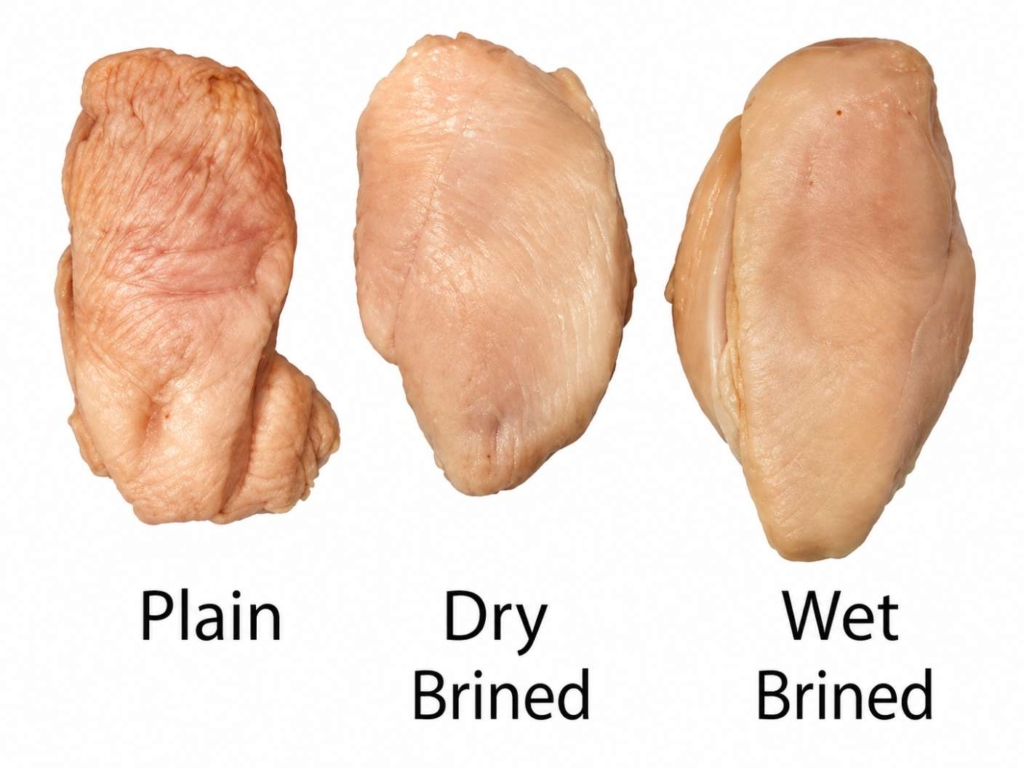
If you have read much of this site you will note that I prefer dry brining to wet brining in most cases. This is an exception. Fish absorbs brines and sugar better than land animals, and in a liquid, the salt distributes more evenly in the meat.
Hot smoked salmon is brined for a short period of time, usually a few hours and then cooked via the smoking process itself, which occurs at 125°F and 225°F typically. Salmon comes out flaky, moist, and opaque.
Cold smoked salmon is cured longer in salt for at least a day, and smoked at a lower temperature, under 85°F, for a longer time than hot smoking. The fish’s texture is more reminiscient of lox or gravlax, with translucent slices.
Keep salmon stored in the fridge at 38°F or below. It will keep for 4 to 5 days. You can freeze hot smoked salmon in vacuum-sealed bags for up to 3 months. Thaw in the fridge.
Fish oils create greasy drippings that build up inside your cooker. After smoking fish, give your smoker a thorough washing. Or, after removing the fish, give ‘er all she’s got, Scottie, and get the inside rip snorting hot to burn off any oil buildup. If you smoke a lot of fish, it might be worth buying a smoker just for fish. It’s one of the few meats I think tastes best on an electric smoker since the smoke is less intense. Pellet grills also excel at smoking fish since they, too, produce a delicate flavor.
If you like this hot smoked salmon recipe, you’ll love . . .
- Quick Simple Dry Brined Hot Smoked Fish Recipe
- An Epic Smoked Ribs Recipe
- Best Smoked Brisket Recipe: Meathead’s Texas Style BBQ Brisket
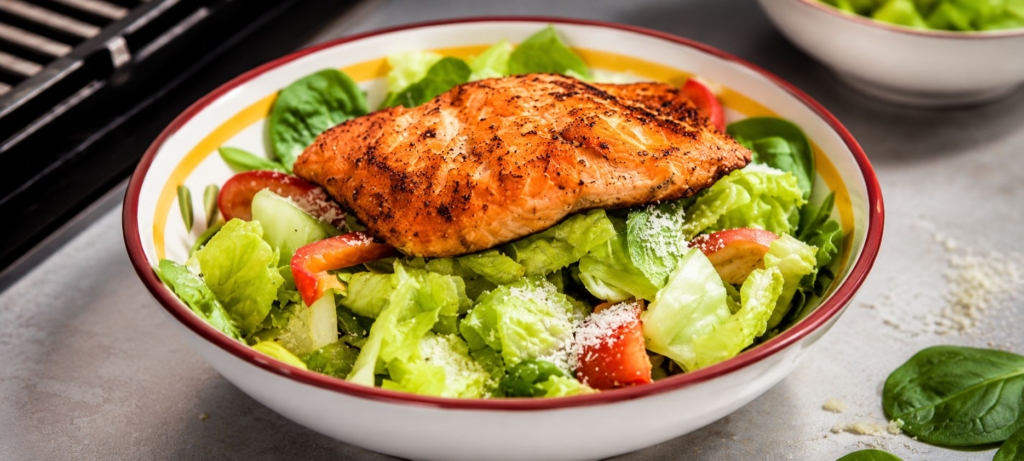
- Griddled Salmon on a Salad is Simple and Delicious
Hot smoked salmon recipe

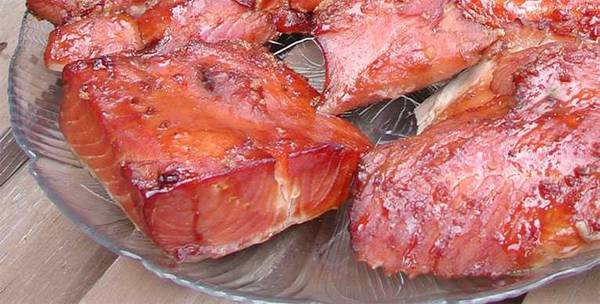
Native American Style Hot Smoked Salmon Recipe
Special Tools
Ingredients
Method
- Prep the fish. Remove the scales but leave the skin on. Don't worry if there are a few scales left on the skin. You will be removing the skin eventually. Run your fingers over the flesh of the fish and make sure all the pin bones are gone. If not, drape the fish over the edge of a bowl so the bones stick out, and yank them with tweezers or needle nose pliers. Sometimes the lining of the belly of the fish has a milky membrane on it. With a sharp filleting knife, remove it. It will get leathery when you cook. Cut the meat into 8-ounce pieces, each about 3-inches wide.
- Brine it. Chose your brining container carefully. It needs to be food grade, large enough to hold the meat and the brine with the meat submerged, and it cannot be made of aluminum, copper, or cast iron, all of which can react with the salt. Do not use garbage bags or a garbage can or a bucket from Home Depot. They are not food grade. Do not use a styrofoam cooler. It might give the meat an off flavor and you'll never get the cooler clean when you're done. Zipper bags work fine. For large cuts, get Reynolds Brining Bags, Ziploc XL, and XXL bags.
- You can make the brine days in advance and keep it chilled if you wish. Start by adding 1/2 cup (117ml) hot water to a one cup measuring cup. Then pour in salt, any salt, until the water line reaches 3/4 cup (177ml). The water will swallow up almost exactly 1/4 pound regardless of whether you use table salt, kosher salt, pickling salt, or sea salt. The volume of these salts may differ, but their water displacement will be the same! Pour the slurry into your very clean non-reactive brining container that's large enough to hold the meat and a bit more than 1/2 gallon of water. Then add 1/2 gallon (1.9 L) of cold water. Then add the sugar, garlic, and black pepper. Stir until most of the sugar is dissolved. The garlic and pepper will not dissolve much at first.
- If you are using a pan, submerge the fish skin side up in the brine and refrigerate. Make sure the meat part is thoroughly submerged. If you need to, hold it under with a plate with a weight on top. Cover with plastic wrap not aluminum foil. Gently stir the container occasionally to make sure all parts of the fish come into contact with the brine.
- If you brine in a zipper bag, periodically grab the bag and squish things around and flip the meat so the brine can get in from all sides. Place the bag in a pan to catch leaks.
- The brining time will vary depending on how thick the fillets are. Brine 2" (5 cm) thick fillets for about 2 hours in the fridge, 1" (2.5cm) fillets for 1 hour. Drain the fish and discard the brine. Then rinse the fish to remove excess surface salt. Pat dry with paper towels. Some folks like to put the fillets in the fridge for an up to 3 hours so that a shiny tacky film or pellicle will form on the surface. It is said to help retain moisture and smoke. I have tried it with and without pellicle and see no quality difference. But a few hours of resting will help the brine to distribute itself evenly through the flesh.
- Cut pieces of a paper bag or plain white paper about the same size as each piece of fish and place the fish on the paper, skin side down. Don't use foil or parchment paper. We want the fish to stick to the paper to help us remove the skin, and it will not stick to foil or parchment. If you are glazing, sprinkle some brown sugar on top of the fillets or paint them with maple syrup.
- Fire up. Set up your grill in a 2-zone configuration or get the smoker started, and get the indirect zone up to about 225°F (107°C).
- Cook. Place the fish on a rack on your grill or smoker so the pieces are not touching each other. Add the smoking wood if you're using a grill. Start spot checking the meat temps after about 30 minutes. As the meat approaches doneness, droplets of milky liquid will often come to the surface. Some cooks call them boogers, but they are actually a protein liquid called albumin from within the muscle fibers. It just looks gross, but it's OK. You can wipe it off or brush it off with a wet brush if you want. Remove the meat when it is at about 135°F (57°C) internal. No more than 140°F (60°C). Total cooking time will be about 60 minutes depending on the actual temperature of your oven and the thickness of the meat.
- Cool. Remove the fillets and let them cool for about 15 minutes, until you can handle them. Then peel off the paper and the skins should come right off with it. While you are looking at the skin side, if there is any dark brown flesh, scrape it off with a serrated steak knife and discard it. It can taste muddy.
Notes
Approximate Nutrition
Tried this recipe?
Let us know how it was!Hot smoked haddock in Scotland
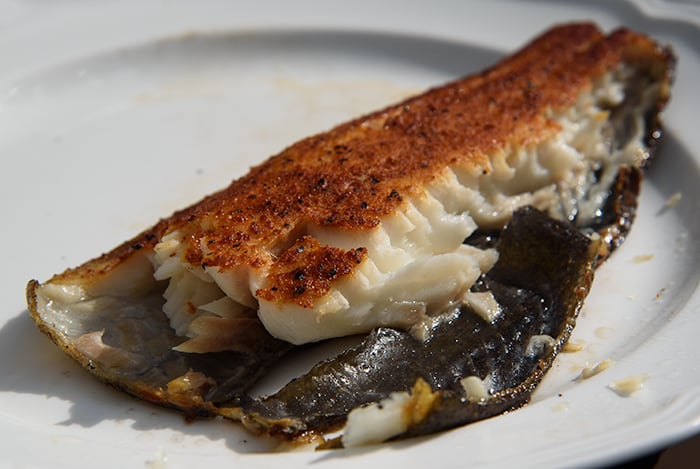
In Scotland, where smoked whisky rules, there is a culinary affinity from a small town named Arbroath where the hot smoked haddock is trademarked Arbroath Smokie under the European Union’s Protected Geographic Indication laws. The beloved dish has inspired poetry, most notably Christopher MacLachan’s “To a Smokie (2009)”:
For haggis some wad live an’ dee,
For Cullen skink or partan bree,
For Athole brose or kedgeree,
Or hokey-pokey;
Gie me that treasure o’ the sea,
An Arbroath smokie.
The end of ilka month’s first week,
To Doubledykes just see me streak,
The Farmers’ Market there to seek,
An’ in twa blinks,
I’ll hae a haddie at its peak,
Hot-smoked by Spink’s.
First, heidless, gutless fish they wale,
Tied up thegither by the tail,
An’ hing them ower a wooden rail
That then they steek,
To cook them through, frae bane to scale,
In vats o’ reek.
Then frae the smoke the fish are whipped,
An’ each oot on the coonter’s tipped,
Whaur frae the flesh the banes are ripped
By fingers nifty,
Till ane inside my poke is slipped,
For twa pund fifty.
Mony there are wha canna wait,
But pree theirs in the market straight;
I like to set mine on a plate,
Warm frae the grill;
Then royally I dine in state,
An’ eat my fill.
O Smokie, when I see you there,
Your riggs o’ ripened meat laid bare,
An’ scent your fragrance on the air,
I bless them both:
The fisherfolk wha bring sic fare,
An’ thee, Arbroath!

Before you can post a comment or question you must sign into our commenting partner, Disqus. This helps make sure everyone hanging around the grill is civil. We do not tolerate nastiness, racism, porn, inappropriate language, or attacks on others. All comments are the property of AmazingRibs.com and we reserve the right to quote them, edit them, delete them, and block people from making future comments.
Please leave comments and questions on the same page that is devoted to that subject so others can see questions and our answers when they are reading about the subject. You must enable JavaScript to use the comments section, and you must accept cookies to post comments. Note: the software that runs Disqus is different from the Pitmaster Club, so members need to sign into the Pitmaster Club separately.