


Give yourself a leg up on other BBQ teams with this award winning competition ribs recipe.
Do you make the best-smoked pork ribs in your neighborhood? Thinking of entering your ribs in a barbecue competition?
The raw truth is that the smoked ribs your family and neighbors love at home may not necessarily work in competition. When I started competing with team Smoke In Da Eye in 2003, I was certain that my backyard rib recipe was good enough to hold its own among the barbecue circuit’s seasoned veterans. Suffice it to say, it did not. In fact, my ribs came within spitting distance of dead a$$ last (DAL), as did the other three categories I entered.
I walked away vowing never again to compete. But the competition bug hit me hard, and I was back at it a month later. During that brief break, I turned to online BBQ forums and fellow competitors for advice on improving my rib score. Slowly but surely, my ribs began to move up the rankings, and a few contests later I got a top ten call.
Recipe Overview: Competition Ribs Success Formula
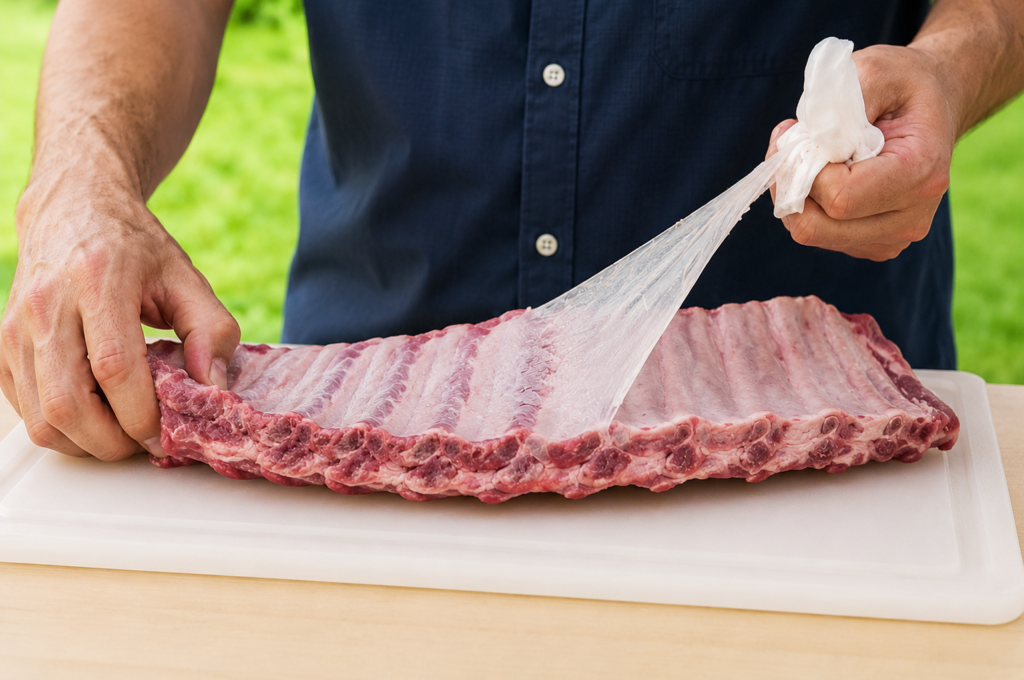
- Buy: a roll of 18-inch wide heavy duty aluminum foil and a slab of St. Louis cut ribs. Remove the membrane from the ribs.
- Season: the ribs with kosher salt and give it 1 to 2 hours for absorption; this is dry brining. Skip this step if you’re using a store-bought rub that has salt in it already.
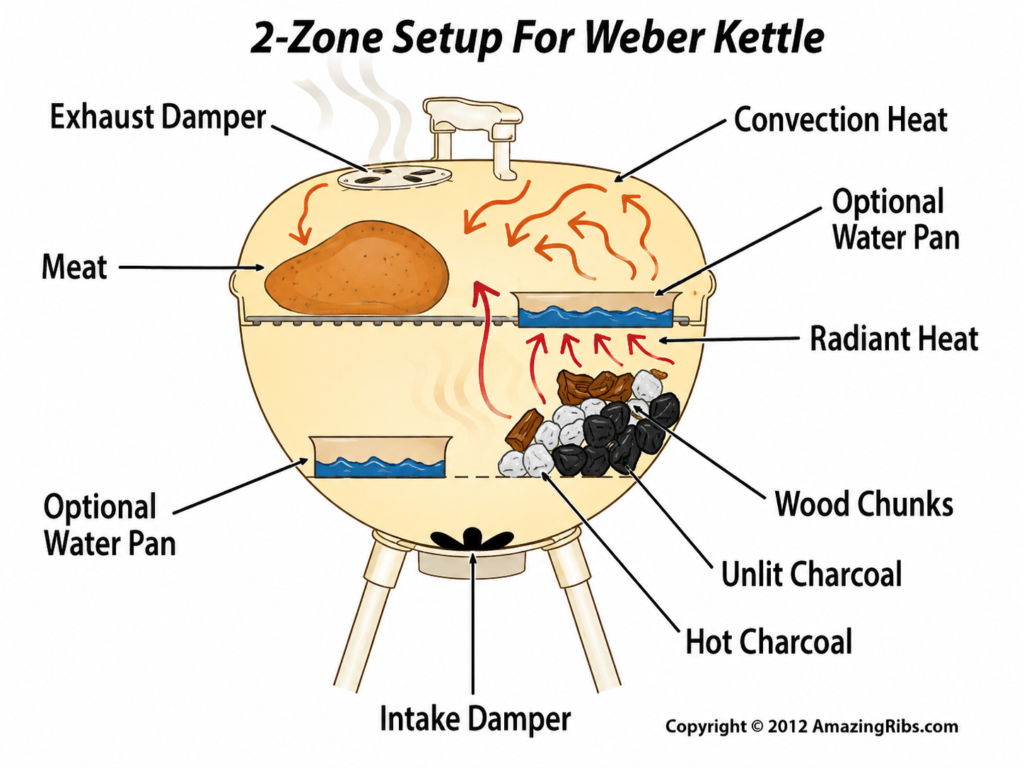
- Fire up: your smoker for indirect cooking or a charcoal grill for 2-zone cooking by creating a chimney full of lit charcoal briquets on one side of the grill to create direct and indirect zones.
- Bring: temperature up to 225°F (107.2°C). Add a few chunks of smoking wood, any kind.
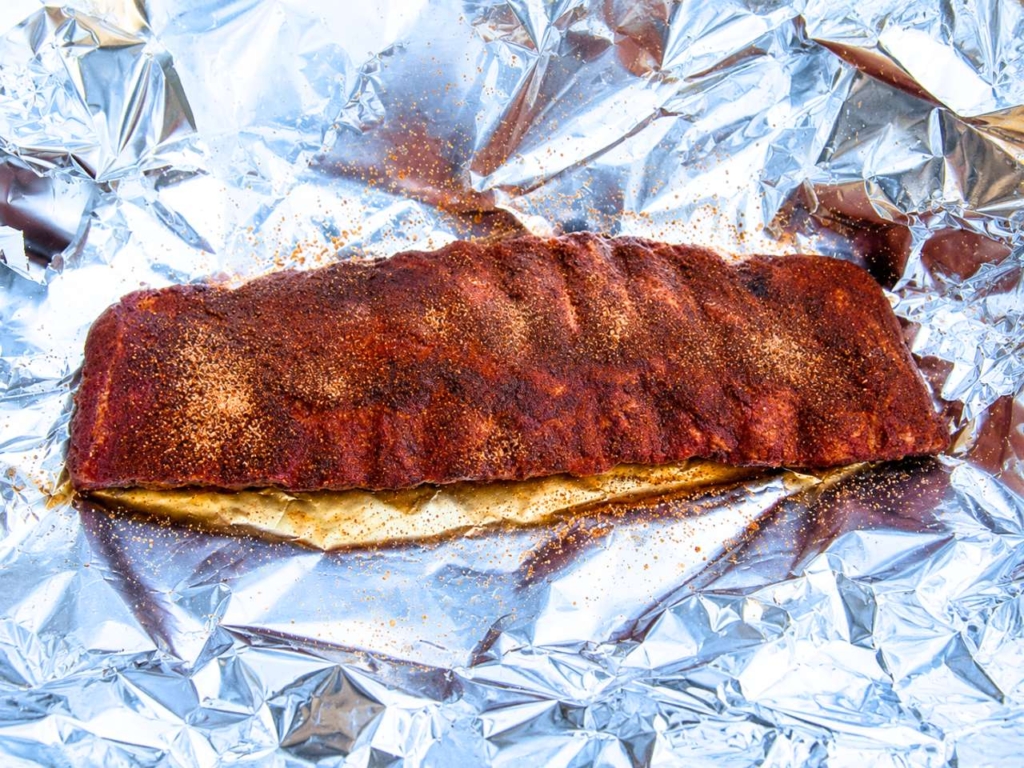
- Coat: the ribs with a thin layer of mayo and season with Meathead’s Memphis Dust dry rub.
- Smoke: the ribs, placed meat side up on the main cooking grate as far from the heat source as possible, for about 3 1/2 hours.
- Lay out: two layers of heavy-duty aluminum foil longer than the ribs. Add butter, honey, brown sugar and margarine to the foil and lay the ribs meat side down on top. Repeat process for the top of the ribs. Create a boat with the foil and add apple juice. Crimp the foil to create a seal.
- Keep cooking: Put the foiled ribs back on the smoker or grill, close the lid and cook for an hour. Check for doneness: If the meat has started to pull back from the bone, remove them from the smoker. If they haven’t check again in 15-20 minutes.
- Remove the ribs: from the grill and carefully open the foil to let steam escape. Remove ribs from foil and put them back on the smoker or grill and cook 20 more minutes until tender, using “the bend test” to determine doneness.
- Add sauce: on both sides of the ribs and turn them meat side up. Cover, and cook for just 3 to 4 minutes.
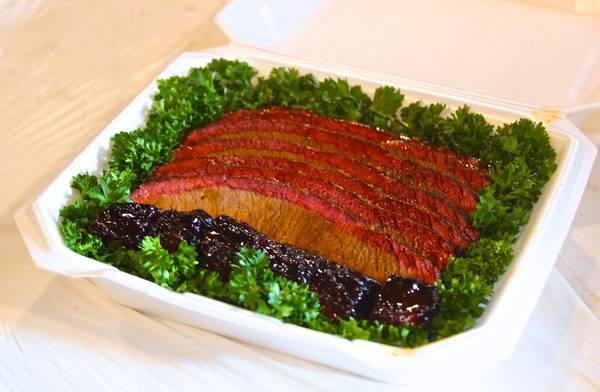
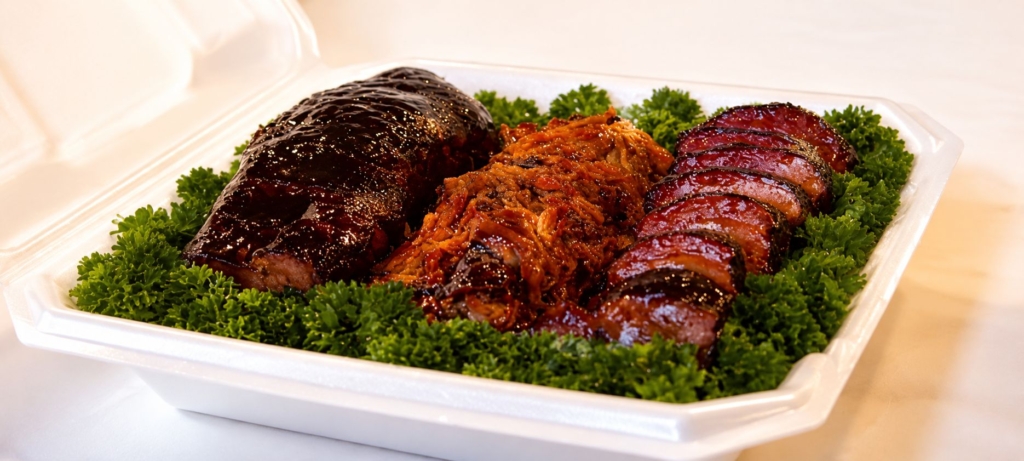
- Slice and serve: the ribs once you’ve removed them from the smoker or grill. When prepping for competition, set 4 to 5 ribs side by side in the turn-in box and top with another 4 to 5.
Summarize & Save this Content on:
The science of our competition ribs recipe
In the spirit of camaraderie and to honor those who helped me up my game, here are my best tips for competition barbecue and my personal ribs recipe. Think of the recipe as a template, and feel free to customize it with different rubs, sauces, and seasonings.
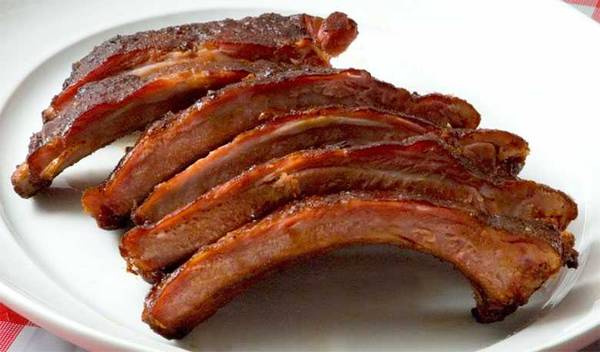
When using the recipe, please note that the goal for competition ribs is for the meat to come off of the bone cleanly in the spot where you take the bite but the meat should not come completely off the bone (i.e. “fall-off-the-bone tender” which is actually a sign that they are overcooked). The window between undercooked and overcooked ribs is extremely small so while this recipe is a great guide, it will likely take some practice to get a feel for when they are just right. As a competitor, I actually find ribs to be the most difficult to nail since the window for a “clean bite” is so small. Meanwhile, competition pork butts (especially when you have already separated the money muscle), competition chicken (especially chicken thighs which tend to be the preferred cut of chicken), and competition brisket have more leeway should you slightly overcook them.
Ingredients and substitutions for competition ribs recipe
- Heavy duty aluminum foil, 18-inches wide, will be used to wrap the ribs. You need something extra wide and sturdy.
- St. Louis cut ribs are usually winners at competitions sanctioned by Kansas City Barbecue Society.
- Morton’s coarse kosher salt is always the go-to. If you want to use table salt keep in mind you’ll need to use half as much.
- Mayonnaise is an essential fat. A thin layer keeps the meat from drying out and gives the rub something to stick to.
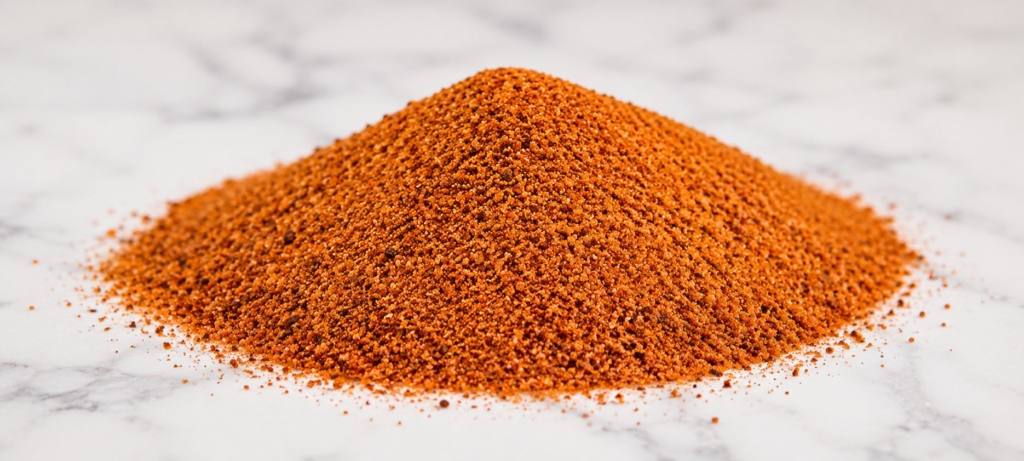
- Memphis Dust rub, one of my recipes, works great here to add a well-rounded sweet-smoky-earthy flavor without adding any heat. If you don’t want to use that, and you’d rather use another rub of your choice, check if it has salt. If it does, skip the dry brining recipe. You can also use our bottled pork rub.
- Margarine or butter will get melted and added to the ribs while they’re cooking. Fat makes everything better.
- Honey is one of two sugars we use here, as the sugars work differently. It’s a liquid sugar and brings some brighter, sweet notes.
- Brown sugar adds a depth of sweetness here thanks to molasses.
- Apple juice adds liquid sweetness and combines with the butter, honey and brown sugar in the foil packet. Apple juice is a pretty common ingredient when making ribs.
- Your favorite BBQ sauce, whether it’s homemade or store-bought, will go on right at the end. These BBQ sauces are some of our favorites.
Competition ribs recipe, step by step
- Remove the membrane from the slab of ribs. If you’re using Memphis Dust rub, add kosher salt and let them sit for 1 to 2 hours to dry brine. (Note: If you’re using your own rub that has salt, skip this step).
- Prepare smoker for indirect cooking or a charcoal grill for 2-zone cooking by placing a chimney of lit briquets on one side of the grill’s grate. Bring the temperature to 225°F (107.2°C) and add a few chunks of smoking wood. If using a gas grill, adjust temperature so one half of the grill is off and the other half is hot enough to maintain that same 225°F (107.2°C) temperature.
- Coat the ribs with a thin layer of mayo and season with your rub.
- Place ribs meat side up on main cooking grate, close the lid, and smoke for 3 1/2 hours.
- Lay out double layers of foil about 8 inches longer than the ribs. Cut the butter into pats, add it along with honey and brown sugar on top of the foil. Lay ribs meat side down on top of these ingredients and then add more butter, honey and brown sugar on top.
- Fold up the sides of the foil to create a boat. Add the apple juice and crimp the foil to create a good seal. Cook for one hour, and then open the foil gently to check for doneness. If the meat has started to pull back from the bone, remove them. If not, let them go for another 15-20 minutes.
- Remove the packet from the smoker or grill and carefully open the foil packet to let steam escape. Remove the ribs from the packet and set them back on the smoker or grill, meat side up, for another 20 until tender.
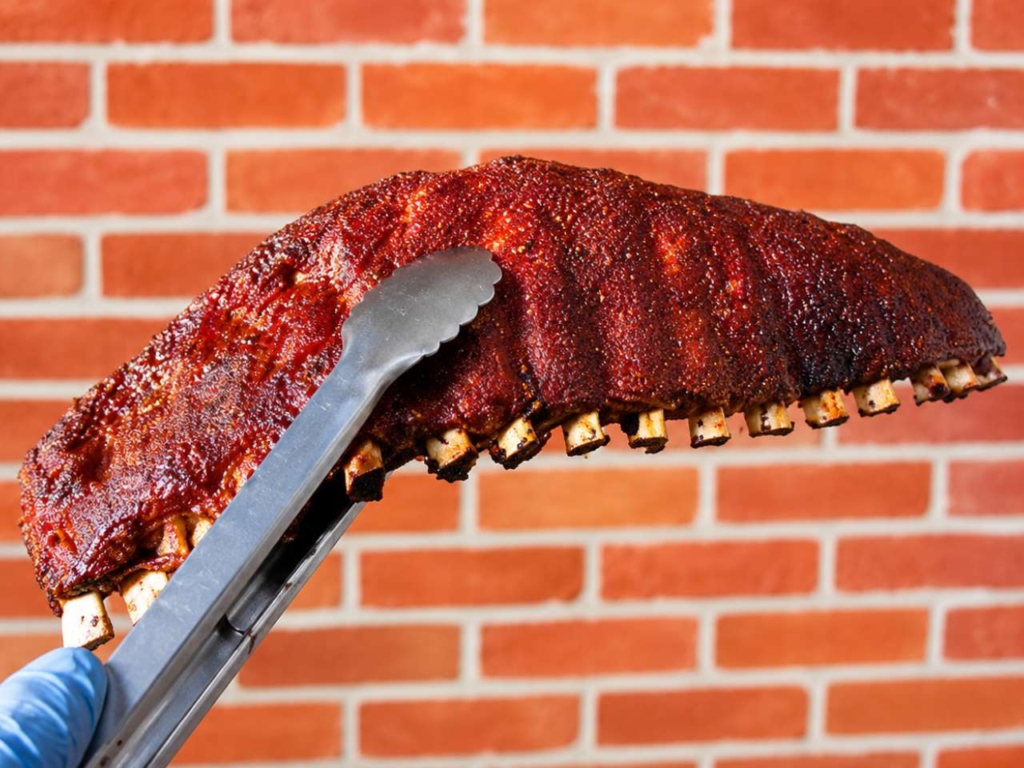
- Use the bend test to determine doneness: use tongs to pick up one end of the slab, then bend them slightly. If they are ready, the slab will bow until meat starts to crack on the surface.
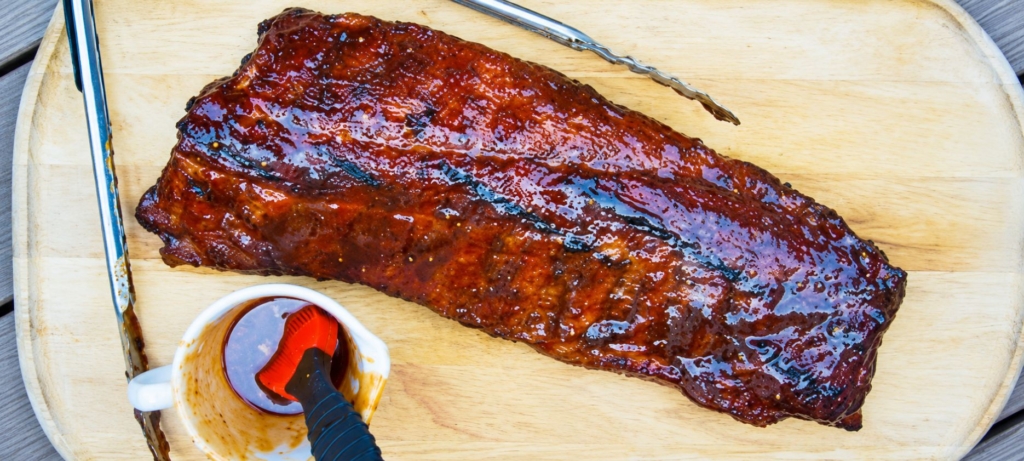
- Brush sauce on both sides of the ribs and turn them meat side up on the smoker or grill. Cover and cook for 3 to 4 minutes until the sauce sets and becomes tacky.
- Remove the ribs from the smoker or grill and slice. If preparing for competition, set 4 to 5 ribs side-by-side in the turn in box, and top with another 4 to 5 ribs.
Competition ribs recipe FAQs
In the world of competitive BBQ, meat that falls off the bone is overcooked because much of the moisture and texture are lost. Meat that falls off the bone has become some kind of sign of success for home cooks who smoke ribs because it’s super tender and easy to chew. Don’t recommend “fall-off-the-bone” anything here!
Yes, you can do this at home, if you want to get your ribs recipe in shape for competition. It helps tenderize the meat and speed up cooking.
Rib meat becomes tender when it’s cooked slowly under low heat because it helps to soften the tougher connective tissue and collagen in ribs.
If you like this Competition Ribs recipe, you’ll love . . .
- An Epic Smoked Ribs Recipe (Baby Back or St. Louis Spare Ribs)
- Easy Rendezvous-Style Memphis Dry Rubbed Ribs Recipe
- Bacon-Wrapped Spare Ribs Will Blow Your Mind
- Perfect BBQ Ribs Every Time With Sous Vide and Smoke
- Chinese Five Spice Ribs Recipe
Pitmaster Deep Dive: 11 Tips For Award-Winning Smoked BBQ Ribs
1) Stockpile charcoal. Many retailers have amazing deals on charcoal during Memorial Day, July 4th, and Labor Day weekends. Take advantage and stockpile.
2) Mind your wood. Among the many options, I prefer cherry wood for the sweet, mild-smoke flavor it lends to pork. Three to four wood chunks add just enough smoke without overpowering the meat, seasonings, or sauce.
3) St. Louis spareribs usually win. At home, I love baby back ribs, but in competition, I stick with St. Louis cut spare ribs. More often than not, spareribs land me in the top 10 in any given contest sanctioned by Kansas City Barbeque Society (KCBS). Before you enter a contest, though, check with the organizer and/or a seasoned competitor to see what tends to do best. It can vary, depending on the region of the country and the sanctioning body. For example, at the Memphis In May World Championship BBQ Cooking Contest, baby back ribs are the “go-to” for competitors.
4) Trim ribs ahead of time. The first few contests are stressful enough. Why add to the pressure by trimming your meats on-site? Instead, I like to get a jump on things at home. I peel off the membranes, remove excess fat or stray flaps of meat, and trim the ends of the racks to create uniform rectangles so that each rib will be roughly the same size when it goes in the turn-in box. Keep in mind that your meat will be inspected when you arrive at the contest. Do not season or inject your ribs until after you get the “all clear.” (Yes, plenty of folks inject their ribs with butter and other flavor enhancers).
5) Bring the right gear. It’s easy to forget something when packing for a BBQ or grilling contest. Check out our comprehensive checklist here so nothing is left behind.
6) Pack essential food. As with equipment, you don’t want to get set up at a BBQ or grilling contest and realize that you forgot key ingredients. In addition to snacks and, if cooking overnight, meals, here is what I always bring for cooking competition ribs:
- Ribs – I always cook 4 slabs so that I have options when it comes time to select the best 8 or so ribs for the turn-in box.
- Mayo – a binding agent helps the rub stick to the ribs. Some folks use mustard but I prefer the neutral taste of mayonnaise. It’s basically fat, and fat is good!
- Dry rub – try Meathead’s Memphis Dust.
- Kosher salt – if you’re confused about kosher salt vs. table salt vs. sea salt, The Science Of Salt.
- Butter – I use unsalted butter (you could also use a butter substitute in stick form or a squeeze bottle) for wrapping the ribs.
- Sweetener – I go with two, a liquid one like honey or agave syrup and a dry one like brown sugar, both for wrapping the ribs.
- Fruit juice – more liquid for softening the ribs when wrapped.
- Barbecue sauce – I like KC Masterpiece original as a base sauce, and I modify it by adding natural cherry juice, chipotle powder, and one or two other seasonings.
- Lettuce or parsley – some pitmasters have excellent tips on garnishing with parsley, but I have done exactly one parsley box in my life and I intend to keep it that way. Instead, I am fully committed to the dying art form of lettuce boxes.
- Beverages – bring two extra cans of adult or non-adult beverages to help shape your turn in box. Two cans create the perfect indention in the center of your garnish in which the meat can rest comfortably. Simply prepare your garnish then set the cans side-by-side in the center to create the indention.
7) Arrive early. Allow some extra time to meet other teams and ask questions. Most competitors are more than willing to help out new teams and answer a few questions. Take heed of their knowledge and guidance.
8) Attend the cook’s meeting. You want to make sure you have all the turn-in times and rules down pat. This is also when you will receive your 10×10 Styrofoam box. Double-check that your team number matches the one on the box. Otherwise, you’ll be cooking some amazing ribs for some other team. Also, keep the box turned right side up. It’s very easy to build a turn-in box upside down only to have to rebuild it at the turn-in table.
9) Wrap your ribs. Unlike the ribs I prepare at home, I always wrap competition ribs (a.k.a. The Texas Crutch: Wrap in Foil to Tenderize and Speed Cooking). This step speeds up the cooking and softens the meat to create the perfect flavorful bite for the judges. They usually only take one or two tastes, so the ribs must be perfect and on time.
10) Avoid overcooked ribs. It’s a common misconception that ribs should be “fall-off-the-bone” tender. If the meat falls off the bone, the ribs are overdone. Judges are actually looking for ribs with a clean bite and a satisfying chew.
11) Turn in on time. Don’t risk getting disqualified! KCBS has a 10-minute turn-in window, which is five minutes before the 12:30 p.m. turn-in time until five minutes after. Be ready.

Our Award Winning Competition Pork Ribs Recipe


Award Winning Competition Ribs Recipe
Special Tools
Ingredients
Method
- Prep. Remove the membrane from the slabs of ribs (read more on removing the membrane here).
- If you are using the homemade Meathead's Memphis Dust rub, begin prepping the ribs by seasoning them with Kosher salt. If you can, give the salt 1 to 2 hours to be absorbed. The process of salting in advance is called dry brining. The rule of thumb is 1/2 teaspoon of kosher salt per pound of meat, but ribs consist of only about 50% meat, so use about 1/4 teaspoon per pound. You can simply eyeball it by sprinkling on the same amount of salt you would sprinkle on the ribs if they were served to you unseasoned. If you are using a store-bought rub containing salt (we often use Meathead's Amazing Smoked Pork Seasoning And Dry Brine), skip the salting step in order to avoid double salt jeoprady.
- Fire up. Prepare a smoker for indirect cooking. Alternatively, you can set up a charcoal grill for 2-zone cooking by placing a chimney full of lit charcoal briquets on one side of the grill's charcoal grate in order to create direct and indirect cooking zones. Adjust the smoker or grill vents to bring the temperature to about 225°F (107.2°C) and add two to three chunks of your favorite smoking wood to the charcoal for flavor. On a gas grill, adjust the temperature knobs so that one half of the grill is off and the other half is heated enough to maintain a temperature of approximately 225°F (107.2°C) on the indirect side.
- Prep again. Once the smoker or grill is ready, coat the ribs with a thin layer of mayonnaise and season with Meathead's Memphis Dust dry rub.
- Cook. Place the slabs of ribs meat side up on the main cooking grate as far away from the heat source as possible. Close the lid on the smoker or grill. Allow the ribs to smoke until the meat just begins to shrink back from the ends of the bones, about 3 1/2 hours.
- Wrap. Lay out two double layers of heavy-duty 18-inch wide aluminum foil approximately eight inches longer than the ribs. Cut the stick of butter into 1/2 tablespoon pieces and top each double layer of foil with two tablespoons of butter, one tablespoon of honey drizzled over the butter, and two tablespoons brown sugar sprinkled over the top. Lay the ribs meat side down on the butter, honey and brown sugar mixture. Place another two tablespoons margarine, a tablespoon of honey, and two tablespoons brown sugar evenly on top of the bone side of each slab of ribs. Fold up the sides of the foil to create a boat, pour in the apple juice. Begin crimping the foil to create a good seal while also being careful not to wrap the foil too tightly against the ribs themselves.
- Keep cooking. Place the foiled ribs sealed side up on the smoker or grill, close the lid, and cook for one hour, then gently open a small section of the foil to check for doneness. If the meat has begun to pull back from the bone (approximately 1/4 of an inch of bone exposed), remove them from the smoker or grill. If they haven't begun to pull back, re-seal the foil and check again after 15-20 minutes.
- Defoil. Removed the wrapped ribs from the smoker or grill, and cautiously open the foil packet to allow the steam to escape. Remove the ribs from the foil and set them back on the smoker or grill meat side up. Cover the smoker or grill and allow the ribs to cook until tender but not falling off the bone, about 20 minutes. We prefer to use the "bend test." Use tongs to pick up one end of the slab of ribs, then bend them slightly. If they are ready, the slab will bow until the meat starts to crack on the surface.
- Sauce. When they are ready, brush sauce on both sides of the ribs and turn them meat side up on the smoker or grill. Cover the smoker or grill and cook just until the sauce sets and becomes tacky, 3 to 4 minutes.
- Slice and serve. Remove the ribs from the smoker or grill, and slice. When preparing the ribs for a competition, set 4 to 5 ribs side-by-side in the turn in box and top with another 4 to 5 ribs.








Before you can post a comment or question you must sign into our commenting partner, Disqus. This helps make sure everyone hanging around the grill is civil. We do not tolerate nastiness, racism, porn, inappropriate language, or attacks on others. All comments are the property of AmazingRibs.com and we reserve the right to quote them, edit them, delete them, and block people from making future comments.
Please leave comments and questions on the same page that is devoted to that subject so others can see questions and our answers when they are reading about the subject. You must enable JavaScript to use the comments section, and you must accept cookies to post comments. Note: the software that runs Disqus is different from the Pitmaster Club, so members need to sign into the Pitmaster Club separately.