




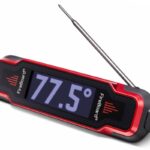
When it comes to baked potatoes, as with meats, we are faced with a food whose center and skin need separate treatment. We want a soft, moist, fluffy inside, and a dry, crisp skin that nobody will leave aside. Once again, a 2-zone setup and reverse sear are the solution. And once again we learn that a good digital thermometer can answer the question “is it done?”
Russet Burbank potatoes are the big brown variety used by steakhouses because they have a stout skin that gets crunchy when baked properly, and although I love the flavor of Yukon Golds, their skin is thinner and they don’t get that satisfying chew. It will not surprise you that I have tested the optimum doneness for baking potatoes and I find 205°F (96.1°C) is the low end, al dente, a bit crunchy. At 212°F (100°C), they are moist, crumbly, fluffy. Amazingly, I have never seen a website or cookbook with a recipe that tells you what temp is optimal for a baked potato. They just give cooking times and temps, and, as regular readers know, this is inaccurate because oven temps are rarely accurate, not to mention grills, and the thickness of the potato is what dictates cooking time.
You can get there by just baking them, but that leaves the skin tender and papery. I like it with a bit of crunch. And you can’t get there in the microwave. I know you are in a hurry, but the microwave heats unevenly and you end up with al dente and dry spots in the same spud. You also end up with blah soft skin.
If you wrap them in foil so everything steams, including the skin. I’m guessing this less than satisfactory shortcut was invented by a restaurateur who didn’t want to wait an hour. A better shortcut is about five minutes in the microwave on high, and then a short trip through a hot 450°F (232.2°C) oven or grill for about 15 minutes. This is better than cooking it in the microwave alone, but again the skin is just too tender for me.
To get the skin perfect you need radiant heat, not hot air. Throwing them right on hot coals is popular, but you’re probably going to burn them, and if you want a mouthful of carbon, just butter up a Kingsford briquet. Putting the spud above the direct heat of a grill is the ultimate solution to a crisp skin. See the recipe below for that method. Another shortcut, in theory, is the potato nail. But it doesn’t work. Here’s the mythbusting explanation. And if you prefer creamier twice baked potatoes, click here.
Up your game: Join our Pitmaster Club. Try it out for free for 30 days. No credit card is needed. No spam. Join now and Be Amazing!

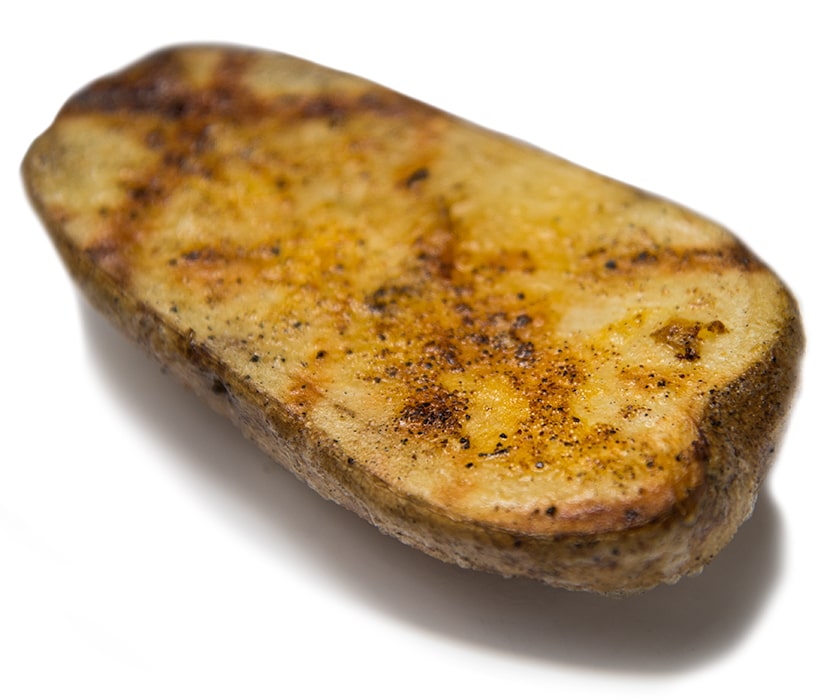
Murphies Recipe: Once Baked Potatoes on the Grill
Rate this RecipeMakes
1 baked potatoIngredients

Method
- Read my article on the Science of Potatoes.
- Prep. With a brush or scrubby sponge devoid of soap, rub the skins hard enough to remove all dirt, but not so hard to remove the skins. Cut out any bad spots. Slice them in half lengthwise. Sniff them carefully. Nothing is worse than a musty potato.
- While the potatoes are wet, generously sprinkle your favorite spice rub all over. If the rub does not have salt, sprinkle a small grained salt on too. Let the spuds sit at room temp for 15 to 30 minutes so the salt will melt and begin migrating towards the center.
- Fire up. Set up a grill for 2-zone cooking and shoot for 325°F (162.8°C) in the indirect zone. If you are in a hurry you can pre-cook them in the microwave for 5 minutes on high. Not any longer or you will not get a good papery skin. The baking on the grill will take as little as 30 minutes after microwaving.
- Cook. Put them on the indirect heat side of the grill and let them bake, cut side up, lid down, for about 90 minutes until the temp in the centers is about 190°F (87.8°C). The edges, which are thinner, will be a little higher.
- Melt the butter in the microwave for about 30 seconds to a minute—each oven will vary— and paint the potatoes all over with the butter. Move them to the direct heat side, cut side down, and let the cut side brown in the direct radiant heat, lid down, for about two minutes until they start to get golden, but don't continue painting them if you want crispy skins. Then roll them over and brown the skin sides.
- Remove them from the heat. They should be in that 200°F (93.3°C) range. Goldilocks! If you like a little al dente crunch, pull them at 200°F (93.3°C). If you want them really fluffy under the crust, take them to 210°F (98.9°C). Bring them in, mash the contents with a fork, and dress them.
- Serve. Here are some fun ways to gussy up a spud:Purists (who me?) use only butter or sour cream, or both, with salt and pepper and perhaps a sprinkling of chopped fresh chives or green onions. The adventurous will add broccoli florets, fresh thyme, fresh dill weed, fresh basil, or cowboy candy.Here's one of my all-time favorites: Splashes of malt vinegar. That's right, just plain malt vinegar. Tons of flavor, zero calories. If you've ever been to England, you've tasted fish and chips with malt vinegar. Balsamic or sherry vinegar work, but not nearly as well. For a fun change of place, try Crema Mexicana, which is similar to sour cream, or try my recipe for horseradish cream sauce.Make lemon butter by melting butter, squeezing in a bit of lemon juice, and whisking together thoroughly. One lemon per stick of butter is a good ratio. Or skip the juice and just mix in the zest of the lemon.Or you can go the cheese route with a few dollops of home made boursin (a favorite of mine), pimento cheese spread, fresh chevre (a light creamy tart goat cheese), crumbled blue cheese, or shredded cheddar.Stir in pesto, tomato salsa, caramelized onions, home made ketchup.Go crazy and top it with bacon, lobster, shrimp, pulled pork, chopped brisket, hot dog chili, or chopped hard boiled eggs with chopped onions.Caviar anyone?
Before you can post a comment or question you must sign into our commenting partner, Disqus. This helps make sure everyone hanging around the grill is civil. We do not tolerate nastiness, racism, porn, inappropriate language, or attacks on others. All comments are the property of AmazingRibs.com and we reserve the right to quote them, edit them, delete them, and block people from making future comments.
Please leave comments and questions on the same page that is devoted to that subject so others can see questions and our answers when they are reading about the subject. You must enable JavaScript to use the comments section, and you must accept cookies to post comments. Note: the software that runs Disqus is different from the Pitmaster Club, so members need to sign into the Pitmaster Club separately.