


If you’ve ever wanted to create a smoked brisket at home that’s just as good, if not better, than they do at Texas’ best BBQ joints then this BBQ brisket recipe is for you!
How do you cook a brisket? That is probably the most common question I receive from readers, right up there with How do you cook ribs? Once you master the basics, making smoked brisket is not as difficult as you might think. You just need a good recipe loaded with proven techniques and useful tips. In this article, you’ll find all that and more. I go through everything you need to cook a tender barbecue beef brisket, including how to season it, how long to smoke it, how to slice it, and everything in between!
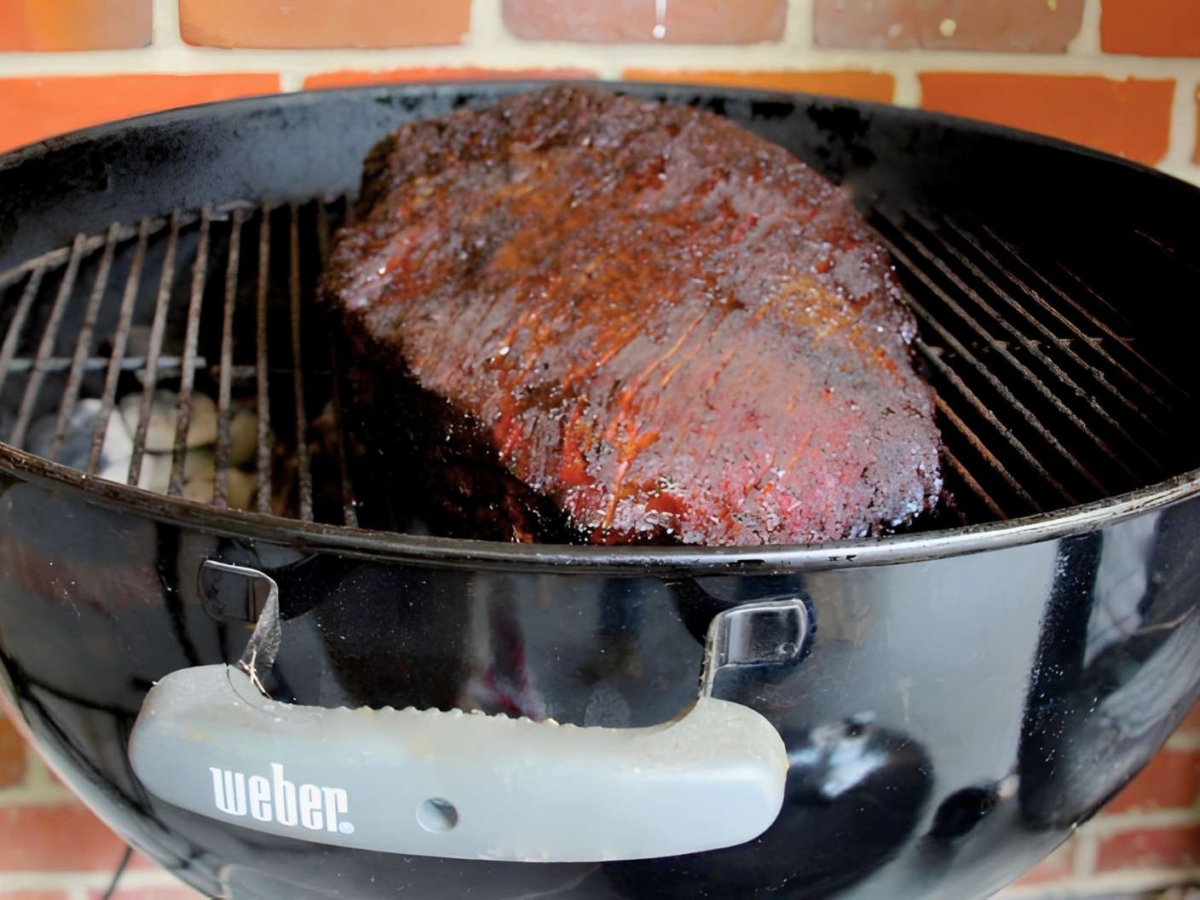
Recipe Overview: Smoked Brisket Success Formula
- Buy a 12- to 15-pound whole packer brisket, USDA Choice or better.
- Trim the fat cap to about 1/4 inch.
- Dry brine with approximately 1/2 teaspoon Morton Coarse Kosher Salt per pound of meat.
- Rub with Big Bad Beef Rub or Mrs. O’Leary’s Cow Crust dry rub, or if you’re a traditionalist, just salt and pepper.
- Smoke at 225°F with hardwood smoke. Your choice of smoking wood is not critical.
- Wrap the brisket when the bark is set and the meat hits the BBQ stall, at an internal temp of 150°F to 165°F (after about 6 to 8 hours), and then continue cooking at 225°F.
- Hold when the meat reaches an internal temp of 195°F to 205°F (the jiggly “wubba wubba” stage, after another 5 to 7 hours), by placing the wrapped brisket in a cooler for 2 to 4 hours.
- Slice when the meat temp drops back down to 150°F, unwrapping the beast, and slicing it across the grain of each muscle.
Summarize & Save this Content on:
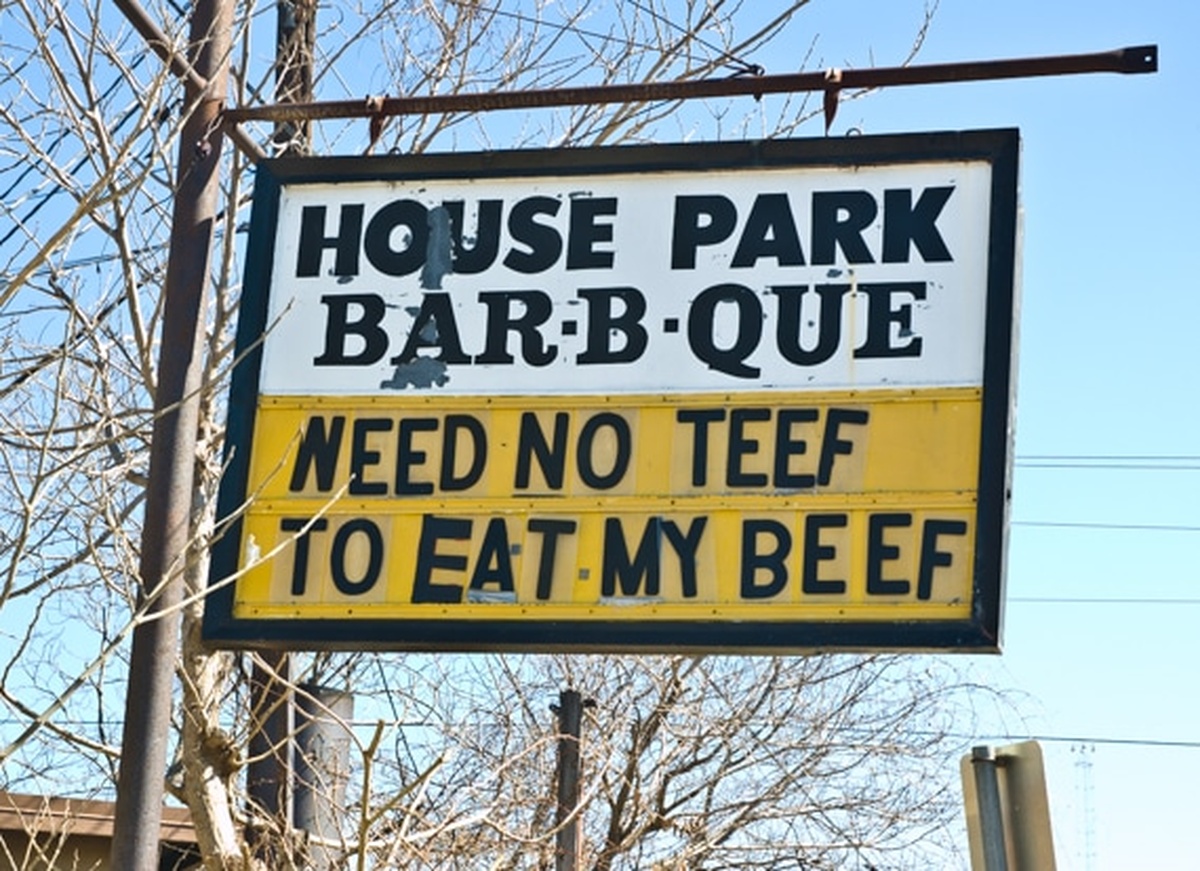
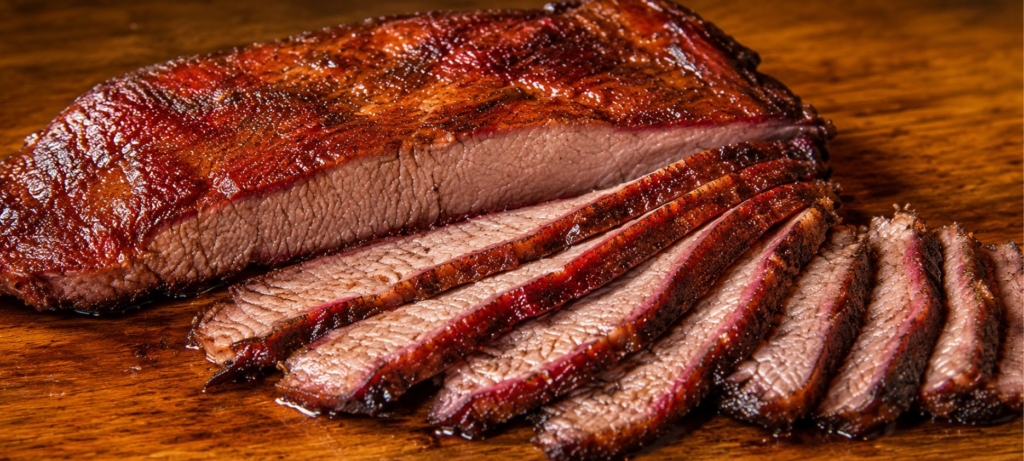
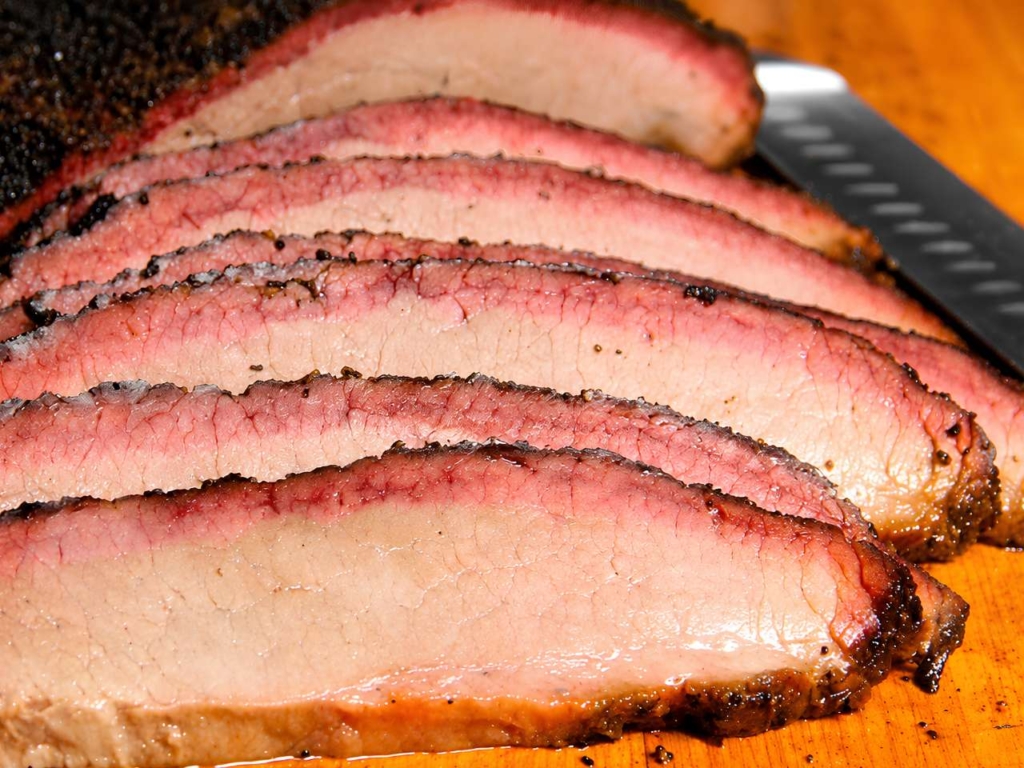
That’s the gist of best smoked brisket recipe, honed from years of experience cooking the holy grail of barbecue, Texas-style BBQ brisket with juicy, tender meat, a crusty bark, deep beefy flavor, and a prominent BBQ smoke ring. Follow this success formula and your brisket will be tender and juicy, just like the sign says outside of House Park Bar-B-Que in Austin, Need No Teef To Eat My Beef! (Click here to Tweet this bit of wisdom)!
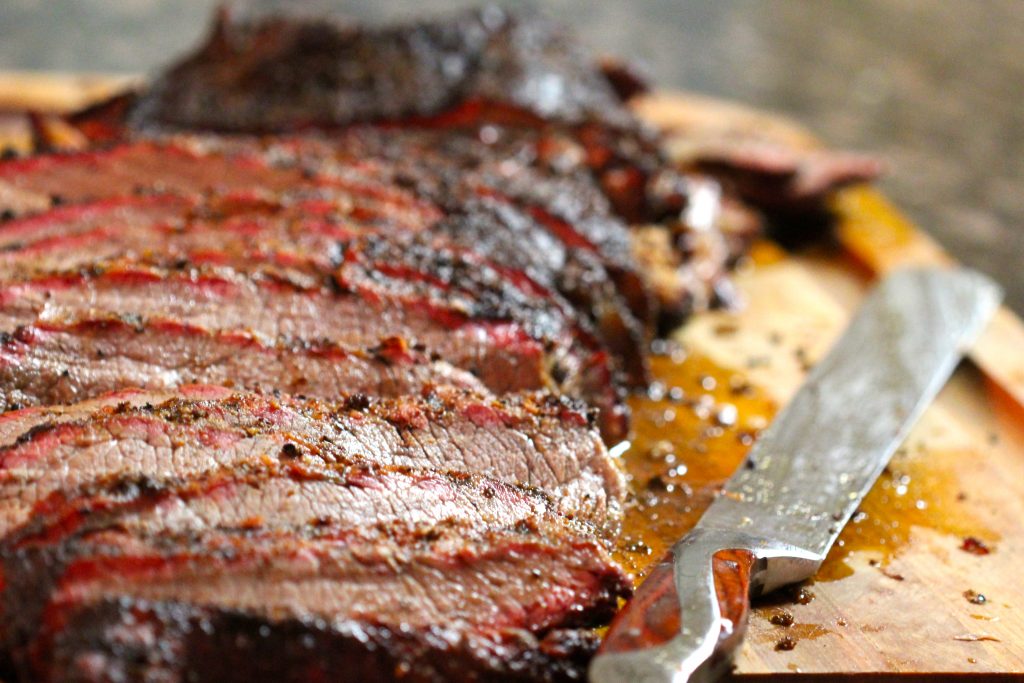
The science behind our BBQ brisket recipe
- Juicy, tender meat. Cooking at a low and slow 225°F allows time for tough connective tissue to soften and become tender. An optional injection of beef broth keeps the meat extra juicy.
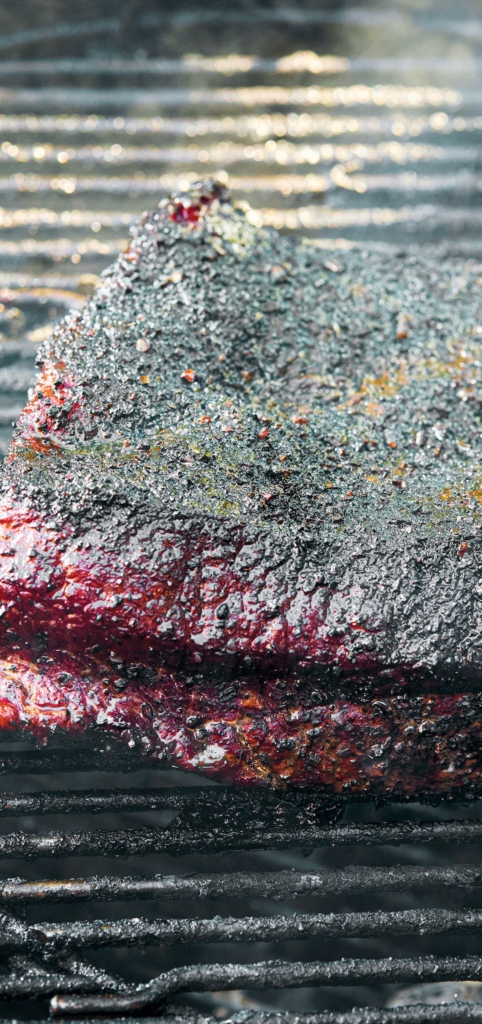
- Smoky bark. Cooking with hardwood flavors the surface of the meat with smoke, while evaporation and a BBQ dry rub enhance the bark’s flavor and crunchiness.
- Salt for flavor and juiciness. Salting the meat and leaving it on overnight gives the salt time to penetrate. The other spices in your BBQ rub won’t penetrate, but you want that NaCl flavor amplifier down in the meat where it can also help the proteins retain moisture, the basic result of brining.
- Wrapping to beat the stall. The Texas Crutch is optional but I always do it for brisket. Wrapping the meat powers through the dreaded BBQ stall, minimizes evaporative cooling, cuts cooking time, and retains juices.
- Holding the meat to tenderize it. After cooking, holding the wrapped meat for 1 to 4 hours lets carryover cooking tenderize the meat further by converting more connective tissue collagen into gelatin.
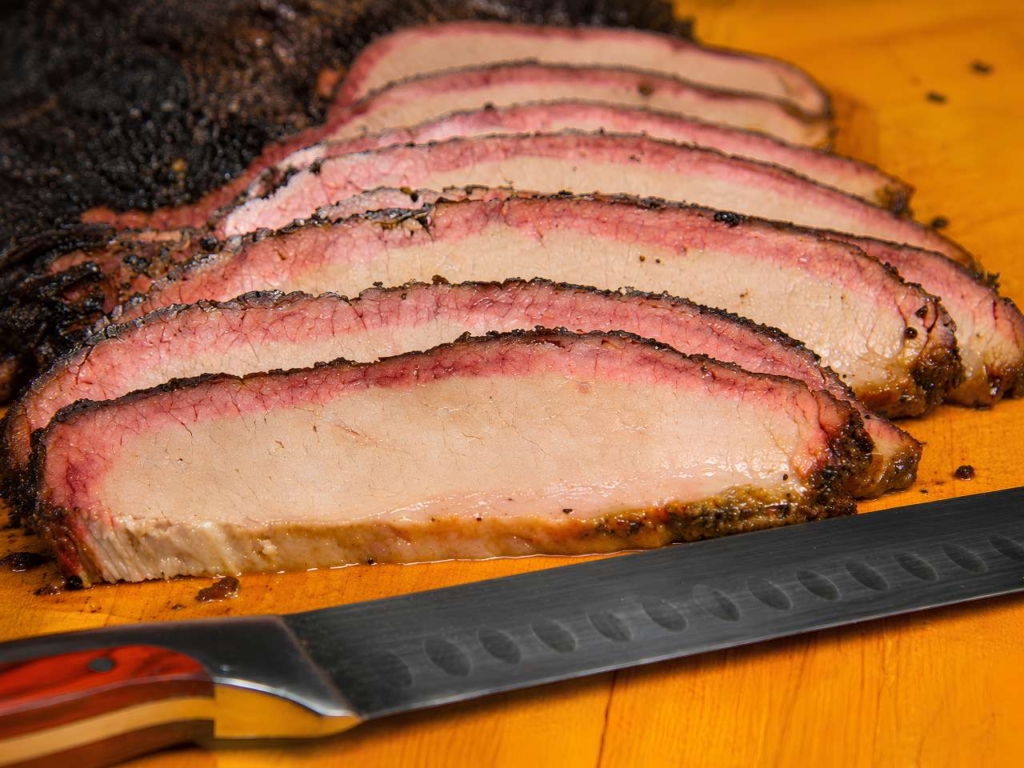
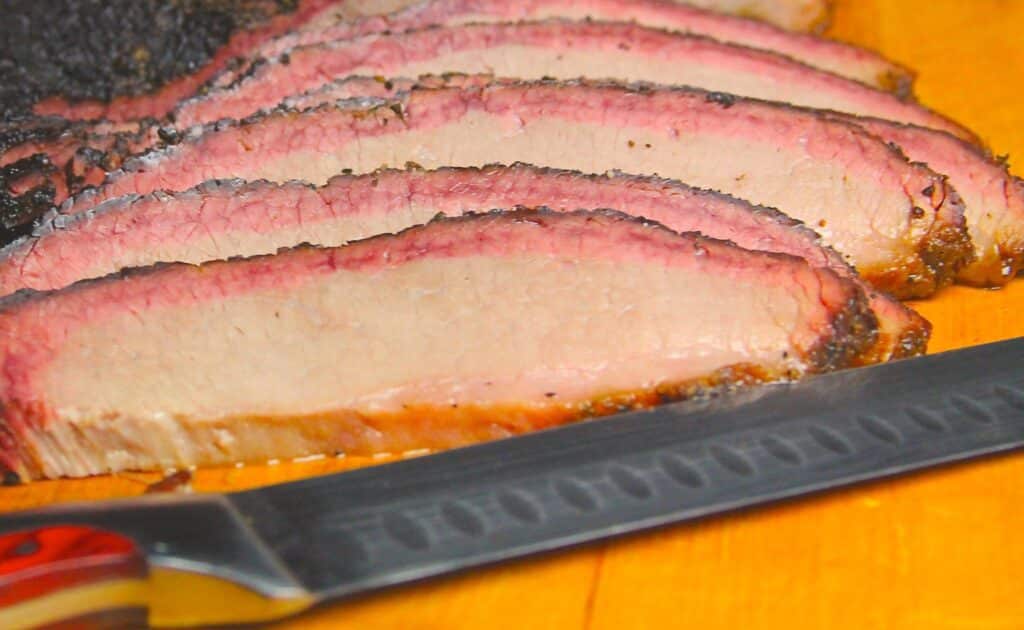
- Slicing for increased tenderness. When done, slicing the two main brisket muscles against the grain of the muscle makes the meat even easier to chew (a.k.a. more tender). Separate the muscles and you can slice each one properly. Most pitmasters slice their brisket to the thickness of a pencil. I like to pour any retained juices over the slices.
How to buy the best brisket
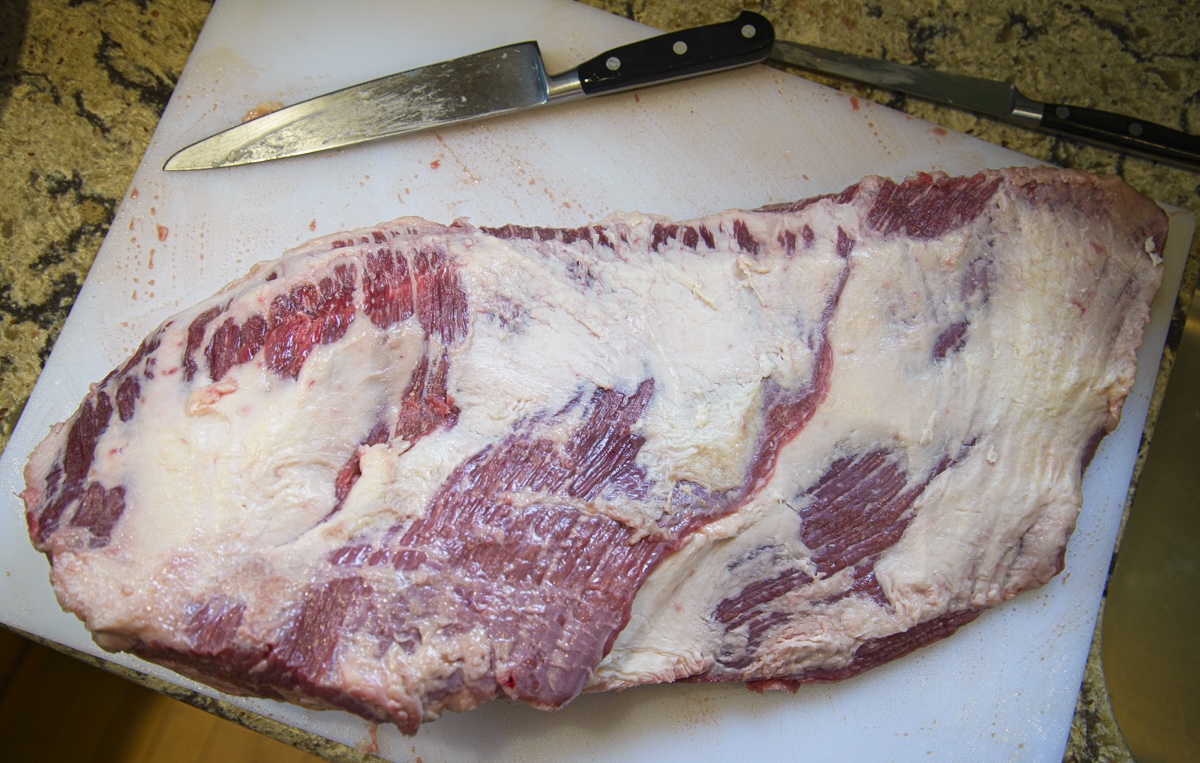
Get a good grade. Go for the highest grade you can find, and hand pick the slab with the most fat striation visible. Pay no attention to the fat cap. You will trim most of that away. But marbling is important. Go for USDA Choice, USDA Prime, or Certified Angus Beef. If you insist on the best and have the cash, buy Wagyu brisket. Good fat marbling is half the battle when the goal is a tender brisket. And if it is not labeled, chances are it is USDA Select. Avoid it. You will have a hard time elevating it above shoe leather. Please don’t write to me saying you can’t figure out why your brisket was tough if you did not buy USDA Choice or better. If you have to special order the brisket you want, then order it.
Buy a whole packer. Go for a whole packer brisket with the point and flat muscles intact. It’ll weigh anywhere from 8 to 16 pounds, depending on the size of the cow (larger specimens tend to be tougher). Some butchers sell only brisket flats (a.k.a. “first cut”) and some may offer the point (a.k.a. “second cut” or “deckle”). Small pieces, like a four pound hunk o’ flat or hunk o’ point lose a lot of moisture, shrink a lot, and get tough. But if that’s your only option, go for the point. Worse case, if they only have flats, buy the thickest one you can. Plan on 1/2 pound or more per person.
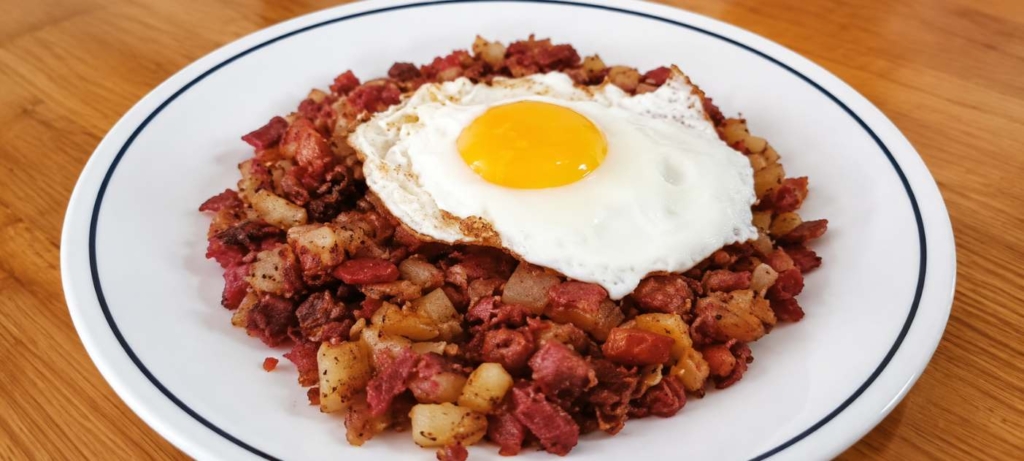
Don’t buy corned beef. Brisket that been preserved with salt and flavorings is corned beef. It is not suitable for this recipe! To make Texas brisket, you need raw beef. That said, if you love corned beef (and we do!), check out our recipes showing you how to make homemade corned beef and how to enjoy it dishes like Corned Beef and Cabbage and Corned Beef Hash.
How to prep brisket for smoking
Trim. The thick fat cap does not penetrate the meat when it melts. I explain why in my article on the myth of melting fat penetrating meat. But a little fat does help provide some moisture, plus most people will not cut off a thin fat cap at the table, so your flavorful BBQ rub remains and makes the brisket taste better. I trim off most of the fat from the surface, leaving about a 1/4″ (6.3 mm). Some folks like to trim fat from between the flat and the point muscles too. Go for it, but don’t cut all the way through if you want the two muscles to remain attached. Render all your trimmed fat in a saucepan and discover the glories of how to use beef tallow.
Separate (optional). In a Texas bar, this topic will usually end in gunplay. The truth is that you can separate the muscles while trimming the brisket. Purists cry heresy, and I’m with them if this is your first rodeo. It’s just easier and more traditional to leave a whole packer brisket whole. However, separating makes a lot of sense. It makes the flat more uniform in thickness, so it cooks more evenly. Plus, you can apply your dry rub to all sides of the flat for more flavor, and you will get an all-around smoke ring. You can then cook the flat and point side by side and easily turn the point into that luscious beef candy known as burnt ends. Separate and you also knock off about 1/3 of the cooking time compared to a whole packer. Let’s say you separate and remove most of the fat from a 13 pound (5.8 kg) packer. You can expect about 5 pounds (2.2 kg) of flat, 4 pounds (1.8 kg) of point, and 4 pounds (1.8 kg) of trim. The point end is usually a bit thinner, so if you separate, you might want to put the point on the smoker an hour or two after the flat.
Inject (optional). If you have a hypodermic syringe for injecting meat, now’s the time to use it. Injecting is strictly optional but it does keep the meat juicy. Injecting with beef broth, brine, or a specially formulated injection helps combat dehydration, and the salt enhances flavor. Many of the competition champs have been injecting with a product called Fab B Light or Butcher BBQ Brisket Marinade, both of which are moisturizers, tenderizers, and flavor enhancers. Traditionalists think this is way too Barry Bonds and are repulsed by the idea. The results speak for themselves. They are winning. A lot. I like to inject for moisture but I also like brisket to taste like beef, so I use plain beef broth. Just pump in about 1 ounce (28 g) of beef broth per pound of raw meat by inserting the needle parallel to the grain in several locations about 1″ (2.5 cm) apart and backing it out as you press the plunger. Do it in the sink, and be careful so you don’t get squirted in the eye.
Season. If you injected the meat with salted beef broth, then do not salt the meat. On the other hand, if you didn’t inject, then salt the meat about 12 to 24 hours in advance so it can work its way in. Worse case, salt it at least 2 to 4 hours before cooking. Sprinkle on about 1/2 teaspoon per pound of meat evenly over the meat surface. Both injecting and salting harness the benefits of brining meat: enhanced juiciness and flavor. Some cooks mark the meat grain direction now with a slice in the surface, or they cut off a slice following the grain. That’s so they can properly slice the cooked meat across the grain later.
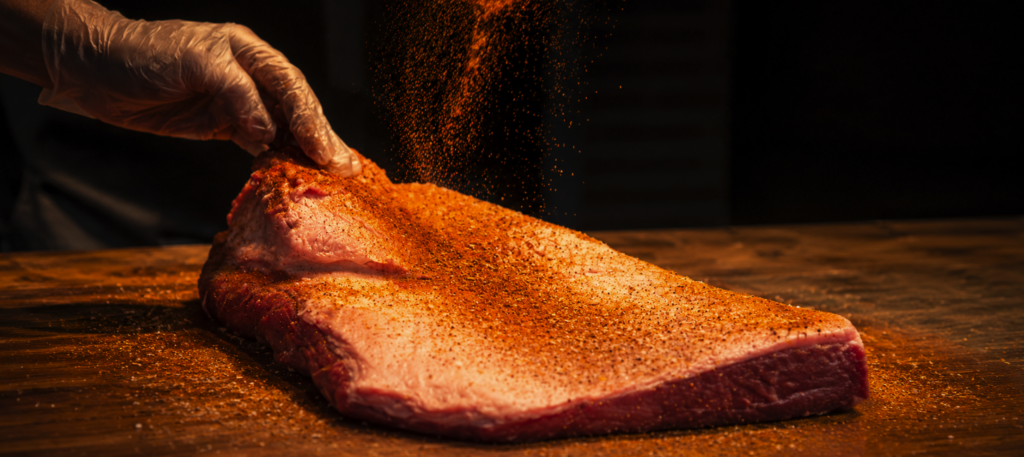
Rub. After salting, sprinkle my Big Bad Beef Rub liberally on all areas of the meat and rub it in evenly. This rub is perfect for BBQ brisket, as it helps darken and flavor the brisket bark. Want to go strictly traditional? Use “dalmation rub,” just salt and pepper. That means only adding pepper after brining with an injection or with salt. Note: You can put the salt and spice rub on at the same time, but the rub flavors won’t penetrate the meat, so I put mine on while the smoker is heating up, about an hour before cooking. This approach is discussed in my article on the Science of Rubs. Some cooks like to help the rub stick to the meat by slathering on mustard or beef tallow first. Our President, Clint Cantwell, uses mayonnaise because, as he says “mayo is fat, and fat is flavor!” Don’t get too bogged down in slathers. My experience is that they make little or no difference in the final outcome so I tend to skip them.
Chill. Keep the meat chilled until just before you cook it. Chilled meat attracts more smoke through a process called thermophoresis.
How to wrap brisket
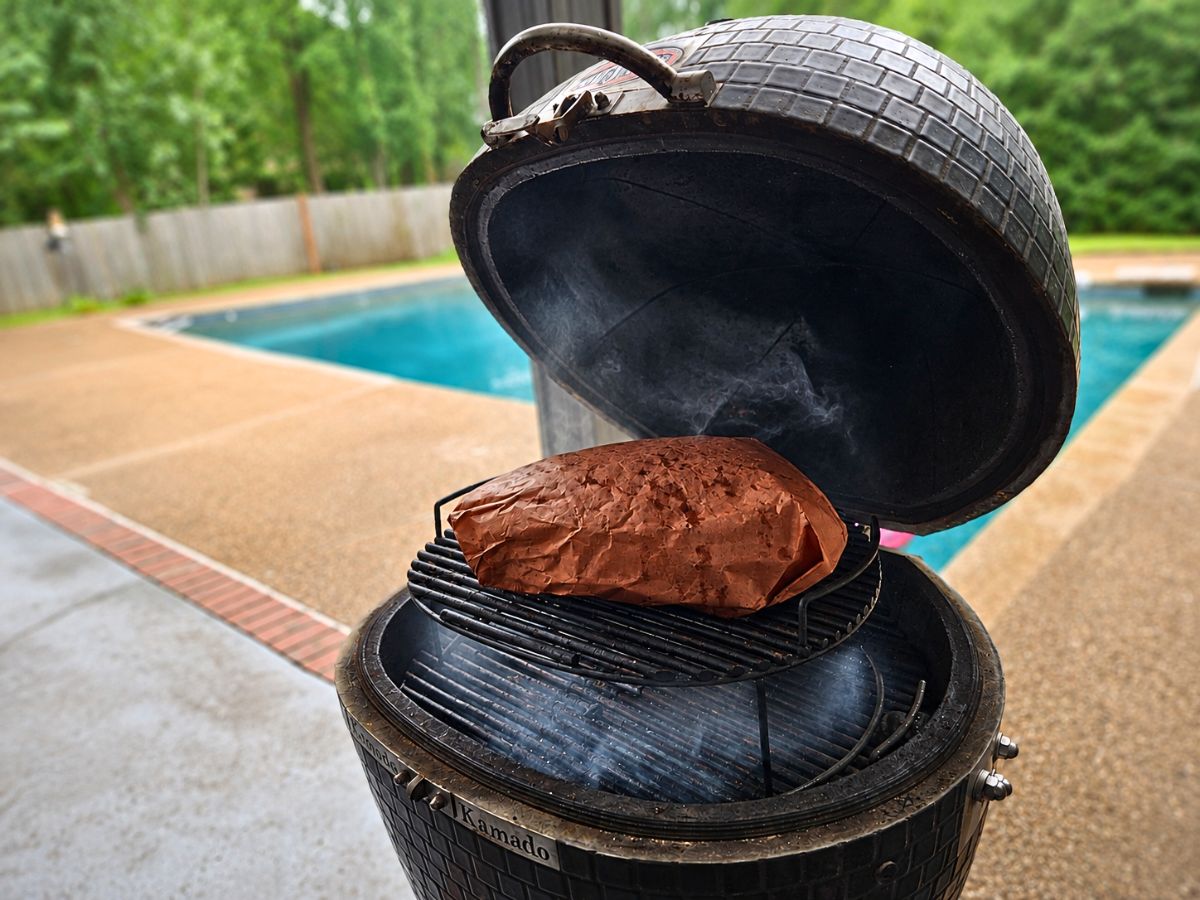
Big, dense clods of meat like beef brisket and pork shoulder tend to hit a point during smoking when the internal temperature stops rising. Sometimes for hours. This maddening phenomenon is known as the BBQ stall. But there’s a way to beat it: the Texas Crutch. Just wrap the hunk of meat in foil or butcher paper. The meat braises and steams in its own juices, powering through the stall. It does soften the bark a bit, but it makes the meat more tender and juicy. Purists say wrapping is not traditional. Spare me. Cooking with charcoal in a steel tube is not traditional either. You want tradition? Go dig a pit in the dirt. I always crutch brisket, and here’s how.
Wait for the stall. At around 150 to 165°F internal temp (after 6 to 8 hours of smoking), the internal temperature will stop rising steadily. That’s when to wrap.
Use foil or butcher paper. Foil makes moister meat with a slight pot roast texture and a soft bark, but it can cut 2 hours off the cooking time. Butcher paper cuts about 1 hour off cooking time, lets some moisture escape, and tastes very much like the foil wrapped version. Both materials trap some rendered fat and juices, so the differences are subtle. Austin brisket master Aaron Franklin uses butcher paper, and you can buy pink butcher paper online here.
Crimp it tight. Place the brisket on a long sheet of double-layered heavy-duty foil or on butcher paper. Drizzle on 1/2 cup beef broth (some folks added a little beef tallow as well), and then wrap the brisket, crimping and folding the foil or paper tightly around the meat as you go down the sheet of foil or paper.
Keep cooking. Continue cooking the wrapped brisket at 225°F either on the smoker or in an oven (it won’t pick up any more smoke when wrapped). Finishing in the oven is cheating, but nobody will arrest you, and it might be your only option if you’re having trouble controlling the temperature of your outdoor cooker. What about the bark? If you have a good bark when you wrap, most of it will survive. It will soften some, so if you prefer it really crusty, crisp up the bark over high heat when you unwrap.
How to make burnt ends
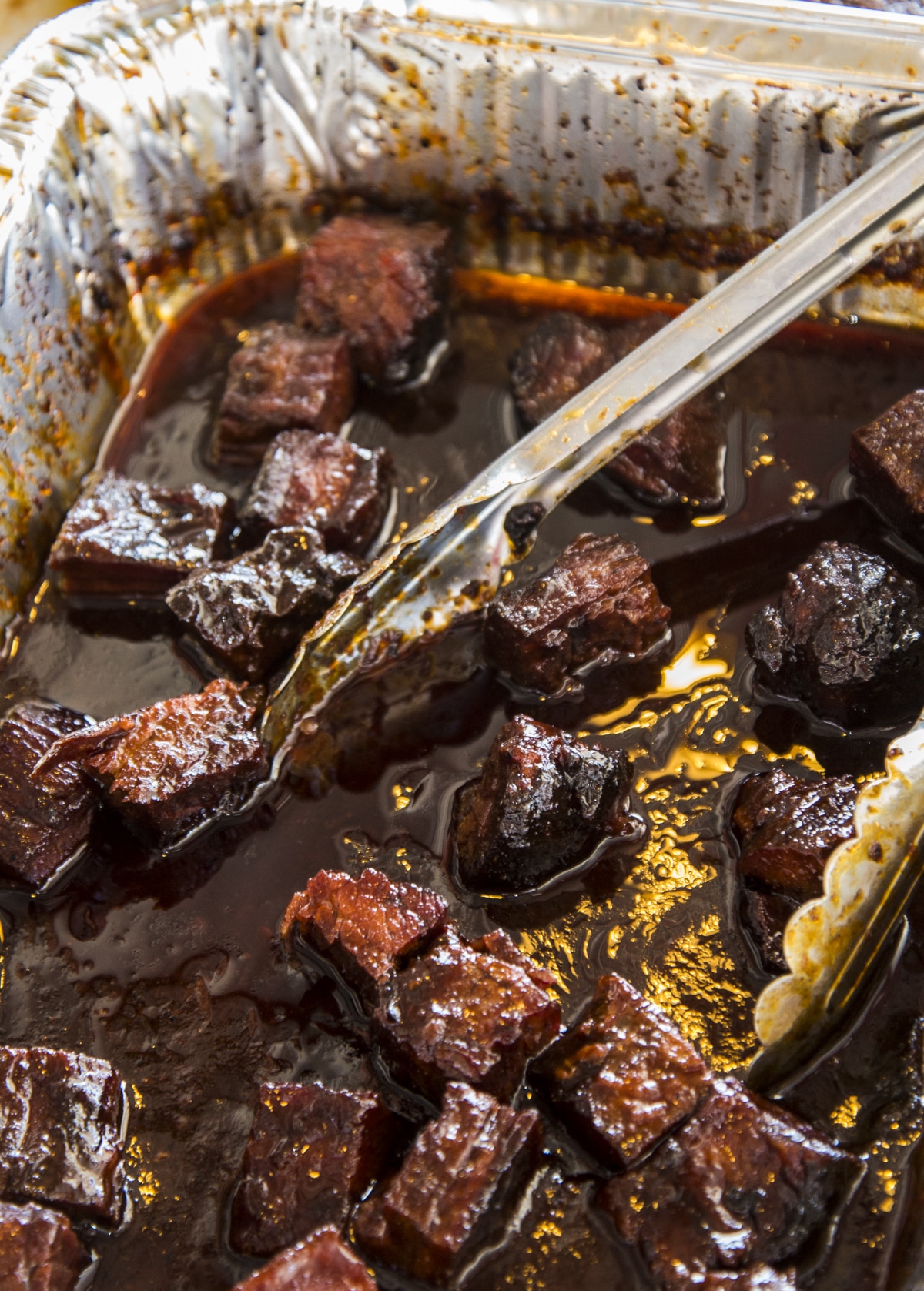
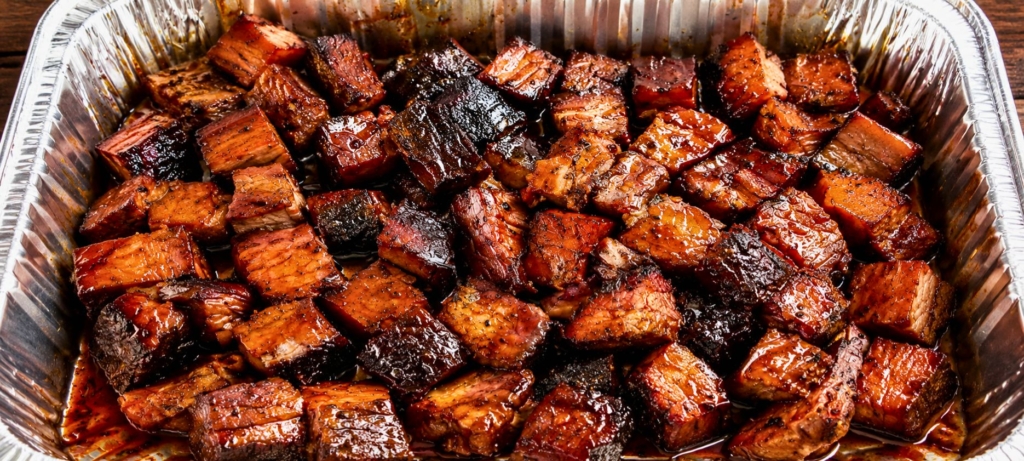
Burnt ends are amazingly flavorful bite-size crispy meat cubes. Originally they were simply edges and ends that were overcooked and trimmed off and munched by the kitchen staff. If there were any leftover, they were given away for free.
Then, in 1970, in his marvelous book American Fried, Calvin Trillin wrote the following about Arthur Bryant’s restaurant in Kansas City “The main course at Bryant’s, as far as I’m concerned, is something that is given away for free — the burned edges of the brisket. The counterman just pushes them over to the side as he slices the beef, and anyone who wants them helps himself. I dream of those burned edges. Sometimes, when I’m in some awful overpriced restaurant in some strange town — all of my restaurant-finding techniques having failed, so that I’m left to choke down something that costs seven dollars and tastes like a medium-rare sponge — a blank look comes over my face: I have just realized that at that very moment someone in Kansas City is being given those burned edges free.”
To make burnt ends, cut the cooked point muscle into bite-size cubes, about 1/2″ to 3/4″ (12 to 19 mm). Set aside any pieces that are too fatty or just eat them. And here’s my technique, strictly illegal in BBQ competitions, but very welcome in my family. In a frying pan or even in a disposable pan on the grill, render about 1/4 pound of the beef fat that you trimmed from the brisket. Or use bacon fat or duck fat. Put the cubes in the pan and gently fry the cubes until they are crunchy on the outside, turning them a few times. Drain the fat and add about 1/4 cup (60 ml) of your favorite BBQ sauce and 1/4 cup (60 ml) of the drippings from the foil used for the Texas Crutch. You can do all this outside. Put the pan back over the heat and close the lid of your cooker (or add a lid if you’re indoors at this point). Stir every 5 minutes or so. Let the cubes absorb most of the liquid and start to sizzle, but don’t let them burn. When they’re done, keep them warm in a faux cambro with the cooked flat muscle.
The best smoked brisket recipe, step by step
New to brisket? Follow the simple path first: start with a whole packer brisket (Choice grade or better), trim the fat cap to 1/4 inch, dry brine, smoke at 225°F, wrap when the brisket hits the stall and the bark is set, cook until the meat is wobbly and probe-tender, hold it wrapped for at least 2 hours, then slice it against the grain.
Advanced cooks may want to take other paths like separating the point muscle from the flat muscle, injecting the meat with broth, making burnt ends, and slicing the finished brisket like they do in BBQ competitions. My advice: start simple before you go playing around. Your guests will thank you.
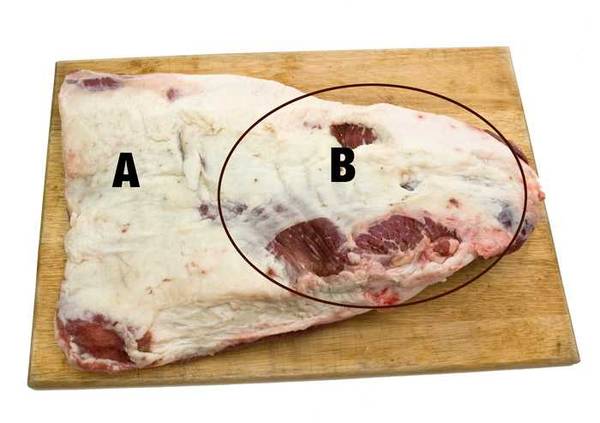
- Trim. Cut off most of the fat from the surface, leaving a 1/4″ (6.3 mm). The point muscle (B) sits on top of the flat muscle (A). Some folks like to trim fat from the surface and also from between two muscles. Go for it, but don’t cut all the way through if you want the two muscles to remain attached. Render the trimmed fat in a saucepan and discover the glories of how to use beef tallow.
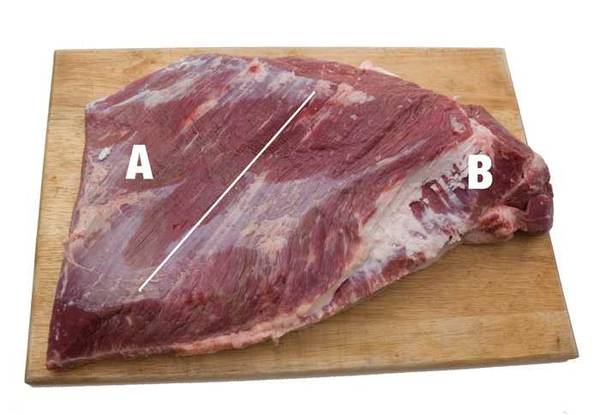
- Separate (optional). If you choose to separate the flat (A) and the point (B), just slide your knife into the fat layer between the two muscles, separate them, and trim off excess fat. You can cook the point and flat side by side.
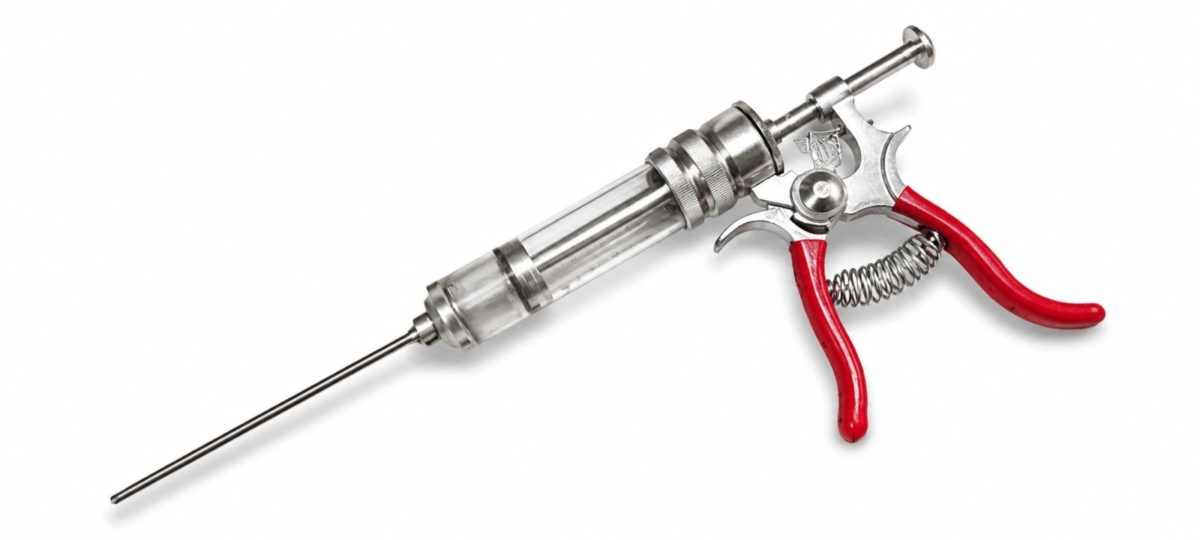
- Inject. If you have a hypodermic syringe for injecting meat, now’s the time to use it. Pump in about 1 ounce (28 g) of beef broth per pound of raw meat, inserting the needle parallel to the grain in several locations about 1″ (2.5 cm) apart and backing it out as you press the plunger. Do it in the sink.
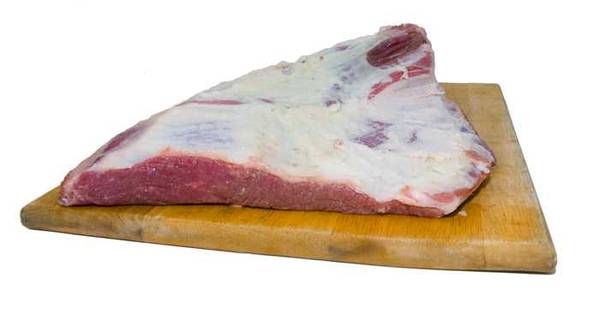
- Season. If you injected the meat with salted beef broth, then do not salt the meat. On the other hand, if you didn’t inject, then salt the meat about 12 to 24 hours in advance so it can work its way in. Worse case, salt it at least 2 to 4 hours before cooking. Sprinkle on about 1/2 teaspoon per pound of meat evenly over the meat surface.
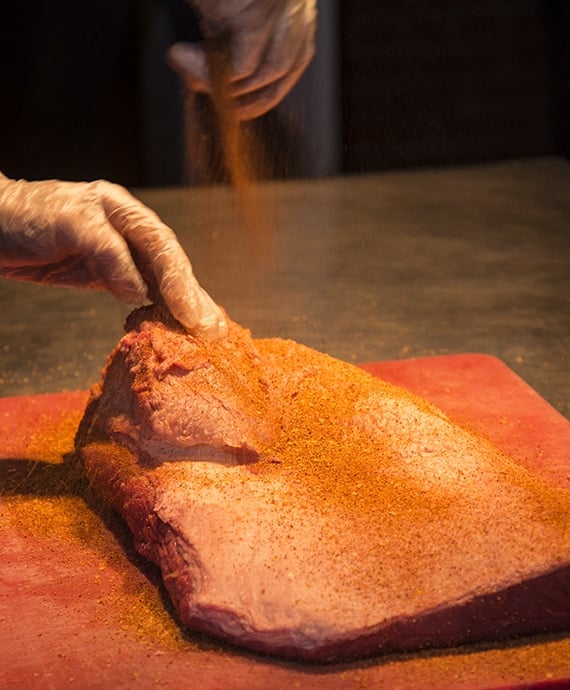
- Rub. After salting, sprinkle the Big Bad Beef Rub liberally on all areas of the meat and rub it in evenly. Keep the meat chilled until just before you cook it. Chilled meat attracts more smoke through a process called thermophoresis.
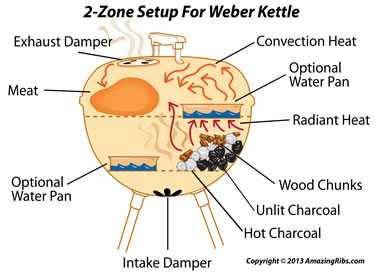
- Fire up. Get your smoker stabilized at about 235°F (113°C). We want to cook at about 225°F (107°C), but the temp will drop a bit when you add the cold meat. If you are using a grill, set it up for indirect cooking based on the illustration shown. Click here for how to set up a charcoal grill, here for how to set up a gas grill, or here for how to set up a bullet smoker like a Weber Smokey Mountain.
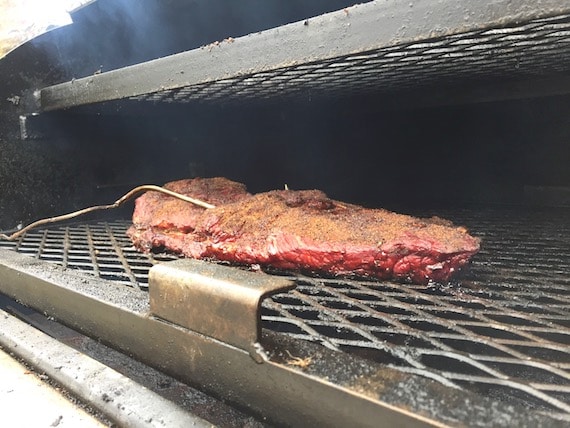
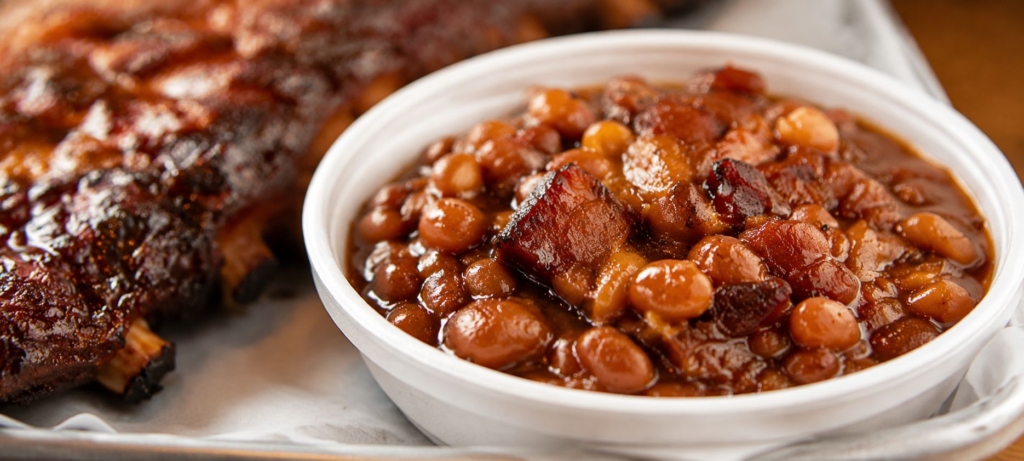
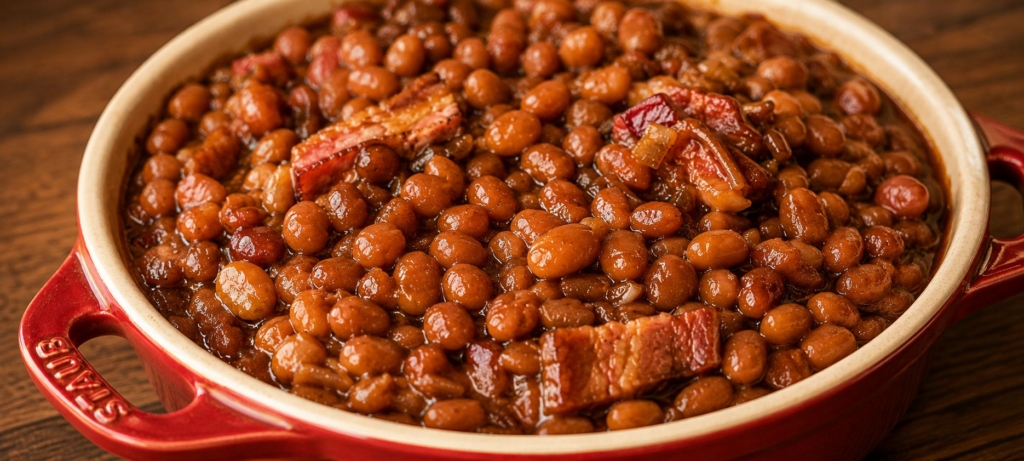
- Cook. Put the meat on the cooker and insert a temp probe in the thickest part. I put the fat cap down so the melting fat drips off into a pan of beans underneath. But if you’re using a water pan, put the meat right over the water. Immediately add about 2 cups or 4 ounces (113 g) of smoking wood. Add another 2 cups wood whenever the smoke stops, about every 30 minutes or so. Keep water in the pan, and there’s no need to mop, baste or spritz.
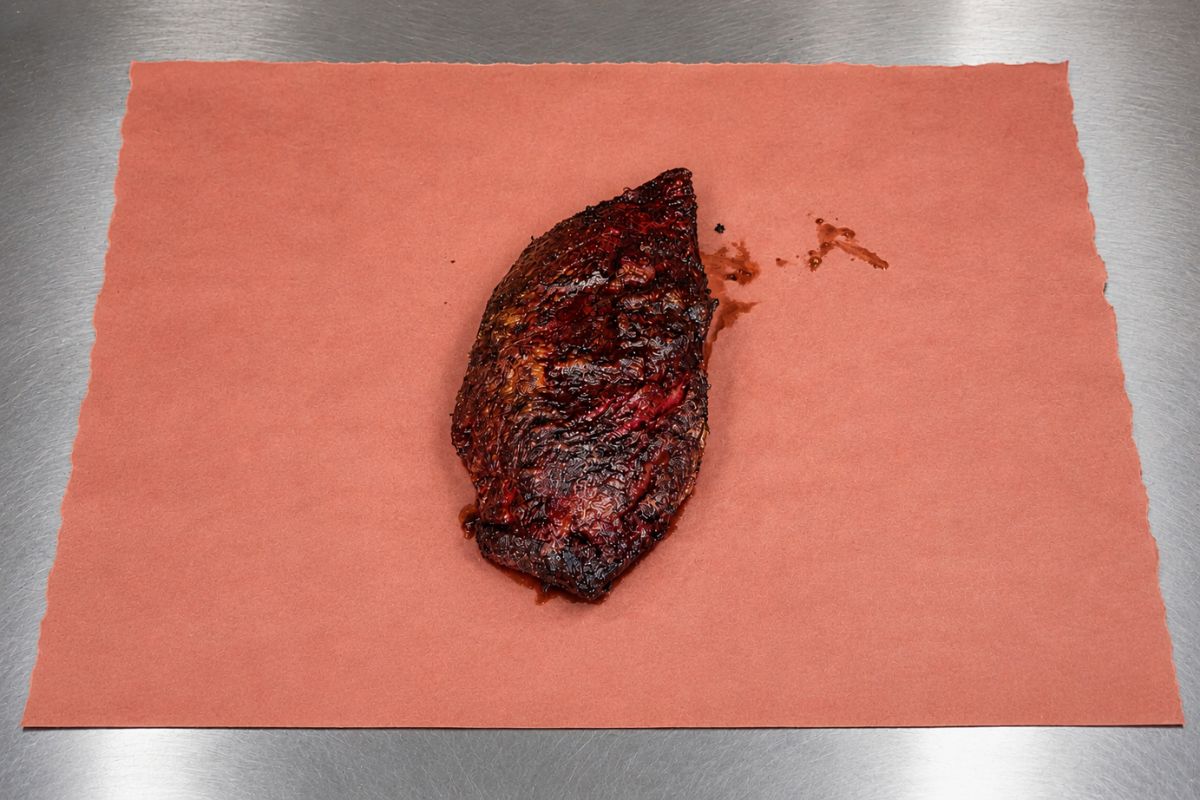
- Wrap. When the meat hits the BBQ stall, usually around 150 to 165°F internal temp (after 6 to 8 hours), wrap the brisket tightly in a double-layer of heavy-duty foil or in butcher paper. Continue cooking at 225°F on the smoker or in an oven.
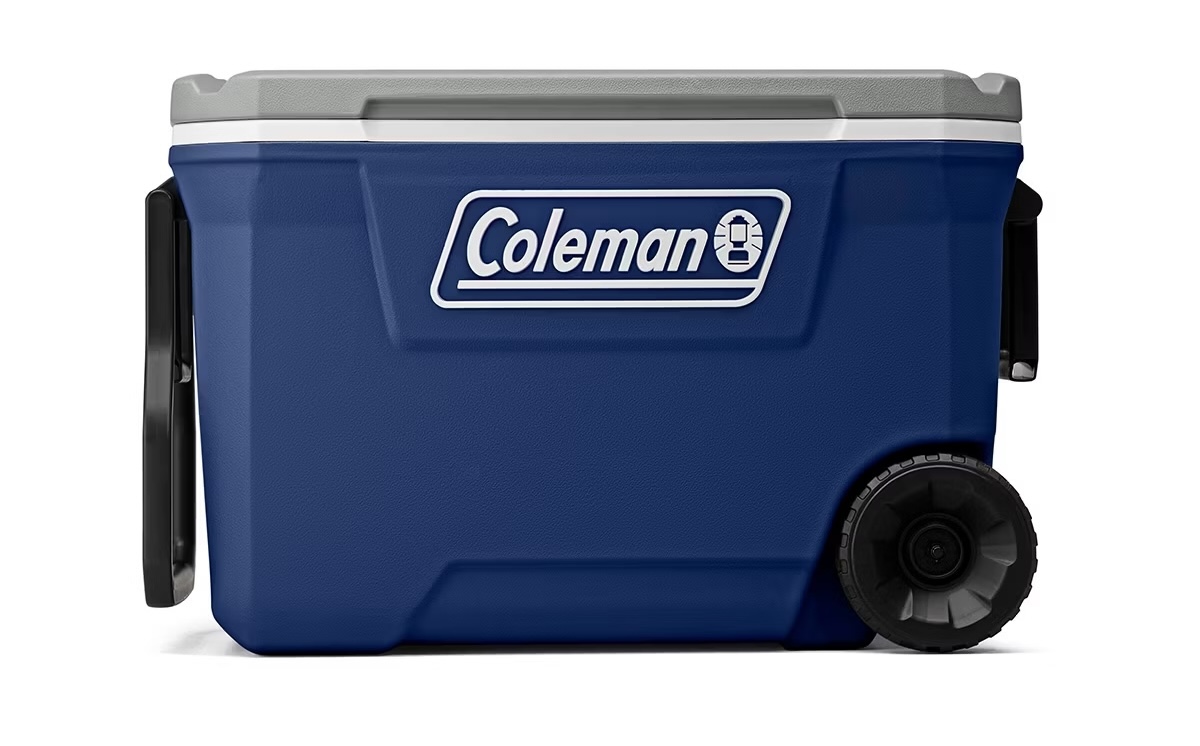
- Hold. When the internal temp reaches about 203°F and the brisket wobbles when you poke it, hold the wrapped meat in a faux Cambro (plastic cooler). Keep it there until the meat temp drops back down to 150°F, about 2 to 4 hours. Click here for our cooler reviews.
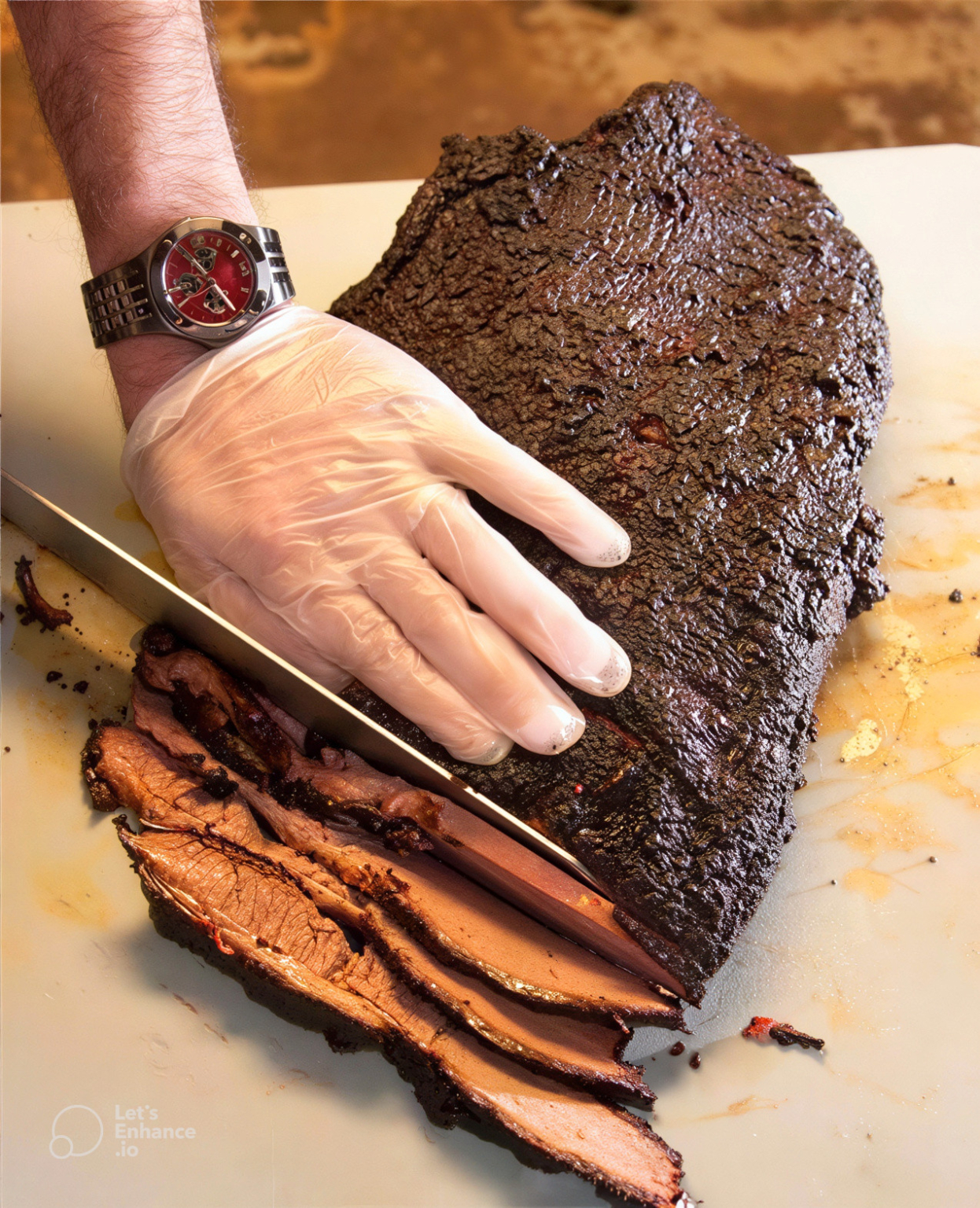
- Slice. Unwrap, slice the meat across the grain and serve with the juices. If you didn’t separate the muscles before cooking, now’s the time to do it.
Smoked brisket FAQs
I like 225°F for this recipe. Many competitors agree that low and slow, around 225°F (107°C) for 16 to 20 hours for a whole packer brisket, is necessary to make the meat tender and juicy. However, legendary “Barbecue King” Walter Jetton, Lyndon Johnson’s caterer, advocated cooking brisket at 275°F (135°C) and up. John Fullilove at the Texas brisket mecca Smitty’s Market confesses that he cranks the heat over 300°F (149°C) and knocks out his briskets in as little as 8 hours. I have seen competitors take home big prize checks with brisket cooked at 350°F (167°C). And chef-scientist Chris Young swears by his 6-Hour Brisket (Hot and Fast Brisket Recipe) that he generously shared on our website. The bottom line is that cooking temp seems to be less important than other factors. But because it is difficult to make brisket tender, I advocate for low and slow until you have mastered the techniques and are certain that your meat source and methods are superior.
I skip it because it softens the bark, cools the meat and slows cooking. I prefer to inject moisture before cooking instead. That said, the AmazingRibs.com science advisor, Prof. Greg Blonder has proven that wet meat holds more smoke, so mopping or spritzing with water, beef broth, or apple juice will yield a smokier brisket. Will flavored liquids help? No. There just aren’t enough taste molecules in apple juice or beer to change the taste of brisket. Not like a sprinkle of a spice. For more on the subject, read my article on the science of basting.
Use a good digital thermometer to monitor your cooker and another to monitor the meat. Your smoker’s dial thermometer is wrong. Don’t trust it. For the meat, the Combustion Predictive Thermometer is perfect for the job. Step into the digital age. As a rule of thumb, aim for a finished meat temperature of between 195°F and 205°F, though seasoned professionals go by feel versus temperature as each brisket cooks differently. Poke it with a finger or pick it up and jiggle it. If it goes “wubba wubba” and wiggles like jelly, you know the connective tissues have melted and it is done. You can also poke it with a thermometer probe. It should slide in and out with only a little resistance.
My answer is “don’t do it”. That’s called serving leftovers. Brisket is best fresh off the smoker or out of the faux cambro. If you have to serve it at noon on Sunday, then start cooking before you go to bed on Saturday. Now if you absolutely, positively must finish cooking it Saturday and then serve it Sunday, here’s a different brisket cooking and holding technique used by award-winning pitmaster Mike Wozniak.
To some people, it’s not barbecue unless it has a sweet red sauce on it. Not to Texans. “In Texas, we celebrate great brisket by not messing with it,” says Daniel Vaughn, the barbecue critic for Texas Monthly. “If it’s done right, then you slice it pencil thick and slap it on a piece of butcher paper. It’s naked, quivering and vulnerable, so it has to stand on its own.” In some places, a thin decidedly not-sweet, tomato-y gravy-like jus is tolerated.
BBQ brisket timeline: how long does smoked brisket take?
Below is a timetable for the average brisket cook. Plan on 14 to 18 hours for a whole packer brisket cooked at 225°F and wrapped in foil when the meat hits 150°F (65°C). That includes about two hours holding time. If you wrap in butcher paper instead of foil, add another one to two hours cooking time. If you don’t wrap in foil or paper, plan on 16 to 20 hours cooking plus two hours holding. For brisket flats, plan on 10 to 12 hours with foil, 12 to 14 hours without foil. The meat thickness, the cooker temperature and whether you wrap or not are the most important determinants of total cooking time for BBQ brisket. But humidity, ambient air temp, wind, rain, and grade of meat can all play a role. Click here for more about what determines cooking time. If you’re in a hurry, check out this 6-Hour Brisket (Hot and Fast Brisket Recipe).
| Time | Internal temp | Stage |
| 0:00 | 40°F | Brisket goes on the cooker |
| 6 hr | 150–160°F | Stall begins, wrap brisket |
| 10–12 hr | 190–195°F | Nearly done |
| 12–14 hr | 200–205°F | Probe-tender, jiggly, done |
| 16–18 hr | 150°F | Hold wrapped 2–4 hours before slicing |
Smoked brisket troubleshooting
Having problems? Check out these possible causes and solutions. My printable cooking log can also help you keep track of all the variables. Remember: sometimes it’s the steer, not the brisket recipe or the cook!
| Problem | Likely cause | Fix next time |
| Brisket is tough | Low grade, undercooked, not enough hold time | Buy Choice or better, cook until probe tender, hold longer |
| Brisket is dry | Lean flat, overcooked edges, not enough hold time | Use whole packer brisket, inject with broth, wrap, hold, slice just before serving |
| Bark is soft | Wrapped too early or too much liquid | Only wrap after bark to set, use less liquid, consider butcher paper over foil, crisp up bark after unwrapping |
| Cook is taking too long | Stall, low smoker temp, large brisket | Wrap, verify cooker temp with digital thermometer, plan 12–18 hours plus hold time |
| Slices crumble | Overcooked or sliced too hot/thin | Rest longer, slice pencil-thick across the grain |
What to serve with smoked brisket
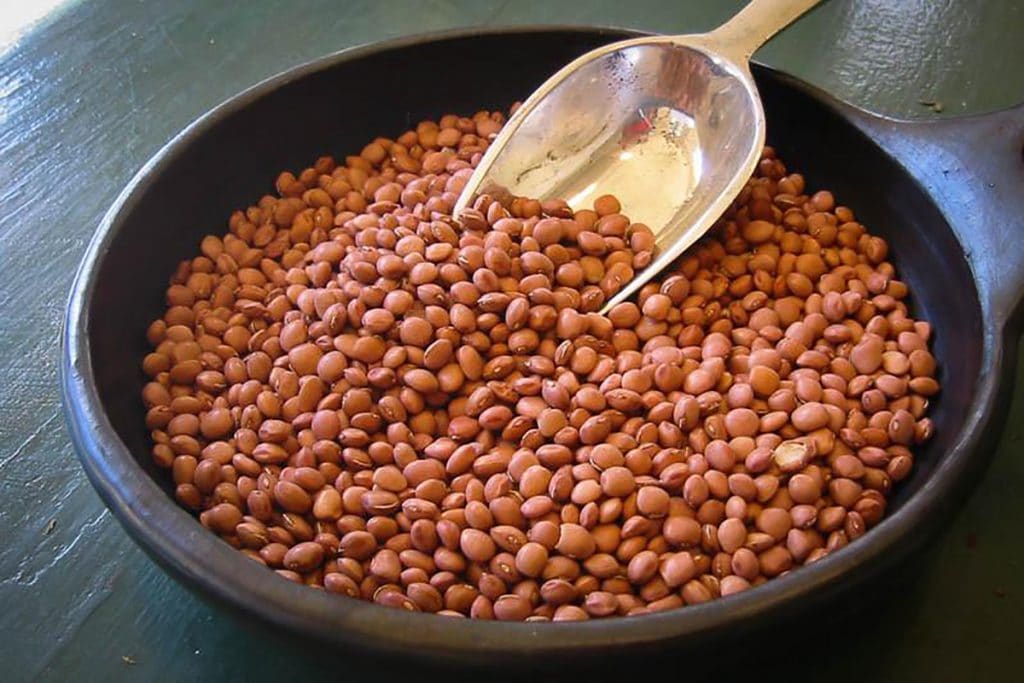
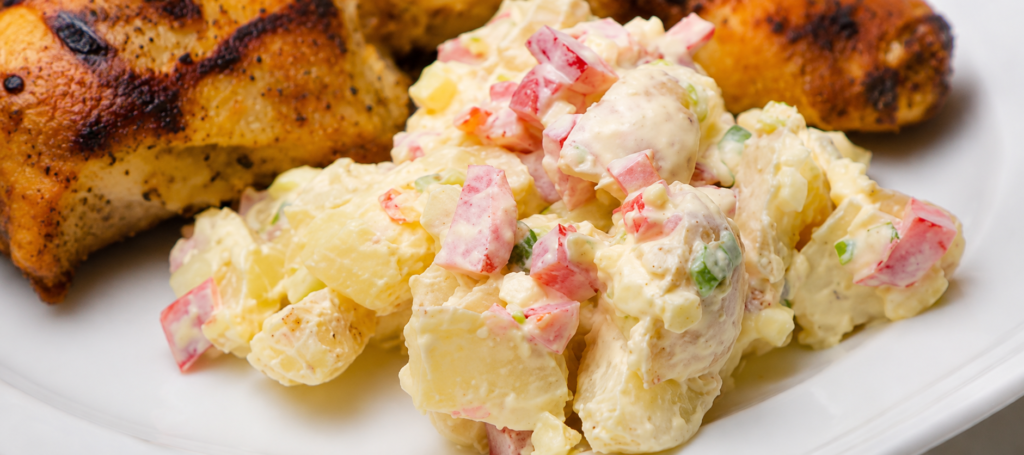
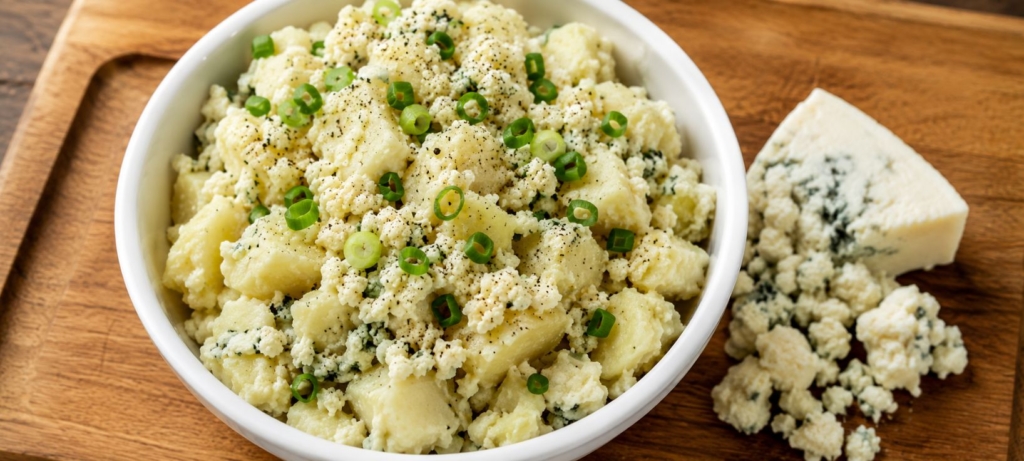
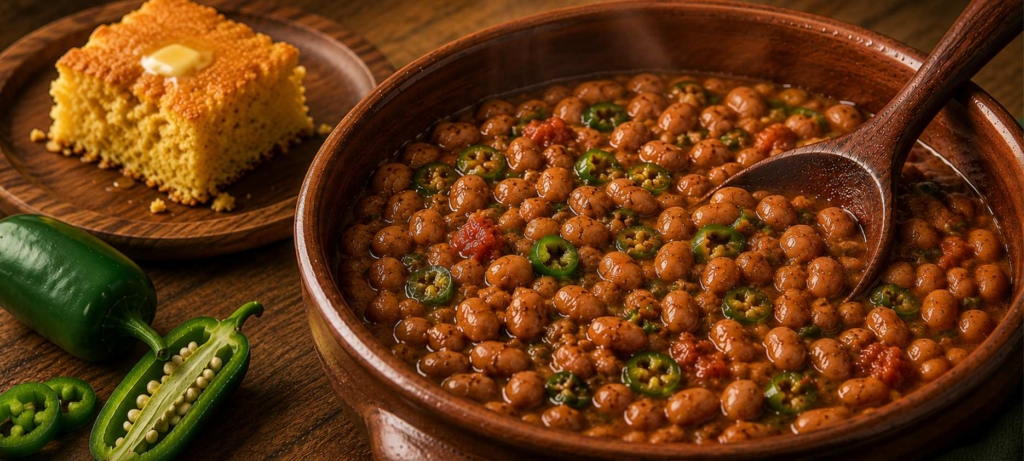
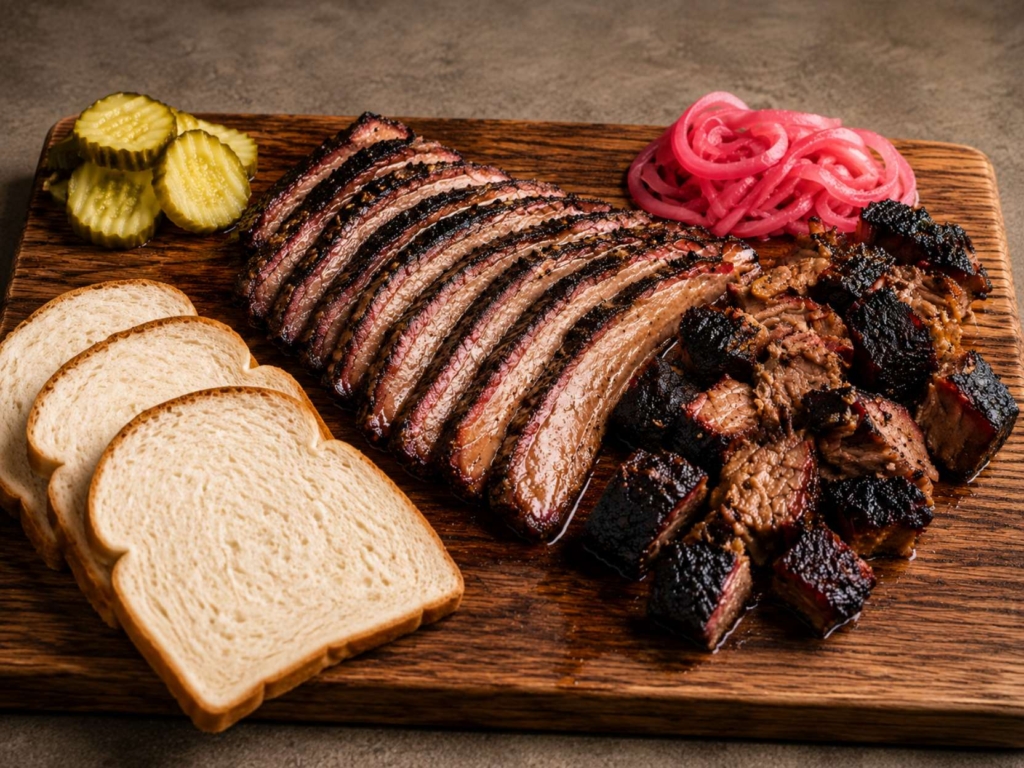
I always serve it Texas style on a thick slab of Texas Toast with only a few spoons of Texas Mop Sauce, a thin, tart, tomato-soup like sauce, none of that thick sweet Kansas City stuff. On the side, I like to honor the Mexican heritage of Texan cuisine with frijoles, simple pinto beans cooked cowboy style with some fatback or bacon, onion, garlic, and a few chopped tomatoes, scented with bay leaves and cumin, and sprinkled with fresh minced jalapeño. Then, honoring the European heritage of many of the great Texas barbecue joints surrounding Austin, I want a mound of German Potato Salad, warm and pungent with vinegar and dotted with celery seed. Next to it I want a scoop of fresh, crunchy sauerkraut from the fridge. None of that soggy canned stuff. To honor the Czech heritage of the numerous Texas butcher shops turned barbecue joints, I chase the whole thing with a tallboy, a simple uncomplicated Pilsner style Texas brew, straight from the bottle. Dessert has to be crunchy, gooey pecan pie with black coffee. Pecans are a major cash crop of the Lone Star State, and my favorite pie bar none.
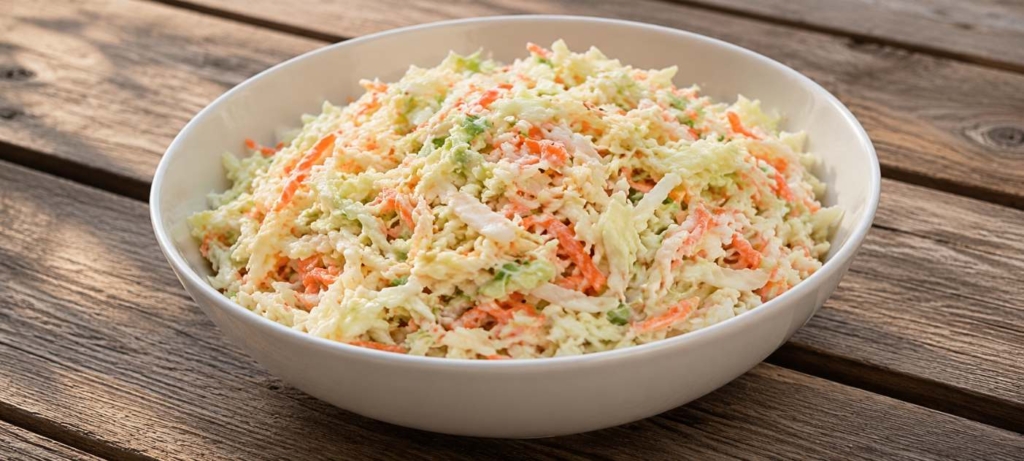
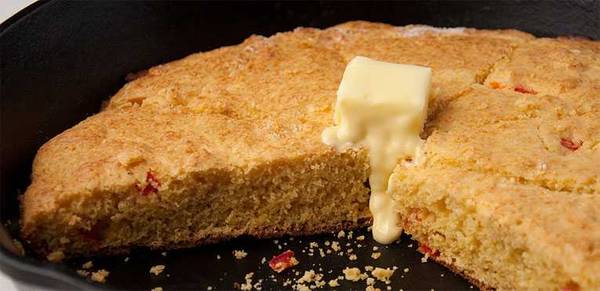
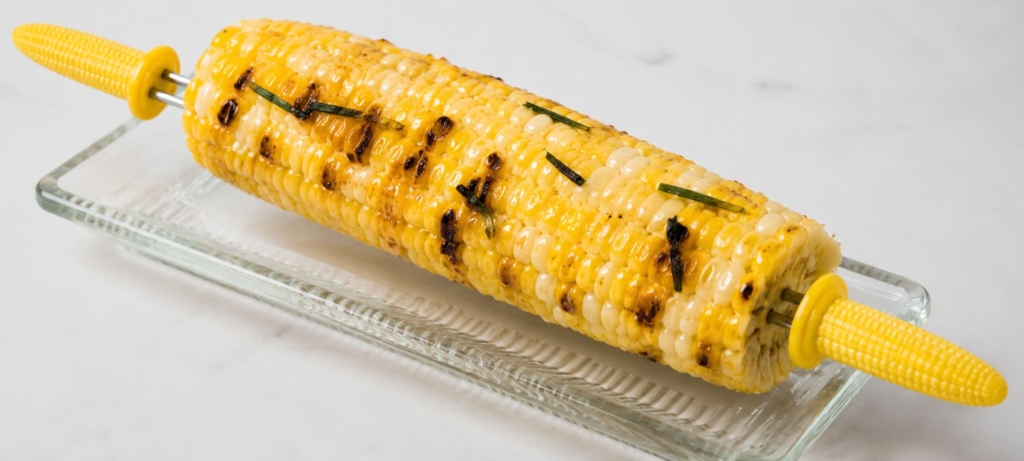
That’s me, though. Other folks like coleslaw, pickled jalapeños, pickled red onions, or even mac and cheese.
Pitmaster Deep Dive: What to do with brisket leftovers
If you have leftovers that you will not be able to scarf down in a few days, mix them with a bit of barbecue sauce or the jus from the Texas Crutch (if it is not too salty), and freeze everything in zipper bags or vacuum bags. The sauce helps prevents freezer burn. Pop a bag in the microwave and you’ve got a great emergency meal for two. Second best is to heat leftovers slowly in a pot with the lid on. Here are some other ways to transform brisket into a new dish.
- Shepherd’s Pie and Cottage Pie. Probably the best thing I’ve ever done with leftover meat from my smoked brisket recipe is a variation on Shepherd’s Pie or Cottage Pie, which is essentially meat and mashed potatoes in two layers. Brown some carrots, celery, onion, and frozen peas in a cast iron pan, then toss in cubes of leftover brisket with some of the jus and/or some beef stock. Top them with about 2″ (5 cm) of mashed spuds, paint the top with melted butter, sprinkle on some parmesan cheese and bread crumbs, and bake the whole shootin’ match in a 350°F oven until the top is brown. OMG. Substitute BBQ lamb and you’ve got Shepherd’s Pie.
- Brisket enchiladas. Slow’s Bar-B-Q in Detroit is famous for this dish. They sauté onions, toss in sliced brisket and a splash of hot sauce, Worcestershire sauce, and their secret house sauce. They then dump it on a corn tortilla, top it with grated smoked gouda cheese, roll it up, grate some American cheese on top, and give it a squirt of hot sauce for good measure.
- Stir fry. Believe it or not, leftover brisket is great in a Chinese stir-fry with onions, carrots, broccoli, and a soy/sesame oil/hoisin sauce with a splash of hot sauce on a bed of rice.
- Hash. John R. Crowley from Denver (a member of our Pitmaster Club, where many brilliant BBQ ideas are shared) says he likes to chop up leftovers, mix them in beans, or fry them up in some hash.
- On scrambled eggs or salads. Bill Martin likes his leftovers chopped up in scrambled eggs and on top of a salad.
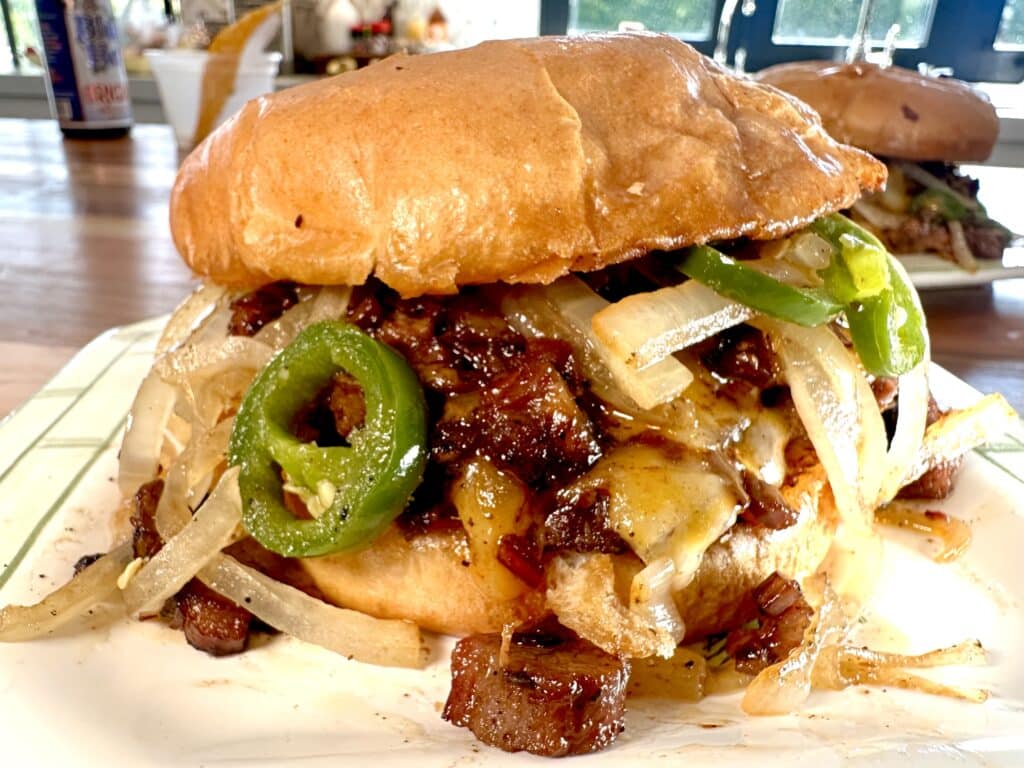
- Sandwiches. Seve Page says “To me there is not much better than a long slice of brisket with mozzarella (or provolone) on a steak roll bun. I microwave gently with some crutch sauce, place on the bottom half of the bun with two thick slices of cheese end-to-end on top and pop into a small toaster oven in the broil mode to melt the cheese and toast the bun (so it doesn’t get soggy). I then drizzle the crutch sauce on the top toasted bun and slap ’em together.”
- Italian beef sandwiches. Lucy Baker says “Make Italian beef-style sandwiches with very cooked (limp) green and red bell peppers, onion, and a little Italian seasoning. Reheat the beef in broth and spoon over crusty bread before adding the beef and peppers. Yikes!”
- Quesadillas. Merrill Powers in Elmhurst, Illinois, makes quesadillas with his leftovers.
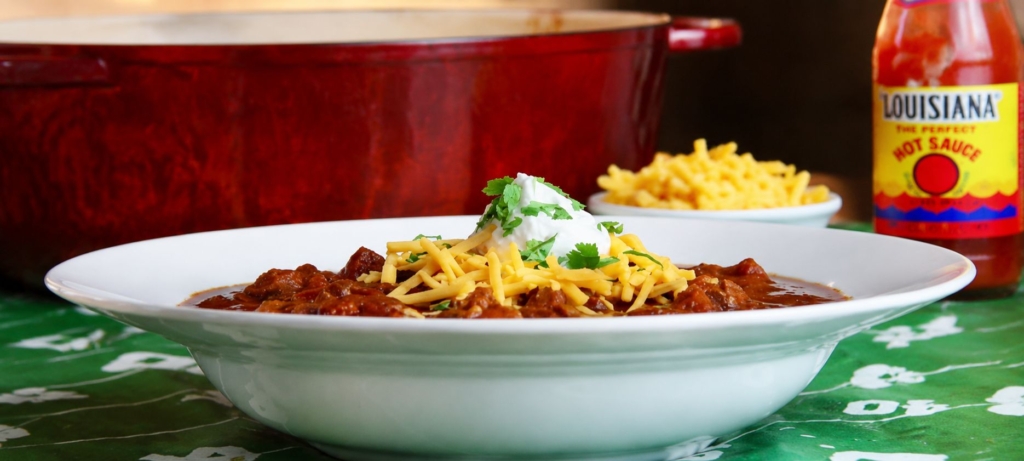
- Chili. Dave Frary makes chili with his leftovers.
- Burritos. Danny Gaulden makes burritos.
- I don’t know what to call this but I want to eat it. Rodney Leist from Elfrida, Arizona, kills several different leftovers in one dish. He puts one of those single serving bags of corn chips in a bowl, adds a big scoop of leftover chopped brisket, a similar amount of leftover smoked sausage, and a similar amount of beans. On goes some leftover sauce, chopped onions, chopped jalapeños, and grated cheese. The whole thing gets heated in the microwave. Sort of like a walking taco but in a bowl!
- Trade bait. Buzz Dean in Wisconsin says he takes his leftovers to the pub and trades them for beer!
Texas style smoked brisket recipe with video
Watch the video and I’ll show you how to make this smoked brisket recipe step by step at home. Want a printed recipe? Click the “Print Recipe” button in the recipe card.

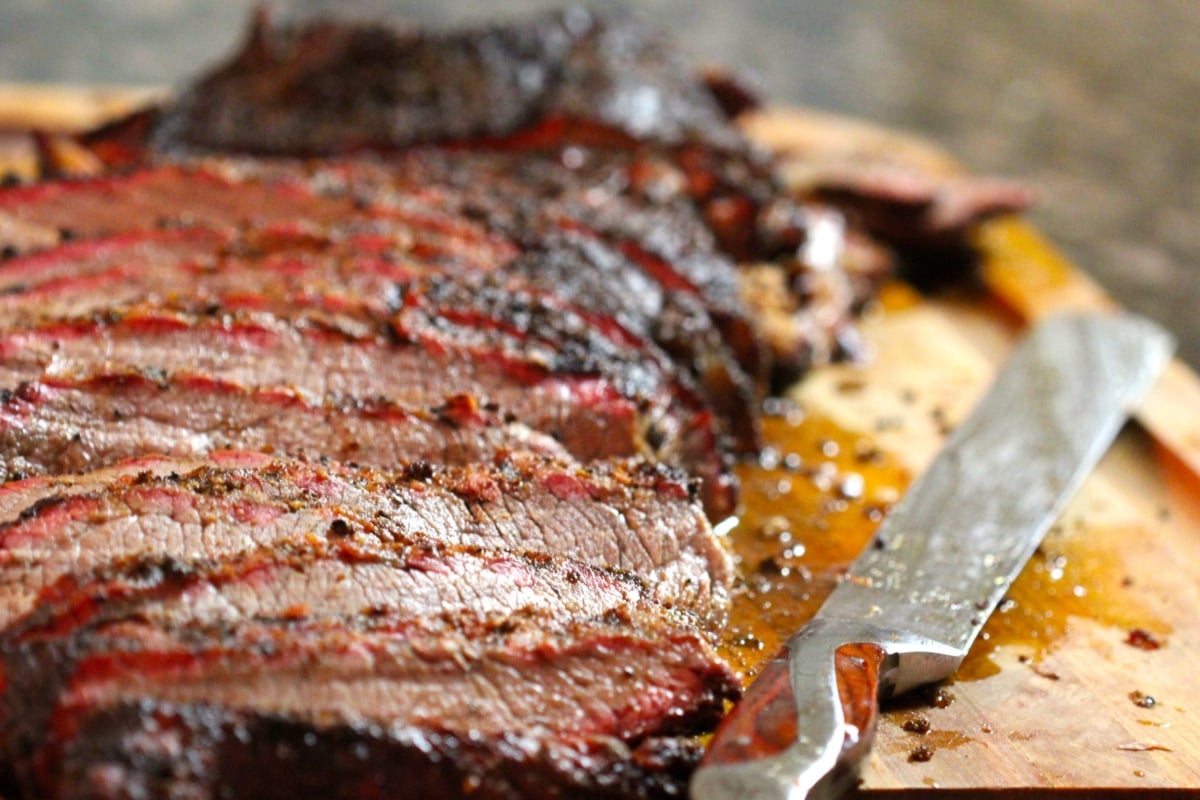
Authentic Texas-Style Smoked BBQ Brisket
Makes
1 killer brisketSpecial Tools
Ingredients
Method
- Trim. Trim off most of the fat cap but leave about 1/4" (6.3 mm). Clean the meaty side of any silverskin, a shiny, thin, tough membrane. Set aside some fat for making burnt ends if you're going that route. I always freeze some of the fat and grind it for my burgers. I also render beef fat in a saucepan, and freeze that too. I use beef fat to paint my steaks with fat just before searing. If you want to separate the point and the flat muscles before cooking, now's the time to do it (see Notes).
- Season. Sprinkle 1/2 teaspoon Morton's Coarse Kosher Salt per pound of meat evenly over the surface. Do this about 12 to 24 hours in advance, or at least 2 to 4 hours before you put it on the smoker. Notice the direction of the meat grain so you can slice across the grain when the brisket is done. After salting, sprinkle Big Bad Beef Rub liberally on all areas of the meat and rub it in. Keep the meat chilled until just before you cook it. Chilled meat attracts more smoke.
- Fire up. Preheat your smoker, or if you are using a grill, set it up for indirect cooking. Click here to see how to set up a gas grill, here for how to set up a charcoal grill, or here for how to set up a bullet smoker like the Weber Smokey Mountain. Get the cooker temp stabilized at about 235°F (113°C). We want to cook at about 225°F (107°C), but the temp will drop a bit once you open the lid and load in the cold meat.
- Cook. Put the meat on the cooker. I strongly recommend you use a remote digital thermometer and insert the probe with the tip centered in the thickest part of the meat furthest from the heat. On a smoker with a water pan, put the meat right above the water. Place the oven temp probe on the grate next to the meat. Add about 2 cups (4 ounces (113 g) of smoking wood right after the meat goes on. When the smoke stops, add 4 ounces more during the first 2 hours, which usually means adding some every 30 minutes or so. Keep an eye on the water in the pan. Don't let it dry out. After 3 hours, turn the meat over if the color is different from top to bottom. Otherwise, leave the meat alone.
- Wrap. The Texas Crutch is optional but I always crutch brisket. It helps beat the BBQ stall. When the brisket bark is set and the internal temp stops rising, at an internal temp of about 150°F to 165°F (after about 6 to 8 hours), put the brisket on a long sheet of double-layered heavy-duty foil or butcher paper, drizzle on 1/2 cup beef broth, and wrap the brisket, crimping and folding tightly around the meat. Then continue cooking it wrapped at 225°F (either on the smoker or in an oven).
- Hold it. When the meat temp hits 195°F (95°C), after another 5 to 7 hours, start poking it. When it is done, a thermometer probe will slide in and out with little resistance. Poke it with a finger or pick it up and jiggle it. If it goes "wubba wubba" and wiggles like jelly, it is done. This usually happens at around 203°F (95°C). At that point, hold the wrapped brisket in a faux cambro (plastic cooler) for 2 to 4 hours. That extra time helps tenderize the meat by allowing some carryover cooking to soften tough connective tissue. And it’s a great fudge factor that lets you take the meat off when it is ready and hold it for a few hours until the guests are ready.
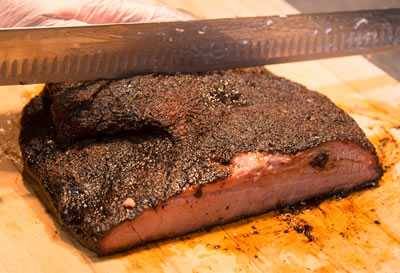
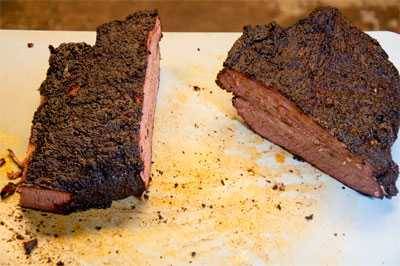
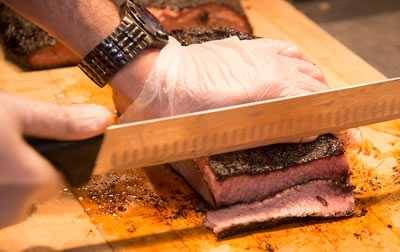
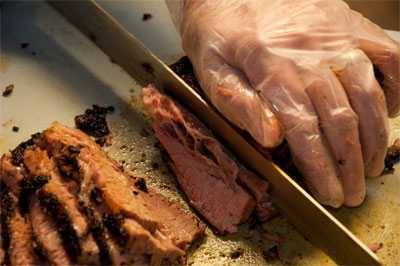
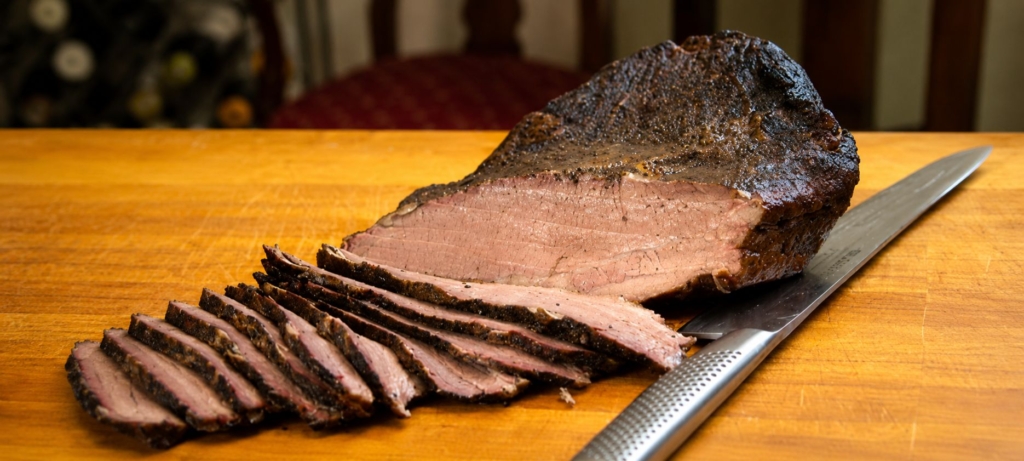
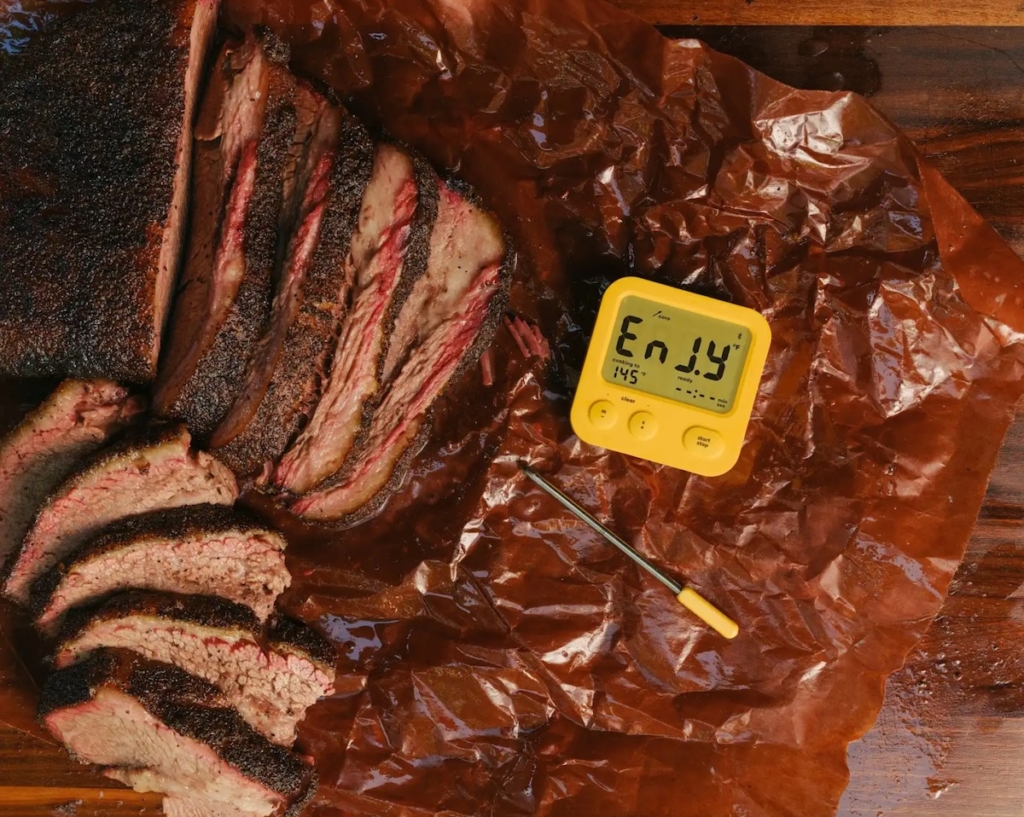
- Slice. Wait to slice until the last possible minute. Brisket dries out very quickly when cut. Turn the meat fat side up so the juices will run onto the meat as you slice. The easy way is to lop off about 1" (2 cm) from the thick end and about 2" (5 cm) from the thin end, which is the tip of the flat. These ends are likely overcooked and dry. Chop them and smother them in sauce for chopped brisket. Then find the fat layer between the point and flat and slide your blade between the two muscles. Separate them, and trim off most of the excess fat. Find the grain of the flat and cut across the grain into slices 1/8″ to 1/4″ (3 to 6 mm) thick, or about as thick as a pencil. You can also slice against the grain of the point, and offer your guests "lean" (flat) or "fatty" (point). Most will choose the lean, which will leave the better, fattier, point cut for you. Turn it into burnt ends!
- Serve. If the brisket is perfectly cooked, it should be moist and juicy. You can serve it simply sliced on a plate or as a sandwich made with Texas Toast. If you want to drizzle on the juices, taste them first: they can be salty. In that case, you can dilute them with water or unsalted beef broth. You can also mix them with some Texas Barbecue Mop Sauce.
Notes
Approximate Nutrition
Tried this recipe?
Let us know how it was!Pitmaster Deep Dive: Brisket anatomy
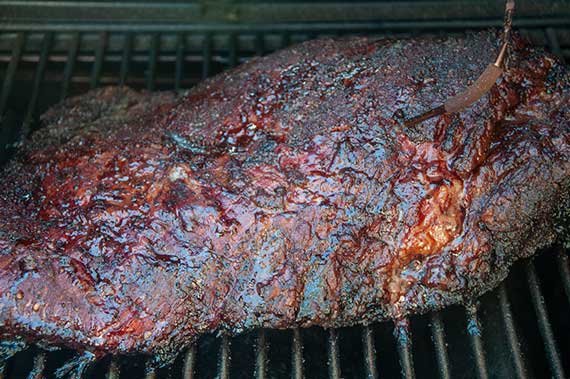
Briskets are the pectoral muscles from the chest of the steer between the forelegs. Each animal has two, and because cattle have no collarbones, these boneless muscles bear quite a load. There isn’t much fat marbling within the muscle, and there’s a lot of springy connective tissue in and around the muscle fibers. That’s why briskets are so tough.
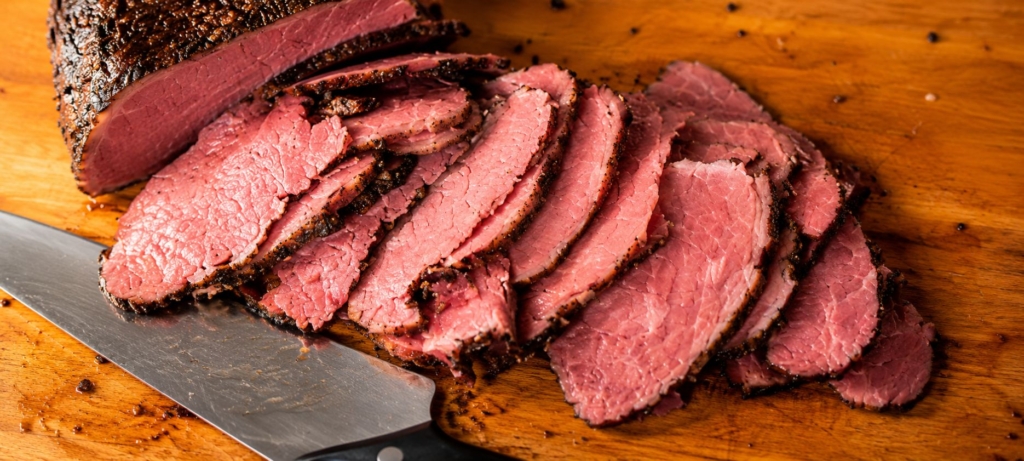
Much of the world’s brisket is made into corned beef, pastrami, or pot roast, but it is also a fine cut for barbecue, and it is required in cooking contests sanctioned by the Kansas City Barbecue Society (KCBS), about 500 across the nation.
The two muscles on a brisket
There are two distinct muscles in a brisket that comes from the meat packer whole: a long, flat, rectangular, lean muscle that sometimes comes to a point that is called the flat (pectoralis profundus), and a narrower, thicker, fattier, oval shaped muscle called the point (pectoralis superficialis). Got it? The flat is pointy and the point is oval. Go figure.
When you buy a whole packer brisket, it usually weighs 8 to 16 pounds (3.6 to 7.2 kg) and comes vacuum packed in an airtight plastic bag. The meat has a cap of fat on one side that can be up to 1″ (2.54cm) thick, and it is trimmed pretty close to fat free on the other side. There is a thick layer of fat that separates the point from the flat.
Cooking a hunk o’ flat or a hunk o’ point
A whole packer brisket is a lot of meat! Many grocers cut up the whole brisket into smaller more manageable sizes. I often see cuts from the flat (a.k.a. “first cut”) or point (“second cut” or “deckle”) running anywhere from three to six pounds. Flats seem to be more common than points. If the meat case has both, choose the point. It has more marbling in the muscle and will be more tender, flavorful, and juicy. If you see only flats, ask the butcher if you can order points.
Either way, the best briskets are wet aged 28 to 45 days in a vacuum bag. Enzymes within muscles tenderize meat as it ages, so competitors often wet age their meat in the vacuum bag in the fridge in their basement. Click here for more about aging beef.
Pitmaster Deep Dive: Left-handed briskets?
Tom Hoefer from Allen, Texas, posted this tall tale about a barbecue contest on the net in 2001. It is reprinted here, slightly edited, with his permission. Fact or fiction? Serious or joke? You decide…
A few years back at the Texas State Finals, several of us arrived on Thursday to get in line for the best sites. Thursday night was devoted to serious drinking.
One of the better cooks, Ole Connie Baker of the team “Li’l Pit Of Heaven” was throwing back quite a few of those Mexican beers with a chunk of lime stuck in the neck. Connie had so many of them limeade beers that he was starting to smile with a pucker.
Someone asked him how come his brisket was so tender and always placed in the top three. I thought to myself, boy oh boy, if loose lips sink ships then Ole Connie is going down tonight. All got quiet as he stuffed another lime in a longneck and he said that he “only cooks left-handed briskets”.
He explained that most, but not all, steers rest on their left side, which means when they get up they have to push harder with their right legs. At this point about half the bunch mumbled something to the effect of “bull hockey” and went back to different conversations.
A few of us noticed that Ole Connie wasn’t smirking. Two or three of us moved closer and I said to him, “You can’t stop there. What does pushing up with their right legs have to do with the left brisket?”
Ole Connie stuffed another lime and told us that when they push up with the right legs, it flexes the right brisket muscle more than the left. Therefore the right-handed brisket will be tougher and less marbled than the left. Not always but usually. I asked him, “How the heck do you tell a left-handed brisket from the right?”
He stuffed another lime and told me that, with the fat side down, on a left-handed brisket, with the narrow part closest to you, the point will curve to the right.
Saturday awards time rolled around and Connie took First Brisket and Grand Champion over 180 of the best cooks in Texas. I think that I came in 19th with my right-handed brisket.
This is a concept that I just could not get this off my mind. Then I phoned the kin folk in LaGrange, Texas, and asked if they would check out their herd. Yep, you guessed it. Only three out of 37 consistently rested on their right side. Dangnation, Ole Connie has got it going big time!
I went to five different grocery stores and flexed briskets to see which sides were more limber and more marbled. There are some right-handed briskets that are more limber and marbled than the lefties, but for the most part, the majority of the best are left handed!
Welp, there it is folks. Take it or leave it. As Joe Friday on the 1950s TV show, Dragnet, used to say, “Only the facts, ma’am.”
Pitmaster Deep Dive: Brisket slicing methods
Brisket dries out quickly when cut, so wait until the last possible minute to slice. Then cut across the grain into slices 1/8″ to 1/4″ (3 to 6 mm) thick, or about as thick as a pencil. We slice across the grain to make the meat easier to chew (more tender). But slicing can be tricky because there are two muscles (the point and the flat) and the grain flows in different directions.
The classic brisket slicing method
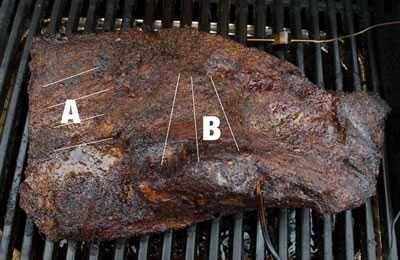
In this photo you can see the grain in the meat. The point muscle sits on top of the flat muscle. The point is thin on one end (A) and thick on the other (B). The easy slicing method is to first cut off an inch or two from both ends because these ends are most likely overcooked and dry; chop them up and douse them with Texas Mop sauce. Then find the fat layer between the point and flat and slide your knife between the two muscles. Separate them, and trim off most of the excess fat. Find the grain of the flat and cut across the grain into slices 1/8″ to 1/4″ (3 to 6 mm) thick, or about as thick as a pencil. Do the same with the point.
The competition brisket slicing method
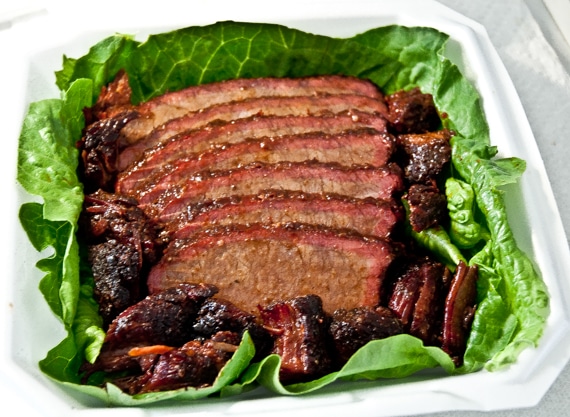
Some competitors prefer this method. As in the classic method, you run your knife between the flat and the point to separate the two muscles, trim off excess fat, and slice the flat across the grain about 1/4″ (6.3 mm) thick. The meat should hold together, not fall apart or crumble. It should only pull apart with a gentle tug. If the first slice falls apart, cut thicker slices. The difference here is that the point is turned into chunks of burnt ends and served with nice, even slices of the flat. The image above shows a competition brisket entry by Kansas City Barbecue Society (KCBS) President Emeritus Candy Weaver. Click here to learn more about how to cook competition brisket.
The Sorkin brisket slicing method
I learned this method from Barry Sorkin of Chicago’s Smoque BBQ. He makes my favorite brisket in the world. In the photos below, Sorkin demonstrates how he slices a whole packer brisket.
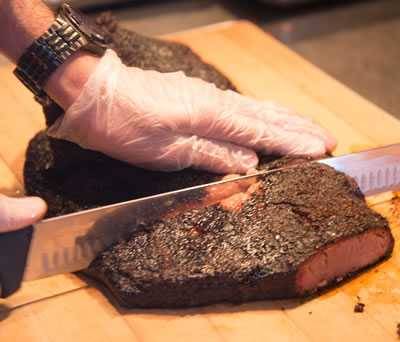
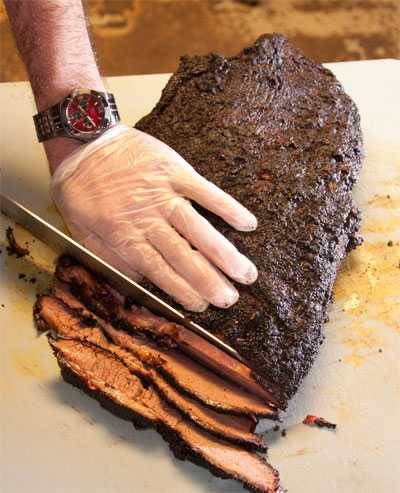
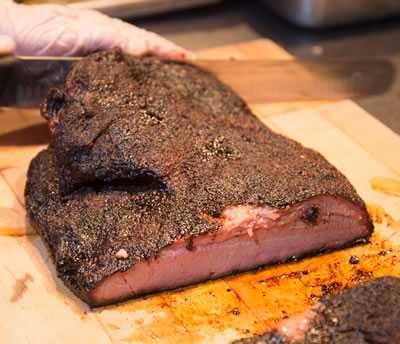
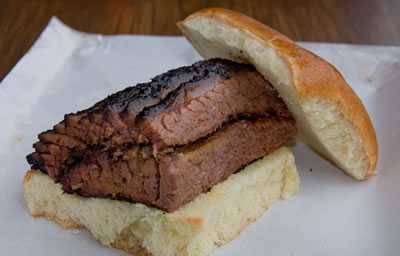
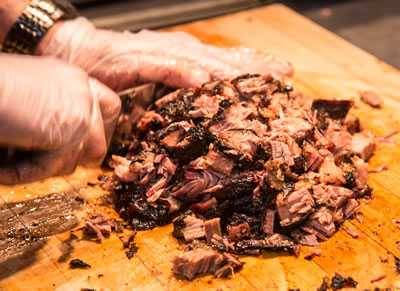
The competition brisket slicing method
A note from BBQ Smokehouse
“I adapted your brisket rub recipe this summer and my customers love it (8,000 pounds served in the past 6 months)! My brisket even won ‘best beef’ in the Sonoma County Harvest Fair this year (2010).” Larry Vito of BBQ Smokehouse in Sebastapol, CA
Up your game: Join our Pitmaster Club. Try it out for free for 30 days. No credit card is needed. No spam. Join now and Be Amazing!
Before you can post a comment or question you must sign into our commenting partner, Disqus. This helps make sure everyone hanging around the grill is civil. We do not tolerate nastiness, racism, porn, inappropriate language, or attacks on others. All comments are the property of AmazingRibs.com and we reserve the right to quote them, edit them, delete them, and block people from making future comments.
Please leave comments and questions on the same page that is devoted to that subject so others can see questions and our answers when they are reading about the subject. You must enable JavaScript to use the comments section, and you must accept cookies to post comments. Note: the software that runs Disqus is different from the Pitmaster Club, so members need to sign into the Pitmaster Club separately.